Loading...
Li Ling vs Xiang Yu
Xiang Yu leads by 4.3 pts · 2 figures compared
…

Li Ling
General · Ancient
48.0Total
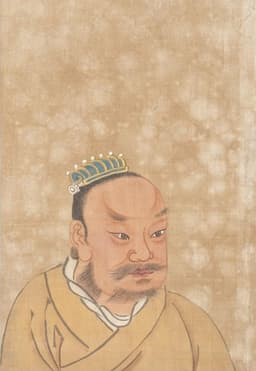
Xiang Yu
General · Ancient
52.3Total
Basic Information
Born
-134
-232
Died
-74
-202
Era
Ancient
Ancient
Nationality
China
China
Occupation
General
General
Civilization
Eastern
Eastern
Score Comparison
Military (10%)
55.0
77.5
Political (20%)
35.0
35.0
Influence (20%)
51.8
61.0
Legacy (20%)
42.5
52.0
Leadership (15%)
62.6
30.0
Strategy (15%)
43.3
65.4
TOTAL
48.0
52.3
Li Ling — Complete Timeline
99 BC
Battle of Junji MountainWar◆ Major
Li Ling led 5,000 Han infantry deep into Xiongnu territory. After days of fighting against a vastly larger Xiongnu army, his forces ran out of arrows and were surrounded. Li Ling surrendered to the Xiongnu rather than be captured or killed.
Han-Xiongnu WarSurrenderDefeat
Impact: nationaltragic
Surrender to the XiongnuPolitical Action◆ Major
After his defeat at Junji Mountain, Li Ling surrendered to the Xiongnu. Emperor Wu of Han initially praised Li Ling but later, believing false reports that Li Ling was training Xiongnu troops, ordered the execution of Li Ling's entire family in China.
Han-Xiongnu WarFamily ExecutionBetrayal
Impact: nationaltragic
98 BC
Marriage to Xiongnu PrincessPolitical Action
After surrendering, Li Ling was given a Xiongnu princess as a wife and granted a fief by the Xiongnu Chanyu. He lived among the Xiongnu for the remainder of his life, never returning to Han China.
XiongnuMarriageExile
Xiang Yu — Complete Timeline
207 BC
Battle of JuluWar◆ Major
Xiang Yu led a rebel army against the Qin dynasty at Julu. After ordering his troops to destroy their cooking vessels and boats, they defeated a larger Qin force, breaking the siege and establishing Xiang Yu as the leading rebel commander.
Qin rebellionBattleTurning point
Impact: regional
206 BC
Feast at Hong GatePolitical Action◆ Major
Xiang Yu hosted a banquet for Liu Bang at Hong Gate. During the feast, Xiang Yu's advisor Fan Zeng attempted to have Liu Bang assassinated, but Xiang Yu hesitated. Liu Bang escaped, and the rivalry between the two leaders intensified.
Political intrigueRivalryChu-Han Contention
Impact: regional
202 BC
Battle of GaixiaWar◆ Major
Liu Bang's Han forces surrounded Xiang Yu's army at Gaixia. After a night of psychological warfare with Han soldiers singing Chu songs, Xiang Yu's troops lost morale. Xiang Yu broke out but was cornered, leading to his suicide.
Chu-Han ContentionBattleDefeat
Impact: regionaltragic
Expert Analysis
Origins
Li Ling (c. 134 BCE – 74 BCE) was a Han dynasty general from a distinguished military family; his grandfather was the famous general Li Guang. He grew up in the capital Chang'an, trained in martial arts and strategy, and served as a palace attendant before being appointed as a commander. Xiang Yu (232–202 BCE) was born into the Chu aristocracy during the late Qin dynasty. His family had served as generals for Chu, and he was raised by his uncle Xiang Liang after his father's early death. Xiang Yu was known for his physical strength and ambition, learning calligraphy and swordsmanship but ultimately focusing on military tactics.
Rise to Power
Li Ling rose through the Han military hierarchy under Emperor Wu. In 99 BCE, he volunteered to lead a campaign against the Xiongnu, commanding 5,000 infantry. He advanced deep into enemy territory, engaging in several skirmishes before the climactic Battle of Junji Mountain. Xiang Yu's rise began with the rebellion against Qin. In 209 BCE, he and his uncle Xiang Liang assassinated the Qin governor and raised an army. Xiang Yu's breakthrough came at the Battle of Julu (207 BCE), where he led a coalition of rebel forces to a decisive victory against a larger Qin army. After the fall of Qin, he became the de facto leader of the rebels and divided the empire, naming himself Hegemon-King of Western Chu.
Leadership & Governance
Li Ling's leadership was characterized by tactical competence and loyalty to his troops. At Junji Mountain, he maintained discipline despite being outnumbered, and his forces inflicted heavy casualties on the Xiongnu. However, his governance was limited; after surrendering, he lived among the Xiongnu and married a Xiongnu princess, but he never held high office in the Han dynasty. Xiang Yu's leadership was marked by personal bravery and military genius but also by political naivety and brutality. He often led from the front, inspiring his troops, but he failed to build a stable administration. For example, after conquering Qin, he burned the Qin palaces and killed the last Qin emperor, alienating potential allies. His political score of 35.0 reflects his poor governance, while Li Ling also scored 35.0 politically, indicating both were weak in statecraft.
Triumph & Tragedy
Li Ling's triumph was his heroic stand at Junji Mountain, where his small force held off a massive Xiongnu army for days, killing thousands. His tragedy was running out of arrows and surrendering, which led to his family being executed by Emperor Wu. He lived the rest of his life in exile among the Xiongnu. Xiang Yu's greatest triumph was the Battle of Julu, where his strategy of destroying his own supply lines to motivate his troops resulted in a crushing victory. His tragedy was the Battle of Gaixia (202 BCE), where Liu Bang's forces surrounded him. After a night of psychological warfare, Xiang Yu's army disintegrated. He fled with only 28 cavalry and, rather than surrender, committed suicide by the Wu River. His military score of 77.5 is significantly higher than Li Ling's 55.0, reflecting his battlefield prowess.
Character & Destiny
Li Ling was a capable but unfortunate general. His decision to surrender was pragmatic but condemned by Han court. He was known for his loyalty to his men but ultimately failed to secure a glorious death. Xiang Yu was a charismatic warrior with a volatile temper. He was generous to allies but ruthless to enemies, often massacring prisoners. His arrogance and refusal to listen to advisors, such as Fan Zeng, led to his downfall. At the Feast at Hong Gate, he spared Liu Bang's life, a decision that proved fatal. His leadership score of 30.0 is low because his impulsive nature undermined his strategic brilliance. Li Ling's leadership score of 62.6 indicates he was more stable, though less influential.
Legacy
Li Ling's legacy is mixed. In China, he is often remembered as a tragic figure who surrendered under duress, and his story is used to discuss loyalty and survival. His military tactics are studied but not as prominent as others. He scored 42.5 in legacy. Xiang Yu's legacy is far greater. He is celebrated as a folk hero and a symbol of resistance against tyranny. His story is immortalized in Chinese opera and literature, such as the Records of the Grand Historian. His military strategies at Julu are taught in military academies. His legacy score of 52.0 reflects his enduring cultural impact. The total score gap of 4.3 points in Xiang Yu's favor is evident.
Conclusion
Xiang Yu had greater overall impact than Li Ling. Despite his political failures, Xiang Yu's military achievements and cultural legacy outshine Li Ling's. Li Ling's story is a cautionary tale, but Xiang Yu's rebellion against Qin changed Chinese history by enabling the Han dynasty's rise. While Li Ling scored 48.0 total and Xiang Yu 52.3, the difference is not just numerical—Xiang Yu's actions shaped an era, whereas Li Ling's were a footnote. Therefore, Xiang Yu is the more significant historical figure.
Rankings
🥇
Xiang YuLeader
Mil: 77.5Pol: 35.0Inf: 61.0
52.3
🥈
Li Ling
Mil: 55.0Pol: 35.0Inf: 51.8
48.0
+4.3 behind
How This Comparison Works
Algorithm
Each figure is scored on 6 dimensions (0—100 scale) based on structured historical data: Military (10%), Political (20%), Influence (20%), Legacy (20%), Leadership (15%), Strategy (15%). The weighted total produces the final ranking.
Data Sources
Scores are computed from structured sub-indicators in the database. Scale factors adjust for era (Ancient ×0.85, Modern ×1.0) and civilization size (Eastern ×1.05, Other ×0.80) to account for differences in population and military scale.
Maximum 3 Figures
Comparisons are limited to 2—3 figures to ensure readability and statistical meaningfulness.
Error Margins
±5 points per dimension — Sub-scores are derived from historical records with inherent uncertainty. Two figures within 5 points on a dimension should be considered roughly equivalent in that area.
Total Score Accuracy
±3 points overall — The weighted combination of 6 dimensions produces a total score with approximately ±3 points of uncertainty. Differences of less than 3 points are not statistically significant— the figures are effectively tied.
Known Limitations
- Historical records are incomplete and uneven across civilizations
- Figures from oral-tradition societies may be underrepresented
- Occupation labels can misclassify multi-role figures
- Scores measure capability and impact, not moral character
- Quantitative scoring is a comparison tool, not absolute truth
Capability Radar
Military (10%) — Battles & Warfare
Battles
20
85
Win Rate
15
75
Expansion
5
80
Political (20%) — Governance & Reform
Reform
5
10
Diplomacy
20
30
Economy
5
15
Influence (20%) — Cultural & Global Reach
Cultural
30
70
Global
20
55
Legacy (20%) — Historical Impact
Historical
35
75
Longevity
30
70
Leadership (15%) — Power & Stability
Tenure
10
40
Stability
10
20
Strategy (15%) — Tactics & Innovation
Strategy
25
70
Tactics
30
90
Reform
5
20
Similar Comparisons
Comments & Discussion
No comments yet. Be the first to share your thoughts!