Loading...
Marcellus of Gaul vs Xiang Yu
Xiang Yu leads by 10.1 pts · 2 figures compared
…
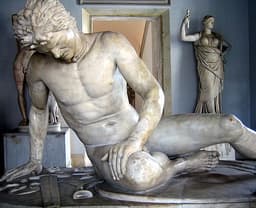
Marcellus of Gaul
General · Ancient
42.2Total
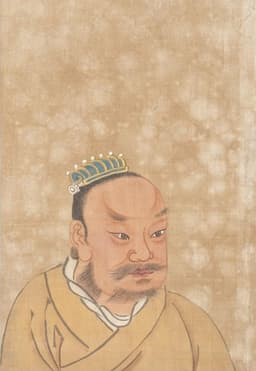
Xiang Yu
General · Ancient
52.3Total
Basic Information
Born
330
-232
Died
366
-202
Era
Ancient
Ancient
Nationality
Roman Empire
China
Occupation
General
General
Civilization
Western
Eastern
Score Comparison
Military (10%)
50.0
77.5
Political (20%)
35.0
35.0
Influence (20%)
44.0
61.0
Legacy (20%)
34.2
52.0
Leadership (15%)
57.1
30.0
Strategy (15%)
38.3
65.4
TOTAL
42.2
52.3
Marcellus of Gaul — Complete Timeline
360 AD
Appointed Magister OfficiorumPolitical Action
Marcellus was appointed Magister Officiorum (Master of Offices) under Emperor Julian. This high-ranking position made him responsible for the imperial court, administration, and intelligence services.
AppointmentRoman EmpireAdministration
Impact: national
366 AD
Brief Usurpation and ExecutionPolitical Action◆ Major
After the death of Procopius, Marcellus attempted to seize power by proclaiming himself emperor. His rebellion was short-lived; he was quickly defeated and executed by forces loyal to Emperor Valens.
UsurpationRoman EmpireExecution
tragic
Xiang Yu — Complete Timeline
207 BC
Battle of JuluWar◆ Major
Xiang Yu led a rebel army against the Qin dynasty at Julu. After ordering his troops to destroy their cooking vessels and boats, they defeated a larger Qin force, breaking the siege and establishing Xiang Yu as the leading rebel commander.
Qin rebellionBattleTurning point
Impact: regional
206 BC
Feast at Hong GatePolitical Action◆ Major
Xiang Yu hosted a banquet for Liu Bang at Hong Gate. During the feast, Xiang Yu's advisor Fan Zeng attempted to have Liu Bang assassinated, but Xiang Yu hesitated. Liu Bang escaped, and the rivalry between the two leaders intensified.
Political intrigueRivalryChu-Han Contention
Impact: regional
202 BC
Battle of GaixiaWar◆ Major
Liu Bang's Han forces surrounded Xiang Yu's army at Gaixia. After a night of psychological warfare with Han soldiers singing Chu songs, Xiang Yu's troops lost morale. Xiang Yu broke out but was cornered, leading to his suicide.
Chu-Han ContentionBattleDefeat
Impact: regionaltragic
Expert Analysis
Origins
**Xiang Yu (232–202 BCE)** was born into the Chu nobility during the late Warring States period. His family had served as generals for Chu, and he was raised with martial training and a strong sense of clan honor. He learned swordsmanship and military strategy from his uncle Xiang Liang, who also instilled in him a desire to restore Chu after the Qin conquest. Xiang Yu was known for his imposing physique and fierce temper, but also for his impatience with formal education—he famously abandoned calligraphy and swordsmanship in favor of learning the art of war.
**Marcellus of Gaul** (full name unknown, died c. 366 CE) was a Roman official of Gallic origin. Little is known of his early life, but he rose through the imperial bureaucracy to become Magister Officiorum (Master of Offices) under Emperor Julian (r. 361–363). This position made him responsible for the imperial secretariat, intelligence, and the scholae palatinae (palace guard). His background was administrative rather than military, and his career depended on patronage within the late Roman court.
Rise to Power
**Xiang Yu** rose to prominence in 209 BCE when he and his uncle Xiang Liang joined the rebellion against the Qin dynasty after the death of Qin Shi Huang. In 208 BCE, after Xiang Liang's death at the Battle of Dingtao, Xiang Yu took command of the Chu rebel forces. His decisive moment came at the **Battle of Julu** (207 BCE), where he led a coalition of rebel armies against a massive Qin force. To inspire his troops, he ordered them to destroy their cooking vessels and boats, leaving no option but victory. His army routed the Qin general Zhang Han, forcing his surrender. This victory made Xiang Yu the de facto leader of the anti-Qin coalition and earned him the title "Hegemon-King of Western Chu."
**Marcellus of Gaul** rose to the position of Magister Officiorum under Emperor Julian, likely due to his administrative competence and loyalty. After Julian's death in 363 CE during the Persian campaign, the army elected Jovian as emperor. Jovian died in 364 CE, and Valentinian I was proclaimed emperor. In 366 CE, a usurper named Procopius rebelled against Valentinian, but was quickly defeated and executed. Marcellus, who had been a supporter of Procopius or perhaps saw an opportunity, then declared himself emperor. His rebellion lacked significant support; he was soon captured and executed by Valentinian's forces. His rise to power was entirely dependent on the chaotic aftermath of Julian's death and lasted only a few weeks.
Leadership & Governance
**Xiang Yu** was a charismatic and fearsome battlefield commander who led from the front. His leadership score of 30.0 reflects his inability to translate military prowess into stable governance. He divided the conquered Qin empire into 18 kingdoms, alienating many allies by awarding territories based on personal favor rather than merit. He rejected the advice of his strategist Fan Zeng, notably at the Feast at Hong Gate (206 BCE), where he failed to kill his rival Liu Bang. His governance was based on fear and personal loyalty rather than institutions, leading to rebellions and defections.
**Marcellus of Gaul** had a brief and ineffectual rule. As Magister Officiorum, he was an administrator, not a ruler. His usurpation lacked a coherent political program or military strategy. He failed to secure support from key generals or provinces, and his forces were quickly dispersed by Valentinian's loyal troops. His governance score of 35.0 reflects his inability to consolidate power or implement any policies.
Triumph & Tragedy
**Xiang Yu**'s greatest triumph was the **Battle of Julu**, where he annihilated the main Qin army, effectively ending Qin rule. His military strategy score of 65.4 reflects his tactical brilliance in set-piece battles. However, his tragedy was the **Battle of Gaixia** (202 BCE), where Liu Bang's Han forces surrounded him. After a night of psychological warfare—Han soldiers sang Chu songs to demoralize Xiang Yu's troops—his army disintegrated. He fled with only 28 cavalry and, after a final stand, committed suicide at the age of 30. His failure to secure alliances and his brutal treatment of surrendered enemies (he once ordered the massacre of 200,000 Qin soldiers) turned potential supporters into enemies.
**Marcellus of Gaul**'s brief usurpation was his only major act. His triumph, if any, was that he managed to claim the title of emperor for a short time. His tragedy was his swift defeat and execution. He left no lasting achievements, and his rebellion was a footnote in the reign of Valentinian I.
Character & Destiny
**Xiang Yu** was proud, impulsive, and honor-bound. He valued personal courage over political calculation. His decision to spare Liu Bang at the Feast at Hong Gate, despite the advice of his advisor Fan Zeng, was driven by a sense of chivalry and disdain for underhanded tactics. This trait, while admirable in a warrior, proved fatal for a would-be emperor. His cruelty, such as the mass execution of Qin prisoners, earned him lasting enmity. His character directly led to his downfall: his inability to compromise or delegate caused allies to defect to Liu Bang.
**Marcellus of Gaul** was ambitious but lacked the military and political resources to succeed. His character is poorly documented, but his actions suggest overconfidence and poor judgment. He attempted a coup without building a sufficient power base, and his execution was a predictable outcome.
Legacy
**Xiang Yu** has a legacy score of 52.0. He is remembered in Chinese history as a tragic hero and a symbol of martial valor. His story is retold in the historical records of Sima Qian's "Records of the Grand Historian" and in operas and folklore. The idiom "besieged on all sides" (from the Battle of Gaixia) derives from his defeat. His military tactics influenced later Chinese generals, and his rivalry with Liu Bang is a classic tale of a warrior versus a strategist. However, his political failures allowed Liu Bang to found the Han dynasty, which lasted over 400 years.
**Marcellus of Gaul** has a legacy score of 34.2. He is virtually unknown outside of specialist studies of late Roman usurpers. His brief rebellion had no lasting impact on the Roman Empire, which continued under Valentinian I and his successors. His name appears only in a few ancient sources, such as Ammianus Marcellinus.
Conclusion
Xiang Yu had a far greater impact than Marcellus of Gaul. Xiang Yu's military score of 77.5 and strategy score of 65.4 significantly exceed Marcellus's 50.0 and 38.3. While Xiang Yu failed politically, his role in overthrowing the Qin dynasty and his enduring legend make him a figure of historical importance. Marcellus, with a total score of 42.2 versus Xiang Yu's 52.3, was a minor usurper in a declining empire. Xiang Yu's influence on Chinese culture and military history is substantial, whereas Marcellus is a footnote. The data supports Xiang Yu as the more significant figure, despite his ultimate failure.
Rankings
🥇
Xiang YuLeader
Mil: 77.5Pol: 35.0Inf: 61.0
52.3
🥈
Marcellus of Gaul
Mil: 50.0Pol: 35.0Inf: 44.0
42.2
+10.1 behind
How This Comparison Works
Algorithm
Each figure is scored on 6 dimensions (0—100 scale) based on structured historical data: Military (10%), Political (20%), Influence (20%), Legacy (20%), Leadership (15%), Strategy (15%). The weighted total produces the final ranking.
Data Sources
Scores are computed from structured sub-indicators in the database. Scale factors adjust for era (Ancient ×0.85, Modern ×1.0) and civilization size (Eastern ×1.05, Other ×0.80) to account for differences in population and military scale.
Maximum 3 Figures
Comparisons are limited to 2—3 figures to ensure readability and statistical meaningfulness.
Error Margins
±5 points per dimension — Sub-scores are derived from historical records with inherent uncertainty. Two figures within 5 points on a dimension should be considered roughly equivalent in that area.
Total Score Accuracy
±3 points overall — The weighted combination of 6 dimensions produces a total score with approximately ±3 points of uncertainty. Differences of less than 3 points are not statistically significant— the figures are effectively tied.
Known Limitations
- Historical records are incomplete and uneven across civilizations
- Figures from oral-tradition societies may be underrepresented
- Occupation labels can misclassify multi-role figures
- Scores measure capability and impact, not moral character
- Quantitative scoring is a comparison tool, not absolute truth
Capability Radar
Military (10%) — Battles & Warfare
Battles
10
85
Win Rate
10
75
Expansion
5
80
Political (20%) — Governance & Reform
Reform
5
10
Diplomacy
10
30
Economy
5
15
Influence (20%) — Cultural & Global Reach
Cultural
5
70
Global
5
55
Legacy (20%) — Historical Impact
Historical
10
75
Longevity
5
70
Leadership (15%) — Power & Stability
Tenure
10
40
Stability
5
20
Strategy (15%) — Tactics & Innovation
Strategy
15
70
Tactics
15
90
Reform
5
20
Similar Comparisons
Comments & Discussion
No comments yet. Be the first to share your thoughts!