Loading...
William Pitt the Elder vs Yuan Shikai
William Pitt the Elder leads by 10.2 pts · 2 figures compared
…
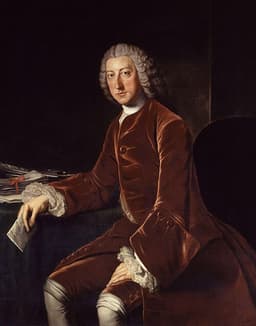
William Pitt the Elder
Politician · Modern
70.2Total
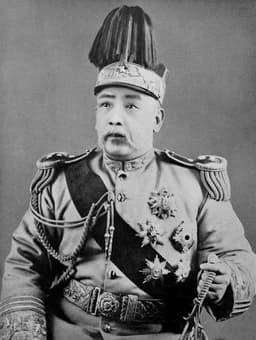
Yuan Shikai
Politician · Modern
60.0Total
Basic Information
Born
1708
1859
Died
1778
1916
Era
Modern
Modern
Nationality
United Kingdom
China
Occupation
Politician
Politician
Civilization
Western
Eastern
Score Comparison
Military (10%)
67.3
45.0
Political (20%)
72.0
72.0
Influence (20%)
68.0
57.2
Legacy (20%)
68.0
54.0
Leadership (15%)
80.0
72.0
Strategy (15%)
67.2
61.2
TOTAL
70.2
60.0
William Pitt the Elder — Complete Timeline
1756 AD
Led Britain in Seven Years' WarWar
William Pitt the Elder served as Secretary of State from 1756 to 1761, directing British strategy in the Seven Years' War. His policies focused on naval supremacy and colonial campaigns, leading to victories in Canada, India, and the Caribbean.
Seven Years' WarColonial EmpireMilitary Strategy
Impact: global
1759 AD
Conquest of QuebecWar◆ Major
Under Pitt's direction, British forces under General James Wolfe captured Quebec City on September 13, 1759, after the Battle of the Plains of Abraham. This victory secured British control over Canada and marked a turning point in the Seven Years' War.
Seven Years' WarCanadaMilitary Victory
Impact: global
1766 AD
Became Prime MinisterPolitical Action
Pitt was appointed Prime Minister on July 30, 1766, forming a government. However, his health declined and he was elevated to the House of Lords as Earl of Chatham, which weakened his political base. His second ministry was less effective than his wartime leadership.
Prime MinisterGovernment18th Century
Impact: national
Opposed American TaxationPolitical Action◆ Major
Pitt argued for the repeal of the Stamp Act in 1766, asserting that Parliament had no right to tax the American colonies without representation. His speech in the Commons helped secure repeal, though he maintained Parliament's authority to legislate for the colonies.
American ColoniesTaxationParliamentary Debate
Impact: global
Yuan Shikai — Complete Timeline
1901 AD
Command of the Beiyang ArmyReform◆ Major
Yuan Shikai took command of the Beiyang Army, the most modern military force in late Qing China. He expanded and trained the army, which became the basis for his political power and later dominated Chinese politics.
Military reformBeiyang Army
Impact: national
1912 AD
Appointed First President of the Republic of ChinaPolitical Action
Yuan Shikai became the first president of the Republic of China after negotiating the abdication of the Qing emperor. He used his control of the Beiyang Army to pressure the revolutionary government into accepting his leadership.
PresidencyRepublic of China
Impact: national
1915 AD
Declaration of the Empire of ChinaPolitical Action◆ Major
Yuan Shikai declared himself emperor of the Empire of China, attempting to restore the monarchy. This move sparked widespread opposition from provincial leaders and foreign powers, leading to the collapse of his regime.
Monarchy restorationPolitical crisis
Impact: nationaldestructive
Signing of the Twenty-One DemandsPolitical Action◆ Major
Yuan Shikai accepted most of Japan's Twenty-One Demands, which expanded Japanese influence in China. The agreement granted Japan economic rights in Manchuria and Shandong, and was seen as a national humiliation.
DiplomacyJapanese imperialism
Impact: globaltragic
1916 AD
Death and Collapse of the Beiyang GovernmentPolitical Action◆ Major
Yuan Shikai died of uremia, leaving no clear successor. His death led to the fragmentation of the Beiyang Army into warlord factions, plunging China into a period of civil war and political instability.
Warlord eraPolitical fragmentation
Impact: nationaltragic
Expert Analysis
Yuan Shikai vs William Pitt the Elder
# The Commoner and the Strongman: William Pitt and Yuan Shikai
In the winter of 1915, Yuan Shikai sat in the Forbidden City, preparing to declare himself emperor of a new Chinese dynasty. Half a world away and 150 years earlier, William Pitt the Elder stood before the British Parliament, thundering against the taxation of American colonists whom he called "fellow subjects." One man sought to resurrect an ancient monarchy; the other defended the rights of distant subjects against his own king. Both were architects of national power, yet their paths could not have diverged more sharply. What drove these two statesmen—one hailed as the "Great Commoner," the other remembered as a would-be emperor—to such different fates?
Origins
William Pitt was born in 1708 into a political family, the grandson of a governor of Madras. His grandfather had amassed a fortune in India, but Pitt's father died young, leaving the family with modest means. Pitt attended Eton and Oxford, though ill health forced him to leave university without a degree. He entered Parliament in 1735, a young man with a stutter and a burning ambition. His era was one of global imperial competition, when Britain and France fought for supremacy across continents. Pitt grew up watching Britain stumble through the War of the Austrian Succession, and he developed a conviction that strong leadership and naval power could transform the nation's fortunes.
Yuan Shikai was born in 1859 into a different world entirely. His family were minor gentry in Henan province, but China was crumbling. The Opium Wars had humiliated the Qing dynasty, and the Taiping Rebellion had devastated the countryside. Yuan failed the imperial civil service examinations twice—a humiliation that would shape his pragmatic, results-driven worldview. Instead of scholarship, he turned to the military, joining the Beiyang Army in Korea. His era was one of chaos and foreign predation, when China seemed to be disintegrating under the weight of internal rebellion and external pressure. Where Pitt saw opportunity in conflict, Yuan saw survival.
Rise to Power
Pitt's ascent was dramatic and improbable. He entered Parliament as a critic of the government, attacking corruption and incompetence with such ferocity that King George II despised him. Yet Pitt's eloquence and popularity with the public—the "common people" who packed the galleries—made him indispensable. In 1756, with the Seven Years' War going badly, the king had no choice but to appoint Pitt as Secretary of State. Pitt accepted on his own terms: he would direct strategy, not merely administer. He had waited two decades for this moment.
Yuan Shikai's rise was more methodical. In 1901, after the Boxer Rebellion had exposed Qing weakness, the Empress Dowager Cixi gave Yuan command of the Beiyang Army, the most modern military force in China. Yuan had already proven his loyalty during the Boxer crisis, and he now built the Beiyang into a personal power base. He trained officers who owed allegiance to him, not the dynasty. By 1911, when revolution erupted, Yuan was the only man who could command both the Qing court and the republican rebels. In 1912, he negotiated the abdication of the child emperor Puyi and became the first president of the Republic of China—a position he secured through cunning, not popular acclaim.
Leadership & Governance
Pitt governed through inspiration. He did not micromanage battles; he chose the right generals—like James Wolfe and Robert Clive—and gave them resources and freedom. His strategy was simple but devastating: use the Royal Navy to blockade France, attack French colonies in North America and India, and subsidize European allies like Prussia to tie down French armies on the continent. In 1759, the "Year of Victories," British forces captured Quebec, while the Royal Navy destroyed the French fleet at Quiberon Bay. Pitt understood that war was about will and resources, not just tactics. He also understood limits: after the war, he opposed taxing the American colonies directly, arguing that Parliament had no such right over men who had no representation.
Yuan Shikai governed through manipulation. He balanced factions within the Beiyang Army, played republicans against monarchists, and used secret police to suppress dissent. His military reforms were genuine: he professionalized the army, introduced modern training, and created a Western-style officer corps. But his political vision was narrow. In 1915, he accepted most of Japan's Twenty-One Demands, granting Japan extensive economic and territorial privileges in exchange for recognition of his regime. The deal bought short-term stability at the cost of long-term humiliation. Then, in a disastrous miscalculation, Yuan declared himself emperor of the "Empire of China" in 1915, believing that only a strong monarchy could unify the fractured nation.
Triumph & Tragedy
Pitt's triumph was the Seven Years' War. When the Treaty of Paris was signed in 1763, Britain had become the world's dominant colonial power, controlling Canada, India, and the Caribbean. Pitt had saved his country from defeat and elevated it to an empire. Yet his tragedy came later: his health deteriorated, and when he finally became Prime Minister in 1766, his mind was failing. He withdrew into depression, unable to govern effectively. His greatest legacy—the British Empire—was built on principles of liberty that he himself could not fully sustain.
Yuan Shikai's triumph was his rise itself. From a failed examination candidate, he became the most powerful man in China. His tragedy was his fall. The declaration of empire in 1915 sparked immediate rebellion across China. Provinces declared independence, and his own Beiyang generals turned against him. In March 1916, he was forced to cancel the monarchy. He died of uremia in June 1916, a broken man. His death left the Beiyang Army leaderless, and China descended into the Warlord Era—a decade of chaos that would kill millions.
Character & Destiny
Pitt was a man of principle and passion. He believed in parliamentary liberty, hated corruption, and trusted the common people. His stutter, which he overcame through sheer willpower, symbolized his struggle against an establishment that dismissed him. He was vain and prone to illness, but he possessed a moral clarity that allowed him to see the American colonists as fellow Britons, not subjects to be taxed. His character made him a great war leader but a poor peacetime administrator—he could inspire but not manage.
Yuan Shikai was a man of pragmatism and ambition. He believed in power, not principles. He saw the world as a game of survival, where loyalty was a transaction and morality a luxury. His failure of the civil service exams had taught him that traditional virtue was useless; only force and cunning mattered. This worldview made him an effective military reformer but a disastrous national leader. He could build an army but not a nation, because he could not imagine a China held together by anything other than fear.
Legacy
Pitt is remembered as the "Great Commoner" who saved Britain and built an empire. His statue stands in Parliament Square, and his name is synonymous with wartime leadership. Yet his legacy is complicated: the empire he built would eventually collapse, and his opposition to American taxation could not prevent the Revolution that followed. Still, he is honored as a statesman who understood that power must be tempered by principle.
Yuan Shikai is remembered as a villain in Chinese history. The Communist Party and the Nationalists both condemned him as a traitor who sold out China to Japan and tried to restore the monarchy. His name is synonymous with warlordism and national humiliation. Yet this judgment is too simple. Yuan modernized China's army, preserved the state through the chaos of revolution, and might have succeeded if he had not overreached. His tragedy was that he could not imagine a modern China that was not a monarchy—and he died before anyone else could imagine a better one.
Conclusion
The contrast between Pitt and Yuan is not merely one of East versus West. It is a contrast of vision. Pitt believed that power should serve liberty; Yuan believed that liberty should serve power. Pitt built an empire by inspiring people to fight for a cause; Yuan built an army by binding people to his will. One died revered, the other reviled. Yet both were men of their time, shaped by the crises they faced. Pitt's Britain was rising; Yuan's China was falling. In the end, the difference between triumph and tragedy may be less about character than about the age into which one is born—and whether one can imagine a future beyond the ruins of the past.
Rankings
🥇
William Pitt the ElderLeader
Mil: 67.3Pol: 72.0Inf: 68.0
70.2
🥈
Yuan Shikai
Mil: 45.0Pol: 72.0Inf: 57.2
60.0
+10.2 behind
How This Comparison Works
Algorithm
Each figure is scored on 6 dimensions (0—100 scale) based on structured historical data: Military (10%), Political (20%), Influence (20%), Legacy (20%), Leadership (15%), Strategy (15%). The weighted total produces the final ranking.
Data Sources
Scores are computed from structured sub-indicators in the database. Scale factors adjust for era (Ancient ×0.85, Modern ×1.0) and civilization size (Eastern ×1.05, Other ×0.80) to account for differences in population and military scale.
Maximum 3 Figures
Comparisons are limited to 2—3 figures to ensure readability and statistical meaningfulness.
Error Margins
±5 points per dimension — Sub-scores are derived from historical records with inherent uncertainty. Two figures within 5 points on a dimension should be considered roughly equivalent in that area.
Total Score Accuracy
±3 points overall — The weighted combination of 6 dimensions produces a total score with approximately ±3 points of uncertainty. Differences of less than 3 points are not statistically significant— the figures are effectively tied.
Known Limitations
- Historical records are incomplete and uneven across civilizations
- Figures from oral-tradition societies may be underrepresented
- Occupation labels can misclassify multi-role figures
- Scores measure capability and impact, not moral character
- Quantitative scoring is a comparison tool, not absolute truth
Capability Radar
Military (10%) — Battles & Warfare
Battles
60
45
Win Rate
75
55
Expansion
80
50
Political (20%) — Governance & Reform
Reform
75
55
Diplomacy
80
70
Economy
70
50
Influence (20%) — Cultural & Global Reach
Cultural
60
40
Global
75
35
Legacy (20%) — Historical Impact
Historical
80
65
Longevity
70
40
Leadership (15%) — Power & Stability
Tenure
70
60
Stability
65
30
Strategy (15%) — Tactics & Innovation
Strategy
85
65
Tactics
65
60
Reform
70
80
Similar Comparisons
Comments & Discussion
ChinaHand6/16/2026
Pitt the Elder was a war prime minister who actually won, while Yuan was a self-declared emperor who couldn't even hold onto the throne for three months. Pitt’s 1759 “Year of Victories” (Quebec, Minden, Lagos, Quiberon Bay) reshaped global power. Yuan’s “Hongxian Emperor” fiasco? A 83-day joke. One man used sea power to build an empire; the other used bribery to build a faux dynasty. Pitt died in office a hero; Yuan died in disgrace, a footnote. That’s the difference between strategy and vanity.
复古考据迷6/16/2026
拿匹特和袁世凯比,看似都是战时强人,实际差着一个银河系。匹特七年战争期间一手打造的“海上帝国”思维,把法国挤出北美和印度,奠定了不列颠百年霸权。而老袁呢?小站练兵练出个北洋军阀体系,签《二十一条》换日本人点头称帝,最后连亲信段祺瑞都反他。一个开疆拓土是真战略,一个复辟称帝是纯投机,历史谁高谁低,一目了然。
DataSkeptic6/16/2026
Let’s talk numbers. Pitt’s administration took Britain’s national debt from £72M to £132M (1748-1763) but won control of India, Canada, and the Caribbean sugar islands. Yuan’s regime spent $30M+ on his coronation ceremony alone (1915) while China’s external debt ballooned to ¥2.2B. Pitt’s spending built an empire; Yuan’s spending bought a crown he couldn’t keep. Return on investment? Pitt’s taxpayers got global hegemony; Yuan’s taxpayers got a civil war. Call it strategic bankruptcy versus perso
帝国官僚遗少6/16/2026
说白了,匹特和袁大头根本不是一个赛道的。匹特是议会制里杀出来的政治动物,扛着“全民偶像”的旗号打压贵族势力,把英帝国推向巅峰。袁则是旧帝国废墟上的投机军阀,玩的是“废科举、办新军、修铁路”那一套表面现代化,骨子里还是权术和血盟。匹特敢跟国王掀桌子为殖民地争权,袁只会跪舔列强换皇位。一个代表上升期的帝国精英,一个代表衰败期的官场老油条,没什么好比的。