Loading...
This comparison has not been analyzed yet.
One-time AI generation (~1 minute). Scores and timeline are already available below.
William Massey vs William Pitt the Elder
William Pitt the Elder leads by 14.9 pts · 2 figures compared
…
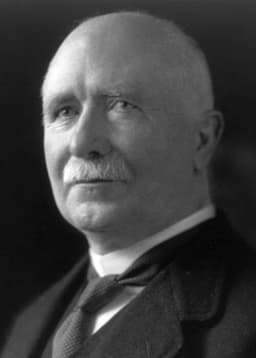
William Massey
Politician · Modern
55.3Total
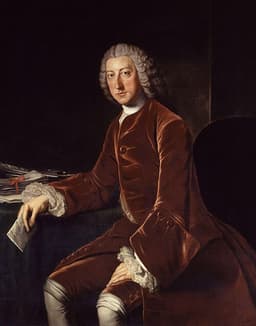
William Pitt the Elder
Politician · Modern
70.2Total
Basic Information
Born
1856
1708
Died
1925
1778
Era
Modern
Modern
Nationality
New Zealand
United Kingdom
Occupation
Politician
Politician
Civilization
Western
Western
Score Comparison
Military (10%)
49.6
67.3
Political (20%)
60.0
72.0
Influence (20%)
52.5
68.0
Legacy (20%)
45.0
68.0
Leadership (15%)
85.0
80.0
Strategy (15%)
41.9
67.2
TOTAL
55.3
70.2
William Massey — Complete Timeline
1912 AD
Became Prime Minister of New ZealandPolitical Action◆ Major
Massey became Prime Minister on 10 July 1912, leading the Reform Party. He succeeded Joseph Ward and began a 13-year tenure that shaped New Zealand's early 20th-century politics.
Prime MinisterReform Party
Impact: national
1914 AD
Led New Zealand in World War IWar◆ Major
Massey led New Zealand through World War I, committing troops to the Allied cause. He supported the British Empire's war effort and oversaw the mobilization of New Zealand's military and economy.
World War IMilitary Mobilization
Impact: global
1919 AD
Signed the Treaty of VersaillesPolitical Action◆ Major
Massey attended the Paris Peace Conference and signed the Treaty of Versailles on behalf of New Zealand. He secured New Zealand's membership in the League of Nations, marking a step in its international recognition.
Treaty of VersaillesLeague of Nations
Impact: globalconstructive
1925 AD
Died in OfficePolitical Action◆ Major
Massey died in office on 10 May 1925, becoming the first New Zealand prime minister to die while serving. His death marked the end of the Reform Party's long dominance.
Death in OfficeEnd of Era
Impact: nationaltragic
William Pitt the Elder — Complete Timeline
1756 AD
Led Britain in Seven Years' WarWar
William Pitt the Elder served as Secretary of State from 1756 to 1761, directing British strategy in the Seven Years' War. His policies focused on naval supremacy and colonial campaigns, leading to victories in Canada, India, and the Caribbean.
Seven Years' WarColonial EmpireMilitary Strategy
Impact: global
1759 AD
Conquest of QuebecWar◆ Major
Under Pitt's direction, British forces under General James Wolfe captured Quebec City on September 13, 1759, after the Battle of the Plains of Abraham. This victory secured British control over Canada and marked a turning point in the Seven Years' War.
Seven Years' WarCanadaMilitary Victory
Impact: global
1766 AD
Became Prime MinisterPolitical Action
Pitt was appointed Prime Minister on July 30, 1766, forming a government. However, his health declined and he was elevated to the House of Lords as Earl of Chatham, which weakened his political base. His second ministry was less effective than his wartime leadership.
Prime MinisterGovernment18th Century
Impact: national
Opposed American TaxationPolitical Action◆ Major
Pitt argued for the repeal of the Stamp Act in 1766, asserting that Parliament had no right to tax the American colonies without representation. His speech in the Commons helped secure repeal, though he maintained Parliament's authority to legislate for the colonies.
American ColoniesTaxationParliamentary Debate
Impact: global
This comparison has not been analyzed yet.
One-time AI generation (~1 minute). Scores and timeline are already available below.
Rankings
🥇
William Pitt the ElderLeader
Mil: 67.3Pol: 72.0Inf: 68.0
70.2
🥈
William Massey
Mil: 49.6Pol: 60.0Inf: 52.5
55.3
+14.9 behind
How This Comparison Works
Algorithm
Each figure is scored on 6 dimensions (0—100 scale) based on structured historical data: Military (10%), Political (20%), Influence (20%), Legacy (20%), Leadership (15%), Strategy (15%). The weighted total produces the final ranking.
Data Sources
Scores are computed from structured sub-indicators in the database. Scale factors adjust for era (Ancient ×0.85, Modern ×1.0) and civilization size (Eastern ×1.05, Other ×0.80) to account for differences in population and military scale.
Maximum 3 Figures
Comparisons are limited to 2—3 figures to ensure readability and statistical meaningfulness.
Error Margins
±5 points per dimension — Sub-scores are derived from historical records with inherent uncertainty. Two figures within 5 points on a dimension should be considered roughly equivalent in that area.
Total Score Accuracy
±3 points overall — The weighted combination of 6 dimensions produces a total score with approximately ±3 points of uncertainty. Differences of less than 3 points are not statistically significant— the figures are effectively tied.
Known Limitations
- Historical records are incomplete and uneven across civilizations
- Figures from oral-tradition societies may be underrepresented
- Occupation labels can misclassify multi-role figures
- Scores measure capability and impact, not moral character
- Quantitative scoring is a comparison tool, not absolute truth
Capability Radar
Military (10%) — Battles & Warfare
Battles
27
60
Win Rate
33
75
Expansion
36
80
Political (20%) — Governance & Reform
Reform
55
75
Diplomacy
60
80
Economy
50
70
Influence (20%) — Cultural & Global Reach
Cultural
30
60
Global
25
75
Legacy (20%) — Historical Impact
Historical
40
80
Longevity
30
70
Leadership (15%) — Power & Stability
Tenure
65
70
Stability
55
65
Strategy (15%) — Tactics & Innovation
Strategy
37
85
Tactics
38
65
Reform
45
70
Similar Comparisons
Comments & Discussion
No comments yet. Be the first to share your thoughts!