Loading...
Alcide De Gasperi vs William Pitt the Elder
William Pitt the Elder leads by 14.7 pts · 2 figures compared
…
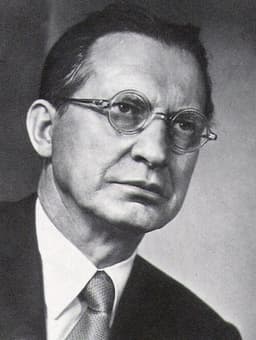
Alcide De Gasperi
Politician · Modern
55.5Total
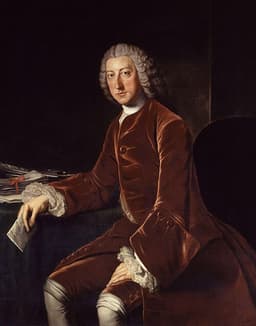
William Pitt the Elder
Politician · Modern
70.2Total
Basic Information
Born
1881
1708
Died
1954
1778
Era
Modern
Modern
Nationality
Italy
United Kingdom
Occupation
Politician
Politician
Civilization
Western
Western
Score Comparison
Military (10%)
12.4
67.3
Political (20%)
85.0
72.0
Influence (20%)
65.0
68.0
Legacy (20%)
40.0
68.0
Leadership (15%)
80.7
80.0
Strategy (15%)
31.5
67.2
TOTAL
55.5
70.2
Alcide De Gasperi — Complete Timeline
1946 AD
First Prime Minister of the Italian RepublicPolitical Action
De Gasperi became the first prime minister of the newly proclaimed Italian Republic in December 1945. He led a coalition government that included Christian Democrats, Socialists, and Communists. His government oversaw the transition from monarchy to republic.
RepublicGovernmentTransition
Impact: nationalconstructive
1947 AD
Peace Treaty of ParisPolitical Action◆ Major
De Gasperi signed the Treaty of Paris, which formally ended World War II for Italy. Italy lost its colonies, ceded territory to Yugoslavia and France, and paid reparations. The treaty was unpopular but allowed Italy to regain sovereignty and join the Western alliance.
TreatyWorld War IIDiplomacy
Impact: global
Expulsion of Communists from GovernmentPolitical Action
De Gasperi expelled the Italian Communist Party and Socialist Party from his coalition government in May 1947. This move aligned Italy with the United States and the Marshall Plan, deepening the Cold War divide. It solidified Christian Democratic dominance for decades.
Cold WarMarshall PlanCoalition
Impact: global
1949 AD
Italian Membership in NATOPolitical Action◆ Major
De Gasperi led Italy into the North Atlantic Treaty Organization (NATO) as a founding member. This decision anchored Italy in the Western bloc during the Cold War and secured U.S. military and economic support. It was opposed by the Communist Party.
NATOCold WarAlliance
Impact: globalconstructive
William Pitt the Elder — Complete Timeline
1756 AD
Led Britain in Seven Years' WarWar
William Pitt the Elder served as Secretary of State from 1756 to 1761, directing British strategy in the Seven Years' War. His policies focused on naval supremacy and colonial campaigns, leading to victories in Canada, India, and the Caribbean.
Seven Years' WarColonial EmpireMilitary Strategy
Impact: global
1759 AD
Conquest of QuebecWar◆ Major
Under Pitt's direction, British forces under General James Wolfe captured Quebec City on September 13, 1759, after the Battle of the Plains of Abraham. This victory secured British control over Canada and marked a turning point in the Seven Years' War.
Seven Years' WarCanadaMilitary Victory
Impact: global
1766 AD
Became Prime MinisterPolitical Action
Pitt was appointed Prime Minister on July 30, 1766, forming a government. However, his health declined and he was elevated to the House of Lords as Earl of Chatham, which weakened his political base. His second ministry was less effective than his wartime leadership.
Prime MinisterGovernment18th Century
Impact: national
Opposed American TaxationPolitical Action◆ Major
Pitt argued for the repeal of the Stamp Act in 1766, asserting that Parliament had no right to tax the American colonies without representation. His speech in the Commons helped secure repeal, though he maintained Parliament's authority to legislate for the colonies.
American ColoniesTaxationParliamentary Debate
Impact: global
Expert Analysis
Alcide De Gasperi vs William Pitt the Elder
# The Architect of Victory and the Builder of Peace
In the winter of 1766, William Pitt the Elder rose in the House of Commons to defend the rights of American colonists against taxation without representation, his voice thundering across the chamber with the same force that had directed British fleets to conquer Quebec seven years earlier. Across the Atlantic, nearly two centuries later, another statesman sat in a modest Roman apartment, drafting the constitutional framework for a republic that would rise from the ashes of fascism. One man commanded empires at war; the other pieced together a nation from rubble. Both were called to lead in moments of existential crisis, yet their paths diverged as sharply as the eras that shaped them.
Origins
William Pitt was born in 1708 into a political family with ambitions that outstripped its wealth. His grandfather had been governor of Madras, but the Pitt fortune was neither vast nor ancient. Educated at Eton and Oxford, young William suffered from gout and bouts of melancholia that would shadow him throughout life. The England of his youth was a rising commercial power, but one still finding its footing against France on the global stage. Pitt absorbed the classical ideals of Cicero and the Whig conviction that Parliament, not the crown, should guide the nation’s destiny.
Alcide De Gasperi entered the world in 1881 in the Trentino region, then part of the Austro-Hungarian Empire. His father was a tax collector of modest means, and the family spoke Italian in a land ruled by Vienna. De Gasperi grew up bilingual, navigating two cultures—a skill that would prove essential. The Italy of his youth was a young kingdom, barely unified, struggling with poverty and regional divisions. He studied literature and philosophy at the University of Vienna, absorbing the Catholic social teachings of Pope Leo XIII, which emphasized dignity, community, and cautious reform.
Rise to Power
Pitt’s ascent was theatrical and confrontational. He entered Parliament in 1735 as an outsider, attacking the government of Robert Walpole with such ferocity that he was dismissed from the army for his speeches. For years, he was denied high office by King George II, who distrusted his fiery rhetoric and independence. Yet Pitt’s moment came with the Seven Years’ War in 1756. Britain was losing. The king had no choice but to summon the man who had correctly predicted every disaster. Pitt became Secretary of State, effectively running the war effort, though he was never formally prime minister until a decade later.
De Gasperi’s rise was slower, forged in the crucible of oppression. He served in the Austrian parliament before World War I, advocating for Italian unification. After the war, he helped found the Italian People’s Party, a Christian democratic movement. But Mussolini’s rise forced him into hiding. Arrested in 1927, De Gasperi spent four years in prison and then lived in obscurity, working as a librarian in the Vatican. When the fascist regime collapsed in 1943, he emerged not as a fiery revolutionary, but as a patient organizer, rebuilding networks of trust among anti-fascist factions. In December 1945, he became prime minister of a shattered nation.
Leadership & Governance
Pitt governed through vision and will. He understood grand strategy—that Britain could not fight France everywhere, but must concentrate on North America and the seas. He appointed young commanders like James Wolfe and Robert Clive, trusting them with unprecedented autonomy. He raised funds through taxes and loans, mobilized the navy, and supplied Prussia with subsidies to tie down French armies in Europe. His method was not administrative detail but inspirational direction. When news of Quebec’s fall reached London in 1759, the church bells rang for days. Pitt had turned a defensive war into an imperial triumph.
De Gasperi governed through coalition and compromise. Italy in 1945 was starving, divided, and humiliated. Communists and Socialists held immense popular support, while monarchists and former fascists lurked on the right. De Gasperi’s genius lay in timing and patience. He accepted the harsh Treaty of Paris in 1947, losing colonies and territory, because he knew Italy had no leverage. Then, in May 1947, he expelled the Communists from his government—a decisive break that ended the postwar unity and aligned Italy firmly with the West. He led Italy into NATO in 1949, securing American aid and protection. His political score of 88.0 reflects this masterful balancing act.
Triumph & Tragedy
Pitt’s greatest triumph was the conquest of Canada in 1759, a victory that established British dominance in North America. But his tragedy was personal and political. He resigned in 1761 over policy disagreements, and when he returned as prime minister in 1766, his health had collapsed. Gout, mania, and opium dependency rendered him incapable of leading. He spent his final years in the House of Lords, a ghost of the Great Commoner, warning against the very American rebellion his earlier policies had helped provoke.
De Gasperi’s triumph was Italy’s return to the community of nations. By 1953, Italy was a founding member of the European Coal and Steel Community, a NATO ally, and a stable democracy. Yet his tragedy was the Cold War’s hardening. The expulsion of the left in 1947 created a political fault line that would divide Italy for decades. De Gasperi believed in gradual social reform, but the bipolar world forced him into stark choices that alienated many workers and intellectuals. He died in 1954, just as Italy entered its economic miracle, but also its long season of political instability.
Character & Destiny
Pitt was a man of fire—brilliant, arrogant, and fragile. He believed in the supremacy of Parliament and the destiny of Britain, but his personality could not sustain power. He needed crisis to function; peace eroded him. His famous declaration, “I know that I can save this country, and that no one else can,” was not boast but diagnosis. De Gasperi was a man of ice—calm, methodical, and resilient. A devout Catholic who once said, “Politics is the art of the possible,” he understood that rebuilding required patience. His personality was suited to the long, slow work of construction, not the flash of conquest.
Legacy
Pitt’s legacy is the British Empire at its zenith. He is remembered as the architect of victory in the Seven Years’ War, the man who made Britain a global power. Yet his opposition to taxing the American colonies suggests a deeper wisdom—he saw that empire required consent, not coercion. His political score of 80.0 reflects both his achievements and his limitations. De Gasperi is remembered as the founding father of the Italian Republic, a statesman who chose democracy over revolution, Atlanticism over neutrality. His legacy is Italy’s place in Europe and NATO, but also the unfinished work of national reconciliation.
Conclusion
Pitt and De Gasperi never met, but they shared a truth that echoes across centuries: leadership is not about power, but about purpose. Pitt’s purpose was victory; De Gasperi’s was peace. One expanded an empire, the other rebuilt a nation. Both understood that history does not forgive hesitation. In the end, what separates them is not their scores or their dates, but the nature of their challenges. Pitt faced an enemy he could defeat; De Gasperi faced ruins he could only slowly repair. The Great Commoner and the patient librarian—each, in his own way, gave his people a future worth living in.
Rankings
🥇
William Pitt the ElderLeader
Mil: 67.3Pol: 72.0Inf: 68.0
70.2
🥈
Alcide De Gasperi
Mil: 12.4Pol: 85.0Inf: 65.0
55.5
+14.7 behind
How This Comparison Works
Algorithm
Each figure is scored on 6 dimensions (0—100 scale) based on structured historical data: Military (10%), Political (20%), Influence (20%), Legacy (20%), Leadership (15%), Strategy (15%). The weighted total produces the final ranking.
Data Sources
Scores are computed from structured sub-indicators in the database. Scale factors adjust for era (Ancient ×0.85, Modern ×1.0) and civilization size (Eastern ×1.05, Other ×0.80) to account for differences in population and military scale.
Maximum 3 Figures
Comparisons are limited to 2—3 figures to ensure readability and statistical meaningfulness.
Error Margins
±5 points per dimension — Sub-scores are derived from historical records with inherent uncertainty. Two figures within 5 points on a dimension should be considered roughly equivalent in that area.
Total Score Accuracy
±3 points overall — The weighted combination of 6 dimensions produces a total score with approximately ±3 points of uncertainty. Differences of less than 3 points are not statistically significant— the figures are effectively tied.
Known Limitations
- Historical records are incomplete and uneven across civilizations
- Figures from oral-tradition societies may be underrepresented
- Occupation labels can misclassify multi-role figures
- Scores measure capability and impact, not moral character
- Quantitative scoring is a comparison tool, not absolute truth
Capability Radar
Military (10%) — Battles & Warfare
Battles
11
60
Win Rate
15
75
Expansion
17
80
Political (20%) — Governance & Reform
Reform
85
75
Diplomacy
80
80
Economy
70
70
Influence (20%) — Cultural & Global Reach
Cultural
60
60
Global
65
75
Legacy (20%) — Historical Impact
Historical
70
80
Longevity
65
70
Leadership (15%) — Power & Stability
Tenure
75
70
Stability
75
65
Strategy (15%) — Tactics & Innovation
Strategy
21
85
Tactics
23
65
Reform
27
70
Similar Comparisons
Comments & Discussion
灰烬建筑师6/16/2026
德加斯佩里才是真正的英雄。皮特只是站在英国不断扩张的国力上跳舞——七年战争前英国海军规模已是法国的两倍。而德加斯佩里面对的是1945年意大利:工业产能仅为战前30%,30%人口营养不良。他不仅重建了国家,还设计出与天主教民主、自由市场兼容的体系。皮特可以用舰队轰开魁北克的城墙,但德加斯佩里必须在废墟上搭建一个让人们愿意活下去的框架。这才叫治国。
语法爱国者6/16/2026
这场对比是对古典政治哲学的扭曲。皮特是西塞罗式的演说家——他用拉丁文词汇打磨议会的立场,把美国的税赋问题变成道德辩论。德加斯佩里?他只是奥匈帝国边缘地带的公务员,在维也纳学习官僚技术。他制定的宪法第7条关于政教关系的妥协,不过是政治算术,而非道德哲学。皮特的伟大在于他敢于说不代表权就不纳税,用古典共和主义对抗帝国膨胀。德加斯佩里只是个技术官僚,没有灵魂的契约人。
Historian5376/16/2026
Here's what nobody says: Pitt was a brilliant imperialist, but his American policy was a disaster. He defended colonists' rights in 1766, then backed the Coercive Acts in 1774 that crushed them. Flip-flopper. De Gasperi was consistent—he rejected both fascism and communism because he actually believed in liberal democracy. He kept Italy in NATO and Europe, not by bombast, but by sheer stubborn negotiation. Pitt had gout and grand speeches; De Gasperi had tuberculosis and patience. Give me the pa
Historian8126/16/2026
Pitt the Elder didn't just win wars—he rewired the British Empire's soul. His 1759 "Year of Victories" speech wasn't bluster; he actually forced the Admiralty to stop bickering and coordinate. De Gasperi? A desk-jockey who cut deals with communists. Pitt understood power was about momentum—you strike hard and never apologize. Italy needed a Caesar, not a go-between who balanced budgets while his country rotted. Give me the man who seized Quebec with Wolfe over the one who signed the Treaty of Pa
Historian4816/16/2026
Let's talk numbers. Pitt's "masterful" 1759 campaigns? Britain spent £14 million on war that year—triple its peacetime budget—and national debt ballooned to £133 million. De Gasperi held Italy together with Marshall Plan aid of about $1.5 billion total, but he also slashed inflation from 85% to single digits by 1950. Pitt was a spender who left his successor with a debt crisis; De Gasperi was a fiscal surgeon who stabilized a collapsed economy. Who actually rebuilt something sustainable?