Loading...
Cleisthenes vs William Pitt the Elder
Cleisthenes leads by 8.1 pts · 2 figures compared
…
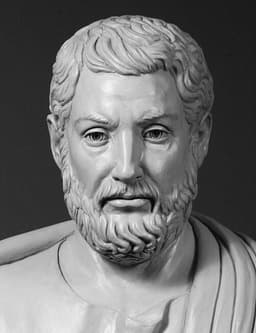
Cleisthenes
Politician · Ancient
78.3Total
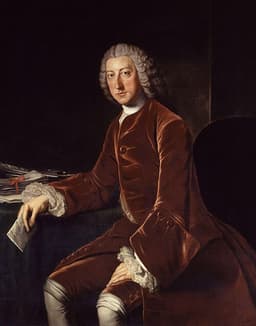
William Pitt the Elder
Politician · Modern
70.2Total
Basic Information
Born
-570
1708
Died
-508
1778
Era
Ancient
Modern
Nationality
Greece
United Kingdom
Occupation
Politician
Politician
Civilization
Western
Western
Score Comparison
Military (10%)
49.4
67.3
Political (20%)
62.7
72.0
Influence (20%)
92.0
68.0
Legacy (20%)
92.0
68.0
Leadership (15%)
72.0
80.0
Strategy (15%)
71.3
67.2
TOTAL
78.3
70.2
Cleisthenes — Complete Timeline
510 BC
Expulsion of the PeisistratidsPolitical Action◆ Major
Cleisthenes, with the support of the Alcmaeonid family and Spartan assistance, led the overthrow of the tyrant Hippias, son of Peisistratus. This ended the Peisistratid tyranny in Athens and opened the way for democratic reforms.
Tyranny OverthrownAthensSparta
Impact: nationalconstructive
508 BC
Reforms of CleisthenesReform
Cleisthenes reorganized the Athenian citizen body into ten new tribes based on demes, replacing the old four Ionian tribes. He established the Council of 500 (Boule) and introduced ostracism, creating a system of isonomia (equal rights) that is considered the foundation of Athenian democracy.
Athenian DemocracyConstitutional ReformAncient Greece
Impact: globalprogressive
507 BC
Introduction of OstracismReform◆ Major
Cleisthenes instituted ostracism, a procedure allowing Athenian citizens to vote annually to exile a prominent citizen deemed a threat to democracy for ten years. This mechanism aimed to prevent the rise of a new tyrant and stabilize the democratic system.
Athenian DemocracyPolitical MechanismExile
Impact: national
William Pitt the Elder — Complete Timeline
1756 AD
Led Britain in Seven Years' WarWar
William Pitt the Elder served as Secretary of State from 1756 to 1761, directing British strategy in the Seven Years' War. His policies focused on naval supremacy and colonial campaigns, leading to victories in Canada, India, and the Caribbean.
Seven Years' WarColonial EmpireMilitary Strategy
Impact: global
1759 AD
Conquest of QuebecWar◆ Major
Under Pitt's direction, British forces under General James Wolfe captured Quebec City on September 13, 1759, after the Battle of the Plains of Abraham. This victory secured British control over Canada and marked a turning point in the Seven Years' War.
Seven Years' WarCanadaMilitary Victory
Impact: global
1766 AD
Became Prime MinisterPolitical Action
Pitt was appointed Prime Minister on July 30, 1766, forming a government. However, his health declined and he was elevated to the House of Lords as Earl of Chatham, which weakened his political base. His second ministry was less effective than his wartime leadership.
Prime MinisterGovernment18th Century
Impact: national
Opposed American TaxationPolitical Action◆ Major
Pitt argued for the repeal of the Stamp Act in 1766, asserting that Parliament had no right to tax the American colonies without representation. His speech in the Commons helped secure repeal, though he maintained Parliament's authority to legislate for the colonies.
American ColoniesTaxationParliamentary Debate
Impact: global
Expert Analysis
Cleisthenes vs William Pitt the Elder
# The Architect and the Titan: Cleisthenes and William Pitt the Elder
On a dusty Athenian hill in 508 BCE, a nobleman named Cleisthenes stood before a restless assembly, proposing a radical idea: that the city’s citizens should be reorganized not by bloodline or clan, but by where they lived. Across twenty-three centuries, in the wood-paneled chamber of the British House of Commons, William Pitt the Elder rose in 1766 to thunder that Parliament had no right to tax the American colonies without their consent. Both men were reformers who reshaped the political landscapes of their eras, yet their paths—and their destinies—diverged as sharply as the ages they inhabited. Why did one become the quiet father of democracy, the other the roaring titan of empire?
Origins
Cleisthenes was born into the aristocratic Alcmaeonid family of Athens around 570 BCE, a time when the city was still emerging from the shadow of aristocratic feuds and tyrannical rule. His lineage was both a privilege and a curse: his family had been cursed for a massacre of rebels, and they had been exiled more than once. This instability bred in him a deep understanding of how factionalism could destroy a state. He grew up watching tyrants like Peisistratus seize power, and he learned that political survival required not just strength, but clever institutional design.
William Pitt the Elder, born in 1708, came from a very different world—a Britain already a constitutional monarchy, with a Parliament that had curbed royal power. His grandfather was a governor of Madras, but Pitt’s family was considered “new money” by the landed aristocracy. He suffered from gout and bouts of depression, which gave him a prickly, independent temperament. Where Cleisthenes was a calm engineer of systems, Pitt was a volcanic orator, a man who could make the chandeliers tremble with his voice.
Rise to Power
Cleisthenes entered politics as a faction leader within the old aristocratic order. His great moment came in 510 BCE, when he helped expel the tyrant Hippias, ending the Peisistratid dynasty. But his rivals, led by the conservative Isagoras, then seized control. When Isagoras called in Spartan troops to purge Cleisthenes and his supporters, the Athenian people rose in rebellion. Cleisthenes was recalled from exile not as a conqueror, but as a savior. His rise was not a march of ambition but a response to crisis—the city needed a new foundation.
Pitt’s rise was a different drama. He entered Parliament in 1735 as a rebellious backbencher, attacking the government of Robert Walpole with such ferocity that he was dismissed from the army. For years he was a voice in the wilderness, despised by the king and the establishment. It was only when the Seven Years’ War erupted in 1756 that Britain, desperate for leadership, turned to him. He became Secretary of State not because he had built a coalition, but because he was the only man with a plan to win.
Leadership & Governance
Cleisthenes’ genius was architectural. In 508 BCE, he reorganized the entire Athenian citizen body into ten new tribes, each composed of demes—local villages or neighborhoods—from different regions of Attica. This broke the power of the old aristocratic clans, who had dominated through blood ties. He also introduced ostracism in 507 BCE, a peaceful mechanism to exile dangerous politicians without civil war. His reforms were not about accumulating power for himself; they were about distributing it so broadly that no faction could ever monopolize it again. He did not seek to lead Athens; he sought to make Athens lead itself.
Pitt’s leadership was strategic and charismatic. As war leader from 1756 to 1761, he did not command armies in the field, but he chose the generals and set the global strategy. He poured resources into North America and India, understanding that the Seven Years’ War was a world war. The conquest of Quebec in 1759, under General Wolfe, was his crowning achievement—a victory that secured Canada for Britain. Yet when he became Prime Minister in 1766, his health was failing, and his government was weak. He could win wars but could not manage peace. His opposition to taxing the American colonies was principled but politically disastrous; he saw the injustice but could not prevent the drift toward revolution.
Triumph & Tragedy
Cleisthenes’ triumph was the creation of democracy itself. His reforms gave ordinary Athenians—farmers, craftsmen, rowers—a voice in government, and this participation would fuel Athens’ Golden Age. But his tragedy was that he vanished from history soon after. We know almost nothing of his later years. He was the architect, not the builder; the father who stepped back as his child grew.
Pitt’s triumph was the defeat of France and the expansion of the British Empire. In 1759, the “Year of Victories,” he was the most popular man in Britain. But his tragedy was that his greatest victory sowed the seeds of the American Revolution. The war had bankrupted Britain, and the taxes he opposed were the very ones that would ignite rebellion. He died in 1778, just as the American colonies declared independence, a broken man who had seen his empire fracture.
Character & Destiny
Cleisthenes’ personality remains elusive, but his actions suggest a man of remarkable self-discipline. He did not seek fame or power; he sought stability. His reforms were designed to outlast him, and they did—for nearly two centuries. Pitt, by contrast, was a creature of fire and storm. His pride and eloquence made him a great war leader, but the same qualities made him impossible as a peacetime prime minister. He could inspire a nation but could not compromise with his rivals. His character was his destiny: he burned bright and burned out.
Legacy
Cleisthenes is remembered as the Father of Athenian Democracy, a title that echoes in every parliament and congress today. His reforms were not perfect—women, slaves, and foreigners were excluded—but they established the principle that citizens could govern themselves. Pitt is remembered as the Great Commoner, a symbol of patriotic resistance to tyranny. His statue stands in London, and his name adorns cities in America. Yet his legacy is ambiguous: he built an empire whose costs would lead to revolution.
Conclusion
Standing at the crossroads of history, Cleisthenes and Pitt remind us that political greatness takes many forms. One built a system; the other led a war. One vanished into obscurity after his work was done; the other died in the wreckage of his ambitions. Yet both understood a truth that still resonates: that power, whether in ancient Athens or modern Britain, must be held accountable to the people. The architect and the titan—each in his own way—showed that the most enduring monuments are not made of stone, but of laws and liberties.
Rankings
🥇
CleisthenesLeader
Mil: 49.4Pol: 62.7Inf: 92.0
78.3
🥈
William Pitt the Elder
Mil: 67.3Pol: 72.0Inf: 68.0
70.2
+8.1 behind
How This Comparison Works
Algorithm
Each figure is scored on 6 dimensions (0—100 scale) based on structured historical data: Military (10%), Political (20%), Influence (20%), Legacy (20%), Leadership (15%), Strategy (15%). The weighted total produces the final ranking.
Data Sources
Scores are computed from structured sub-indicators in the database. Scale factors adjust for era (Ancient ×0.85, Modern ×1.0) and civilization size (Eastern ×1.05, Other ×0.80) to account for differences in population and military scale.
Maximum 3 Figures
Comparisons are limited to 2—3 figures to ensure readability and statistical meaningfulness.
Error Margins
±5 points per dimension — Sub-scores are derived from historical records with inherent uncertainty. Two figures within 5 points on a dimension should be considered roughly equivalent in that area.
Total Score Accuracy
±3 points overall — The weighted combination of 6 dimensions produces a total score with approximately ±3 points of uncertainty. Differences of less than 3 points are not statistically significant— the figures are effectively tied.
Known Limitations
- Historical records are incomplete and uneven across civilizations
- Figures from oral-tradition societies may be underrepresented
- Occupation labels can misclassify multi-role figures
- Scores measure capability and impact, not moral character
- Quantitative scoring is a comparison tool, not absolute truth
Capability Radar
Military (10%) — Battles & Warfare
Battles
58
60
Win Rate
62
75
Expansion
59
80
Political (20%) — Governance & Reform
Reform
95
75
Diplomacy
70
80
Economy
40
70
Influence (20%) — Cultural & Global Reach
Cultural
85
60
Global
85
75
Legacy (20%) — Historical Impact
Historical
90
80
Longevity
95
70
Leadership (15%) — Power & Stability
Tenure
30
70
Stability
60
65
Strategy (15%) — Tactics & Innovation
Strategy
62
85
Tactics
67
65
Reform
72
70
Similar Comparisons
Comments & Discussion
Democracy's Engineer6/16/2026
Let's be clear: Cleisthenes actually built something that lasted, while Pitt just yelled into the void. The demes he created in 508 BCE still shape Greek local governance today—that's 2,500 years of staying power. Pitt gave a fiery speech about colonial rights, then promptly ignored India's oppression. The Athenian reforms got Isagoras and the Spartans kicked out. Pitt got a statue. Institution-building beats oratory every time.
帝国回声6/16/2026
皮特老兄在1766年吼的那些话,听着挺美,结果呢?美国独立战争照打不误。克莱斯提尼搞的五百人议事会和陶片放逐法,实实在在改变了雅典的权力格局。一个只是雄辩家,另一个是真奠基人。别跟我扯什么"帝国巨人",能经受2500年考验的制度才是真本事。皮特的帝国?早进历史垃圾堆了。
Skeptical Quill6/16/2026
Everyone's swooning over Cleisthenes, but let's check the math. His "democracy" excluded women, slaves, and metics—that's roughly 90% of Athens' population. Pitt's 1766 stance on no taxation without representation at least applied to a broader concept of rights. Sure, Cleisthenes' tribal reforms broke clan power, but they also created new patronage networks. The demes weren't some utopia; they were just a reshuffling of elite control. Pitt's defiance of King George III over the Stamp Act took re
陶片疑云6/16/2026
你们吹克莱斯提尼是民主之父,可别忘了,雅典的民主是靠奴隶制支撑的。他搞的陶片放逐法听起来很酷,实际操作就是政治暗杀的合法化。皮特至少公开反抗王权,捍卫议会自由。克莱斯提尼的改革本质是贵族内斗的产物,皮特却是用个人勇气挑战体制。哪个更值得钦佩?我选那个敢对国王说"不"的。民主的源头不干净,宪政的火种才可贵。