Loading...
Lucius Junius Brutus vs William Pitt the Elder
Lucius Junius Brutus leads by 2.5 pts · 2 figures compared
…
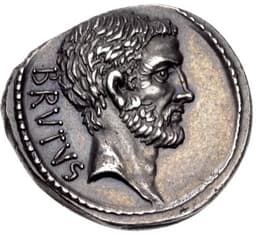
Lucius Junius Brutus
Politician · Ancient
72.7Total
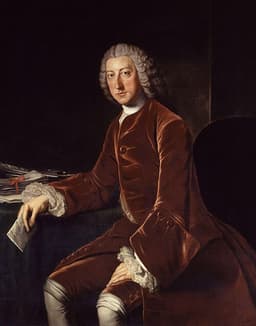
William Pitt the Elder
Politician · Modern
70.2Total
Basic Information
Born
-540
1708
Died
-509
1778
Era
Ancient
Modern
Nationality
Roman Republic
United Kingdom
Occupation
Politician
Politician
Civilization
Western
Western
Score Comparison
Military (10%)
45.0
67.3
Political (20%)
72.0
72.0
Influence (20%)
75.0
68.0
Legacy (20%)
90.0
68.0
Leadership (15%)
71.0
80.0
Strategy (15%)
54.8
67.2
TOTAL
72.7
70.2
Lucius Junius Brutus — Complete Timeline
509 BC
Battle of Silva ArsiaWar◆ Major
Brutus led the Roman army against the forces of Tarquinius Superbus and his Etruscan allies at Silva Arsia. During the battle, Brutus and Arruns Tarquinius, the king's son, killed each other in single combat, but the Romans ultimately won the battle, securing the Republic's survival.
BattleSingle CombatFounding Myth
Impact: nationaltragic
Expulsion of the TarquinsPolitical Action
Lucius Junius Brutus led a revolt against the Tarquin monarchy after the rape of Lucretia by Sextus Tarquinius. He organized the Senate and the people to expel the royal family, ending the Roman Kingdom and establishing the Roman Republic with himself as one of the first consuls.
RevolutionFounding of RepublicOverthrow of Monarchy
Impact: globalprogressive
Execution of His SonsPolitical Action◆ Major
Brutus discovered that his own sons, Titus and Tiberius, had conspired to restore the Tarquins. As consul, he ordered their arrest, trial, and execution by beheading in the Forum, demonstrating his unwavering commitment to the Republic over family loyalty.
ExecutionConspiracyRepublican Virtue
Impact: nationaltragic
Oath of BrutusPolitical Action◆ Major
After the expulsion of the Tarquins, Brutus made the Roman people swear an oath never to allow a king to rule Rome again. This oath became a foundational principle of the Republic, reinforcing the commitment to liberty and opposition to tyranny.
OathRepublican IdeologyAnti-Monarchy
Impact: nationalprogressive
William Pitt the Elder — Complete Timeline
1756 AD
Led Britain in Seven Years' WarWar
William Pitt the Elder served as Secretary of State from 1756 to 1761, directing British strategy in the Seven Years' War. His policies focused on naval supremacy and colonial campaigns, leading to victories in Canada, India, and the Caribbean.
Seven Years' WarColonial EmpireMilitary Strategy
Impact: global
1759 AD
Conquest of QuebecWar◆ Major
Under Pitt's direction, British forces under General James Wolfe captured Quebec City on September 13, 1759, after the Battle of the Plains of Abraham. This victory secured British control over Canada and marked a turning point in the Seven Years' War.
Seven Years' WarCanadaMilitary Victory
Impact: global
1766 AD
Became Prime MinisterPolitical Action
Pitt was appointed Prime Minister on July 30, 1766, forming a government. However, his health declined and he was elevated to the House of Lords as Earl of Chatham, which weakened his political base. His second ministry was less effective than his wartime leadership.
Prime MinisterGovernment18th Century
Impact: national
Opposed American TaxationPolitical Action◆ Major
Pitt argued for the repeal of the Stamp Act in 1766, asserting that Parliament had no right to tax the American colonies without representation. His speech in the Commons helped secure repeal, though he maintained Parliament's authority to legislate for the colonies.
American ColoniesTaxationParliamentary Debate
Impact: global
Expert Analysis
Lucius Junius Brutus vs William Pitt the Elder
# The Commoner and the Censor: Two Paths to Founding Power
On a September morning in 1759, British redcoats scrambled up the cliffs of Quebec under musket fire, their general James Wolfe dying at the moment of victory. Across the Atlantic, a sickly man in London received the news with grim satisfaction: William Pitt the Elder had gambled on a global war and won. But seventeen hundred years earlier, on a blood-soaked field at Silva Arsia, another founder of a republic fell in battle—Lucius Junius Brutus, who had already sacrificed his sons to the cause of liberty. One expanded an empire; the other severed it from kings. Both faced the cruel arithmetic of power, yet their outcomes could not have been more different. What drove them?
Origins
Pitt was born into privilege but not aristocracy. His grandfather was a governor of Madras, his father a member of Parliament, yet the family’s wealth came from trade, not land. Young William suffered from gout and bouts of mental illness, and his contemporaries dismissed him as frail. He entered Parliament at twenty-seven, a commoner in a world of lords, and nursed a burning resentment against the ruling oligarchy. His voice—a thunderous, hypnotic instrument—became his weapon.
Brutus, by contrast, emerged from legend. The historical record is fragmentary, but Roman tradition holds that he was the nephew of King Tarquinius Superbus, the last Etruscan monarch. He watched his uncle’s tyranny destroy his own family: his father and brother were murdered by the king. Brutus survived by playing the fool—his name may derive from the Latin *brutus*, meaning “dullard.” He feigned idiocy to escape execution, waiting decades for the moment to strike. Where Pitt inherited a stable system, Brutus inherited a poisoned throne.
Rise to Power
Pitt’s ascent was a masterclass in opposition. He railed against the corruption of Prime Minister Robert Walpole, then against the failed policies of the Duke of Newcastle. He was denied high office for years because George II despised him. But when the Seven Years’ War erupted in 1756, Britain was losing everywhere—in America, in Europe, at sea. Desperation forced the king to appoint Pitt as Secretary of State. He did not become prime minister; he became the war’s architect, bypassing the official title.
Brutus’s rise was swifter and bloodier. In 509 BCE, the rape of Lucretia by the king’s son ignited a revolt. Brutus, no longer playing the fool, stood before the Roman people and swore the famous oath: never again would a king rule Rome. He organized the expulsion of the Tarquins, then was elected one of the first two consuls of the new Republic. His rise took weeks, not decades. But the price of speed was instability: the exiled king immediately marched on Rome with Etruscan allies.
Leadership & Governance
Pitt governed through vision. He understood that the Seven Years’ War was a global contest, not a European squabble. He poured resources into North America, blockaded French ports, and subsidized Prussia to tie down France’s armies. “I am sure I can save this country, and nobody else can,” he once declared—arrogant, but accurate. His political genius lay in delegation: he chose brilliant generals (Wolfe, Amherst) and admirals (Hawke, Boscawen), then gave them freedom to act. He also reformed logistics, ensuring troops were fed and paid—a revolutionary concept.
Brutus governed through law. As consul, he codified the powers of the office, limited its term to one year, and established the principle of collegiality (two consuls, each with veto power). When his own sons conspired to restore the monarchy, Brutus did not hesitate. He ordered their execution, watching as they were beaten and beheaded before the assembled citizens. The Roman historian Livy records that Brutus’s face showed no emotion—a terrifying display of impartial justice. He was not building an empire; he was building a cage for tyranny.
Triumph & Tragedy
Pitt’s greatest triumph was 1759, the *annus mirabilis*. Quebec fell, Guadeloupe was captured, and the French fleet was shattered at Quiberon Bay. British global dominance was secured. But his tragedy came later. In 1766, he became prime minister, but his health collapsed. He suffered bouts of madness, refused to attend cabinet meetings, and alienated allies. He opposed taxing the American colonies, arguing that Parliament had no right to impose internal taxes—a prescient warning—but his voice was too weak to stop the Stamp Act’s repeal or the subsequent drift toward revolution.
Brutus’s triumph and tragedy were the same event. At Silva Arsia, he led the Roman army against the Tarquins, fighting hand-to-hand with the king’s son. He died in the battle, but his forces won. His body was carried back to Rome, and the matrons mourned him for a year. His tragedy was not personal failure but the knowledge that his Republic would face endless threats—from without and within. He had killed his sons, but could he kill the ambition that would later produce Caesar?
Character & Destiny
Pitt was a man of grand passions and frail health. His arrogance was legendary: he once told the king that he would not serve with certain ministers, adding, “I will not be the dupe of any man.” Yet his hypochondria and depression often paralyzed him. He was a creature of the system, not its destroyer. He expanded British power because he believed in British institutions—Parliament, the navy, the rule of law. His destiny was to make the empire work, not to question its foundations.
Brutus was a man of iron restraint. He had learned to hide his feelings for decades, and that discipline never left him. He was not a builder but a cleanser. His destiny was to cut away the monarchy like a gangrenous limb. He did not care about institutions beyond their ability to prevent tyranny. Where Pitt sought glory, Brutus sought permanence—or rather, the absence of kings.
Legacy
Pitt’s legacy is the British Empire at its height. He is remembered as the “Great Commoner,” a man who broke the aristocracy’s monopoly on power. Canada, India, and the Caribbean bear the stamp of his decisions. But his name is also linked to the American Revolution, which he tried to prevent. His son, William Pitt the Younger, would become prime minister at twenty-four, continuing the family’s dominance.
Brutus’s legacy is the Roman Republic itself. Every Roman who later fought against tyranny—the Gracchi, Cato, Cicero—invoked his name. The oath against kings became a sacred text. His execution of his sons haunted Roman memory, a reminder that liberty demands terrible sacrifices. Yet the Republic he founded lasted nearly five centuries, until the ambition he feared finally overwhelmed it.
Conclusion
Standing on the cliffs of history, Pitt and Brutus faced opposite directions. Pitt looked outward, expanding a kingdom into an empire. Brutus looked inward, purging a kingdom to save a people. Both succeeded, and both failed. Pitt’s empire crumbled, but his principles of global strategy and parliamentary government endured. Brutus’s Republic fell to dictators, but his dream of a kingless state inspired revolutions for two thousand years.
Perhaps the deepest difference lies in their relationship to power. Pitt wielded power as a tool, using it to achieve concrete victories. Brutus distrusted power itself, seeking to bind and limit it forever. One was the master of his age; the other was the conscience of his civilization. And when we ask which legacy is more enduring, we might remember that Brutus’s sons died for an idea, while Pitt’s sons inherited a world. The idea outlasted the world.
Rankings
🥇
Lucius Junius BrutusLeader
Mil: 45.0Pol: 72.0Inf: 75.0
72.7
🥈
William Pitt the Elder
Mil: 67.3Pol: 72.0Inf: 68.0
70.2
+2.5 behind
How This Comparison Works
Algorithm
Each figure is scored on 6 dimensions (0—100 scale) based on structured historical data: Military (10%), Political (20%), Influence (20%), Legacy (20%), Leadership (15%), Strategy (15%). The weighted total produces the final ranking.
Data Sources
Scores are computed from structured sub-indicators in the database. Scale factors adjust for era (Ancient ×0.85, Modern ×1.0) and civilization size (Eastern ×1.05, Other ×0.80) to account for differences in population and military scale.
Maximum 3 Figures
Comparisons are limited to 2—3 figures to ensure readability and statistical meaningfulness.
Error Margins
±5 points per dimension — Sub-scores are derived from historical records with inherent uncertainty. Two figures within 5 points on a dimension should be considered roughly equivalent in that area.
Total Score Accuracy
±3 points overall — The weighted combination of 6 dimensions produces a total score with approximately ±3 points of uncertainty. Differences of less than 3 points are not statistically significant— the figures are effectively tied.
Known Limitations
- Historical records are incomplete and uneven across civilizations
- Figures from oral-tradition societies may be underrepresented
- Occupation labels can misclassify multi-role figures
- Scores measure capability and impact, not moral character
- Quantitative scoring is a comparison tool, not absolute truth
Capability Radar
Military (10%) — Battles & Warfare
Battles
10
60
Win Rate
10
75
Expansion
10
80
Political (20%) — Governance & Reform
Reform
90
75
Diplomacy
40
80
Economy
30
70
Influence (20%) — Cultural & Global Reach
Cultural
70
60
Global
70
75
Legacy (20%) — Historical Impact
Historical
80
80
Longevity
80
70
Leadership (15%) — Power & Stability
Tenure
30
70
Stability
40
65
Strategy (15%) — Tactics & Innovation
Strategy
10
85
Tactics
10
65
Reform
20
70
Similar Comparisons
Comments & Discussion
No comments yet. Be the first to share your thoughts!