Loading...
Wedem Arad vs Zhao Kuangyin
Zhao Kuangyin leads by 23.0 pts · 2 figures compared
…
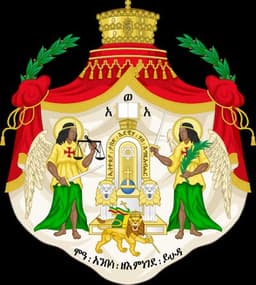
Wedem Arad
Emperor · Medieval
48.5Total
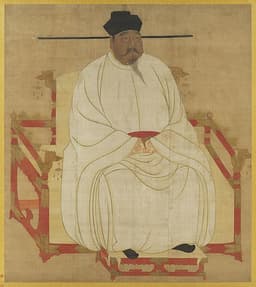
Zhao Kuangyin
Emperor · Medieval
71.5Total
Basic Information
Born
1270
927
Died
1314
976
Era
Medieval
Medieval
Nationality
Ethiopia
China
Occupation
Emperor
Emperor
Civilization
Other
Eastern
Score Comparison
Military (10%)
50.0
78.0
Political (20%)
35.1
84.0
Influence (20%)
58.0
68.0
Legacy (20%)
45.8
65.0
Leadership (15%)
55.3
74.0
Strategy (15%)
39.6
68.0
TOTAL
48.5
71.5
Wedem Arad — Complete Timeline
1306 AD
First Contact with EuropePolitical Action◆ Major
Wedem Arad sent an embassy to Europe, likely to the court of Pope Clement V in Avignon. This was the first recorded diplomatic contact between Ethiopia and a European power since antiquity, establishing a precedent for future Ethiopian-European relations.
Impact: regional
Zhao Kuangyin — Complete Timeline
960 AD
Founded Song dynastyPolitical Action
Zhao Kuangyin, a general of Later Zhou, was proclaimed emperor by his troops at Chenqiao. He established the Song dynasty, ending the Five Dynasties period and beginning a new era of Chinese history.
Song dynastyFoundingChenqiao
Impact: globalconstructive
961 AD
Removed military power from generalsPolitical Action◆ Major
Zhao Kuangyin invited senior generals to a banquet and persuaded them to retire peacefully. This 'removal of military power over wine' prevented military coups and centralized control.
Song dynastyMilitary reformCentralization
Impact: nationalconstructive
963 AD
Unified southern ChinaWar◆ Major
Zhao Kuangyin launched campaigns to conquer the southern kingdoms, including Jingnan, Later Shu, and Southern Tang. By his death, most of China was reunified under Song rule.
Song unificationConquestSouthern kingdoms
Impact: national
Expert Analysis
Zhao Kuangyin vs Wedem Arad
# The Emperor and the Envoy
On a misty morning in 960, a Chinese general named Zhao Kuangyin woke up to find a yellow imperial robe draped over his shoulders, thrust upon him by his own troops in a carefully orchestrated coup. Half a world away and three centuries later, in 1306, an Ethiopian emperor named Wedem Arad dispatched a delegation to a distant pope in Avignon, seeking something no one in his realm fully understood—a connection to a continent he had never seen. One man unified a civilization; the other reached beyond his own. Both were emperors. But their worlds could not have been more different.
Origins
Zhao Kuangyin was born in 927 into a fractured China, the twilight of the Five Dynasties and Ten Kingdoms period—an era of constant warfare, shifting allegiances, and short-lived regimes. His father was a military officer, and Zhao grew up surrounded by the clang of swords and the smell of gunpowder. He learned early that power was a blade that could cut both ways. In contrast, Wedem Arad ascended to the throne of the Solomonic dynasty in Ethiopia around 1270, inheriting a kingdom that had long been isolated by geography and faith. The Ethiopian highlands were a fortress of Christianity surrounded by Muslim sultanates and pagan kingdoms. For Wedem Arad, the world beyond the Red Sea was a rumor, a legend, a mystery. His upbringing was steeped in the rituals of the Ethiopian Orthodox Church, where the emperor was not merely a ruler but a descendant of King Solomon and the Queen of Sheba—a living symbol of divine lineage.
Rise to Power
Zhao Kuangyin rose through the ranks of the Later Zhou dynasty, one of the many ephemeral states that flickered across the Chinese chessboard. His path was pragmatic and patient: he proved himself as a general, won the trust of his soldiers, and waited for the right moment. That moment came in 960, when his troops mutinied at Chenqiao and proclaimed him emperor. Zhao accepted—or appeared to accept—reluctantly, a performance that would become his trademark. He understood that legitimacy required theater.
Wedem Arad’s rise was more obscure. He was likely a younger son who took the throne after a series of dynastic struggles, but the records are sparse. What is clear is that he ruled a kingdom that had recently reasserted its independence from the Zagwe dynasty, a period of restoration that demanded both military strength and religious piety. Unlike Zhao, who seized power in a single dramatic stroke, Wedem Arad inherited a throne that was still being rebuilt.
Leadership & Governance
Zhao Kuangyin’s genius lay not in conquest but in consolidation. After founding the Song dynasty in 960, he faced a familiar problem: how to prevent his generals from doing to him what he had done to his predecessor. His solution was legendary. In 961, he invited his top commanders to a banquet, plied them with wine, and then, with tears in his eyes, confessed that he could not sleep at night for fear of their ambition. The generals, moved and perhaps a little drunk, offered to resign. Zhao accepted their swords and gave them estates, titles, and peace. It was a masterstroke of political wisdom—the “removal of military power over a cup of wine.” He then turned his attention to the south, launching campaigns from 963 onward that absorbed Jingnan, Later Shu, and Southern Tang into his realm. By his death in 976, he had reunified most of China under a single rule, not through endless war but through a blend of force, diplomacy, and bribery.
Wedem Arad’s governance was more constrained. He ruled a kingdom that was perpetually on the defensive, surrounded by enemies and limited by resources. His most significant act was not a military campaign or a political reform but a diplomatic mission. In 1306, he sent an embassy to Europe, likely to the court of Pope Clement V in Avignon. This was the first recorded contact between Ethiopia and the Latin West. The envoys carried letters and gifts, seeking an alliance against their common Muslim foes. But the mission was a fragile thread across an enormous gulf—of language, culture, and distance. It was a gesture of hope, not a policy of power.
Triumph & Tragedy
Zhao Kuangyin’s triumph was the Song dynasty itself, which would endure for over three centuries, a golden age of commerce, technology, and culture. His tragedy was that his own methods—centralizing power, weakening the military, and favoring civil officials—would eventually leave the Song vulnerable to invasions from the north. The very peace he created sowed the seeds of future defeat.
Wedem Arad’s triumph was the mere act of reaching out. His embassy may have failed to forge a lasting alliance, but it planted a seed in European consciousness—the idea of a Christian king named Prester John, a mythical ally in the East. His tragedy was that he never saw the fruit of his effort. Ethiopia remained isolated for centuries more, and the contact he initiated would not bear fruit until the age of exploration.
Character & Destiny
Zhao Kuangyin was a pragmatist who understood that power is a burden, not a prize. He once said, “The empire is vast, and there is much to be done.” He ruled with a light hand, preferring persuasion to force, and he died relatively young, possibly from illness, at the age of forty-nine. His destiny was to be the unifier, the founder, the man who turned chaos into order.
Wedem Arad was a visionary who looked beyond his borders. He was a man of faith in an age of isolation, who believed that his kingdom could find allies in a world it had never seen. His destiny was to be a bridge that no one crossed, a messenger whose message arrived too early.
Legacy
Today, Zhao Kuangyin is remembered as one of China’s greatest emperors, a model of Confucian rulership who valued stability over glory. His portrait hangs in the Forbidden City, and his story is taught in every Chinese school. Wedem Arad is a footnote in Ethiopian history, known mainly to scholars and chroniclers of Africa’s medieval kingdoms. Yet his legacy is no less profound: he was the first Ethiopian to reach out to Europe, a pioneer of diplomacy in a world that was about to shrink.
Conclusion
Two emperors, two worlds. One built an empire that lasted centuries; the other sent a message that took centuries to arrive. Zhao Kuangyin’s China was a civilization of paper, gunpowder, and bureaucracy, where power was a game of chess played by scholars and generals. Wedem Arad’s Ethiopia was a kingdom of rock-hewn churches and ancient scrolls, where power was a covenant with God. Both men faced the same fundamental question: how to rule in a world of uncertainty. One answered by looking inward, the other by looking outward. In the end, both were right—and both were wrong. History remembers the builder, but it also remembers the dreamer.
Rankings
🥇
Zhao KuangyinLeader
Mil: 78.0Pol: 84.0Inf: 68.0
71.5
🥈
Wedem Arad
Mil: 50.0Pol: 35.1Inf: 58.0
48.5
+23.0 behind
How This Comparison Works
Algorithm
Each figure is scored on 6 dimensions (0—100 scale) based on structured historical data: Military (10%), Political (20%), Influence (20%), Legacy (20%), Leadership (15%), Strategy (15%). The weighted total produces the final ranking.
Data Sources
Scores are computed from structured sub-indicators in the database. Scale factors adjust for era (Ancient ×0.85, Modern ×1.0) and civilization size (Eastern ×1.05, Other ×0.80) to account for differences in population and military scale.
Maximum 3 Figures
Comparisons are limited to 2—3 figures to ensure readability and statistical meaningfulness.
Error Margins
±5 points per dimension — Sub-scores are derived from historical records with inherent uncertainty. Two figures within 5 points on a dimension should be considered roughly equivalent in that area.
Total Score Accuracy
±3 points overall — The weighted combination of 6 dimensions produces a total score with approximately ±3 points of uncertainty. Differences of less than 3 points are not statistically significant— the figures are effectively tied.
Known Limitations
- Historical records are incomplete and uneven across civilizations
- Figures from oral-tradition societies may be underrepresented
- Occupation labels can misclassify multi-role figures
- Scores measure capability and impact, not moral character
- Quantitative scoring is a comparison tool, not absolute truth
Capability Radar
Military (10%) — Battles & Warfare
Battles
15
75
Win Rate
20
85
Expansion
10
75
Political (20%) — Governance & Reform
Reform
20
90
Diplomacy
55
85
Economy
15
80
Influence (20%) — Cultural & Global Reach
Cultural
20
70
Global
40
60
Legacy (20%) — Historical Impact
Historical
35
80
Longevity
30
75
Leadership (15%) — Power & Stability
Tenure
40
65
Stability
30
85
Strategy (15%) — Tactics & Innovation
Strategy
10
80
Tactics
10
70
Reform
5
90
Similar Comparisons
Comments & Discussion
CoupMechanic6/16/2026
Zhao Kuangyin didn’t just stumble into power—he engineered the most elegant power transfer in medieval history. The "yellow robe" story is beautiful theater, but the real genius was how he then systematically demilitarized the provinces, swapped generals around like chess pieces, and centralized Song authority without a civil war. Wedem Arad sent envoys to Avignon hoping for magical European alliances that never materialized. One understood power; the other understood prayer.
历史掌局者6/16/2026
赵匡胤的“杯酒释兵权”才是真本事,不是靠什么神迹,而是用一顿饭把老将们的兵权收回来,温柔得像个政变艺术家。相比之下,埃塞俄比亚的维德姆·阿拉德满脑子都是跟万里之外的教皇攀亲戚,结果人家教皇连埃塞俄比亚在非洲哪个角落都搞不清。一个用酒稳住江山,一个拿信仰赌外交,高下立判。
BridgeBurner6/16/2026
Let’s stop romanticizing Wedem Arad’s “outreach.” Sending a delegation to Avignon in 1306 was a desperate Hail Mary from a regime terrified of Muslim encirclement. The pope couldn’t even guarantee safe passage through Mamluk territory. Zhao Kuangyin’s unification campaign was a masterclass in realpolitik—he bribed, bullied, and outmaneuvered rival kingdoms into submission. Wedem Arad was chasing alliances that didn’t exist; Zhao was building an empire that lasted three centuries.
纸背刀光6/16/2026
五百年的分裂靠一件黄袍就统一了?别被史书骗了。赵匡胤的“陈桥兵变”根本就是赵家军自导自演的戏,他弟弟赵光义和谋士赵普才是幕后黑手。而维德姆·阿拉德派人去阿维尼翁找教皇,表面是寻求基督教同盟,实际是想借欧洲技术造火药——可惜信使半路就被抓了。一个玩的是权谋剧本,一个玩的是宗教空想,结果赵匡胤赢了江山,阿拉德只赢了一纸档案。
AshenEmissary6/16/2026
What fascinates me is how both men grasped that legitimacy required performance. Zhao staged the yellow robe ritual as a reluctant emperor—pure political theater to avoid the stain of usurpation. Wedem Arad crafted his Solomonic lineage as a counterweight to Muslim propaganda. But here's the difference: Zhao's performance built a stable bureaucracy; Wedem Arad's performance left Ethiopia more isolated than before, because the Avignon mission never returned with anything tangible. Theater without
异域孤星6/16/2026
拿两个完全不在一个量级的人比,本身就是没常识。赵匡胤的时代,中国有成熟的官僚体系、发达的运河