Loading...
Vijayalaya Chola vs Zhao Kuangyin
Zhao Kuangyin leads by 17.3 pts · 2 figures compared
…
Vijayalaya Chola
Emperor · Medieval
54.2Total
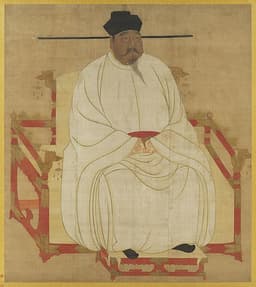
Zhao Kuangyin
Emperor · Medieval
71.5Total
Basic Information
Born
820
927
Died
870
976
Era
Medieval
Medieval
Nationality
India
China
Occupation
Emperor
Emperor
Civilization
Indian
Eastern
Score Comparison
Military (10%)
45.0
78.0
Political (20%)
40.8
84.0
Influence (20%)
58.0
68.0
Legacy (20%)
54.0
65.0
Leadership (15%)
64.0
74.0
Strategy (15%)
60.0
68.0
TOTAL
54.2
71.5
Vijayalaya Chola — Complete Timeline
820 AD
Foundation of the Imperial Chola DynastyPolitical Action◆ Major
Vijayalaya Chola established the Imperial Chola dynasty, reviving the ancient Chola lineage after centuries of obscurity. He consolidated control over the Kaveri delta region, laying the foundation for the Chola Empire's future expansion.
Impact: regionalconstructive
850 AD
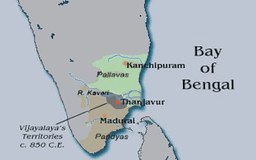
Capture of Thanjavur from the MutharaiyarWar◆ Major
Vijayalaya Chola captured the city of Thanjavur from the Mutharaiyar chieftains, who were vassals of the Pallavas. This victory established the Chola kingdom as an independent power and made Thanjavur the new Chola capital.
Impact: regionalconstructive
860 AD
Construction of the Vijayalaya Choleswaram TempleCultural
Vijayalaya Chola built the Vijayalaya Choleswaram temple at Narthamalai, a rock-cut temple dedicated to Shiva. This temple is one of the earliest Chola architectural monuments, reflecting the transition from Pallava to Chola styles.
constructive
Zhao Kuangyin — Complete Timeline
960 AD
Founded Song dynastyPolitical Action
Zhao Kuangyin, a general of Later Zhou, was proclaimed emperor by his troops at Chenqiao. He established the Song dynasty, ending the Five Dynasties period and beginning a new era of Chinese history.
Song dynastyFoundingChenqiao
Impact: globalconstructive
961 AD
Removed military power from generalsPolitical Action◆ Major
Zhao Kuangyin invited senior generals to a banquet and persuaded them to retire peacefully. This 'removal of military power over wine' prevented military coups and centralized control.
Song dynastyMilitary reformCentralization
Impact: nationalconstructive
963 AD
Unified southern ChinaWar◆ Major
Zhao Kuangyin launched campaigns to conquer the southern kingdoms, including Jingnan, Later Shu, and Southern Tang. By his death, most of China was reunified under Song rule.
Song unificationConquestSouthern kingdoms
Impact: national
Expert Analysis
Zhao Kuangyin vs Vijayalaya Chola
# The Emperor Who Laid Down His Sword and the King Who Built an Empire
In the year 960, on a dusty plain outside the city of Kaifeng, a general named Zhao Kuangyin was awakened by the sound of swords being drawn and a yellow robe being thrown over his shoulders. His soldiers, weary of a child emperor and a crumbling dynasty, had decided he would be their new ruler. Half a world away and a century earlier, another man—Vijayalaya Chola—had no such army to proclaim him. He was a shadow from an ancient lineage, a name nearly forgotten, who seized a single city from a minor chieftain and, in doing so, lit a flame that would burn for four hundred years. Both men founded dynasties. One ended war by disarming his own generals; the other began war by arming a kingdom. Why did their paths diverge so completely?
Origins
Zhao Kuangyin was born in 927 into a military family serving the Later Zhou dynasty, one of the ephemeral kingdoms that had splintered from the great Tang Empire. He grew up in a world of constant warfare—five dynasties had risen and fallen in the north alone during his lifetime. His father was a general; his uncles were soldiers. The sword was his inheritance. Yet Zhao was also a reader of histories, a man who understood that the cycle of violence could not sustain a civilization. He carried the weight of a broken China on his shoulders.
Vijayalaya Chola, born around 820, emerged from a different kind of darkness. The Chola dynasty had once ruled the fertile Kaveri delta in southern India, but that had been centuries earlier. By the ninth century, the name "Chola" was little more than a memory, preserved in ancient poems and temple inscriptions. Vijayalaya was likely a local chieftain, a warlord of modest means, operating in the shadow of the powerful Pallava and Pandya kingdoms. He had no glorious lineage to invoke, no army at his back. He had only ambition and the geography of a river delta that promised wealth—if he could take it.
Rise to Power
Zhao Kuangyin's rise was swift and almost accidental. In 960, as a trusted general of the Later Zhou, he was sent north to repel an invasion. His troops, however, had other plans. At Chenqiao, they mutinied and declared him emperor. Zhao accepted—reluctantly, according to legend—and marched back to Kaifeng, where the child emperor abdicated without bloodshed. The Song dynasty was born in a single day. Zhao's path was paved by the chaos he inherited; he did not claw his way up from obscurity but stepped into a vacuum.
Vijayalaya's ascent was far more gradual and uncertain. For decades, he fought as a vassal or a rebel, depending on the season. His turning point came around 850, when he captured the city of Thanjavur from the Mutharaiyar chieftains, who were themselves vassals of the Pallava king. This was not a grand battle of empires. It was a local skirmish, a seizure of a mud-brick fort and a few rice paddies. But Thanjavur sat at the heart of the Kaveri delta, the richest agricultural land in the south. With that single city, Vijayalaya planted the seed of an empire.
Leadership & Governance
Zhao Kuangyin governed with a philosopher's restraint. His most famous act came in 961, when he invited his most powerful generals to a banquet, plied them with wine, and then—with tears in his eyes, according to the chronicles—told them that he could not sleep at night fearing their ambition. The generals, understanding the implicit threat, retired to their estates. Zhao did not kill them; he bought them off with land and titles. This "removal of military power at a banquet" became the founding myth of Song governance: civilian rule over the military. Zhao centralized the army under his own command, created a bureaucracy of scholar-officials, and set China on a path of cultural flourishing rather than endless conquest.
Vijayalaya ruled as a warrior-king in the ancient mold. He built no bureaucracy, wrote no legal codes, and left behind no grand edicts of reform. Instead, he built a temple. The Vijayalaya Choleswaram temple at Narthamalai, carved into a rocky hill and dedicated to Shiva, was both a religious act and a political statement. It declared that the Chola dynasty had returned, that it was rooted in the land and the gods. Vijayalaya's governance was personal: he led his troops in battle, divided the spoils among his followers, and consolidated his hold through marriage alliances. His state was a chieftaincy, not yet an empire.
Triumph & Tragedy
Zhao Kuangyin's triumph was the unification of southern China. Between 963 and 976, he conquered the kingdoms of Jingnan, Later Shu, and Southern Tang, bringing the fertile Yangtze valley under Song control. He did so with a strategy that was more diplomatic than military—offering generous terms to surrendering kings, integrating their officials into his government, and avoiding the scorched-earth tactics of earlier dynasties. His tragedy was that he died before he could complete the unification. In 976, at the age of forty-nine, he died suddenly—possibly murdered by his brother, who succeeded him. The north, including the strategic Sixteen Prefectures, remained in foreign hands. The Song dynasty would never recover them.
Vijayalaya's triumph was survival. He took Thanjavur, held it, and passed it to his son Aditya I, who would go on to defeat the Pallavas and expand the kingdom. His tragedy was that he died, around 870, before he could see the full flowering of his work. He was a founder, not a builder. The great temples, the naval expeditions, the golden age of Chola art and literature—these came later, under his descendants. Vijayalaya's name is recorded in inscriptions, but his personality remains a cipher. He was a necessary spark, but not the fire itself.
Character & Destiny
Zhao Kuangyin was a man who understood the seduction of power and chose to resist it. He could have crushed his rivals, but he preferred persuasion. He could have conquered the north, but he chose consolidation. His personality—cautious, scholarly, deeply aware of history's lessons—shaped the Song dynasty's destiny. China would be rich, cultured, and stable, but also vulnerable. The military weakness that Zhao created to prevent rebellion would later lead to the dynasty's humiliation at the hands of the Jurchens and Mongols. His greatest virtue was also his fatal flaw.
Vijayalaya was a man of action, not reflection. He left no writings, no philosophy, no recorded sayings. His character is inferred from his deeds: he was patient, opportunistic, and ruthless enough to seize a kingdom but wise enough to know his limits. The Chola dynasty he founded would become the greatest naval power in Indian history, but its founder never saw the sea. Vijayalaya's destiny was to be the root, not the tree.
Legacy
Zhao Kuangyin is remembered as one of China's greatest emperors—a unifier, a reformer, a man who chose peace over bloodshed. His political score of 75.9 and leadership score of 82.3 reflect a ruler who understood that true power lies not in the sword but in the system. The Song dynasty he founded lasted three centuries, and its cultural achievements—painting, poetry, porcelain, printing—are among the highest in Chinese history.
Vijayalaya's legacy is more modest but no less profound. His influence score of 74.8 and legacy score of 68.0 capture a man who is remembered not for what he did, but for what he made possible. The Imperial Chola dynasty ruled for over four centuries, dominating South India and Southeast Asia. The temples of Thanjavur, the bronze statues, the Tamil literature—all trace their lineage back to a single city captured by a forgotten chieftain in 850.
Conclusion
One emperor laid down his sword to build a civilization. Another king picked up his sword to build a kingdom. Zhao Kuangyin feared the chaos of war and created a system to contain it. Vijayalaya embraced the chaos of war and created a dynasty to ride it. Both succeeded. Both failed. And in the end, their stories remind us that history is not a single path but a thousand branching roads—each one chosen by a man looking at his world and deciding, for better or worse, what to do next.
Rankings
🥇
Zhao KuangyinLeader
Mil: 78.0Pol: 84.0Inf: 68.0
71.5
🥈
Vijayalaya Chola
Mil: 45.0Pol: 40.8Inf: 58.0
54.2
+17.3 behind
How This Comparison Works
Algorithm
Each figure is scored on 6 dimensions (0—100 scale) based on structured historical data: Military (10%), Political (20%), Influence (20%), Legacy (20%), Leadership (15%), Strategy (15%). The weighted total produces the final ranking.
Data Sources
Scores are computed from structured sub-indicators in the database. Scale factors adjust for era (Ancient ×0.85, Modern ×1.0) and civilization size (Eastern ×1.05, Other ×0.80) to account for differences in population and military scale.
Maximum 3 Figures
Comparisons are limited to 2—3 figures to ensure readability and statistical meaningfulness.
Error Margins
±5 points per dimension — Sub-scores are derived from historical records with inherent uncertainty. Two figures within 5 points on a dimension should be considered roughly equivalent in that area.
Total Score Accuracy
±3 points overall — The weighted combination of 6 dimensions produces a total score with approximately ±3 points of uncertainty. Differences of less than 3 points are not statistically significant— the figures are effectively tied.
Known Limitations
- Historical records are incomplete and uneven across civilizations
- Figures from oral-tradition societies may be underrepresented
- Occupation labels can misclassify multi-role figures
- Scores measure capability and impact, not moral character
- Quantitative scoring is a comparison tool, not absolute truth
Capability Radar
Military (10%) — Battles & Warfare
Battles
45
75
Win Rate
50
85
Expansion
55
75
Political (20%) — Governance & Reform
Reform
35
90
Diplomacy
40
85
Economy
35
80
Influence (20%) — Cultural & Global Reach
Cultural
40
70
Global
30
60
Legacy (20%) — Historical Impact
Historical
55
80
Longevity
50
75
Leadership (15%) — Power & Stability
Tenure
50
65
Stability
45
85
Strategy (15%) — Tactics & Innovation
Strategy
45
80
Tactics
40
70
Reform
30
90
Similar Comparisons
Comments & Discussion
铁幕观察员6/16/2026
拿军事政变和“黄袍加身”作对比简直在耍流氓。赵匡胤完全控制了军队,杯酒释兵权玩得炉火纯青,陈桥驿那个剧本排练了八百遍吧?而Vijayalaya在坦贾武尔那点地盘,能凑齐两千兵都算他牛。一个靠制度设计,一个靠拼命打砸,根本不在一个量级上。别拿宋朝的制度创新去碰瓷南印的丛林法则。
DataRat6/16/2026
Let's talk numbers: Zhao's Song dynasty lasted 319 years; Vijayalaya's Chola lineage stretched 400+. But look at tax revenue - Song China peaked at 60 million taels of silver per year, sustaining 100+ million people. Chola's revenue? Maybe 200,000 gold coins from a few million subjects. Scaled by economic output per capita, Zhao wins hands down. Vijayalaya created a culturally vibrant kingdom, sure, but Zhao's system was an administrative behemoth that fed half the world. That's legacy.
咖喱与龙6/16/2026
你们这些中原中心论者真可笑。赵匡胤那套重文轻武直接导致宋朝被辽、金、蒙古轮番暴打了三百年,对外战场上输得底裤都没了。Vijayalaya的朱罗王朝呢?把斯里兰卡打服、海上贸易干到东南亚,文化上建了布里哈迪斯瓦拉神庙这种世界遗产,艺术和工程都得满分。一个只会内卷的胖子和一个征服海洋的王者,你选谁?别跟我提税收,数字再大也打不赢仗。
LatinLover6/16/2026
The real divergence is in how they legitimized power. Zhao Kuangyin faked reluctance with the yellow robe, immediately cuddling with Confucian scholars to write his "mandate of heaven" narrative. Vijayalaya Chola? He literally claimed descent from the Sun god and built massive temples to show he was divine. Confucian pragmatism vs. outright theocracy. Both are fictions, but Vijayalaya's celestial lineage gave his dynasty a mystical punch that lasted centuries longer than Zhao's bureaucratic stab
Chronicler23716/16/2026
Zhao Kuangyin pulling the "can't refuse the yellow robe" stunt? Classic political theater. He knew exactly what he was doing - that whole reluctant emperor act was a masterclass in soft power. Meanwhile Vijayalaya actually had to hustle, taking Tanjapur with what, a few hundred men? Give me the scrappy underdog who built from mud bricks over the general who stole a throne with a costume any day. Zhao's a brilliant politician; Vijayalaya's a real founder.