Loading...
Theodore I Laskaris vs Zhao Kuangyin
Zhao Kuangyin leads by 9.7 pts · 2 figures compared
…
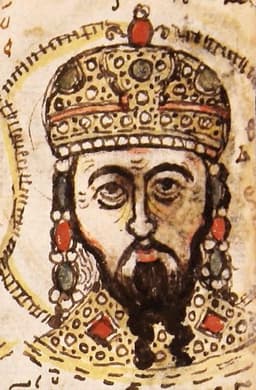
Theodore I Laskaris
Emperor · Medieval
61.8Total
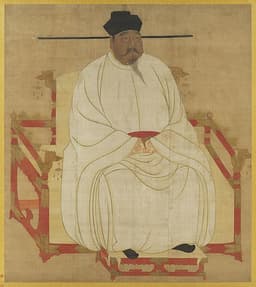
Zhao Kuangyin
Emperor · Medieval
71.5Total
Basic Information
Born
1174
927
Died
1222
976
Era
Medieval
Medieval
Nationality
Nicaean Empire
China
Occupation
Emperor
Emperor
Civilization
Western
Eastern
Score Comparison
Military (10%)
65.0
78.0
Political (20%)
60.0
84.0
Influence (20%)
61.0
68.0
Legacy (20%)
56.0
65.0
Leadership (15%)
77.2
74.0
Strategy (15%)
55.0
68.0
TOTAL
61.8
71.5
Theodore I Laskaris — Complete Timeline
1204 AD
Foundation of the Empire of NicaeaPolitical Action
After the Fourth Crusade captured Constantinople, Theodore I Laskaris fled to Nicaea in Asia Minor and established a Byzantine government-in-exile. He organized resistance against the Latin Empire and the Seljuk Turks, laying the foundation for the Nicaean Empire as the primary successor state of Byzantium.
Fourth CrusadeSuccessor StateExile Government
Impact: regionalconstructive
1208 AD
Coronation as emperor by the Patriarch of ConstantinoplePolitical Action◆ Major
Theodore I Laskaris was formally crowned as emperor by the newly elected Patriarch of Constantinople-in-exile, Michael IV Autoreianos. This coronation legitimized the Nicaean Empire as the rightful continuation of the Byzantine Empire, with full ecclesiastical authority.
CoronationLegitimacyPatriarchate
Impact: regionalconstructive
1211 AD
Battle of Antioch on the MeanderWar◆ Major
Theodore I Laskaris defeated the Seljuk Sultanate of Rum at the Battle of Antioch on the Meander. The victory secured Nicaean control over western Anatolia and prevented Seljuk expansion into Byzantine territories, establishing Theodore as a major regional power.
Byzantine-Seljuk WarsMilitary VictoryAnatolian Campaign
Impact: regional
Defeat of the Latin Empire at the Battle of RhyndacusWar
Theodore I Laskaris led Nicaean forces to a victory over the Latin Empire at the Battle of Rhyndacus. The battle halted Latin expansion into Asia Minor and secured Nicaean control over the region, strengthening the Byzantine resistance against the crusader states.
Latin EmpireMilitary VictoryAsia Minor
Impact: regional
Zhao Kuangyin — Complete Timeline
960 AD
Founded Song dynastyPolitical Action
Zhao Kuangyin, a general of Later Zhou, was proclaimed emperor by his troops at Chenqiao. He established the Song dynasty, ending the Five Dynasties period and beginning a new era of Chinese history.
Song dynastyFoundingChenqiao
Impact: globalconstructive
961 AD
Removed military power from generalsPolitical Action◆ Major
Zhao Kuangyin invited senior generals to a banquet and persuaded them to retire peacefully. This 'removal of military power over wine' prevented military coups and centralized control.
Song dynastyMilitary reformCentralization
Impact: nationalconstructive
963 AD
Unified southern ChinaWar◆ Major
Zhao Kuangyin launched campaigns to conquer the southern kingdoms, including Jingnan, Later Shu, and Southern Tang. By his death, most of China was reunified under Song rule.
Song unificationConquestSouthern kingdoms
Impact: national
Expert Analysis
Zhao Kuangyin vs Theodore I Laskaris
# The Founder’s Burden
In the winter of 960, a general named Zhao Kuangyin stood at Chenqiao, a military camp some twenty miles from the capital of Kaifeng, as his soldiers draped a yellow robe over his shoulders. He had not sought the throne—or so the story goes—but his men insisted, and the empire of Later Zhou was about to become the Song dynasty. Two and a half centuries later, on a spring morning in 1204, another man fled westward through the chaos of a fallen world. Theodore I Laskaris, a Byzantine aristocrat, watched from a ship as the crusader armies of the Fourth Crusade torched Constantinople, the greatest city in Christendom. He carried no imperial robe, only the desperate hope of rebuilding an empire from ashes. Both men were founders. Both faced the same elemental question: how do you build something lasting when the world around you is crumbling? Their answers, shaped by radically different circumstances, would define the fates of two civilizations.
Origins
Zhao Kuangyin was born in 927 into a China fragmented by the chaos of the Five Dynasties and Ten Kingdoms period. His father was a military officer, and Zhao grew up in a world where warlords rose and fell with dizzying speed. He learned to fight, to command, and to read the shifting loyalties of men who would kill for a crown. The era taught him one brutal lesson: power that depends on the sword is power that can be taken by the sword. He would never forget it.
Theodore Laskaris was born in 1174 into the twilight of the Byzantine Empire. His Constantinople was a city of ancient glory, its walls still strong, its churches still golden. But the empire had been bleeding territory for decades, and the Fourth Crusade—a catastrophe born of greed, betrayal, and religious schism—shattered what remained. Theodore was no peasant warrior; he was a member of the imperial aristocracy, a man educated in theology, law, and diplomacy. He knew that survival meant not only fighting but also negotiating, persuading, and building legitimacy from thin air.
Rise to Power
Zhao Kuangyin’s path to the throne was swift and almost bloodless. He was a general of Later Zhou when his troops mutinied and declared him emperor. The Chenqiao mutiny of 960 was a carefully staged drama: Zhao supposedly refused the crown twice before reluctantly accepting. He then marched on Kaifeng, where the child emperor abdicated without resistance. In a single day, a dynasty was born. Zhao understood that his power rested on the loyalty of armed men—and that the same men could unmake him just as quickly.
Theodore’s rise was slower and harder. After fleeing Constantinople in 1204, he made his way to Nicaea, a city in western Anatolia, where Byzantine refugees had gathered. He was not the only claimant to the imperial title, and the first years were a scramble for survival. He fought off Latin crusaders, Seljuk Turks, and rival Byzantine nobles. It was not until 1208, when the Patriarch of Constantinople-in-exile crowned him emperor, that Theodore’s authority became unassailable. Even then, his empire was a fragile patchwork of towns and fortresses, surrounded by enemies on every side.
Leadership & Governance
Zhao Kuangyin’s greatest achievement was not military conquest but political genius. He unified most of China through a combination of war and diplomacy, conquering the southern kingdoms of Jingnan, Later Shu, and Southern Tang by 963. But his most famous act was the “removal of military power over a cup of wine.” In 961, he invited his senior generals to a banquet, praised their service, and then gently suggested they retire to lives of comfort and wealth. They did. Zhao replaced them with civil officials, centralized the army under imperial control, and built a bureaucracy that would govern China for three centuries. He understood that the greatest threat to his dynasty was not foreign invasion but internal rebellion. By disarming his own commanders, he ensured that no general could ever repeat his own rise.
Theodore I Laskaris governed in a world where survival came first. He spent his reign fighting: against the Latin Empire at the Battle of Rhyndacus in 1211, where he halted their advance; against the Seljuk Sultanate at the Battle of Antioch on the Meander in the same year, where he secured Nicaea’s eastern frontier. He was a capable commander, but his real skill lay in statecraft. He built alliances with the Seljuks when necessary, negotiated with the papacy, and cultivated the Orthodox Church as a source of legitimacy. His empire was a government-in-exile, but he gave it institutions—a court, a treasury, a church hierarchy—that would survive his death.
Triumph & Tragedy
Zhao Kuangyin died in 976, at the age of forty-nine, under mysterious circumstances. Some say his brother Zhao Guangyi murdered him; others believe he fell ill. His triumph was the unification of China, a feat that ended decades of fragmentation. His tragedy was that he never completed the conquest of the northern territories, leaving the Song vulnerable to the Liao and Jin dynasties. The price of his peaceful consolidation was a military weakness that would haunt his successors.
Theodore’s triumph was survival. He died in 1222, having defended Nicaea against every enemy and passed a stable throne to his son-in-law, John III Vatatzes. His tragedy was that he never saw Constantinople again. The city he had fled in 1204 would not be reclaimed until 1261, long after his death. He founded a state, but he could not restore the empire he loved.
Character & Destiny
Zhao Kuangyin was a man of calculation and restraint. He chose peace over glory, bureaucracy over charisma. His character shaped his destiny: a founder who feared the sword more than he trusted it, he built a dynasty that would endure for three centuries but never conquer its northern rivals. Theodore was a man of resilience and pragmatism. He fought when he had to, negotiated when he could, and never let pride destroy a chance for survival. His destiny was to be a bridge—between a fallen empire and a restored one, between the old world and the new.
Legacy
Zhao Kuangyin is remembered as one of China’s greatest emperors, a unifier who ended an age of war. The Song dynasty he founded became a golden age of culture, commerce, and technology. But his decision to weaken the military left China vulnerable, and his successors paid the price. Theodore I Laskaris is less famous, but no less important. He saved Byzantium from extinction, preserving its language, faith, and law for another two centuries. The empire he built in exile would eventually reclaim Constantinople, though it would never regain its former power.
Conclusion
Both men were founders, but they founded different worlds. Zhao Kuangyin built a stable, centralized state that prized peace over conquest. Theodore Laskaris built a resilient, mobile empire that survived by adapting to crisis. One created a civilization that turned inward; the other preserved a civilization that refused to die. Their stories remind us that founding an empire is not about strength alone—it is about understanding the moment you are given. Zhao understood that China needed order. Theodore understood that Byzantium needed time. Both were right, and both paid the price for their choices. History remembers them not as conquerors, but as survivors.
Rankings
🥇
Zhao KuangyinLeader
Mil: 78.0Pol: 84.0Inf: 68.0
71.5
🥈
Theodore I Laskaris
Mil: 65.0Pol: 60.0Inf: 61.0
61.8
+9.7 behind
How This Comparison Works
Algorithm
Each figure is scored on 6 dimensions (0—100 scale) based on structured historical data: Military (10%), Political (20%), Influence (20%), Legacy (20%), Leadership (15%), Strategy (15%). The weighted total produces the final ranking.
Data Sources
Scores are computed from structured sub-indicators in the database. Scale factors adjust for era (Ancient ×0.85, Modern ×1.0) and civilization size (Eastern ×1.05, Other ×0.80) to account for differences in population and military scale.
Maximum 3 Figures
Comparisons are limited to 2—3 figures to ensure readability and statistical meaningfulness.
Error Margins
±5 points per dimension — Sub-scores are derived from historical records with inherent uncertainty. Two figures within 5 points on a dimension should be considered roughly equivalent in that area.
Total Score Accuracy
±3 points overall — The weighted combination of 6 dimensions produces a total score with approximately ±3 points of uncertainty. Differences of less than 3 points are not statistically significant— the figures are effectively tied.
Known Limitations
- Historical records are incomplete and uneven across civilizations
- Figures from oral-tradition societies may be underrepresented
- Occupation labels can misclassify multi-role figures
- Scores measure capability and impact, not moral character
- Quantitative scoring is a comparison tool, not absolute truth
Capability Radar
Military (10%) — Battles & Warfare
Battles
65
75
Win Rate
70
85
Expansion
60
75
Political (20%) — Governance & Reform
Reform
65
90
Diplomacy
70
85
Economy
60
80
Influence (20%) — Cultural & Global Reach
Cultural
50
70
Global
45
60
Legacy (20%) — Historical Impact
Historical
65
80
Longevity
55
75
Leadership (15%) — Power & Stability
Tenure
70
65
Stability
65
85
Strategy (15%) — Tactics & Innovation
Strategy
75
80
Tactics
60
70
Reform
55
90
Similar Comparisons
Comments & Discussion
帝国裁缝6/16/2026
赵匡胤的"黄袍加身"就是场精心导演的真人秀。他派弟弟赵光义去搞定京城守军,连开封城门都没带锁的。对比之下,拉斯卡里斯在废墟中捡起碎冠冕时没有剧本,只有火花和尸体的恶臭。赵某人是篡位艺术家,老西奥多是哭丧的存亡主义者。别拿政治表演和历史创伤一起比较。
ROBE-SNATCHER6/16/2026
The "yellow robe" story is pure propaganda. Zhao Kuangyin’s men didn’t spontaneously decide to make him emperor—he orchestrated every detail, from the timing at Chenqiao to the loyalist general he conveniently "spared." Compare this to Theodore, who fled with a core of genuine supporters and no pretense of reluctance. Zhao’s narrative is a classic founder’s myth: pretend you didn’t want power so no one calls you usurper. Theodore faced an existential crisis, not a staged coup. One created a lege