Loading...
Themistocles vs Zhao Kuangyin
Zhao Kuangyin leads by 3.1 pts · 2 figures compared
…
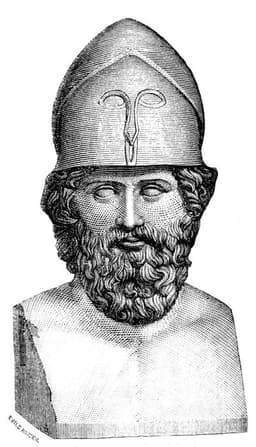
Themistocles
Politician · Ancient
68.4Total
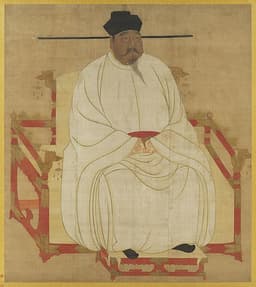
Zhao Kuangyin
Emperor · Medieval
71.5Total
Basic Information
Born
-524
927
Died
-459
976
Era
Ancient
Medieval
Nationality
Greece
China
Occupation
Politician
Emperor
Civilization
Western
Eastern
Score Comparison
Military (10%)
80.0
78.0
Political (20%)
72.0
84.0
Influence (20%)
40.0
68.0
Legacy (20%)
80.0
65.0
Leadership (15%)
79.8
74.0
Strategy (15%)
76.0
68.0
TOTAL
68.4
71.5
Themistocles — Complete Timeline
483 BC
Construction of the Athenian FleetReform◆ Major
Themistocles persuaded the Athenian assembly to use silver from the Laurion mines to build a fleet of 200 triremes. This naval expansion transformed Athens into a major maritime power and was crucial for the victory at Salamis.
AthensNaval PowerReform
Impact: nationalconstructive
480 BC
Battle of SalamisWar
Themistocles commanded the Greek navy against the Persian fleet at Salamis. He lured the Persians into the narrow straits, where the Greek ships destroyed the larger Persian fleet. This victory ended the Persian threat to Greece and preserved Greek independence.
Greco-Persian WarsNaval BattleAthens
Impact: regionalconstructive
472 BC
Ostracism from AthensPolitical Action◆ Major
Themistocles was ostracized by the Athenian assembly, likely due to political rivalries and accusations of arrogance. He went into exile, first to Argos, then to Persia, where he was received by King Artaxerxes I.
AthensExileOstracism
Impact: nationaltragic
465 BC
Service under the Persian KingPolitical Action
After his ostracism, Themistocles fled to Persia and offered his services to King Artaxerxes I. He was granted governorship of Magnesia and other cities in Asia Minor, where he lived until his death. This act was seen as treason by many Athenians.
PersiaExileTreason
Impact: regional
Zhao Kuangyin — Complete Timeline
960 AD
Founded Song dynastyPolitical Action
Zhao Kuangyin, a general of Later Zhou, was proclaimed emperor by his troops at Chenqiao. He established the Song dynasty, ending the Five Dynasties period and beginning a new era of Chinese history.
Song dynastyFoundingChenqiao
Impact: globalconstructive
961 AD
Removed military power from generalsPolitical Action◆ Major
Zhao Kuangyin invited senior generals to a banquet and persuaded them to retire peacefully. This 'removal of military power over wine' prevented military coups and centralized control.
Song dynastyMilitary reformCentralization
Impact: nationalconstructive
963 AD
Unified southern ChinaWar◆ Major
Zhao Kuangyin launched campaigns to conquer the southern kingdoms, including Jingnan, Later Shu, and Southern Tang. By his death, most of China was reunified under Song rule.
Song unificationConquestSouthern kingdoms
Impact: national
Expert Analysis
Themistocles vs Zhao Kuangyin
### The Chariot and the Sword
History remembers few contrasts as stark as that between Themistocles, the Athenian who saved Greece by tricking the Persians into a narrow strait, and Zhao Kuangyin, the Chinese general who unified an empire by convincing his own officers to lay down their swords over wine. One ended his days a fugitive in the court of his former enemy; the other died in his bed, the revered founder of a dynasty that would last three centuries. What drove these two master strategists to such different fates? The answer lies not in their brilliance—both possessed it in abundance—but in the worlds they sought to shape.
### Origins
Themistocles was born around 524 BCE into an Athens still finding its democratic footing. His mother was not Athenian by birth, a stain that followed him through life. He grew up in the shadow of the Persian Empire, a superpower that had already swallowed the Greek cities of Ionia. This proximity to annihilation forged in him a ruthless pragmatism. He learned early that in a democracy, power belonged to the man who could persuade the crowd—and that the crowd could turn on him just as quickly.
Zhao Kuangyin entered the world in 927 CE, in the chaos of the Five Dynasties and Ten Kingdoms period. China had splintered into a dozen warring states, and military coups were the only reliable path to power. Born into a military family, he rose through the ranks of the Later Zhou dynasty, a regime that had itself been born from a mutiny. He knew that in this world, loyalty was a currency that could be spent only once.
### Rise to Power
Themistocles’ ascent was a triumph of pure political will. In 483 BCE, when a rich vein of silver was discovered at Laurion, the assembly debated how to spend the windfall. Most Athenians wanted to distribute it among the citizens. Themistocles argued instead for a fleet of 200 triremes, warning that the nearby island of Aegina—and, more presciently, Persia—threatened Athens by sea. He won, and the ships he built would become the backbone of Greek freedom.
Zhao Kuangyin’s rise was far more direct. In 960, as a general of the Later Zhou, he was ordered north to repel a Khitan invasion. At Chenqiao, his troops mutinied, draping a yellow imperial robe over his shoulders. He accepted, but with a condition: no looting, no slaughter of the previous court. It was the first sign of a ruler who understood that legitimacy, not force, was the true foundation of power.
### Leadership & Governance
At the Battle of Salamis in 480 BCE, Themistocles showed the world his genius. The Persian fleet outnumbered the Greeks perhaps three to one. Themistocles sent a false message to the Persian king Xerxes, claiming the Greeks were about to flee. Xerxes took the bait, ordering his ships into the narrow strait of Salamis, where their numbers became a liability. The Greeks destroyed them. Themistocles’ score of 75.0 in strategy reflects this masterstroke, but his political score of 69.4 hints at a deeper flaw: he could win battles, but he could not win lasting trust.
Zhao Kuangyin’s greatest act came not on a battlefield but at a banquet. In 961, he invited the generals who had helped him seize power to a feast. As cups were drained, he dismissed the servants and spoke plainly: “If one day, someone drapes a yellow robe over you, what then?” The generals understood. He offered them wealth and titles in exchange for retirement. They accepted. This “removal of military power over cups of wine” was a political masterstroke that ensured the Song dynasty would never suffer a coup. His leadership score of 82.3 and political score of 75.9 reflect a man who knew that the most dangerous enemy was often in his own camp.
### Triumph & Tragedy
Themistocles’ triumph was Salamis, a victory that saved Western civilization from Persian domination. But his tragedy followed swiftly. In 472 BCE, the Athenian assembly ostracized him, voting to send him into exile for ten years. The charge was arrogance—he had built a trophy to himself in the Agora—but the real cause was fear. A man who had saved Athens was too powerful to be trusted.
Zhao Kuangyin’s triumph was the unification of southern China, a campaign he conducted with remarkable restraint. He absorbed the kingdom of Southern Tang through siege and negotiation, sparing its cities from destruction. His tragedy was more subtle: by weakening the military to prevent rebellion, he left the Song vulnerable to northern invaders. The dynasty he founded would eventually fall to the Mongols, a consequence of his own success.
### Character & Destiny
Themistocles was a man of the agora, a creature of democratic politics. He thrived on persuasion and deception, but he could not accept that democracy demanded humility. When ostracized, he did not fade into obscurity. He fled to Persia, of all places, and offered his services to King Artaxerxes I. The man who had defeated the Persians now governed a Persian province. He died there around 459 BCE, a traitor to his own people, yet still remembered as their savior.
Zhao Kuangyin was a man of the court, a creature of Confucian hierarchy. He understood that power in China flowed not from the people but from the Mandate of Heaven. His restraint was not weakness but wisdom. He died in 976, possibly from illness, possibly from poison administered by his brother—the historical record is murky. But he died an emperor, and the dynasty he founded endured.
### Legacy
Themistocles’ legacy is the trireme and the strait. He gave Athens a navy, and that navy gave birth to the Athenian Empire. His influence score of 84.7 and legacy score of 79.0 are fitting: he shaped the course of Western history, but he could not shape his own fate. He is remembered as a savior who became a traitor, a genius undone by his own character.
Zhao Kuangyin’s legacy is the Song dynasty, a golden age of Chinese culture, commerce, and technology. His influence score of 74.9 and legacy score of 75.1 are slightly lower, but they measure a different kind of achievement: not a single dramatic moment, but a stable system that lasted for centuries. He is remembered as a unifier who chose peace over war, a ruler who understood that the sword must ultimately serve the chariot.
### Conclusion
In the end, Themistocles and Zhao Kuangyin were both masters of strategy, but they played different games. Themistocles played the game of the moment: a crisis, a gamble, a victory. Zhao Kuangyin played the game of the ages: a system, a balance, a dynasty. One saved his city and lost himself; the other built an empire and preserved himself. The difference was not in their brilliance but in their worlds. Themistocles’ Athens was a democracy that devoured its heroes; Zhao Kuangyin’s China was a hierarchy that rewarded its architects. And so the Greek ended his days in exile, serving the king he had once defeated, while the Chinese died in his palace, the father of a golden age. History, it seems, remembers both, but for very different reasons.
Rankings
🥇
Zhao KuangyinLeader
Mil: 78.0Pol: 84.0Inf: 68.0
71.5
🥈
Themistocles
Mil: 80.0Pol: 72.0Inf: 40.0
68.4
+3.1 behind
How This Comparison Works
Algorithm
Each figure is scored on 6 dimensions (0—100 scale) based on structured historical data: Military (10%), Political (20%), Influence (20%), Legacy (20%), Leadership (15%), Strategy (15%). The weighted total produces the final ranking.
Data Sources
Scores are computed from structured sub-indicators in the database. Scale factors adjust for era (Ancient ×0.85, Modern ×1.0) and civilization size (Eastern ×1.05, Other ×0.80) to account for differences in population and military scale.
Maximum 3 Figures
Comparisons are limited to 2—3 figures to ensure readability and statistical meaningfulness.
Error Margins
±5 points per dimension — Sub-scores are derived from historical records with inherent uncertainty. Two figures within 5 points on a dimension should be considered roughly equivalent in that area.
Total Score Accuracy
±3 points overall — The weighted combination of 6 dimensions produces a total score with approximately ±3 points of uncertainty. Differences of less than 3 points are not statistically significant— the figures are effectively tied.
Known Limitations
- Historical records are incomplete and uneven across civilizations
- Figures from oral-tradition societies may be underrepresented
- Occupation labels can misclassify multi-role figures
- Scores measure capability and impact, not moral character
- Quantitative scoring is a comparison tool, not absolute truth
Capability Radar
Military (10%) — Battles & Warfare
Battles
75
75
Win Rate
85
85
Expansion
60
75
Political (20%) — Governance & Reform
Reform
75
90
Diplomacy
85
85
Economy
65
80
Influence (20%) — Cultural & Global Reach
Cultural
70
70
Global
75
60
Legacy (20%) — Historical Impact
Historical
85
80
Longevity
80
75
Leadership (15%) — Power & Stability
Tenure
70
65
Stability
60
85
Strategy (15%) — Tactics & Innovation
Strategy
90
80
Tactics
95
70
Reform
80
90
Similar Comparisons
Comments & Discussion
No comments yet. Be the first to share your thoughts!