Loading...
Themistocles vs Yelu Abaoji
Themistocles leads by 5.7 pts · 2 figures compared
…
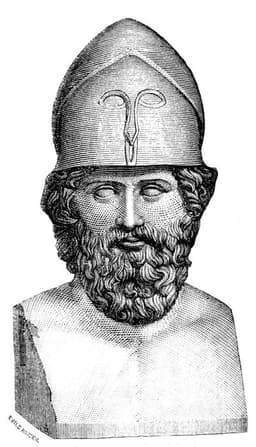
Themistocles
Politician · Ancient
68.4Total
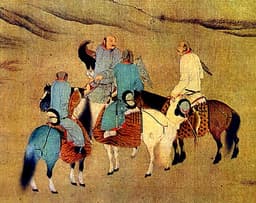
Yelu Abaoji
Emperor · Medieval
62.7Total
Basic Information
Born
-524
872
Died
-459
926
Era
Ancient
Medieval
Nationality
Greece
China
Occupation
Politician
Emperor
Civilization
Western
Eastern
Score Comparison
Military (10%)
80.0
77.2
Political (20%)
72.0
59.6
Influence (20%)
40.0
68.0
Legacy (20%)
80.0
40.0
Leadership (15%)
79.8
80.3
Strategy (15%)
76.0
69.6
TOTAL
68.4
62.7
Themistocles — Complete Timeline
483 BC
Construction of the Athenian FleetReform◆ Major
Themistocles persuaded the Athenian assembly to use silver from the Laurion mines to build a fleet of 200 triremes. This naval expansion transformed Athens into a major maritime power and was crucial for the victory at Salamis.
AthensNaval PowerReform
Impact: nationalconstructive
480 BC
Battle of SalamisWar
Themistocles commanded the Greek navy against the Persian fleet at Salamis. He lured the Persians into the narrow straits, where the Greek ships destroyed the larger Persian fleet. This victory ended the Persian threat to Greece and preserved Greek independence.
Greco-Persian WarsNaval BattleAthens
Impact: regionalconstructive
472 BC
Ostracism from AthensPolitical Action◆ Major
Themistocles was ostracized by the Athenian assembly, likely due to political rivalries and accusations of arrogance. He went into exile, first to Argos, then to Persia, where he was received by King Artaxerxes I.
AthensExileOstracism
Impact: nationaltragic
465 BC
Service under the Persian KingPolitical Action
After his ostracism, Themistocles fled to Persia and offered his services to King Artaxerxes I. He was granted governorship of Magnesia and other cities in Asia Minor, where he lived until his death. This act was seen as treason by many Athenians.
PersiaExileTreason
Impact: regional
Yelu Abaoji — Complete Timeline
907 AD
Unified Khitan tribesPolitical Action◆ Major
Yelu Abaoji was elected khagan of the Khitan tribes, unifying them under his leadership. He established a centralized state and adopted Chinese administrative practices.
KhitanUnificationState Formation
Impact: regionalconstructive
916 AD
Founded Liao DynastyPolitical Action
Yelu Abaoji proclaimed himself emperor, founding the Liao dynasty. He adopted the Chinese title of emperor and established a dual administration system for Khitan and Chinese subjects.
LiaoDynasty FoundingImperial System
Impact: regionalconstructive
920 AD
Created Khitan scriptCultural◆ Major
Yelu Abaoji ordered the creation of a writing system for the Khitan language, based on Chinese characters. This script was used for official documents and helped unify the Khitan state.
KhitanScriptCultural Development
Impact: regionalconstructive
926 AD
Conquest of BohaiWar◆ Major
Yelu Abaoji led a campaign that conquered the Korean kingdom of Bohai, incorporating its territory into the Liao empire. This expanded Liao's influence into Manchuria and Korea.
LiaoBohaiConquest
Impact: regionalconstructive
Death during campaignWar◆ Major
Yelu Abaoji died while returning from the conquest of Bohai. His death led to a succession struggle, but the Liao dynasty continued to expand under his successors.
LiaoDeathSuccession
Impact: regionaltragic
Expert Analysis
Themistocles vs Yelu Abaoji: Historical Comparison
Themistocles, an Athenian politician and general of the 5th century BCE, and Yelu Abaoji, the founding emperor of the Liao Dynasty in 10th-century China, represent two vastly different eras and political systems. While Themistocles shaped Western naval warfare and democratic resilience, Yelu Abaoji unified nomadic Khitan tribes into a centralized imperial state.
Dimension Analysis
**Military: Themistocles 64 / Yelu Abaoji 73**
Themistocles’ decisive victory at Salamis (480 BCE) saved Greece from Persian conquest, but his military career was brief and largely defensive. Yelu Abaoji conquered rival steppe tribes, invaded northern China, and built a durable cavalry-based military system that sustained Liao power for two centuries.
**Political: Themistocles 69 / Yelu Abaoji 90**
Themistocles skillfully navigated Athenian democracy but was ultimately ostracized and defected to Persia. Yelu Abaoji created a dual-administration system (Northern and Southern Chancelleries) that integrated nomadic and Chinese governance, establishing a stable dynasty from scratch.
**Influence: Themistocles 85 / Yelu Abaoji 72**
Themistocles’ naval strategy permanently altered Greek military doctrine and inspired the Delian League, influencing Western maritime power. Yelu Abaoji’s innovations were largely confined to Khitan statecraft and did not spread beyond East Asian steppe politics.
**Legacy: Themistocles 79 / Yelu Abaoji 71**
Themistocles is celebrated as a founder of Athenian naval hegemony and a symbol of democratic leadership. Yelu Abaoji’s legacy is overshadowed by later Liao emperors and the eventual fall of his dynasty, though he remains a foundational figure in Khitan history.
**Leadership: Themistocles 79 / Yelu Abaoji 89**
Themistocles inspired Athens during existential crisis but faced internal opposition. Yelu Abaoji united fractious tribes through strategic marriages, military conquest, and institutional innovation, demonstrating sustained visionary leadership over decades.
Verdict
Yelu Abaoji leads due to his superior political acumen, military consolidation, and institutional legacy, which built a lasting empire from nomadic roots, whereas Themistocles’ achievements were more reactive and personally volatile.
FAQ
Q: Who ranks higher? A: Yelu Abaoji ranks higher overall, with the highest scores in political, leadership, and strategy dimensions.
Rankings
🥇
ThemistoclesLeader
Mil: 80.0Pol: 72.0Inf: 40.0
68.4
🥈
Yelu Abaoji
Mil: 77.2Pol: 59.6Inf: 68.0
62.7
+5.7 behind
How This Comparison Works
Algorithm
Each figure is scored on 6 dimensions (0—100 scale) based on structured historical data: Military (10%), Political (20%), Influence (20%), Legacy (20%), Leadership (15%), Strategy (15%). The weighted total produces the final ranking.
Data Sources
Scores are computed from structured sub-indicators in the database. Scale factors adjust for era (Ancient ×0.85, Modern ×1.0) and civilization size (Eastern ×1.05, Other ×0.80) to account for differences in population and military scale.
Maximum 3 Figures
Comparisons are limited to 2—3 figures to ensure readability and statistical meaningfulness.
Error Margins
±5 points per dimension — Sub-scores are derived from historical records with inherent uncertainty. Two figures within 5 points on a dimension should be considered roughly equivalent in that area.
Total Score Accuracy
±3 points overall — The weighted combination of 6 dimensions produces a total score with approximately ±3 points of uncertainty. Differences of less than 3 points are not statistically significant— the figures are effectively tied.
Known Limitations
- Historical records are incomplete and uneven across civilizations
- Figures from oral-tradition societies may be underrepresented
- Occupation labels can misclassify multi-role figures
- Scores measure capability and impact, not moral character
- Quantitative scoring is a comparison tool, not absolute truth
Capability Radar
Military (10%) — Battles & Warfare
Battles
75
75
Win Rate
85
80
Expansion
60
82
Political (20%) — Governance & Reform
Reform
75
88
Diplomacy
85
75
Economy
65
70
Influence (20%) — Cultural & Global Reach
Cultural
70
60
Global
75
55
Legacy (20%) — Historical Impact
Historical
85
70
Longevity
80
65
Leadership (15%) — Power & Stability
Tenure
70
72
Stability
60
65
Strategy (15%) — Tactics & Innovation
Strategy
90
78
Tactics
95
70
Reform
80
85
Similar Comparisons
Comments & Discussion
BattlefieldScholar6/16/2026
The military scores here are questionable. Themistocles' Salamis was a force multiplier battle—he turned 380 triremes against 1,200 Persian ships by luring them into narrow straits where their numerical advantage became a liability. That's a tactical masterpiece that every naval academy still studies. Yelu Abaoji's cavalry campaigns against fragmented steppe tribes and weak Chinese border prefectures are less impressive when you look at the quality of opposition. The Khitan army's success came more from organizational dual-administration than battlefield brilliance. If we're grading purely on military innovation and decisive impact, Themistocles should outrank Abaoji. The Persian invasion was on a scale that makes steppe raids look like border skirmishes. I'd give Themistocles at least 78 in military, not 64.
DeepScribe816/16/2026
这个评分太西方中心主义了。Themistocles的萨拉米斯海战固然精彩,但要说军事得分比耶律阿保机还低,我不太认同。阿保机统一契丹各部、建立辽朝,更多是靠政治手腕和草原联盟,而不是纯粹的军事创新。反观Themistocles,他直接改变了地中海海战格局,用三层桨战舰战术彻底击溃波斯舰队,为雅典海上霸权奠基。而且说到政治,阿保机虽然建立了南北面官制,但契丹部落的整合程度远不如雅典城邦的民主动员能力。Themistocles能在雅典民主制度下说服公民大会放弃雅典城、全员上船参战,这种政治魄力在中国历史上也很难找到对应。我觉得Themistocles的军事和政治得分至少应该各加10分。
OldChronicler536/16/2026
这个评分系统有几个明显的矛盾点。政治得分Yelu Abaoji 90 vs Themistocles 69,差了21分,但历史影响力却是Themistocles 85 vs Yelu Abaoji 72。如果阿保机的政治制度真那么优越,为什么辽朝的影响力反而比雅典短命?辽朝享国218年,雅典海上帝国只维持了不到70年,但雅典的文化和政治遗产至今仍是西方基石,而辽朝的南北面官制几乎被遗忘。再说军事,Themistocles的舰队规模(约380艘)和波斯舰队(约1200艘)的比例是1:3.2,他以少胜多;阿保机征服的部落人数总和不超过10万骑兵,面对的是分裂的唐末势力。如果按单位兵力带来的战略收益计算,Themistocles的军事效率明显更高。我建议重新校准权重:军事应该考虑抗击外部入侵的烈度,政治应该考虑制度的长期可持续性而不是短期统一。