Loading...
Tamar of Georgia vs Zhao Kuangyin
Tamar of Georgia leads by 0.0 pts · 2 figures compared
…
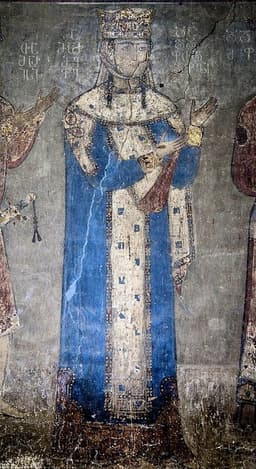
Tamar of Georgia
Emperor · Medieval
71.5Total
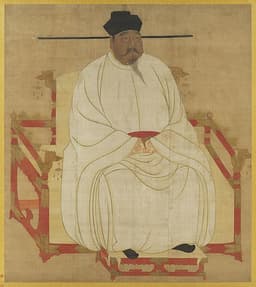
Zhao Kuangyin
Emperor · Medieval
71.5Total
Basic Information
Born
1160
927
Died
1213
976
Era
Medieval
Medieval
Nationality
Georgia
China
Occupation
Emperor
Emperor
Civilization
Western
Eastern
Score Comparison
Military (10%)
78.0
78.0
Political (20%)
72.0
84.0
Influence (20%)
82.0
68.0
Legacy (20%)
55.0
65.0
Leadership (15%)
80.0
74.0
Strategy (15%)
66.3
68.0
TOTAL
71.5
71.5
Tamar of Georgia — Complete Timeline
1184 AD
Coronation as Queen RegnantPolitical Action
Tamar was crowned as the first female ruler of Georgia after her father George III's death. Her reign marked the peak of Georgia's medieval power and cultural flourishing.
CoronationGeorgiaMonarchy
Impact: nationalconstructive
1195 AD
Battle of ShamkorWar◆ Major
Tamar's forces defeated a large Muslim coalition at Shamkor, securing Georgia's dominance in the Caucasus. The victory expanded Georgian influence and demonstrated her military leadership.
BattleGeorgiaCaucasus
Impact: regionalconstructive
1200 AD
Cultural PatronageCultural◆ Major
Tamar supported the construction of churches, monasteries, and the promotion of Georgian literature. Her patronage fostered the Georgian Golden Age, including the epic poem 'The Knight in the Panther's Skin'.
CulturePatronageGeorgia
Impact: nationalconstructive
Zhao Kuangyin — Complete Timeline
960 AD
Founded Song dynastyPolitical Action
Zhao Kuangyin, a general of Later Zhou, was proclaimed emperor by his troops at Chenqiao. He established the Song dynasty, ending the Five Dynasties period and beginning a new era of Chinese history.
Song dynastyFoundingChenqiao
Impact: globalconstructive
961 AD
Removed military power from generalsPolitical Action◆ Major
Zhao Kuangyin invited senior generals to a banquet and persuaded them to retire peacefully. This 'removal of military power over wine' prevented military coups and centralized control.
Song dynastyMilitary reformCentralization
Impact: nationalconstructive
963 AD
Unified southern ChinaWar◆ Major
Zhao Kuangyin launched campaigns to conquer the southern kingdoms, including Jingnan, Later Shu, and Southern Tang. By his death, most of China was reunified under Song rule.
Song unificationConquestSouthern kingdoms
Impact: national
Expert Analysis
Tamar of Georgia vs Zhao Kuangyin
# The Emperor and the Queen
In the year 960, a general named Zhao Kuangyin stood before his mutinous army at Chenqiao, reluctantly accepting the yellow robe they thrust upon him. Half a world away and two centuries later, a teenage girl named Tamar knelt in a cathedral in Kutaisi, receiving a crown that would make her the first female ruler of Georgia. One man seized power through the chaos of military revolt; one woman inherited it through the precarious accident of bloodline. Both would transform their kingdoms, yet their paths diverged as sharply as the civilizations they ruled. What drove a Chinese emperor to disarm his own generals at a banquet table, and a Georgian queen to lead her armies to triumph on the battlefield? The answers lie in the deep currents of culture, gender, and historical moment.
Origins
Zhao Kuangyin was born in 927 into a military family during the Five Dynasties and Ten Kingdoms period—a brutal era when China fragmented into warring states and generals toppled emperors with alarming regularity. His father served the Later Tang, but Zhao himself rose through the ranks of the Later Zhou, a dynasty that lasted barely a decade. This world taught him one lesson above all: power was fragile, and the man with the army was king—until the next man with a larger army arrived.
Tamar of Georgia, born in 1160, entered a very different world. Her father, King George III, ruled a kingdom that had emerged from centuries of struggle against Byzantine and Muslim empires. Georgia was Christian, feudal, and perched at the crossroads of Europe and Asia. Tamar grew up in a court that valued learning, art, and religious devotion. But she also grew up under a shadow: she was a girl, and her father had no male heir. From childhood, she was groomed for a role that few women had ever played.
Rise to Power
Zhao Kuangyin’s rise was a masterclass in opportunism. By 959, he commanded the elite imperial guard of the Later Zhou. When the young emperor died suddenly, leaving a child on the throne, Zhao’s troops—restless and ambitious—proclaimed him emperor at Chenqiao. He accepted, but with a crucial condition: no looting of the capital. This restraint signaled a leader who understood that power won by force could be undone by chaos.
Tamar’s rise was quieter but no less fraught. Crowned co-ruler by her father in 1178 to secure the succession, she faced a court that doubted her. When George III died in 1184, Tamar was crowned Queen Regnant at just 24. The nobles immediately tested her, demanding she marry a prince they could control. She chose Yuri, a Russian prince, but the marriage failed spectacularly—Yuri proved incompetent and abusive, and Tamar eventually divorced him, a bold act that defied both church and custom.
Leadership & Governance
Here the two rulers reveal their deepest contrasts. Zhao Kuangyin’s genius lay in subtraction. In 961, he invited his most powerful generals to a banquet. Over wine, he lamented the insecurity of his position, hinting that their own troops might one day force them to rebel. The generals, understanding the implied threat, offered to resign. Zhao accepted their swords and retired them with wealth and titles. This “removal of military power at a feast” was a bloodless revolution—a sharp contrast to the purges that marked other Chinese dynasties. Zhao then centralized the army, rotated commanders, and placed civil officials in charge of military logistics. He was a reformer who understood that the greatest threat to stability was not foreign invasion but internal ambition.
Tamar governed from a position of vulnerability that she transformed into strength. She surrounded herself with loyal advisors, patronized the arts, and cultivated an image of pious wisdom. But she also fought. In 1195, at the Battle of Shamkor, her armies crushed a Muslim coalition that threatened Georgia’s borders. Tamar did not lead the charge—she was no warrior queen in the mold of Joan of Arc—but she directed strategy, inspired loyalty, and used victory to cement her authority. Her reign became the Georgian Golden Age: churches rose, literature flourished, and the kingdom expanded to its greatest territorial extent.
Triumph & Tragedy
Zhao Kuangyin’s greatest triumph was unification. By 976, he had conquered the southern kingdoms—Jingnan, Later Shu, Southern Tang—and brought most of China under Song rule. His tragedy was incompleteness: the northern territories of the Liao dynasty remained beyond his grasp, a failure that would haunt his successors. He died suddenly in 976, possibly assassinated by his brother, in a palace mystery that echoes through history.
Tamar’s triumph was the transformation of Georgia into a regional power. Her tragedy was the fragility of her achievement. After her death in 1213, her son George IV ruled competently but briefly; the Mongol invasions that followed would shatter the Golden Age. Tamar’s legacy, unlike Zhao’s, was a golden sunset before a long dark.
Character & Destiny
Zhao Kuangyin was pragmatic, cautious, and deeply aware of history’s patterns. He once said, “The empire is for all under heaven, not for one family alone”—a statement that reveals his understanding of legitimacy. He disarmed his generals because he knew that military power, left unchecked, devours itself. His character shaped a dynasty that valued civil administration over martial glory, stability over expansion.
Tamar was resilient, shrewd, and forced to navigate a world that doubted her capabilities. She learned to wield soft power—patronage, marriage, diplomacy—as effectively as her generals wielded swords. Her character was forged by resistance: every noble who questioned her, every husband who failed her, every battle that tested her kingdom. She ruled not despite being a woman but by turning her gender into a kind of authority—the wise queen, the mother of the nation.
Legacy
Zhao Kuangyin left a unified China, but also a Song dynasty that would struggle with military weakness. His decision to centralize power and subordinate the military to civil bureaucracy created stability but also vulnerability. Later Song emperors would pay dearly for his caution. Yet he is remembered as a founder who shed no blood to secure his throne—a rarity in Chinese history.
Tamar left a Georgia that remembers her as “King of Kings and Queen of Queens,” a title that defies gender. Her reign is the benchmark of Georgian national pride, a golden age of culture and power. She is canonized by the Orthodox Church, celebrated in poetry, and invoked as a symbol of resilience.
Conclusion
Zhao Kuangyin and Tamar of Georgia never met, never knew of each other’s worlds. Yet their stories mirror each other across centuries and continents: both inherited chaos, both created order, both faced the fundamental question of how power should be held and used. Zhao answered by disarming his own generals, trusting that a stable throne required weak swords. Tamar answered by arming her kingdom, trusting that a queen’s authority required strong borders. One built a dynasty on caution; the other built a golden age on courage. Both remind us that leadership is not a formula but a response to the specific pressures of time, place, and circumstance. The emperor and the queen—each, in their own way, shaped the world they inherited, and left it forever changed.
Rankings
🥇
Tamar of GeorgiaLeader
Mil: 78.0Pol: 72.0Inf: 82.0
71.5
🥈
Zhao Kuangyin
Mil: 78.0Pol: 84.0Inf: 68.0
71.5
How This Comparison Works
Algorithm
Each figure is scored on 6 dimensions (0—100 scale) based on structured historical data: Military (10%), Political (20%), Influence (20%), Legacy (20%), Leadership (15%), Strategy (15%). The weighted total produces the final ranking.
Data Sources
Scores are computed from structured sub-indicators in the database. Scale factors adjust for era (Ancient ×0.85, Modern ×1.0) and civilization size (Eastern ×1.05, Other ×0.80) to account for differences in population and military scale.
Maximum 3 Figures
Comparisons are limited to 2—3 figures to ensure readability and statistical meaningfulness.
Error Margins
±5 points per dimension — Sub-scores are derived from historical records with inherent uncertainty. Two figures within 5 points on a dimension should be considered roughly equivalent in that area.
Total Score Accuracy
±3 points overall — The weighted combination of 6 dimensions produces a total score with approximately ±3 points of uncertainty. Differences of less than 3 points are not statistically significant— the figures are effectively tied.
Known Limitations
- Historical records are incomplete and uneven across civilizations
- Figures from oral-tradition societies may be underrepresented
- Occupation labels can misclassify multi-role figures
- Scores measure capability and impact, not moral character
- Quantitative scoring is a comparison tool, not absolute truth
Capability Radar
Military (10%) — Battles & Warfare
Battles
75
75
Win Rate
85
85
Expansion
75
75
Political (20%) — Governance & Reform
Reform
80
90
Diplomacy
75
85
Economy
85
80
Influence (20%) — Cultural & Global Reach
Cultural
80
70
Global
60
60
Legacy (20%) — Historical Impact
Historical
75
80
Longevity
70
75
Leadership (15%) — Power & Stability
Tenure
85
65
Stability
70
85
Strategy (15%) — Tactics & Innovation
Strategy
80
80
Tactics
70
70
Reform
65
90
Similar Comparisons
Comments & Discussion
烤羊肉串的将军6/16/2026
赵匡胤牛逼啊,陈桥兵变教科书级操作:黄袍一披,回头就说"你们逼我的"。装得一手好无辜,转头就把兵权收得干干净净。杯酒释兵权简直精妙,几杯酒就让石守信他们乖乖交权。但塔玛尔呢?靠血统上位,就因为是乔治三世的女儿?这能叫本事?
Longbow Lad6/16/2026
Let's be real here: Tamar's military record speaks for itself. She crushed the Ildenizids at Shamkor in 1195, captured Erzurum in 1201, and secured Georgia's Golden Age as a dominant transregional power. Zhao's claim to military fame? Defeating a couple of minor rebels and his own former colleagues at a banquet. One led armies to victory; the other schemed in palaces. Give me the Queen who actually fought over the Emperor who drank wine.
醉翁之意6/16/2026
塔玛尔被过分浪漫化了。什么"黄金时代",实际她继位时贵族们集体造反,她爹乔治三世的镇压血腥得很。她丈夫Yuri被自己妻子废黜后还引兵回来打她——这就是经典的家庭伦理悲剧。而赵匡胤结束五代十国乱世,统一中原大部分地区,建立了稳定的宋朝政治秩序。塔玛尔的功绩与赵匡胤重建帝国秩序相比,就是地方政权的小打小闹。
Data_Skeptic_426/16/2026
Comparing raw territory and longevity: Northern Song under Zhao's foundation lasted 167 years, controlling about 3 million km² at its peak. Georgia under Tamar maybe 0.4 million km² for two decades before Mongol invasions crushed it. Demographics? Song China had roughly 50-60 million people; Georgia maybe 2 million. Zhao's political reforms—centralizing military command, weakening provincial power, establishing civil service exams—created an administrative machine that lasted centuries. Tamar's
塞外吹笛的吟游诗人6/16/2026
唉,你们汉人永远不懂。塔玛尔的意义不在于征服了多少土地,而在于她证明了女人能统治一个中世纪王国。1184年她登基时才24岁,贵族们必须宣誓效忠一位女性君主——这在东方帝国根本不可想象。她扩建教堂、资助诗人和学者,乔治亚文化在她治下达到巅峰。赵匡胤虽统一中原,但只是又一个男权专制帝王。谁更值得铭记?当然是那位打破性别的女王。