Loading...
Tailapa II vs Yuwen Yong
Yuwen Yong leads by 6.8 pts · 2 figures compared
…
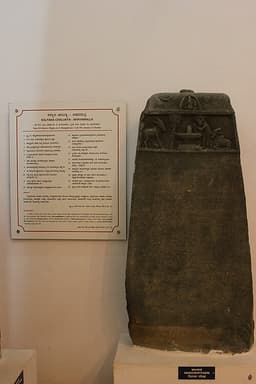
Tailapa II
Emperor · Medieval
60.4Total
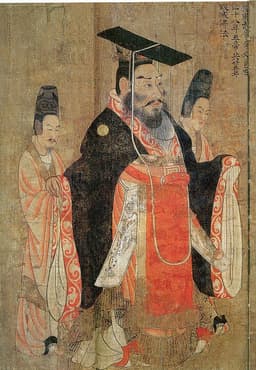
Yuwen Yong
Emperor · Medieval
67.2Total
Basic Information
Born
957
543
Died
997
578
Era
Medieval
Medieval
Nationality
India
China
Occupation
Emperor
Emperor
Civilization
Indian
Eastern
Score Comparison
Military (10%)
74.7
78.0
Political (20%)
53.8
78.0
Influence (20%)
61.0
58.0
Legacy (20%)
52.0
54.0
Leadership (15%)
72.0
85.0
Strategy (15%)
58.0
69.1
TOTAL
60.4
67.2
Tailapa II — Complete Timeline
973 AD
Founding of the Western Chalukya DynastyPolitical Action◆ Major
Tailapa II overthrew the Rashtrakuta ruler Karka II and established the Western Chalukya dynasty. This marked the end of Rashtrakuta rule in the Deccan and the beginning of a new Chalukya era.
Impact: regional
995 AD
Defeat of the Paramara King MunjaWar◆ Major
Tailapa II defeated and captured the Paramara king Munja of Malwa. This victory consolidated Western Chalukya control over the northern Deccan and established their military reputation.
Impact: regional
Yuwen Yong — Complete Timeline
574 AD
Suppression of Buddhism in Northern ZhouReform◆ Major
Emperor Wu of Northern Zhou (Yuwen Yong) ordered the suppression of Buddhism, confiscating monastic lands, forcing monks and nuns to return to lay life, and destroying temples. He aimed to increase state revenue and military manpower, strengthening the state.
Northern ZhouBuddhist PersecutionReform
Impact: nationaldestructive
577 AD
Conquest of Northern QiWar
Emperor Wu led a successful campaign against the rival Northern Qi dynasty, conquering its territory and unifying northern China under Northern Zhou. This victory ended the division of the north and set the stage for the Sui dynasty's unification of all China.
Northern ZhouUnificationNorthern Qi
Impact: regionalconstructive
578 AD
Death during campaign against the TurksWar◆ Major
Emperor Wu died of illness while leading a campaign against the G
Northern ZhouMilitary CampaignDeath
Impact: regionaltragic
Expert Analysis
Yuwen Yong vs Tailapa II
# The Emperor and the Rebel King
In the year 578, on a dusty battlefield somewhere in the northern steppes, a Chinese emperor lay dying. Yuwen Yong, known to history as Emperor Wu of Northern Zhou, had spent two decades forging a unified northern China, only to succumb to illness at the age of thirty-five while campaigning against the Göktürks. Four centuries earlier and thousands of miles to the southwest, another warrior-king, Tailapa II, had just overthrown an empire and was about to establish a dynasty that would rule the Deccan for two centuries. Though they never met, these two medieval rulers—one a Buddhist-suppressing emperor, the other a Chalukya restorer—faced remarkably similar challenges: how to seize power, how to hold it, and what to leave behind. Their different answers reveal much about the civilizations they led and the ages that shaped them.
Origins
Yuwen Yong was born in 543 into a world of fractured empires. The Northern Wei dynasty had split, and China was divided between rival kingdoms—the Northern Zhou in the west and the Northern Qi in the east. His family, the Yuwen clan, were Xianbei warriors who had risen through military ranks, and Yong was raised in a court where power was won by the sword and held by the shrewd. He learned early that survival meant mastering both politics and war, a lesson that would define his reign.
Tailapa II, born in 957, emerged from a different tradition. The Rashtrakuta empire had dominated the Deccan for two centuries, but by the late tenth century, its glory was fading. Tailapa claimed descent from the earlier Chalukya dynasty, which had ruled the region before the Rashtrakutas seized power. He was not a prince of the blood but a feudal lord, a *samanta* who saw opportunity in the empire's decline. While Yuwen Yong inherited a throne, Tailapa had to carve one out for himself.
The contrast is striking: one was born into a system of imperial legitimacy, the other into a world of feudal ambition. Their eras, too, shaped different possibilities. Sixth-century China was a chessboard of competing states, where unification was the ultimate prize. Tenth-century India was a mosaic of regional kingdoms, where local dominance mattered more than continental empire.
Rise to Power
Yuwen Yong's path was swift and direct. He became emperor of Northern Zhou in 560 at the age of seventeen, but real power initially rested with his cousin Yuwen Hu, a regent who had murdered two previous emperors. For twelve years, Yong played the patient puppet, waiting for his moment. In 572, he struck: in a carefully planned coup, he killed Yuwen Hu and seized full control. It was a masterstroke of political timing—he had learned that patience, not impatience, was the key to survival.
Tailapa II's rise was equally dramatic but more violent. In 973, he led a rebellion against the Rashtrakuta ruler Karka II, defeating him in battle and founding the Western Chalukya dynasty. Unlike Yong, who inherited a state and then purged it, Tailapa created his state from scratch. He did not have the luxury of a regency to outmaneuver; he had to fight for every inch of territory, every ally, every grain of tribute.
Both men seized power in their mid-thirties, but the nature of their rise differed fundamentally. Yong's coup was a palace affair, the work of a courtier turned emperor. Tailapa's rebellion was a field campaign, the work of a warlord turned king.
Leadership & Governance
As rulers, they shared a pragmatic ruthlessness but applied it to different ends. Yuwen Yong is best remembered for his 574 suppression of Buddhism, a shock to a society where monasteries owned vast lands and commanded enormous influence. He confiscated monastic properties, forced monks back into lay life, and redirected resources to the state. This was not religious zealotry but cold calculation: he needed funds and manpower for his military campaigns, and the Buddhist establishment was the richest target. His strategy score of 81.8 reflects this clear-eyed realism.
Tailapa II, by contrast, was a restorer of tradition. He revived Chalukya institutions, patronized Hindu temples, and presented himself as a guardian of dharma. His military campaigns—particularly the 995 defeat and capture of the Paramara king Munja of Malwa—were aimed at consolidating control over the Deccan, not transforming society. His political score of 62.2 is lower than Yong's 72.0, partly because he operated within an established order rather than reshaping it.
Their military styles also diverged. Yong was an aggressive strategist who conquered the Northern Qi in 577, unifying northern China under his rule. He died while expanding northward against the Turks. Tailapa fought defensive and consolidating wars, repelling Chola incursions and subduing rivals. Yong's military score of 74.6 edges out Tailapa's 67.3, reflecting the scale of his conquests.
Triumph & Tragedy
Yuwen Yong's greatest triumph was the conquest of Northern Qi in 577, a campaign that demonstrated his strategic brilliance. Within a year, he had unified the north, a feat that his successors would build upon to create the Sui and Tang dynasties. His greatest tragedy was his early death in 578, at the height of his power, cut down by illness during a campaign against the Göktürks. He left behind a unified state but no adult heir—his son, Emperor Xuan, would undo much of his work through misrule.
Tailapa II's triumph was the defeat of Munja in 995, which secured Western Chalukya dominance in the Deccan. His tragedy was subtler: he founded a dynasty that would last two centuries, but his successors would face the same cycle of rebellion and decline that he had exploited. The Western Chalukyas would fall in the twelfth century, not to external conquest but to internal fragmentation.
Character & Destiny
Yuwen Yong was a man of iron will and cold calculation. He suppressed Buddhism not from hatred but from necessity; he killed his cousin not from ambition but from survival. His leadership score of 76.9 reflects a ruler who commanded loyalty through competence, not charisma. He was a builder of systems, a unifier who saw the big picture.
Tailapa II was a warrior-king in the classic Indian mold—brave, pious, and ambitious. His strategy score of 55.4 is lower than Yong's 81.8, suggesting he was more a fighter than a planner. He restored a dynasty but did not transform a civilization. His legacy was personal, not institutional.
Their different fates reflect their different worlds. Yong's China demanded unification; Tailapa's India rewarded regional consolidation. One left a blueprint for empire; the other left a lineage.
Legacy
Yuwen Yong is remembered as a unifier, a precursor to the Sui and Tang dynasties that would reunite China. His suppression of Buddhism has been controversial—some see it as brutal, others as necessary. His legacy score of 68.6 is modest, perhaps because he died too soon to complete his work.
Tailapa II is remembered as the founder of the Western Chalukya dynasty, a golden age of Kannada literature and temple architecture. His legacy score of 66.9 is similar to Yong's, reflecting a comparable impact on regional history. But while Yong's legacy fed into a larger Chinese narrative of unification, Tailapa's remained local.
Conclusion
In the end, both men faced the same fundamental question: what does it mean to rule? Yuwen Yong answered by building a state; Tailapa II by restoring a dynasty. One suppressed a religion to fund his armies; the other patronized temples to legitimize his rule. Their scores are remarkably close—Yong's total of 74.0 to Tailapa's 66.6—but their paths could not have been more different. The emperor who died on campaign and the king who died in bed both left behind worlds they had shaped, but not controlled. History, as always, had the final word.
Rankings
🥇
Yuwen YongLeader
Mil: 78.0Pol: 78.0Inf: 58.0
67.2
🥈
Tailapa II
Mil: 74.7Pol: 53.8Inf: 61.0
60.4
+6.8 behind
How This Comparison Works
Algorithm
Each figure is scored on 6 dimensions (0—100 scale) based on structured historical data: Military (10%), Political (20%), Influence (20%), Legacy (20%), Leadership (15%), Strategy (15%). The weighted total produces the final ranking.
Data Sources
Scores are computed from structured sub-indicators in the database. Scale factors adjust for era (Ancient ×0.85, Modern ×1.0) and civilization size (Eastern ×1.05, Other ×0.80) to account for differences in population and military scale.
Maximum 3 Figures
Comparisons are limited to 2—3 figures to ensure readability and statistical meaningfulness.
Error Margins
±5 points per dimension — Sub-scores are derived from historical records with inherent uncertainty. Two figures within 5 points on a dimension should be considered roughly equivalent in that area.
Total Score Accuracy
±3 points overall — The weighted combination of 6 dimensions produces a total score with approximately ±3 points of uncertainty. Differences of less than 3 points are not statistically significant— the figures are effectively tied.
Known Limitations
- Historical records are incomplete and uneven across civilizations
- Figures from oral-tradition societies may be underrepresented
- Occupation labels can misclassify multi-role figures
- Scores measure capability and impact, not moral character
- Quantitative scoring is a comparison tool, not absolute truth
Capability Radar
Military (10%) — Battles & Warfare
Battles
70
75
Win Rate
75
80
Expansion
75
80
Political (20%) — Governance & Reform
Reform
65
85
Diplomacy
60
70
Economy
65
75
Influence (20%) — Cultural & Global Reach
Cultural
55
40
Global
40
40
Legacy (20%) — Historical Impact
Historical
60
65
Longevity
50
50
Leadership (15%) — Power & Stability
Tenure
70
60
Stability
60
70
Strategy (15%) — Tactics & Innovation
Strategy
70
75
Tactics
65
70
Reform
60
85
Similar Comparisons
Comments & Discussion
Emperor's Reckoning6/16/2026
The numbers don't lie: Yuwen Yong conquered Northern Qi in just 2 years (576-577), unifying China, while Tailapa II spent 23 years (973-996) chipping away at the Rashtrakutas. One crashed his rival like a Byzantine cataphract, the other crawled like a patient assassin. Speed matters in military history—Yong's blitzkrieg efficiency dwarfs Tailapa's grinding war of attrition. Give me the emperor who finishes the job before his beard goes gray.
卫道士的剑6/16/2026
数据只是表象:宇文邕灭佛可不是什么文化净化,而是赤裸裸的政治掠夺——他没收了全国四万所寺庙的田产,释放百万僧尼充作赋税兵源。这招比Tailapa II那套拉拢婆罗门、扶持印度教寺庙的绥靖政策狠辣十倍。一个用暴力重组社会结构,一个用妥协维持表面和谐。别跟我提什么皇帝仁慈,铁腕才是统一者的通行证。
Salt of the Steppe6/16/2026
Tailapa II restored the "glory" of the Chalukyas, but let's be real—his dynasty survived 200 years only because the Deccan was a backwater. Compare their enemies: Yong crushed the Göktürks, arguably the most dangerous nomadic force of his era, while Tailapa fought the Paramara king Munja (who got captured like an amateur). Fighting border raiders versus fighting history's tide? Yong's legacy shaped China's destiny; Tailapa's was a local footnote. No contest.
铁血史官6/16/2026
宇文邕死因至今是个迷:史料说他35岁死于急病,但《周书》记载他死前三天还在军营纵马狂奔。我怀疑是被亲信下毒——他儿子宇文赟就是个暴君,登基后立即废除父亲所有政策。反观Tailapa II,寿终正寝,儿子继位后延续改革。一位帝王连自己的江山都托付不了,打再多胜仗也是失败的。皇帝死在疆场?那叫命运垂死的反讽。
Lotus Eater's Lament6/16/2026
You're all missing the subtler tragedy: both men destroyed what they loved to save their states. Yuwen Yong massacred Buddhists—his Xianbei heritage's native religion—to centralize power; Tailapa II, a Jain patron, let his wife convert to orthodox Hinduism to appease warlords. That's not pragmatism, that's cultural suicide. Yong's anti-Buddhist edicts burned 3 million scriptures; Tailapa's "revival" erased Rashtrakuta pluralism. They unified graves, not civilizations.
暮鼓晨钟6/16/2026
Tailapa II最讽刺的“功绩”是恢复了Vatapi Chalukya的日神庙,却