Loading...
Taejo of Joseon vs Zhao Kuangyin
Zhao Kuangyin leads by 1.1 pts · 2 figures compared
…
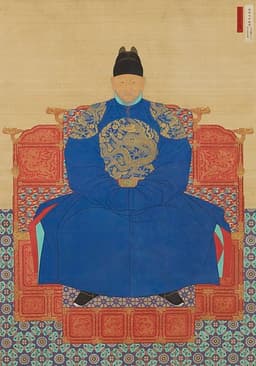
Taejo of Joseon
Emperor · Medieval
70.4Total
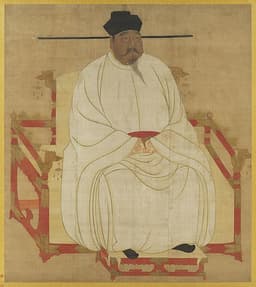
Zhao Kuangyin
Emperor · Medieval
71.5Total
Basic Information
Born
1335
927
Died
1408
976
Era
Medieval
Medieval
Nationality
Korea
China
Occupation
Emperor
Emperor
Civilization
Eastern
Eastern
Score Comparison
Military (10%)
74.7
78.0
Political (20%)
65.0
84.0
Influence (20%)
65.0
68.0
Legacy (20%)
80.0
65.0
Leadership (15%)
72.0
74.0
Strategy (15%)
61.2
68.0
TOTAL
70.4
71.5
Taejo of Joseon — Complete Timeline
1380 AD
Battle of HwangsanWar
General Yi Seong-gye defeated a Japanese pirate (wokou) force at Hwangsan. This victory enhanced his military reputation and demonstrated his capability as a commander.
WokouGoryeo Military
1388 AD
Wihwado RetreatPolitical Action
General Yi Seong-gye, ordered to invade the Ming dynasty's Liaodong region, turned his army back at Wihwado Island. This act of defiance against the Goryeo court led to a coup that eventually brought him to power.
CoupGoryeo-Ming RelationsPower Shift
Impact: national
1391 AD
Land Reform and the Gwajeon LawReform◆ Major
Taejo implemented the Gwajeon Law, a land reform that redistributed land from the old Goryeo aristocracy to his supporters and the state. This weakened the old elite and strengthened the new Joseon ruling class.
Land ReformSocial ChangeJoseon
Impact: nationalconstructive
1392 AD
Founding of the Joseon DynastyPolitical Action
Yi Seong-gye deposed the last Goryeo king and founded the Joseon dynasty, with its capital at Hanyang (modern Seoul). He established a new ruling class based on Confucian ideology, replacing the Buddhist-influenced Goryeo system.
Joseon DynastyConfucianismKorean History
Impact: regionalconstructive
1394 AD
Promulgation of the Gyeongguk DaejeonReform◆ Major
Taejo of Joseon ordered the compilation of the Gyeongguk Daejeon, a comprehensive legal code that established the administrative and social structure of the Joseon dynasty. This code remained in effect for centuries.
Legal CodeGovernanceConfucianism
Impact: nationalconstructive
Zhao Kuangyin — Complete Timeline
960 AD
Founded Song dynastyPolitical Action
Zhao Kuangyin, a general of Later Zhou, was proclaimed emperor by his troops at Chenqiao. He established the Song dynasty, ending the Five Dynasties period and beginning a new era of Chinese history.
Song dynastyFoundingChenqiao
Impact: globalconstructive
961 AD
Removed military power from generalsPolitical Action◆ Major
Zhao Kuangyin invited senior generals to a banquet and persuaded them to retire peacefully. This 'removal of military power over wine' prevented military coups and centralized control.
Song dynastyMilitary reformCentralization
Impact: nationalconstructive
963 AD
Unified southern ChinaWar◆ Major
Zhao Kuangyin launched campaigns to conquer the southern kingdoms, including Jingnan, Later Shu, and Southern Tang. By his death, most of China was reunified under Song rule.
Song unificationConquestSouthern kingdoms
Impact: national
Expert Analysis
Taejo of Joseon vs Zhao Kuangyin
### The General Who Said No: How Yi Seong-gye and Zhao Kuangyin Forged Two Dynasties
In the autumn of 1388, a Korean general named Yi Seong-gye stood on the banks of the Yalu River, facing an impossible order. His king commanded him to invade the vast Ming empire across the border. To advance meant certain destruction; to retreat meant treason. Half a world away in time, though not in spirit, another general, Zhao Kuangyin, faced his own moment of decision in 960, when his troops draped a yellow imperial robe over his shoulders and proclaimed him emperor. One man turned his army around; the other let his army carry him forward. Both founded dynasties—Joseon and Song—that would shape East Asia for centuries. Yet their paths, their characters, and their legacies diverged in ways that reveal the deep currents of history.
### Origins: The Warrior and the Scholar
Yi Seong-gye was born in 1335 into a tumultuous Goryeo kingdom, a land squeezed between Mongol Yuan influence and the rising Ming dynasty. His father was a minor official, but Yi grew up in the northern frontier, where survival depended on the sword. The Korean peninsula was a battlefield for pirate raids, Mongol incursions, and internal rebellions. Yi learned to fight before he learned to read. By contrast, Zhao Kuangyin, born in 927, emerged from the chaos of China's Five Dynasties and Ten Kingdoms period—a brutal era of shifting loyalties and short-lived regimes. His father was a military commander, but Zhao was also steeped in Confucian learning. He was a man who understood that power, in China, required not just force but legitimacy. These different worlds shaped their instincts: Yi saw the state as something to be seized and remade; Zhao saw it as something to be balanced and stabilized.
### Rise to Power: The Retreat and the Robe
Yi Seong-gye's rise was forged in blood. In 1380, at the Battle of Hwangsan, he crushed a Japanese pirate fleet, earning a reputation as Korea's greatest general. But his defining moment came in 1388. Ordered by King U of Goryeo to invade Ming China's Liaodong region, Yi reached Wihwado Island on the Yalu River and stopped. He knew the campaign was suicidal—the Ming were too strong, the army was exhausted, and the court was corrupt. In a stunning act of defiance, he turned his army around and marched back to the capital, Gaegyeong. This Wihwado Retreat was not just a military decision; it was a political revolution. Yi purged the court, deposed the king, and by 1392 had founded the Joseon dynasty, moving the capital to Hanyang, modern Seoul.
Zhao Kuangyin's rise, by contrast, was almost bloodless. In 960, as a general of the Later Zhou dynasty, he was sent north to repel a Khitan invasion. At Chenqiao, his troops mutinied, draping a yellow robe over his shoulders—a symbol of imperial mandate. Zhao accepted, but with a condition: no harm to the child emperor or the capital's civilians. He marched back to Kaifeng, and the Song dynasty was born. There was no massacre, no civil war. The robe, not the sword, was his scepter.
### Leadership & Governance: The Iron Founder and the Gentle Unifier
As ruler, Yi Seong-gye was a revolutionary. He implemented the Gwajeon Law in 1391, a sweeping land reform that confiscated estates from the old Goryeo aristocracy and redistributed them to his supporters—mostly military men and Confucian scholars. This broke the back of the old order and created a new class loyal to the throne. He then ordered the compilation of the Gyeongguk Daejeon, a legal code that enshrined Confucian principles and centralized administration. His rule was harsh, decisive, and transformative. He moved the capital to Hanyang, building a new city with a geomantically perfect layout. His Joseon would last over 500 years.
Zhao Kuangyin took a different path. Rather than break the old elite, he co-opted them. In 961, at a famous banquet, he invited his most powerful generals to drink, then gently persuaded them to retire, offering them wealth and titles in exchange for their military commands. This "removal of military power over wine cups" was a masterstroke of soft power. He then unified southern China through a series of campaigns—conquering Jingnan, Later Shu, and Southern Tang by 963—but always offered generous terms to defeated rulers. His vision was a civil state, where scholars, not soldiers, governed. He established the Song's famed civil service exams and curbed the military's influence, ensuring that never again would a general overthrow a dynasty.
### Triumph & Tragedy: Founding Fathers' Flaws
Yi Seong-gye's greatest triumph was founding Joseon, a dynasty that became synonymous with Korean identity. But his tragedy was personal. He had eight sons, and the succession struggle tore his family apart. His fifth son, Yi Bang-won, who had helped him seize power, was passed over in favor of a younger brother. In 1398, Yi Bang-won launched a coup, killing his brothers and forcing his father to abdicate. Taejo spent his final years in bitter retirement, watching his son rule with a cruelty he could not control. He died in 1408, a founder alienated from his own creation.
Zhao Kuangyin's triumph was unification and peace. He ended a century of chaos and laid the foundation for the Song's golden age of art, commerce, and technology. But his tragedy was a mystery. In 976, at age 49, he died suddenly, reportedly after a dinner with his brother Zhao Guangyi. Legend says the two were alone, and a servant saw a shadow of an axe—the "shadow of an axe" story. Zhao Guangyi succeeded him, and rumors of fratricide have never fully faded. The founder who had peacefully removed his generals may have been removed himself.
### Character & Destiny: The Fire and the Water
Yi Seong-gye was fire: decisive, ruthless, and passionate. He believed in breaking the old world to build a new one. His personality was forged in battle, and he ruled as he fought—directly and without hesitation. Zhao Kuangyin was water: subtle, patient, and strategic. He believed in bending the world without breaking it. His personality was shaped by a deep understanding of Chinese history, where dynasties fell when they alienated the elite. Yi's destiny was to destroy; Zhao's was to build.
### Legacy: The Long Shadow and the Lost Glory
Taejo of Joseon left a legacy of endurance. Joseon lasted 518 years, one of the longest dynasties in world history. His Confucian reforms shaped Korean society until the 20th century. Today, his portrait hangs in schools, and his capital, Seoul, is a global metropolis. His score of 85.0 in Legacy reflects this permanence.
Zhao Kuangyin left a legacy of culture. The Song dynasty, under his successors, became a beacon of innovation—printing, gunpowder, paper money, and landscape painting. But his decision to weaken the military had a cost: the Song never regained northern China, lost to the Khitan and later the Jurchen. His score of 75.1 in Legacy is high, but it reflects a dynasty that was brilliant yet vulnerable.
### Conclusion: Two Ways to Build a World
Standing at the Yalu River in 1388, Yi Seong-gye made a choice that defined Korea for half a millennium. Standing in the banquet hall in 961, Zhao Kuangyin made a choice that defined China for centuries. One said no to war; the other said yes to peace. Both understood that founding a dynasty requires more than victory—it requires a vision of how power should be used. Yi chose to break the old order; Zhao chose to bend it. In the end, both succeeded, but their different paths remind us that history is not a single road. It is a river, and the generals who turn back or march forward are the ones who carve its course.
Rankings
🥇
Zhao KuangyinLeader
Mil: 78.0Pol: 84.0Inf: 68.0
71.5
🥈
Taejo of Joseon
Mil: 74.7Pol: 65.0Inf: 65.0
70.4
+1.1 behind
How This Comparison Works
Algorithm
Each figure is scored on 6 dimensions (0—100 scale) based on structured historical data: Military (10%), Political (20%), Influence (20%), Legacy (20%), Leadership (15%), Strategy (15%). The weighted total produces the final ranking.
Data Sources
Scores are computed from structured sub-indicators in the database. Scale factors adjust for era (Ancient ×0.85, Modern ×1.0) and civilization size (Eastern ×1.05, Other ×0.80) to account for differences in population and military scale.
Maximum 3 Figures
Comparisons are limited to 2—3 figures to ensure readability and statistical meaningfulness.
Error Margins
±5 points per dimension — Sub-scores are derived from historical records with inherent uncertainty. Two figures within 5 points on a dimension should be considered roughly equivalent in that area.
Total Score Accuracy
±3 points overall — The weighted combination of 6 dimensions produces a total score with approximately ±3 points of uncertainty. Differences of less than 3 points are not statistically significant— the figures are effectively tied.
Known Limitations
- Historical records are incomplete and uneven across civilizations
- Figures from oral-tradition societies may be underrepresented
- Occupation labels can misclassify multi-role figures
- Scores measure capability and impact, not moral character
- Quantitative scoring is a comparison tool, not absolute truth
Capability Radar
Military (10%) — Battles & Warfare
Battles
75
75
Win Rate
80
85
Expansion
65
75
Political (20%) — Governance & Reform
Reform
85
90
Diplomacy
70
85
Economy
65
80
Influence (20%) — Cultural & Global Reach
Cultural
80
70
Global
60
60
Legacy (20%) — Historical Impact
Historical
85
80
Longevity
80
75
Leadership (15%) — Power & Stability
Tenure
70
65
Stability
75
85
Strategy (15%) — Tactics & Innovation
Strategy
75
80
Tactics
70
70
Reform
60
90
Similar Comparisons
Comments & Discussion
No comments yet. Be the first to share your thoughts!