Loading...
Sun Tzu vs Toyotomi Hideyoshi
Toyotomi Hideyoshi leads by 21.2 pts · 2 figures compared
…
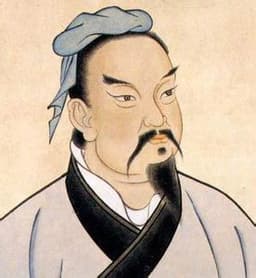
Sun Tzu
General · Ancient
60.8Total
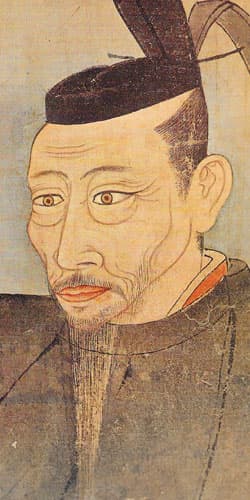
Toyotomi Hideyoshi
General · Modern
82.0Total
Basic Information
Born
-544
1537
Died
-496
1598
Era
Ancient
Modern
Nationality
China
Japan
Occupation
General
General
Civilization
Eastern
Eastern
Score Comparison
Military (10%)
50.0
79.9
Political (20%)
35.0
78.0
Influence (20%)
85.0
88.0
Legacy (20%)
65.0
80.0
Leadership (15%)
30.0
82.0
Strategy (15%)
85.0
80.4
TOTAL
60.8
82.0
Sun Tzu — Complete Timeline
512 BC
Service as General for King Helü of WuWar◆ Major
Sun Tzu served as a general under King Hel
GeneralWuWar
Impact: regional
506 BC
Battle of BojuWar◆ Major
Sun Tzu is traditionally credited with contributing to the Wu victory at the Battle of Boju, where Wu forces defeated the larger Chu army. The battle demonstrated the application of strategic principles from The Art of War.
BattleWuChu
Impact: regional
500 BC
Composition of The Art of WarCultural
Sun Tzu authored The Art of War, a treatise on military strategy and tactics. The text covers planning, deception, terrain, and leadership, and has been studied for centuries in both military and civilian contexts worldwide.
Military StrategyClassicPhilosophy
Impact: globalconstructive
Toyotomi Hideyoshi — Complete Timeline
1583 AD
Battle of ShizugatakeWar◆ Major
Hideyoshi defeated his rival Shibata Katsuie at the Battle of Shizugatake, solidifying his control over central Japan. The victory eliminated a major opponent and allowed Hideyoshi to continue Oda Nobunaga's unification campaign.
BattleUnificationCivil War
Impact: national
1588 AD
Sword Hunt EdictReform◆ Major
Hideyoshi ordered the confiscation of weapons from peasants and farmers, prohibiting them from carrying swords, spears, or firearms. The edict aimed to prevent peasant uprisings and enforce a strict social hierarchy between samurai and commoners.
Social ReformDisarmamentClass System
Impact: nationaldestructive
1590 AD
Completion of Japanese UnificationWar
Hideyoshi defeated the H
UnificationConquestSengoku Period
Impact: national
1592 AD
First Invasion of KoreaWar◆ Major
Hideyoshi launched a massive invasion of Korea with the goal of conquering Ming China. Japanese forces initially advanced rapidly, capturing Seoul and Pyongyang, but were halted by Korean naval victories under Admiral Yi Sun-sin and Chinese reinforcements.
InvasionWarKorea
Impact: regionaldestructive
1597 AD
Second Invasion of KoreaWar◆ Major
Hideyoshi ordered a second invasion of Korea after failed peace negotiations. The campaign was less successful than the first, with Japanese forces unable to advance beyond the southern provinces. The invasion ended with Hideyoshi's death in 1598.
InvasionWarKorea
Impact: regionaldestructive
Expert Analysis
Sun Tzu vs Toyotomi Hideyoshi
# The Strategist and the Unifier: Two Paths to Power in Ancient East Asia
On a misty morning in the Wu state, around 512 BCE, a general stood before the king and demonstrated his military genius by executing the king’s own concubines for insubordination—a chilling lesson in discipline that would echo through the ages. Two thousand years later, another man, born a peasant in a muddy Japanese village, would rise to command armies and unify a fractured nation through a blend of cunning, brutality, and political genius. Sun Tzu and Toyotomi Hideyoshi both changed the course of Eastern history, yet they could hardly have been more different. One wrote a book that would outlast his empire; the other built an empire that would collapse within a generation of his death. Why did these two men, both masters of strategy, leave such profoundly different legacies?
Origins
Sun Tzu was born into the chaos of the Spring and Autumn period, a time when the Zhou dynasty’s authority had crumbled and seven major states warred for supremacy in China. He came from the warrior-aristocrat class—the *shi*—men trained from youth in the arts of war, ritual, and statecraft. His world was one of ancient codes, where honor and strategy were debated by philosophers and generals alike. By contrast, Hideyoshi entered the world in 1537 as the son of a peasant farmer in Owari Province, during Japan’s Sengoku period—an era of constant civil war. He was called “Monkey” for his wiry frame and sharp features, and he had no family name, no lineage, no inheritance. Where Sun Tzu inherited a tradition, Hideyoshi had to invent himself.
The eras shaped them differently. Sun Tzu lived in a time when warfare was becoming more systematic—chariots gave way to infantry, and the old rituals of combat were yielding to strategic thinking. Hideyoshi, meanwhile, witnessed the brutal rise of the samurai class, where a man could rise or fall by the sword alone, and where the only law was the will of the strongest warlord. These contexts would define their approaches to power.
Rise to Power
Sun Tzu’s path was relatively straightforward. He presented *The Art of War* to King Helü of Wu around 512 BCE, and his legendary demonstration of discipline—training the king’s concubines into soldiers—earned him the position of general. His rise was built on intellectual merit and the patronage of a ruler seeking military advantage. He did not claw his way through blood; he reasoned his way to command.
Hideyoshi’s ascent was the stuff of legend. He began as a lowly ashigaru—a foot soldier—under the great Oda Nobunaga. He impressed his lord by repairing a wall in a single night, a feat of improvisation and sheer will. After Nobunaga’s assassination in 1582, Hideyoshi moved with breathtaking speed, avenging his master and then outmaneuvering rivals at the Battle of Shizugatake in 1583, where he crushed Shibata Katsuie. He did not write a book; he wrote his rise in blood and alliances. By 1590, after the Siege of Odawara, he had unified Japan under his rule—a feat that had eluded generals for a century.
Leadership & Governance
Sun Tzu’s leadership was philosophical. In *The Art of War*, he wrote, “The supreme art of war is to subdue the enemy without fighting.” He believed in intelligence, deception, and efficiency—winning through superior planning rather than overwhelming force. As a general, he reportedly led campaigns against the Chu state, but his true legacy lies in his ideas, not his battles. His political score of 26.6 reflects his limited role in governance; he was a strategist, not a ruler.
Hideyoshi was the opposite. His political score of 78.8 and leadership score of 78.8 reveal a man who governed as ruthlessly as he conquered. He implemented the Sword Hunt Edict of 1588, disarming the peasantry to solidify class divisions. He conducted land surveys to tax efficiently. He redistributed territories to loyal vassals, creating a stable feudal order. But his ambition overreached: in 1592 and 1597, he launched invasions of Korea, seeking to conquer Ming China. These campaigns drained Japan’s resources and ended in failure, with Korean naval victories and Chinese intervention stalling his dreams.
Triumph & Tragedy
Sun Tzu’s greatest triumph was the Battle of Boju in 506 BCE, where Wu forces defeated the powerful Chu state. Yet his greatest tragedy is that we know so little of his life—his battles are shadowy, his personal story lost. He became a symbol, not a man.
Hideyoshi’s triumph was the completion of Japanese unification in 1590, a moment when he stood atop a nation he had forged from chaos. His tragedy came soon after: the Korean invasions were a catastrophic overreach. His forces committed atrocities, his supply lines failed, and he died in 1598 as his dreams of a continental empire crumbled. His heir, Toyotomi Hideyori, was too young to hold power, and within seventeen years the Tokugawa shogunate had erased the Toyotomi name.
Character & Destiny
Sun Tzu was a thinker who distanced himself from the chaos of war. His personality—calm, analytical, detached—allowed him to distill strategy into timeless principles. He believed that “if you know the enemy and know yourself, you need not fear the result of a hundred battles.” This detachment made him a great advisor but a limited leader; he did not crave power, only understanding.
Hideyoshi was a man of fire. He rose from nothing, and that hunger never left him. He was brilliant, generous to allies, and merciless to enemies. He built castles, held lavish tea ceremonies, and dreamed of an empire stretching to India. But his ambition was his undoing. He could not stop; he could not consolidate. His personality drove him to conquer, but it also drove him to overreach.
Legacy
Sun Tzu’s legacy is monumental. His *Art of War* has been studied for 2,500 years—by generals, politicians, and business leaders. His influence score of 82.0 and legacy score of 91.4 speak to a man who shaped how the world thinks about conflict. He is a ghost, but a powerful one.
Hideyoshi’s legacy is more concrete but more fragile. He unified Japan, established the feudal system that the Tokugawa shogunate would perfect, and left a mark on Japanese culture—from the sword hunt to the caste system. His legacy score of 81.0 is high, but his influence is more regional. He is remembered as a folk hero and a cautionary tale: the peasant who rose too high and fell too hard.
Conclusion
These two men embody opposite truths about power. Sun Tzu shows that ideas can outlast empires—that a book written in a forgotten age can still whisper strategies to modern generals. Hideyoshi shows that action can reshape the world, but that action without wisdom is a fire that burns out. One chose to write; the other chose to build. One left a text; the other left a nation. In the end, perhaps the greatest strategy is knowing which path to take—and when to stop.
Rankings
🥇
Toyotomi HideyoshiLeader
Mil: 79.9Pol: 78.0Inf: 88.0
82.0
🥈
Sun Tzu
Mil: 50.0Pol: 35.0Inf: 85.0
60.8
+21.2 behind
How This Comparison Works
Algorithm
Each figure is scored on 6 dimensions (0—100 scale) based on structured historical data: Military (10%), Political (20%), Influence (20%), Legacy (20%), Leadership (15%), Strategy (15%). The weighted total produces the final ranking.
Data Sources
Scores are computed from structured sub-indicators in the database. Scale factors adjust for era (Ancient ×0.85, Modern ×1.0) and civilization size (Eastern ×1.05, Other ×0.80) to account for differences in population and military scale.
Maximum 3 Figures
Comparisons are limited to 2—3 figures to ensure readability and statistical meaningfulness.
Error Margins
±5 points per dimension — Sub-scores are derived from historical records with inherent uncertainty. Two figures within 5 points on a dimension should be considered roughly equivalent in that area.
Total Score Accuracy
±3 points overall — The weighted combination of 6 dimensions produces a total score with approximately ±3 points of uncertainty. Differences of less than 3 points are not statistically significant— the figures are effectively tied.
Known Limitations
- Historical records are incomplete and uneven across civilizations
- Figures from oral-tradition societies may be underrepresented
- Occupation labels can misclassify multi-role figures
- Scores measure capability and impact, not moral character
- Quantitative scoring is a comparison tool, not absolute truth
Capability Radar
Military (10%) — Battles & Warfare
Battles
30
85
Win Rate
40
88
Expansion
20
80
Political (20%) — Governance & Reform
Reform
10
95
Diplomacy
30
80
Economy
10
90
Influence (20%) — Cultural & Global Reach
Cultural
95
85
Global
95
70
Legacy (20%) — Historical Impact
Historical
98
90
Longevity
99
85
Leadership (15%) — Power & Stability
Tenure
20
85
Stability
10
75
Strategy (15%) — Tactics & Innovation
Strategy
98
92
Tactics
95
90
Reform
85
95
Similar Comparisons
Comments & Discussion
SunStrokeSkeptic6/16/2026
Any historian who puts Sun Tzu and Hideyoshi in the same breath is ignoring scale. Sun Tzu's "Art of War" is a theory textbook taught at West Point; Hideyoshi actually conquered Japan with swords and siege towers. You compare a man who wrote poetry about winning to a man who starved castles into submission. Hideyoshi's land survey and sword hunt changed Japan forever—Sun Tzu's book just collects dust on CEOs' shelves. One built systems, the other wrote notes.
军魂观察员6/16/2026
说Sun Tzu重权谋、Hideyoshi重执行,这根本是偏见。日本战国谁不懂计谋?秀吉的中国大返し三天行军两百公里,靠的不是蛮力,而是精确计算和赏罚机制。孙子兵法写“兵贵神速”,秀吉不仅做到,还让军队带了铁炮和粮草。理论家永远比实践家多张嘴,但历史记得的是那个从猴子变成太阁的人。
DataCruncher486/16/2026
The core difference: Sun Tzu's strategic ideal was avoiding battle altogether—"supreme excellence is winning without fighting." Hideyoshi's entire career was a bloodbath of sieges, betrayals, and massacres. He conquered Shikoku in a month and Kyushu in two. Sun Tzu's writings are ambiguous enough to be reinterpreted for corporate retreats; Hideyoshi's legacy is the Imjin War that killed hundreds of thousands. If we're comparing impact on human lives, Hideyoshi wins by sheer body count.
古籍侦探6/16/2026
别被“孙子兵法万世流传”这种话术骗了。成书年代本身充满疑点——银雀山汉墓出土竹简证明孙子兵法与孙膑兵法并存,原始版本可能根本不是一个人写的。反观秀吉,他的书状和朱印状现存数千份,每一份都能对应具体战役和政治事件。一个是集体智慧的匿名集结,一个是可查证的个体野心。流传度不等于真实性。
RealityOverTheory6/16/2026
Sun Tzu is overrated by people who've never studied actual logistics. Hideyoshi built Osaka Castle, mobilized 150,000 men for Korea, and managed supply lines across the sea—that's real strategy. Sun Tzu never commanded a major campaign we can verify; his biography in Shiji is mostly legend. Hideyoshi's letters to his wife and generals show a man obsessed with concrete details: rice rations, troop rotations, river crossings. Give me the peasant who delivered over the philosopher who lectured.