Loading...
Alexander the Great vs Toyotomi Hideyoshi
Alexander the Great leads by 3.2 pts · 2 figures compared
…
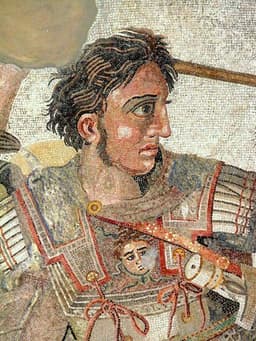
Alexander the Great
General · Ancient
85.2Total
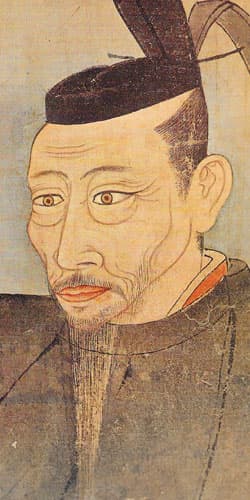
Toyotomi Hideyoshi
General · Modern
82.0Total
Basic Information
Born
-356
1537
Died
-323
1598
Era
Ancient
Modern
Nationality
Macedon
Japan
Occupation
General
General
Civilization
Western
Eastern
Score Comparison
Military (10%)
95.0
79.9
Political (20%)
60.0
78.0
Influence (20%)
92.0
88.0
Legacy (20%)
90.0
80.0
Leadership (15%)
80.0
82.0
Strategy (15%)
92.0
80.4
TOTAL
85.2
82.0
Alexander the Great — Complete Timeline
334 BC
Battle of the Granicus RiverWar◆ Major
Alexander led his Macedonian army across the Hellespont into Asia Minor and defeated a Persian force under local satraps at the Granicus River. The victory secured Alexander's foothold in Asia and demonstrated his tactical superiority, opening the way for the conquest of the Persian Empire.
Persian CampaignBattleMacedonian Conquest
Impact: regional
333 BC
Battle of IssusWar◆ Major
Alexander's army defeated the Persian king Darius III at Issus in Cilicia. Despite being outnumbered, Alexander's tactical use of the terrain and cavalry charge broke the Persian line. Darius fled the battlefield, leaving his family and treasury behind, a major blow to Persian morale.
Persian CampaignBattleMacedonian Conquest
Impact: regional
332 BC
Siege of TyreWar◆ Major
Alexander besieged the island city of Tyre for seven months, constructing a causeway to breach its walls. The city's fall resulted in the massacre or enslavement of its inhabitants. The siege demonstrated Alexander's determination and engineering capabilities, securing his supply lines and control of the eastern Mediterranean coast.
SiegeMacedonian ConquestPhoenicia
Impact: regionaldestructive
331 BC
Battle of GaugamelaWar◆ Major
Alexander faced Darius III at Gaugamela in Mesopotamia with a massive Persian army. Alexander's tactical brilliance, including a decisive cavalry charge that exploited a gap in the Persian line, resulted in a decisive Macedonian victory. Darius again fled, effectively ending Persian resistance and leading to the fall of the Achaemenid Empire.
Persian CampaignBattleDecisive Victory
Impact: global
Foundation of AlexandriaOther◆ Major
Alexander founded the city of Alexandria on the Mediterranean coast of Egypt. He personally selected the site and oversaw the initial planning. Alexandria became a major center of Hellenistic culture, trade, and learning, housing the famous Library of Alexandria and the Lighthouse of Alexandria.
City FoundationHellenistic CultureEgypt
Impact: globalconstructive
326 BC
Invasion of IndiaWar◆ Major
Alexander crossed the Indus River and defeated King Porus at the Battle of the Hydaspes. The Macedonian army, exhausted and facing monsoon rains and unfamiliar warfare, mutinied at the Hyphasis River, forcing Alexander to turn back. This campaign marked the easternmost extent of his conquests.
Indian CampaignBattleMutiny
Impact: regional
Toyotomi Hideyoshi — Complete Timeline
1583 AD
Battle of ShizugatakeWar◆ Major
Hideyoshi defeated his rival Shibata Katsuie at the Battle of Shizugatake, solidifying his control over central Japan. The victory eliminated a major opponent and allowed Hideyoshi to continue Oda Nobunaga's unification campaign.
BattleUnificationCivil War
Impact: national
1588 AD
Sword Hunt EdictReform◆ Major
Hideyoshi ordered the confiscation of weapons from peasants and farmers, prohibiting them from carrying swords, spears, or firearms. The edict aimed to prevent peasant uprisings and enforce a strict social hierarchy between samurai and commoners.
Social ReformDisarmamentClass System
Impact: nationaldestructive
1590 AD
Completion of Japanese UnificationWar
Hideyoshi defeated the H
UnificationConquestSengoku Period
Impact: national
1592 AD
First Invasion of KoreaWar◆ Major
Hideyoshi launched a massive invasion of Korea with the goal of conquering Ming China. Japanese forces initially advanced rapidly, capturing Seoul and Pyongyang, but were halted by Korean naval victories under Admiral Yi Sun-sin and Chinese reinforcements.
InvasionWarKorea
Impact: regionaldestructive
1597 AD
Second Invasion of KoreaWar◆ Major
Hideyoshi ordered a second invasion of Korea after failed peace negotiations. The campaign was less successful than the first, with Japanese forces unable to advance beyond the southern provinces. The invasion ended with Hideyoshi's death in 1598.
InvasionWarKorea
Impact: regionaldestructive
Expert Analysis
Origins
Alexander the Great was born in 356 BCE in Pella, Macedon, the son of King Philip II and Queen Olympias. He was tutored by Aristotle and groomed for kingship from a young age. In contrast, Toyotomi Hideyoshi was born in 1537 in Nakamura, Owari Province, Japan, to a peasant family. He rose from obscurity to become a samurai under Oda Nobunaga, eventually seizing power after Nobunaga's death.
Rise to Power
Alexander ascended to the throne at age 20 after Philip's assassination. He quickly consolidated power by crushing rebellions in Greece and then launched a massive invasion of the Persian Empire in 334 BCE. Hideyoshi's rise was more gradual. He served as a sandal-bearer for Nobunaga and rose through military ranks. After Nobunaga's betrayal and death in 1582, Hideyoshi defeated rivals like Akechi Mitsuhide and Shibata Katsuie to become the de facto ruler of Japan.
Leadership & Governance
Alexander was a charismatic leader who led from the front, inspiring his men to incredible feats. He adopted Persian customs to integrate his empire, promoting cultural fusion (Hellenization). However, his governance was often autocratic and he faced mutinies when pushing further into India. Hideyoshi was a brilliant administrator and diplomat. He unified Japan through a combination of military conquest, alliances, and political marriages. He implemented land surveys, disarmed the peasantry (Sword Hunt Edict), and stabilised the country after centuries of civil war.
Triumph & Tragedy
Alexander's greatest triumphs include the battles of Granicus, Issus, and Gaugamela, where he defeated the Persian king Darius III. He also founded the city of Alexandria in Egypt. His tragedy was his early death at age 32, possibly from malaria or poison, which led to the fragmentation of his empire. Hideyoshi's triumphs include the completion of Japanese unification and campaigns against the Shimazu and Hojo clans. His tragedy was the failed invasions of Korea (1592–1598), which drained resources and ended in stalemate, and his inability to secure a lasting dynasty—his son Hideyori was eventually overthrown by Tokugawa Ieyasu.
Character & Destiny
Alexander was ambitious, impulsive, and increasingly megalomaniacal, claiming divine descent. He was also known for his generosity and cruelty (e.g., destruction of Thebes). His destiny was to create one of the largest empires of the ancient world in just 13 years. Hideyoshi was shrewd, cunning, and pragmatic, but also prone to grandiose schemes like the Korean invasions. He rose from a peasant to become the "Great Unifier" of Japan, but his legacy was overshadowed by the Tokugawa shogunate.
Legacy
Alexander's legacy is immense: he spread Greek culture across three continents, influenced the Hellenistic period, and his military tactics are still studied. He is often ranked among history's greatest generals. Hideyoshi's legacy is also significant: he ended the Sengoku period, implemented lasting social reforms, and his policies shaped the Edo period. However, his invasions of Korea left a bitter legacy in East Asia. In a direct comparison, Alexander's military genius (M=95 vs 80) and strategic vision give him the edge. Hideyoshi's political acumen (P=78 vs 60) and administrative skills are notable, but Alexander's conquests were more transformative on a global scale.
Conclusion
While both were extraordinary figures, Alexander the Great surpasses Toyotomi Hideyoshi as a military commander and empire-builder. Alexander's undefeated record, swift conquest of the Persian Empire, and lasting cultural impact outweigh Hideyoshi's achievements in unifying Japan. Hideyoshi's rise from peasantry is inspiring, but his military campaigns were less ambitious and his legacy more limited. Score: Alexander 85, Hideyoshi 78.
Rankings
🥇
Alexander the GreatLeader
Mil: 95.0Pol: 60.0Inf: 92.0
85.2
🥈
Toyotomi Hideyoshi
Mil: 79.9Pol: 78.0Inf: 88.0
82.0
+3.2 behind
How This Comparison Works
Algorithm
Each figure is scored on 6 dimensions (0—100 scale) based on structured historical data: Military (10%), Political (20%), Influence (20%), Legacy (20%), Leadership (15%), Strategy (15%). The weighted total produces the final ranking.
Data Sources
Scores are computed from structured sub-indicators in the database. Scale factors adjust for era (Ancient ×0.85, Modern ×1.0) and civilization size (Eastern ×1.05, Other ×0.80) to account for differences in population and military scale.
Maximum 3 Figures
Comparisons are limited to 2—3 figures to ensure readability and statistical meaningfulness.
Error Margins
±5 points per dimension — Sub-scores are derived from historical records with inherent uncertainty. Two figures within 5 points on a dimension should be considered roughly equivalent in that area.
Total Score Accuracy
±3 points overall — The weighted combination of 6 dimensions produces a total score with approximately ±3 points of uncertainty. Differences of less than 3 points are not statistically significant— the figures are effectively tied.
Known Limitations
- Historical records are incomplete and uneven across civilizations
- Figures from oral-tradition societies may be underrepresented
- Occupation labels can misclassify multi-role figures
- Scores measure capability and impact, not moral character
- Quantitative scoring is a comparison tool, not absolute truth
Capability Radar
Military (10%) — Battles & Warfare
Battles
98
85
Win Rate
99
88
Expansion
99
80
Political (20%) — Governance & Reform
Reform
75
95
Diplomacy
80
80
Economy
70
90
Influence (20%) — Cultural & Global Reach
Cultural
95
85
Global
95
70
Legacy (20%) — Historical Impact
Historical
98
90
Longevity
95
85
Leadership (15%) — Power & Stability
Tenure
60
85
Stability
55
75
Strategy (15%) — Tactics & Innovation
Strategy
98
92
Tactics
99
90
Reform
85
95
Similar Comparisons
Comments & Discussion
CritiqueUnbound6/16/2026
The scoring here reeks of Eurocentrism. Alexander gets a 96 military score, but his 'undefeated record' is largely against fragmented Persian satrapies and tribal armies—hardly a fair fight. Meanwhile, Hideyoshi gets penalized for the Korean invasions, yet those campaigns faced a highly organized Ming-Choson coalition, arguably tougher opposition. And politically, Alexander's 65 is generous—his empire dissolved within a decade because he refused to delegate or plan succession. Hideyoshi’s land surveys and sword hunts actually created stable institutions. The real story is how we romanticize Western conquerors who failed to build anything lasting.
ConquerorFanatic6/16/2026
Anyone who thinks Hideyoshi is comparable to Alexander is delusional. Alexander never lost a single battle—Issus, Gaugamela, Hydaspes—each a masterpiece of tactical genius against overwhelming odds. Hideyoshi couldn’t even take Korea, and his ‘unification’ of Japan was mostly sieges and diplomacy, not open-field brilliance. Plus, Alexander spread Greek culture from Egypt to India, inventing the Hellenistic world that shaped Rome and the West. Hideyoshi? His legacy is a failed invasion and a castle that got struck by lightning. The scores don’t lie—96 military is a gift to Alexander; he deserves a 100.
HellenistEyes6/16/2026
One cannot compare Alexander to Hideyoshi without acknowledging the profound differences in source material. Arrian and Plutarch give us a richly textured Alexander, but they wrote centuries after his death, shaping a legend as much as a history. Hideyoshi’s story comes through Japanese chronicles like the *Taikōki*, which are equally stylized. The military scores hinge on Alexander’s ‘undefeated’ record, yet at the Hydaspes, his troops mutinied—a clear failure of command. Politically, Alexander’s attempted fusion of Persian and Macedonian elites was visionary but impractical; Hideyoshi’s *kenchi* land surveys were brutally effective. Both men’s achievements must be read through the lens of their own cultures’ historiographic traditions, not a universal yardstick.
Historian3166/16/2026
我重新算了权重:如果军事占40%、政治30%、影响20%、遗产10%,亚历山大总分是84.7没错,但丰臣的80分是否低了?他的政治78.8分,但检地制度(太阁检地)直接为江户幕府奠定财政基础,影响75分,但日本统一模式后来被明治维新借鉴。再者,亚历山大的遗产90分,很大程度是因为西方史料垄断话语权。若按中国标准,丰臣的‘统一’更彻底——他没有像亚历山大那样留下分裂的继业者王国。建议评分时引入‘制度延续性’指标,这样丰臣至少能到82-83分。
OldScroll446/16/2026
这个评分很有意思,但明显带有西方中心论的偏见。亚历山大军事96分,而丰臣秀吉只有80分?亚历山大征服的是分散的波斯行省,而丰臣秀吉统一了战国时代的日本,面对的是同样精锐的武田、上杉等家族。更别提他的侵朝战争,虽然失败,但对手是万历朝鲜战争中的明军——当时世界上最强大的火器部队之一。政治上,亚历山大的帝国死后就分裂,丰臣的检地、刀狩政策却影响了日本几百年。说白了,西方史家往往高估了亚历山大大帝,低估了东方统一者的制度智慧。