Loading...
Suleiman the Magnificent vs Zhao Kuangyin
Suleiman the Magnificent leads by 1.7 pts · 2 figures compared
…
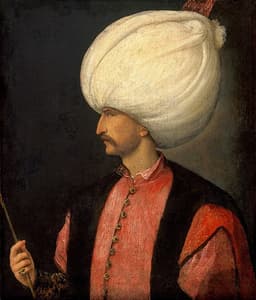
Suleiman the Magnificent
Emperor · Medieval
73.2Total
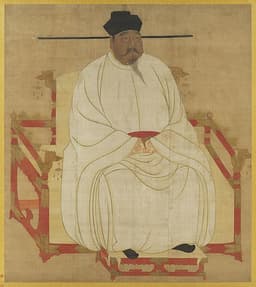
Zhao Kuangyin
Emperor · Medieval
71.5Total
Basic Information
Born
1494
927
Died
1566
976
Era
Medieval
Medieval
Nationality
Ottoman Empire
China
Occupation
Emperor
Emperor
Civilization
Middle Eastern
Eastern
Score Comparison
Military (10%)
85.0
78.0
Political (20%)
78.0
84.0
Influence (20%)
72.0
68.0
Legacy (20%)
68.0
65.0
Leadership (15%)
72.0
74.0
Strategy (15%)
72.0
68.0
TOTAL
73.2
71.5
Suleiman the Magnificent — Complete Timeline
1522 AD
Siege of RhodesWar◆ Major
Suleiman personally led a massive Ottoman campaign against the Knights Hospitaller on Rhodes. After a six-month siege, the knights surrendered and were allowed to leave. This victory secured Ottoman control over the eastern Mediterranean.
SiegeMediterraneanKnights Hospitaller
Impact: regional
1526 AD
Battle of MohácsWar
Suleiman's Ottoman army defeated the Hungarian forces of King Louis II at Moh
BattleHungaryOttoman expansion
Impact: regional
1529 AD
Siege of ViennaWar◆ Major
Suleiman besieged Vienna, the Habsburg capital, with a large army. The siege failed due to supply issues, disease, and strong defenses. This defeat halted Ottoman expansion into central Europe and marked the empire's furthest advance westward.
SiegeViennaDefeat
Impact: regional
1530 AD
Codification of Ottoman lawReform◆ Major
Suleiman oversaw the compilation and standardization of Ottoman legal codes, known as Kanun. These laws regulated criminal justice, land tenure, and taxation, creating a unified legal system that balanced sharia with secular law. He earned the title 'Kanuni' (the Lawgiver).
Legal reformKanunOttoman Empire
Impact: nationalconstructive
1536 AD
Execution of Ibrahim PashaPolitical Action◆ Major
Suleiman ordered the execution of his grand vizier and close friend Ibrahim Pasha, who had served for 13 years. The reasons remain debated, but likely involved Ibrahim's growing power and conflicts with Suleiman's wife, Hurrem Sultan. This event demonstrated the absolute power of the sultan.
ExecutionCourt politicsPower
Impact: nationaltragic
Zhao Kuangyin — Complete Timeline
960 AD
Founded Song dynastyPolitical Action
Zhao Kuangyin, a general of Later Zhou, was proclaimed emperor by his troops at Chenqiao. He established the Song dynasty, ending the Five Dynasties period and beginning a new era of Chinese history.
Song dynastyFoundingChenqiao
Impact: globalconstructive
961 AD
Removed military power from generalsPolitical Action◆ Major
Zhao Kuangyin invited senior generals to a banquet and persuaded them to retire peacefully. This 'removal of military power over wine' prevented military coups and centralized control.
Song dynastyMilitary reformCentralization
Impact: nationalconstructive
963 AD
Unified southern ChinaWar◆ Major
Zhao Kuangyin launched campaigns to conquer the southern kingdoms, including Jingnan, Later Shu, and Southern Tang. By his death, most of China was reunified under Song rule.
Song unificationConquestSouthern kingdoms
Impact: national
Expert Analysis
Zhao Kuangyin vs Suleiman the Magnificent
# The Magnificent and the Unifier: Two Paths to Power
On a summer morning in 1526, Suleiman the Magnificent watched from horseback as his janissaries swept across the plains of Mohács. King Louis II of Hungary drowned in a river, his army annihilated. The Ottoman sultan was thirty-two years old, and all of Europe trembled. A century earlier, in 960, another scene unfolded half a world away: Zhao Kuangyin, a general of the Later Zhou dynasty, was roused from his tent by soldiers who draped an imperial yellow robe over his shoulders. He did not want the throne—or so he claimed. But he took it anyway. Two men, two empires, two radically different definitions of greatness.
Origins
Suleiman was born into destiny. His father, Selim I, had doubled the Ottoman realm in just eight years, conquering Egypt and the Holy Cities of Islam. Suleiman grew up in the palace of Edirne, tutored by the finest scholars, trained in swordsmanship and statecraft. He was the tenth sultan of the Ottoman line, and the tenth held mystical significance in Islamic eschatology—the "Sultan of the World" who would rule until Judgment Day. The weight of that prophecy shaped his every ambition.
Zhao Kuangyin came from a military family in a fractured China. The Five Dynasties and Ten Kingdoms period had seen warlords rise and fall with dizzying speed; Zhao's own father had served one dynasty after another. As a young officer, Zhao learned that loyalty was a luxury, survival a necessity. He was tall, brave, and famously modest—a man who preferred compromise to bloodshed. His world was one of chaos, and he knew that the only way to end it was through restraint, not conquest.
Rise to Power
Suleiman ascended the throne at twenty-six, after his father's sudden death. There was no struggle: Selim had eliminated all rivals. The new sultan inherited an empire at its peak, with a professional army, a formidable navy, and a treasury full of Egyptian gold. His first act was to release hundreds of Egyptian prisoners and restore trade relations with Venice—a gesture of magnanimity that surprised his court. But Suleiman was not content to inherit greatness; he meant to earn it.
Zhao Kuangyin's rise was more precarious. He was a general under the child emperor of Later Zhou when news arrived of a Khitan invasion. Marching north, his troops stopped at Chenqiao, a small station outside Kaifeng. That night, his officers burst into his tent, waving a yellow robe. Zhao pretended to resist, then laid down conditions: no pillaging, no harm to the imperial family, no betrayal of his oath. The soldiers agreed. The next morning, Zhao Kuangyin became Emperor Taizu of the Song dynasty. He had not planned the coup, but he rode it with masterful calm.
Leadership & Governance
Here the two emperors diverged most sharply. Suleiman ruled through terror and splendor. He personally led campaigns into Hungary, besieged Vienna in 1529 (a failure that haunted him), and crushed the Knights Hospitaller at Rhodes in 1522 after a six-month siege. He codified Ottoman law into the Kanun, harmonizing sharia with imperial decrees, and built mosques and bridges across his domain. Yet his greatness had a dark edge: in 1536, he ordered the execution of his grand vizier and closest friend, Ibrahim Pasha, on suspicion of overreaching. Suleiman wept at the execution, but he did not stop it. Power, for him, meant absolute control—even over love.
Zhao Kuangyin governed through persuasion. In 961, he summoned his senior generals to a banquet. As wine flowed, he sighed about the burdens of rule. "What if one day your subordinates draped a yellow robe over you?" he asked. The generals understood. The next morning, they retired to comfortable estates, their military power dissolved without a drop of blood. This "removal of military power over wine" became legendary. Zhao then spent years conquering the southern kingdoms—Jingnan, Later Shu, Southern Tang—but he did so methodically, offering generous terms to defeated rulers. He unified China not by annihilation but by absorption.
Triumph & Tragedy
Suleiman's greatest triumph was the Battle of Mohács in 1526, which broke Hungary and made the Ottoman Empire the dominant power in Central Europe. His greatest tragedy was the execution of Ibrahim Pasha—a decision that isolated him and marked the beginning of his later years, when court intrigue and the ambitions of his wife, Hürrem Sultan, eroded his judgment. He died in 1566 during the siege of Szigetvár, still fighting at seventy-two, his empire overstretched and his successors unprepared for the challenges ahead.
Zhao Kuangyin's triumph was the creation of the Song dynasty itself—a unified China after decades of war. His tragedy was his early death at forty-nine, possibly from illness, possibly from poison. He left behind a stable realm but one that had deliberately weakened its military. The Song would later struggle against northern invaders, a consequence of Zhao's own policy. He had traded strength for stability, and the price would be paid by his descendants.
Character & Destiny
Suleiman was a man of immense confidence and immense loneliness. He believed himself chosen by God, and that belief drove him to expand the empire to its greatest extent. But it also made him paranoid. He could not share power, not even with a friend. His character was his destiny: magnificent, but ultimately tragic.
Zhao Kuangyin was pragmatic and humane. He understood that in a world of shifting loyalties, the only lasting power was the loyalty of the people. He reduced taxes, promoted civil service examinations, and encouraged scholarship. His character shaped a dynasty that would produce some of China's greatest poets and philosophers—but also a military that would never again dominate the steppes.
Legacy
Suleiman is remembered as the lawgiver, the builder, the conqueror. His reign is the golden age of the Ottoman Empire, the standard against which all later sultans were measured. But his legacy is ambiguous: the empire he built became too large to govern, and his successors could not sustain his momentum. The Battle of Lepanto in 1571, though after his death, was a direct result of his naval overreach.
Zhao Kuangyin is remembered as the founder of the Song, a dynasty that lasted three centuries and defined Chinese civilization. His peaceful removal of military power became a model of statecraft. Yet his legacy is also ambiguous: the Song's cultural brilliance was matched by its military vulnerability. He had unified China, but at the cost of its sword.
Conclusion
Two emperors, two worlds. Suleiman reached for the heavens and burned his hands. Zhao Kuangyin planted a garden and watched it grow. Which was greater? The question misses the point. Suleiman's magnificence was the magnificence of fire—it illuminated, but it consumed. Zhao's greatness was the greatness of water—it shaped, but it also eroded. In the end, both men faced the same truth: that power, whether won by the sword or the robe, carries a price that must be paid by someone. And history, impartial as always, records both the glory and the cost.
Rankings
🥇
Suleiman the MagnificentLeader
Mil: 85.0Pol: 78.0Inf: 72.0
73.2
🥈
Zhao Kuangyin
Mil: 78.0Pol: 84.0Inf: 68.0
71.5
+1.7 behind
How This Comparison Works
Algorithm
Each figure is scored on 6 dimensions (0—100 scale) based on structured historical data: Military (10%), Political (20%), Influence (20%), Legacy (20%), Leadership (15%), Strategy (15%). The weighted total produces the final ranking.
Data Sources
Scores are computed from structured sub-indicators in the database. Scale factors adjust for era (Ancient ×0.85, Modern ×1.0) and civilization size (Eastern ×1.05, Other ×0.80) to account for differences in population and military scale.
Maximum 3 Figures
Comparisons are limited to 2—3 figures to ensure readability and statistical meaningfulness.
Error Margins
±5 points per dimension — Sub-scores are derived from historical records with inherent uncertainty. Two figures within 5 points on a dimension should be considered roughly equivalent in that area.
Total Score Accuracy
±3 points overall — The weighted combination of 6 dimensions produces a total score with approximately ±3 points of uncertainty. Differences of less than 3 points are not statistically significant— the figures are effectively tied.
Known Limitations
- Historical records are incomplete and uneven across civilizations
- Figures from oral-tradition societies may be underrepresented
- Occupation labels can misclassify multi-role figures
- Scores measure capability and impact, not moral character
- Quantitative scoring is a comparison tool, not absolute truth
Capability Radar
Military (10%) — Battles & Warfare
Battles
95
75
Win Rate
90
85
Expansion
95
75
Political (20%) — Governance & Reform
Reform
90
90
Diplomacy
88
85
Economy
85
80
Influence (20%) — Cultural & Global Reach
Cultural
90
70
Global
88
60
Legacy (20%) — Historical Impact
Historical
92
80
Longevity
85
75
Leadership (15%) — Power & Stability
Tenure
95
65
Stability
85
85
Strategy (15%) — Tactics & Innovation
Strategy
92
80
Tactics
85
70
Reform
80
90
Similar Comparisons
Comments & Discussion
No comments yet. Be the first to share your thoughts!