Loading...
Sitiveni Rabuka vs Soe Win
Sitiveni Rabuka leads by 10.0 pts · 2 figures compared
…
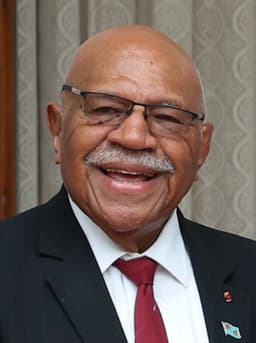
Sitiveni Rabuka
General · Modern
51.7Total
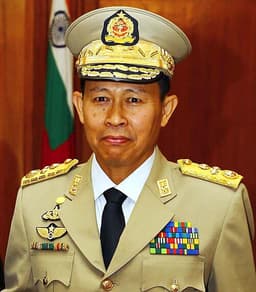
Soe Win
General · Modern
41.7Total
Basic Information
Born
1948
1947
Died
—
—
Era
Modern
Modern
Nationality
Fiji
Myanmar
Occupation
General
General
Civilization
Other
Eastern
Score Comparison
Military (10%)
10.2
25.9
Political (20%)
60.0
30.8
Influence (20%)
53.3
48.6
Legacy (20%)
46.7
40.0
Leadership (15%)
85.0
57.6
Strategy (15%)
39.6
36.8
TOTAL
51.7
41.7
Sitiveni Rabuka — Complete Timeline
1987 AD
1987 Fijian Coup d'étatPolitical Action
Rabuka, as a colonel in the Fijian military, led a coup overthrowing the elected government of Timoci Bavadra. The coup was motivated by ethnic Fijian opposition to Indo-Fijian political influence. Rabuka declared Fiji a republic.
CoupMilitary InterventionEthnic Tension
Impact: nationaldestructive
1992 AD
1992 Election as Prime MinisterPolitical Action◆ Major
Rabuka transitioned from military leader to civilian politician, winning the 1992 general election as leader of the Fijian Political Party. He became Prime Minister, serving until 1999.
ElectionCivilian GovernmentPolitical Transition
Impact: national
1997 AD
1997 Constitution ReformReform◆ Major
Rabuka's government oversaw the adoption of a new constitution that removed ethnic-based voting and provided for a multi-ethnic government. The constitution aimed to reduce ethnic tensions and promote national unity.
ConstitutionReformEthnic Reconciliation
Impact: nationalconstructive
1999 AD
1999 General Election DefeatPolitical Action◆ Major
Rabuka's government was defeated in the general election by the Labour Party led by Mahendra Chaudhry. Rabuka stepped down as Prime Minister, marking the end of his first period in power.
Election DefeatGovernment ChangeChaudhry
Impact: national
2022 AD
2022 Return as Prime MinisterPolitical Action◆ Major
Rabuka led the People's Alliance to victory in the 2022 general election, forming a coalition government. He became Prime Minister again, 23 years after his previous tenure, promising democratic reforms.
ElectionReturn to PowerCoalition Government
Impact: national
Soe Win — Complete Timeline
2004 AD
Appointed Prime Minister of MyanmarPolitical Action◆ Major
Soe Win was appointed Prime Minister of Myanmar by the State Peace and Development Council, succeeding Khin Nyunt. He served as a key figure in the military junta's government.
Military JuntaGovernment Appointment
Impact: national
2007 AD
Saffron Revolution CrackdownPolitical Action
As Prime Minister, Soe Win oversaw the military's violent suppression of the Saffron Revolution, a series of anti-government protests led by Buddhist monks. The crackdown resulted in numerous deaths, arrests, and international condemnation.
Saffron RevolutionHuman RightsRepression
Impact: nationaldestructive
Death in OfficeOther
Soe Win died in office on October 12, 2007, from leukemia. His death occurred shortly after the Saffron Revolution crackdown, and he was succeeded by Thein Sein.
DeathSuccession
Impact: national
Expert Analysis
Sitiveni Rabuka vs Soe Win
# The General's Crossroads
In the autumn of 1987, a Fijian colonel named Sitiveni Rabuka stormed Parliament in Suva, toppling a government that had been in power for barely a month. Half a world away and two decades later, in the sweltering heat of Rangoon, another general named Soe Win sat in a dark-paneled office, giving orders that would send soldiers into the streets against saffron-robed monks. Both men wore the same uniform. Both seized the same terrible power. But the paths they walked from that moment forward could not have diverged more sharply—one toward redemption and democracy, the other toward silence and death.
Origins
Sitiveni Rabuka was born in 1948 on the island of Vanua Levu, the eldest of ten children in a Methodist family. Fiji in the postwar years was a British colony of careful ethnic balance, where indigenous Fijians and Indo-Fijians coexisted under a paternalistic administration. Rabuka's father worked as a government clerk, and young Sitiveni learned early the value of discipline and hierarchy. He joined the military at eighteen, rising through the ranks with a steady competence that marked him as a man of order, not ambition.
Soe Win was born a year earlier, in 1947, in the Burmese heartland. His country had just gained independence from Britain, but the promise of freedom quickly soured into civil war and military rule. Soe Win entered the Defense Services Academy, the crucible of Myanmar's officer corps, where loyalty to the state meant loyalty to the generals who ran it. He learned that stability came through control, and control came through force.
Rise to Power
Rabuka's moment arrived unexpectedly. In 1987, Fiji's general election brought Timoci Bavadra to power—a coalition government led by an Indo-Fijian, which indigenous Fijian nationalists viewed as a threat to their land rights and political dominance. Rabuka, then a colonel, was not the architect of the coup; he was its instrument, chosen by older, more cautious men who wanted deniability. On May 14, he marched into Parliament with ten masked soldiers, arrested the cabinet, and declared himself head of state. It was a clumsy, almost gentlemanly coup—no one was killed—but it shattered Fiji's democratic fabric.
Soe Win's rise was slower, more bureaucratic. He served under the State Peace and Development Council, the junta that had ruled Myanmar since 1988. In 2004, he was appointed Prime Minister, replacing Khin Nyunt in a purge of the intelligence apparatus. Soe Win was a loyalist, a man who had never questioned the system that raised him. His power came not from a dramatic seizure but from decades of quiet compliance.
Leadership & Governance
As Fiji's leader, Rabuka faced an impossible choice. He could rule as a military strongman, as many expected, or he could try to rebuild what he had broken. In 1992, he resigned from the military, formed a political party, and won the general election as a civilian prime minister. It was an extraordinary gamble. For a coup leader to submit himself to the ballot box required a kind of courage that military men rarely possess.
His government's crowning achievement came in 1997, when Rabuka oversaw the adoption of a new constitution that abolished ethnic-based voting and established a multiracial electoral system. It was a direct repudiation of the very grievance that had motivated his coup. Critics called it hypocrisy. Rabuka called it growth.
Soe Win's governance took the opposite direction. When Buddhist monks led the Saffron Revolution in 2007, demanding democratic reforms and lower fuel prices, Soe Win authorized a brutal crackdown. Soldiers beat protesters, raided monasteries, and arrested thousands. The international community condemned the junta, but inside Myanmar, dissent was silenced. Soe Win did not seek reconciliation; he sought submission.
Triumph & Tragedy
Rabuka's greatest triumph was not a military victory but a political one—his return as Prime Minister in 2022, thirty-five years after his coup. He led the People's Alliance to victory, forming a coalition government that promised national unity. For a man who had once torn his country apart, this was a second chance few leaders ever receive.
His tragedy was the 1999 general election defeat, when his government was swept from power by the Labour Party. Rabuka stepped down peacefully, a rare act in a region where defeated leaders often cling to office. He spent the next two decades in the political wilderness, reflecting on his legacy.
Soe Win's triumph was nonexistent. His tragedy was complete. He died in office on October 12, 2007, just weeks after the Saffron Revolution crackdown, from leukemia. His death was quiet, unmourned, and unnoticed by most of the world. He left behind a country more isolated than ever.
Character & Destiny
Rabuka was a man of contradictions. He could be charming and impulsive, decisive and remorseful. In interviews, he spoke openly about his regrets, calling the 1987 coup "the biggest mistake of my life." This capacity for self-reflection was his salvation. He understood that leadership is not about being right but about being willing to change.
Soe Win was a product of a system that punished doubt. In the Burmese military, questioning orders was treason. He never wavered because he never allowed himself to imagine an alternative. His character was shaped by fear—fear of chaos, fear of losing control, fear of the unknown. In the end, it was that fear, not his leukemia, that killed him.
Legacy
Today, Sitiveni Rabuka is remembered as a flawed but transformative figure—a man who broke his country and then helped mend it. His legacy is the 1997 Constitution, which remains the foundation of Fiji's multiracial democracy. He is proof that even those who seize power by force can learn to govern by consent.
Soe Win is remembered, if at all, as a footnote in Myanmar's long tragedy. The Saffron Revolution failed, but its memory endures. Soe Win's name is spoken only in whispers, a symbol of the junta's brutality. His legacy is not a constitution or a reform but a question: What kind of leader chooses destruction when redemption is still possible?
Conclusion
Both men were generals who came to power through violence. But Rabuka found the courage to lay down his sword and pick up the ballot box, while Soe Win held his sword until the end. The difference was not in their training or their circumstances but in something deeper—the willingness to admit that power is not an end in itself, but a trust. Rabuka understood this, too late for some, but just in time for his country. Soe Win never did. In the end, that is the only measure that matters.
Rankings
🥇
Sitiveni RabukaLeader
Mil: 10.2Pol: 60.0Inf: 53.3
51.7
🥈
Soe Win
Mil: 25.9Pol: 30.8Inf: 48.6
41.7
+10.0 behind
How This Comparison Works
Algorithm
Each figure is scored on 6 dimensions (0—100 scale) based on structured historical data: Military (10%), Political (20%), Influence (20%), Legacy (20%), Leadership (15%), Strategy (15%). The weighted total produces the final ranking.
Data Sources
Scores are computed from structured sub-indicators in the database. Scale factors adjust for era (Ancient ×0.85, Modern ×1.0) and civilization size (Eastern ×1.05, Other ×0.80) to account for differences in population and military scale.
Maximum 3 Figures
Comparisons are limited to 2—3 figures to ensure readability and statistical meaningfulness.
Error Margins
±5 points per dimension — Sub-scores are derived from historical records with inherent uncertainty. Two figures within 5 points on a dimension should be considered roughly equivalent in that area.
Total Score Accuracy
±3 points overall — The weighted combination of 6 dimensions produces a total score with approximately ±3 points of uncertainty. Differences of less than 3 points are not statistically significant— the figures are effectively tied.
Known Limitations
- Historical records are incomplete and uneven across civilizations
- Figures from oral-tradition societies may be underrepresented
- Occupation labels can misclassify multi-role figures
- Scores measure capability and impact, not moral character
- Quantitative scoring is a comparison tool, not absolute truth
Capability Radar
Military (10%) — Battles & Warfare
Battles
5
10
Win Rate
5
10
Expansion
5
10
Political (20%) — Governance & Reform
Reform
50
10
Diplomacy
45
10
Economy
40
10
Influence (20%) — Cultural & Global Reach
Cultural
30
10
Global
20
10
Legacy (20%) — Historical Impact
Historical
40
20
Longevity
30
10
Leadership (15%) — Power & Stability
Tenure
55
30
Stability
35
10
Strategy (15%) — Tactics & Innovation
Strategy
10
10
Tactics
10
10
Reform
5
10
Similar Comparisons
Comments & Discussion
佛经与步枪6/16/2026
拉布卡和苏温都是军人政变的产物,但一个在教堂忏悔,一个在佛塔前杀人。苏温亲手签署了对僧侣的镇压令,这比任何政变都更亵渎缅甸的信仰传统。拉布卡至少后来承认错误,推动种族和解;而苏温至死未有一句道歉。两人都穿着军装走入权力,但一个人走回了群众中,另一个人走进了黑暗里。
泥潭观察者6/16/2026
别被“忏悔将军”的叙事骗了。拉布卡1999年才加入政坛,距离他政变已过十二年,分明是政治投机。他当年发动政变时,公开宣称要捍卫“原住民至上”,这和苏温的军人威权主义有本质区别吗?只不过斐济有选民压力,缅甸只有枪杆子。把拉布卡抬上道德高地,等于否认1997年斐济宪法仍保留种族特权的事实。
Historian4606/16/2026
Cherry-picking Rabuka's turnaround ignores the blood-soaked common ground. Both men crushed opposition with military force—Fiji's 1987 coup destabilized the economy for years, while Soe Win's 2007 crackdown killed hundreds. Claiming 'divergent paths' is narrative fluff. Show me the GDP per capita post-coup for both countries, and we'll talk. Without that, this is just storytelling dressed as history.
Historian6166/16/2026
Rabuka's redemption arc is a historian's dream—but let's not sugarcoat it. He staged two coups in 1987 solely to protect indigenous Fijian supremacy, then spent decades backpedaling. Soe Win was worse, sure, but Rabuka wasn't a democrat by conviction; he was a pragmatist who saw the writing on the wall. The real difference? Rabuka had a forgiving electorate; Soe Win had a junta. One got a second act; the other got a coffin.
Historian7916/16/2026
The comparison misses the elephant in the room: colonial legacy. Rabuka's Fiji was a British-created ethnic powder keg, his coups a desperate reassertion of indigenous control against the demographic tide of Indo-Fijians. Soe Win's Myanmar was a shattered post-colonial state, never unified, where the military became the only institution. One man inherited a manageable fracture, the other a festering wound. Context, not character, explains the divergence.