Loading...
Muhammadu Buhari vs Soe Win
Muhammadu Buhari leads by 9.8 pts · 2 figures compared
…
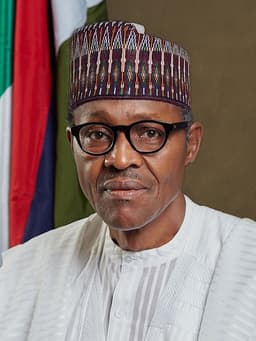
Muhammadu Buhari
General · Modern
51.5Total
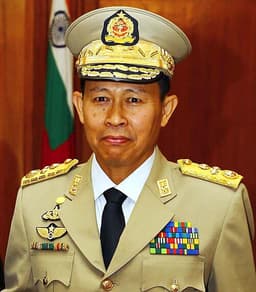
Soe Win
General · Modern
41.7Total
Basic Information
Born
1942
1947
Died
—
—
Era
Modern
Modern
Nationality
Nigeria
Myanmar
Occupation
General
General
Civilization
Other
Eastern
Score Comparison
Military (10%)
22.6
25.9
Political (20%)
68.0
30.8
Influence (20%)
53.3
48.6
Legacy (20%)
43.3
40.0
Leadership (15%)
72.0
57.6
Strategy (15%)
41.0
36.8
TOTAL
51.5
41.7
Muhammadu Buhari — Complete Timeline
1983 AD
1983 Nigerian coup d'étatPolitical Action
Major General Muhammadu Buhari led a military coup that overthrew the civilian government of President Shehu Shagari. Buhari cited corruption and economic mismanagement as justifications, and he became the head of state.
CoupMilitary RuleCorruption
Impact: nationaldestructive
1984 AD
War Against Indiscipline (WAI)Reform◆ Major
Buhari launched the War Against Indiscipline, a campaign to enforce discipline and order in Nigerian society. It included harsh penalties for minor offenses, such as queue-jumping, and was criticized for human rights abuses.
DisciplineSocial PolicyHuman Rights
Impact: nationaldestructive
1985 AD
Overthrow by Ibrahim BabangidaPolitical Action◆ Major
Buhari was overthrown in a palace coup led by his Chief of Army Staff, Ibrahim Babangida. Babangida cited Buhari's authoritarian style and failure to address the economy as reasons for the coup.
CoupOverthrowBabangida
Impact: national
2015 AD
Anti-corruption campaignReform◆ Major
Buhari launched a high-profile anti-corruption campaign, targeting government officials and recovering stolen assets. The campaign was praised internationally but criticized for being selective and politically motivated.
Anti-CorruptionReformGovernance
Impact: nationalconstructive
Election as President of NigeriaPolitical Action
Buhari won the 2015 Nigerian presidential election, defeating incumbent Goodluck Jonathan. This was the first time an opposition candidate had defeated a sitting president in Nigeria's history, marking a democratic milestone.
ElectionDemocracyOpposition Victory
Impact: nationalprogressive
Soe Win — Complete Timeline
2004 AD
Appointed Prime Minister of MyanmarPolitical Action◆ Major
Soe Win was appointed Prime Minister of Myanmar by the State Peace and Development Council, succeeding Khin Nyunt. He served as a key figure in the military junta's government.
Military JuntaGovernment Appointment
Impact: national
2007 AD
Saffron Revolution CrackdownPolitical Action
As Prime Minister, Soe Win oversaw the military's violent suppression of the Saffron Revolution, a series of anti-government protests led by Buddhist monks. The crackdown resulted in numerous deaths, arrests, and international condemnation.
Saffron RevolutionHuman RightsRepression
Impact: nationaldestructive
Death in OfficeOther
Soe Win died in office on October 12, 2007, from leukemia. His death occurred shortly after the Saffron Revolution crackdown, and he was succeeded by Thein Sein.
DeathSuccession
Impact: national
Expert Analysis
Muhammadu Buhari vs Soe Win
# The Iron Fist and the Velvet Glove: Two Generals, Two Nations, Two Fates
In the summer of 2015, Muhammadu Buhari stood before the Nigerian flag, a man twice crowned—first by coup, then by ballot. Half a world away and a decade earlier, Soe Win sat in the shadows of Naypyidaw, his power absolute yet invisible, his name whispered in fear by the monks of the Saffron Revolution. Both were generals. Both seized control of nations in turmoil. But one would return from disgrace to democratic victory, while the other would vanish into history’s footnotes, leaving only the echo of a crackdown. What drove these two men down such divergent paths?
Origins
Muhammadu Buhari was born in 1942 in Daura, a quiet town in northern Nigeria, into a Fulani Muslim family steeped in tradition. He joined the Nigerian Army at nineteen, a time when the young nation was drunk on independence but fractured by ethnic and regional rivalries. The Biafran War of the late 1960s forged him into a soldier who saw discipline as the only cure for chaos. Soe Win, born in 1947 in Burma, grew up in a country that had never known stable democracy—only military juntas and isolation. He entered the Burmese Army under the shadow of General Ne Win’s paranoid rule, where loyalty was survival and dissent was death. Their eras shaped them: Buhari came of age in a Nigeria still hopeful of its potential; Soe Win matured in a Myanmar that had learned to fear its own leaders.
Rise to Power
Buhari’s ascent was swift and public. On December 31, 1983, he led a bloodless coup that toppled President Shehu Shagari, whose civilian government had collapsed under corruption and economic decay. Buhari, then a Major General, justified the takeover as a “corrective” measure. It was a familiar pattern in post-colonial Africa—the soldier as savior. Soe Win’s rise was quieter, a slow crawl through the ranks of the State Peace and Development Council, the military junta that had ruled Myanmar since 1962. He became Prime Minister in 2004, not through popular acclaim but by replacing his predecessor, Khin Nyunt, in a purge. Where Buhari seized power from outside, Soe Win inherited it from within.
Leadership & Governance
Buhari’s rule from 1983 to 1985 was defined by the War Against Indiscipline, a campaign that forced Nigerians to queue in lines, salute the flag, and obey the clock. It was paternalistic, even petty—but it aimed to cure a national sickness of graft and laziness. His military score of 20.7 reflects a leader who was no battlefield genius, but his political score of 61.0 hints at a man who understood governance as a moral crusade. Soe Win, with a military score of 44.6 and political score of 51.8, was more a bureaucrat in uniform. His tenure saw no grand reforms, only the maintenance of a system that crushed dissent. The Saffron Revolution of 2007—when Buddhist monks marched for freedom—was his defining test. He chose the tank over the table, ordering a crackdown that killed dozens and sent thousands to prison. Buhari, too, was harsh, but his harshness had a stated purpose: to rebuild a nation. Soe Win’s harshness had only one goal: to preserve a regime.
Triumph & Tragedy
Buhari’s greatest moment came not in a coup but in an election. In 2015, he defeated incumbent Goodluck Jonathan, marking the first peaceful transfer of power in Nigeria’s history. It was a triumph of redemption: the former dictator reborn as a democrat. His anti-corruption campaign, however, became his tragedy. It targeted political enemies but failed to stem the tide of theft, and his health declined as Nigeria’s economy cratered. Soe Win’s triumph, if it can be called one, was his silence. He died of leukemia on October 12, 2007, just weeks after the Saffron Revolution’s bloodiest days, never having to answer for his orders. His tragedy was that he never lived to see the reforms that followed—or to face the judgment of history.
Character & Destiny
Buhari was a man of iron principles, rigid and unyielding. His Fulani stoicism made him respected but not loved; his refusal to compromise cost him allies. Yet that same stubbornness drove him to return to politics after his 1985 overthrow by Ibrahim Babangida, who cited Buhari’s “authoritarian” style. Soe Win was a shadow—a general who left no speeches, no memoirs, no personal mark beyond the crackdown. His character was the product of a system that rewarded obedience over initiative. Buhari’s destiny was to be a symbol of second chances; Soe Win’s was to be a footnote in Myanmar’s long struggle for freedom.
Legacy
Buhari’s legacy is a paradox. His total score of 60.7 ranks him as a moderately effective leader, but Nigerians remain divided. Some see him as a principled reformer; others, as a relic of military rule who failed to deliver. His War Against Indiscipline is remembered with a mix of nostalgia and ridicule. Soe Win’s legacy is simpler: a 56.0 score that reflects a man who did little but destroy. He is not mourned, not celebrated, only occasionally mentioned in the same breath as the monks he silenced.
Conclusion
Standing at the end of their stories, we see two generals who shared a uniform but not a fate. Buhari, the soldier who became a democrat, shows that even iron can be reforged. Soe Win, the general who remained a soldier, reminds us that power without purpose is a hollow throne. Their differences are not merely personal—they are the product of nations with different histories, different hopes, and different thresholds for forgiveness. In the end, Buhari’s story is one of redemption, however imperfect; Soe Win’s is a cautionary tale of a man who chose to be a weapon when he could have been a leader. The question they leave us is not which was better, but which we, as societies, are willing to let shape our future.
Rankings
🥇
Muhammadu BuhariLeader
Mil: 22.6Pol: 68.0Inf: 53.3
51.5
🥈
Soe Win
Mil: 25.9Pol: 30.8Inf: 48.6
41.7
+9.8 behind
How This Comparison Works
Algorithm
Each figure is scored on 6 dimensions (0—100 scale) based on structured historical data: Military (10%), Political (20%), Influence (20%), Legacy (20%), Leadership (15%), Strategy (15%). The weighted total produces the final ranking.
Data Sources
Scores are computed from structured sub-indicators in the database. Scale factors adjust for era (Ancient ×0.85, Modern ×1.0) and civilization size (Eastern ×1.05, Other ×0.80) to account for differences in population and military scale.
Maximum 3 Figures
Comparisons are limited to 2—3 figures to ensure readability and statistical meaningfulness.
Error Margins
±5 points per dimension — Sub-scores are derived from historical records with inherent uncertainty. Two figures within 5 points on a dimension should be considered roughly equivalent in that area.
Total Score Accuracy
±3 points overall — The weighted combination of 6 dimensions produces a total score with approximately ±3 points of uncertainty. Differences of less than 3 points are not statistically significant— the figures are effectively tied.
Known Limitations
- Historical records are incomplete and uneven across civilizations
- Figures from oral-tradition societies may be underrepresented
- Occupation labels can misclassify multi-role figures
- Scores measure capability and impact, not moral character
- Quantitative scoring is a comparison tool, not absolute truth
Capability Radar
Military (10%) — Battles & Warfare
Battles
10
10
Win Rate
10
10
Expansion
5
10
Political (20%) — Governance & Reform
Reform
30
10
Diplomacy
25
10
Economy
20
10
Influence (20%) — Cultural & Global Reach
Cultural
25
10
Global
25
10
Legacy (20%) — Historical Impact
Historical
30
20
Longevity
20
10
Leadership (15%) — Power & Stability
Tenure
45
30
Stability
15
10
Strategy (15%) — Tactics & Innovation
Strategy
15
10
Tactics
15
10
Reform
20
10
Similar Comparisons
Comments & Discussion
No comments yet. Be the first to share your thoughts!