Loading...
Sima Yi vs Uqba ibn Nafi
Uqba ibn Nafi leads by 8.7 pts · 2 figures compared
…
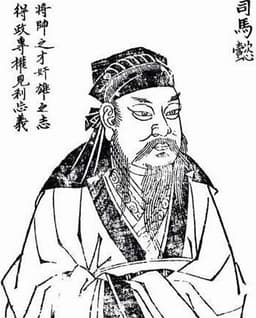
Sima Yi
General · Ancient
58.3Total
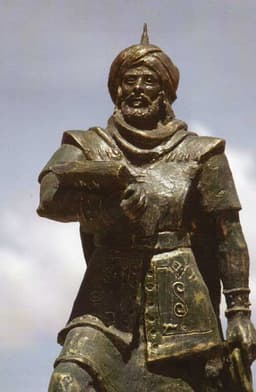
Uqba ibn Nafi
General · Ancient
67.0Total
Basic Information
Born
179
-622
Died
251
—
Era
Ancient
Ancient
Nationality
China
Umayyad Caliphate
Occupation
General
General
Civilization
Eastern
Middle Eastern
Score Comparison
Military (10%)
75.0
80.0
Political (20%)
59.2
68.0
Influence (20%)
58.3
72.0
Legacy (20%)
40.0
55.0
Leadership (15%)
66.0
68.0
Strategy (15%)
74.4
68.0
TOTAL
58.3
67.0
Sima Yi — Complete Timeline
228 AD
Battle of JietingWar◆ Major
Sima Yi led the Cao Wei forces to defeat the Shu Han army at Jieting, forcing Zhuge Liang to retreat. This victory prevented Shu from capturing the Chang'an region and secured Wei's western border.
BattleCao WeiShu HanThree Kingdoms
Impact: regionalconstructive
231 AD
Defense of HefeiWar
Sima Yi successfully defended the city of Hefei against an Eastern Wu invasion led by Sun Quan. He repelled the Wu forces, maintaining Wei control over the Huai River region.
DefenseCao WeiEastern WuThree Kingdoms
Impact: regionalconstructive
249 AD
Coup at Gaoping TombsPolitical Action
Sima Yi staged a coup against the regent Cao Shuang at the Gaoping Tombs. He seized control of the Cao Wei government, executing Cao Shuang and his faction. This event gave the Sima clan effective control over Wei.
CoupCao WeiThree KingdomsPower Struggle
Impact: nationaldestructive
251 AD
Death and Posthumous HonorsOther◆ Major
Sima Yi died in 251 AD. His descendants later founded the Jin dynasty, fulfilling his ambition. He was posthumously honored as Emperor Xuan of Jin, though he never ruled as emperor himself.
DeathJin DynastyLegacy
Impact: national
Uqba ibn Nafi — Complete Timeline
670 AD
Founded KairouanPolitical Action
Uqba ibn Nafi founded the city of Kairouan in present-day Tunisia as a military base and center for Islamic expansion in North Africa. The city became a major religious and cultural center, housing the Great Mosque of Kairouan.
City FoundationIslamic ExpansionNorth Africa
Impact: regionalconstructive
680 AD
Conquered the MaghrebWar◆ Major
Uqba led Arab forces across the Maghreb, reaching the Atlantic coast. He subdued Berber tribes and established Umayyad control over territories from Egypt to Morocco, extending Islamic rule across North Africa.
ConquestMaghrebUmayyad Caliphate
Impact: regional
683 AD
Killed at the Battle of TahudaWar◆ Major
Uqba ibn Nafi was ambushed and killed by Berber forces under Kusaila at Tahuda in present-day Algeria. His death temporarily halted Arab expansion in the Maghreb and led to a Berber resurgence.
BattleDeathBerber Resistance
Impact: regionaltragic
Expert Analysis
Origins
Sima Yi was born in 179 AD in present-day Henan, China, into a prominent scholarly family. His father, Sima Fang, served as a high-ranking official under the Han dynasty. Sima Yi received a classical Confucian education, excelling in politics and strategy. He began his career as a minor official but quickly gained a reputation for intelligence and caution.
Uqba ibn Nafi was born around 622 AD in Mecca, part of the Quraysh tribe. He was a companion of the Prophet Muhammad and belonged to the early Muslim elite. His family had military traditions, and Uqba participated in early Islamic conquests. He was appointed by the Umayyad caliphs to lead expeditions in North Africa.
Rise to Power
Sima Yi rose through the ranks of Cao Wei by serving under Cao Cao, who recognized his talents. He played a key role in the Battle of Jieting in 228 AD, where he defeated Zhuge Liang's northern expedition, securing Wei's borders. Sima Yi's political acumen allowed him to survive purges and gain influence. His turning point came in 249 AD during the Coup at Gaoping Tombs, where he seized power from regent Cao Shuang, executing him and his faction. This coup established Sima Yi as de facto ruler of Wei.
Uqba ibn Nafi rose to prominence under Caliph Uthman and later Muawiyah I. He led multiple campaigns into North Africa, subduing Berber tribes. In 670 AD, he founded the city of Kairouan (in modern Tunisia) as a military base, which became a center for Islamic expansion. His greatest achievement was reaching the Atlantic coast in 682 AD, conquering territories from Egypt to Morocco. However, his aggressive tactics alienated local Berbers.
Leadership & Governance
Sima Yi's leadership style was cautious and methodical. He emphasized strategic defense, as seen in his successful defense of Hefei against Eastern Wu in 233 AD. Politically, he consolidated power through alliances and purges, but his governance was effective in maintaining stability. He implemented agricultural reforms and promoted meritocracy within his administration.
Uqba ibn Nafi was an aggressive and charismatic military leader. He governed conquered territories with a focus on spreading Islam and establishing administrative centers like Kairouan. However, his harsh treatment of Berber tribes provoked resistance. He scored 68.0 for political and 68.0 for leadership, while Sima Yi scored 59.2 and 66.0 respectively. Uqba's governance was more expansionist but less sustainable.
Triumph & Tragedy
Sima Yi's greatest triumph was the Coup at Gaoping Tombs, which allowed him to control Wei and set the stage for his descendants to found the Jin dynasty. His military victory at Jieting prevented Shu Han from gaining strategic advantage. However, his tragedy was the betrayal of trust—he had sworn an oath of loyalty to Cao Shuang before the coup, breaking it. His legacy is tainted by this duplicity. He died in 251 AD, never seeing the Jin dynasty he enabled.
Uqba ibn Nafi's triumph was the conquest of the Maghreb and the founding of Kairouan, which became a major cultural and religious center. His military score of 80.0 reflects his success. His tragedy was his death at the Battle of Tahuda in 683 AD, where he was ambushed by Berber forces under Kusaila. This defeat temporarily halted Arab expansion and showed the limits of his harsh methods.
Character & Destiny
Sima Yi was patient, calculating, and ruthless. He waited decades to seize power, enduring setbacks. His character—deceptive and strategic—enabled his rise but also led to his posthumous reputation as a usurper. His descendants would later legitimize him as Emperor Xuan of Jin.
Uqba ibn Nafi was bold, devout, and uncompromising. His faith drove him to expand Islam, but his intolerance of Berber culture caused rebellion. His death in battle reflected his aggressive nature. Historians view him as a key figure in Islamization of North Africa.
Legacy
Sima Yi's legacy is mixed. He is remembered as a brilliant strategist who outmaneuvered Zhuge Liang, but also as a usurper who betrayed the Wei emperor. His descendants founded the Jin dynasty, which unified China briefly. His military and political strategies influenced later Chinese generals. He scored 40.0 in legacy and 58.3 total.
Uqba ibn Nafi's legacy is more tangible: Kairouan remains a major city and UNESCO World Heritage site. His conquests brought Islam to North Africa permanently. Despite his death, the Umayyads continued expansion. He scored 55.0 in legacy and 67.0 total.
Conclusion
Uqba ibn Nafi had a greater impact on history than Sima Yi. His military score of 80.0 exceeds Sima Yi's 75.0, and his total score of 67.0 surpasses 58.3. While Sima Yi's cunning shaped Chinese politics, Uqba's conquests permanently transformed North Africa's religion and culture. Sima Yi's influence was largely confined to a transition of dynasties, whereas Uqba's actions had enduring civilizational effects. Therefore, Uqba ibn Nafi is the more significant historical figure.
Rankings
🥇
Uqba ibn NafiLeader
Mil: 80.0Pol: 68.0Inf: 72.0
67.0
🥈
Sima Yi
Mil: 75.0Pol: 59.2Inf: 58.3
58.3
+8.7 behind
How This Comparison Works
Algorithm
Each figure is scored on 6 dimensions (0—100 scale) based on structured historical data: Military (10%), Political (20%), Influence (20%), Legacy (20%), Leadership (15%), Strategy (15%). The weighted total produces the final ranking.
Data Sources
Scores are computed from structured sub-indicators in the database. Scale factors adjust for era (Ancient ×0.85, Modern ×1.0) and civilization size (Eastern ×1.05, Other ×0.80) to account for differences in population and military scale.
Maximum 3 Figures
Comparisons are limited to 2—3 figures to ensure readability and statistical meaningfulness.
Error Margins
±5 points per dimension — Sub-scores are derived from historical records with inherent uncertainty. Two figures within 5 points on a dimension should be considered roughly equivalent in that area.
Total Score Accuracy
±3 points overall — The weighted combination of 6 dimensions produces a total score with approximately ±3 points of uncertainty. Differences of less than 3 points are not statistically significant— the figures are effectively tied.
Known Limitations
- Historical records are incomplete and uneven across civilizations
- Figures from oral-tradition societies may be underrepresented
- Occupation labels can misclassify multi-role figures
- Scores measure capability and impact, not moral character
- Quantitative scoring is a comparison tool, not absolute truth
Capability Radar
Military (10%) — Battles & Warfare
Battles
78
75
Win Rate
75
80
Expansion
72
80
Political (20%) — Governance & Reform
Reform
65
70
Diplomacy
82
65
Economy
70
60
Influence (20%) — Cultural & Global Reach
Cultural
65
70
Global
55
65
Legacy (20%) — Historical Impact
Historical
80
75
Longevity
75
70
Leadership (15%) — Power & Stability
Tenure
80
60
Stability
75
55
Strategy (15%) — Tactics & Innovation
Strategy
85
75
Tactics
88
70
Reform
60
65
Similar Comparisons
Comments & Discussion
No comments yet. Be the first to share your thoughts!