Loading...
Gao Huan vs Sima Yi
Gao Huan leads by 0.1 pts · 2 figures compared
…

Gao Huan
General · Ancient
58.4Total
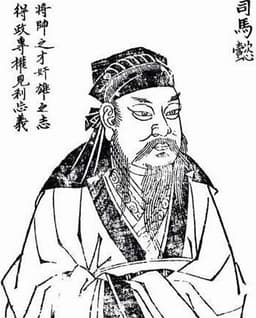
Sima Yi
General · Ancient
58.3Total
Basic Information
Born
496
179
Died
547
251
Era
Ancient
Ancient
Nationality
China
China
Occupation
General
General
Civilization
Eastern
Eastern
Score Comparison
Military (10%)
78.0
75.0
Political (20%)
62.7
59.2
Influence (20%)
54.9
58.3
Legacy (20%)
50.0
40.0
Leadership (15%)
48.8
66.0
Strategy (15%)
76.0
74.4
TOTAL
58.4
58.3
Gao Huan — Complete Timeline
531 AD
Battle of ShanyinWar
Gao Huan defeated the Erzhu clan at the Battle of Shanyin, ending their dominance over the Northern Wei court. This victory allowed him to install Emperor Xiaowu as a puppet ruler and become the de facto ruler of northern China.
Northern WeiErzhu ClanBattlePower Struggle
Impact: nationaldestructive
534 AD
Establishment of Eastern WeiPolitical Action
After a split with Emperor Xiaowu, Gao Huan established the Eastern Wei Dynasty with Emperor Xiaojing as a puppet ruler. He controlled the eastern half of northern China from his capital at Yecheng, ruling as de facto dictator until his death.
Eastern WeiNorthern WeiDynastic SplitPuppet Emperor
Impact: regionaldestructive
547 AD
Death from IllnessOther◆ Major
Gao Huan died from illness at age 51. His sons Gao Cheng and Gao Yang succeeded him, with Gao Yang later founding the Northern Qi Dynasty, fulfilling Gao Huan's ambition of establishing a new ruling house.
Eastern WeiNorthern QiSuccessionGao Yang
Impact: regional
Sima Yi — Complete Timeline
228 AD
Battle of JietingWar◆ Major
Sima Yi led the Cao Wei forces to defeat the Shu Han army at Jieting, forcing Zhuge Liang to retreat. This victory prevented Shu from capturing the Chang'an region and secured Wei's western border.
BattleCao WeiShu HanThree Kingdoms
Impact: regionalconstructive
231 AD
Defense of HefeiWar
Sima Yi successfully defended the city of Hefei against an Eastern Wu invasion led by Sun Quan. He repelled the Wu forces, maintaining Wei control over the Huai River region.
DefenseCao WeiEastern WuThree Kingdoms
Impact: regionalconstructive
249 AD
Coup at Gaoping TombsPolitical Action
Sima Yi staged a coup against the regent Cao Shuang at the Gaoping Tombs. He seized control of the Cao Wei government, executing Cao Shuang and his faction. This event gave the Sima clan effective control over Wei.
CoupCao WeiThree KingdomsPower Struggle
Impact: nationaldestructive
251 AD
Death and Posthumous HonorsOther◆ Major
Sima Yi died in 251 AD. His descendants later founded the Jin dynasty, fulfilling his ambition. He was posthumously honored as Emperor Xuan of Jin, though he never ruled as emperor himself.
DeathJin DynastyLegacy
Impact: national
Expert Analysis
Origins
Gao Huan (born 496 CE) emerged from relative obscurity in the Northern Wei military. His family had served as garrison commanders in the Six Frontier Towns, but Gao Huan began his career as a low-ranking officer. He gained early experience under the Erzhu clan, learning the intricacies of Northern Wei politics. Sima Yi (born 179 CE) came from a prominent Han dynasty bureaucratic family. His grandfather Sima Jun was a governor, and his father Sima Fang served as a court official. Sima Yi received a classical Confucian education, which shaped his cautious, analytical approach. Both men rose from backgrounds that blended military and administrative exposure, but Gao Huan's was rooted in frontier warfare, while Sima Yi's was grounded in courtly administration.
Rise to Power
Gao Huan's breakthrough came in 531 CE when he defeated the Erzhu clan at the Battle of Shanyin. This victory ended Erzhu dominance over the Northern Wei court and allowed Gao Huan to install Emperor Xiaowu as a puppet ruler. However, tensions with Xiaowu led to a split in 534 CE, prompting Gao Huan to establish the Eastern Wei dynasty with Emperor Xiaojing as his figurehead. Sima Yi's ascent was slower and more subtle. He entered service under Cao Cao, but only rose to prominence after Cao Pi's death in 226 CE. Sima Yi became a key advisor to Cao Rui, leading successful campaigns against Shu Han and Eastern Wu. His turning point came in 249 CE with the Coup at Gaoping Tombs, where he seized power from regent Cao Shuang, effectively controlling the Cao Wei government. Both men used military victories as springboards, but Gao Huan's rise was more direct, leveraging battlefield success, while Sima Yi's was a long-term accumulation of influence.
Leadership & Governance
Gao Huan's leadership was pragmatic and militaristic. He maintained control through a network of personal loyalties among frontier generals and granted them significant autonomy. His governance focused on consolidating Eastern Wei's territory, issuing land reforms to secure support from the agricultural base. Sima Yi, by contrast, governed through bureaucratic manipulation and strategic leniency. After his coup, he maintained Cao Wei's existing structures while placing his allies in key positions. Sima Yi's style was cautious, avoiding direct confrontation with the Sima clan's rivals until he had overwhelming advantage. Gao Huan's approach scored 48.8 in leadership vs Sima Yi's 66.0, reflecting Sima Yi's more effective consolidation of power without open conflict. However, Gao Huan's political score (62.7) slightly edged Sima Yi (59.2), indicating his success in building a rival state.
Triumph & Tragedy
Gao Huan's greatest triumph was the establishment of Eastern Wei, which controlled the eastern half of the Northern Wei territory. He successfully defended his realm against Western Wei attacks led by Yuwen Tai. His tragedy came from failing to unify the north before his death in 547 CE. His sons Gao Cheng and Gao Yang completed his work but through brutal infighting. Sima Yi's triumph was the Gaoping Tombs coup, which placed his family in de facto control of Cao Wei. His defense of Hefei and victory at Jieting secured Wei's borders. His tragedy was his posthumous reputation as a usurper, and his descendants' Jin dynasty proved short-lived. Both men achieved their immediate goals but left unstable successions.
Character & Destiny
Gao Huan was bold and decisive, willing to risk battle to gain power. His character led him to dominate through force, but also caused his early death from illness at 51, possibly from stress. Sima Yi was patient and calculating, famously enduring Zhuge Liang's taunts to avoid battle. His cautious nature allowed him to outlast rivals, but also meant his takeover was incomplete during his lifetime. Historical assessments note Gao Huan's military prowess (scoring 78.0) but criticize his lack of political finesse. Sima Yi's strategy score (74.4) reflects his ability to plan long-term, but his legacy (40.0) is marred by the eventual collapse of Jin. Their characters directly shaped their fates: Gao Huan's aggression built a state, while Sima Yi's patience built a dynasty.
Legacy
Gao Huan's legacy is the Northern Qi dynasty, founded by his son Gao Yang in 550 CE. He is remembered as a capable military leader who divided the Northern Wei. Sima Yi's legacy is the Jin dynasty, founded by his grandson Sima Yan in 265 CE. He is posthumously honored as Emperor Xuan of Jin. However, Sima Yi's coup set a precedent for military usurpation in Chinese history. In terms of long-term impact, Sima Yi's actions led to a unified China under Jin, albeit briefly, while Gao Huan's division persisted until the Sui reunification. Sima Yi's influence score (58.3) slightly exceeds Gao Huan's (54.9), suggesting broader historical significance.
Conclusion
While both men were pivotal figures, Sima Yi had greater overall impact. His coup directly led to the end of the Three Kingdoms period and the founding of the Jin dynasty, which unified China. Gao Huan's Eastern Wei was a precursor to Northern Qi, but his defeat by Yuwen Tai at the Battle of Shayuan in 537 CE prevented him from uniting the north. Sima Yi's strategy (74.4 vs 76.0) was nearly equal, but his leadership (66.0 vs 48.8) and political acumen (59.2 vs 62.7) were more effective in building a dynasty that lasted beyond his lifetime. Gao Huan's legacy is regional, while Sima Yi's is national. Therefore, Sima Yi edges out Gao Huan in historical significance.
Rankings
🥇
Gao HuanLeader
Mil: 78.0Pol: 62.7Inf: 54.9
58.4
🥈
Sima Yi
Mil: 75.0Pol: 59.2Inf: 58.3
58.3
+0.1 behind
How This Comparison Works
Algorithm
Each figure is scored on 6 dimensions (0—100 scale) based on structured historical data: Military (10%), Political (20%), Influence (20%), Legacy (20%), Leadership (15%), Strategy (15%). The weighted total produces the final ranking.
Data Sources
Scores are computed from structured sub-indicators in the database. Scale factors adjust for era (Ancient ×0.85, Modern ×1.0) and civilization size (Eastern ×1.05, Other ×0.80) to account for differences in population and military scale.
Maximum 3 Figures
Comparisons are limited to 2—3 figures to ensure readability and statistical meaningfulness.
Error Margins
±5 points per dimension — Sub-scores are derived from historical records with inherent uncertainty. Two figures within 5 points on a dimension should be considered roughly equivalent in that area.
Total Score Accuracy
±3 points overall — The weighted combination of 6 dimensions produces a total score with approximately ±3 points of uncertainty. Differences of less than 3 points are not statistically significant— the figures are effectively tied.
Known Limitations
- Historical records are incomplete and uneven across civilizations
- Figures from oral-tradition societies may be underrepresented
- Occupation labels can misclassify multi-role figures
- Scores measure capability and impact, not moral character
- Quantitative scoring is a comparison tool, not absolute truth
Capability Radar
Military (10%) — Battles & Warfare
Battles
75
78
Win Rate
70
75
Expansion
75
72
Political (20%) — Governance & Reform
Reform
75
65
Diplomacy
85
82
Economy
70
70
Influence (20%) — Cultural & Global Reach
Cultural
50
65
Global
40
55
Legacy (20%) — Historical Impact
Historical
65
80
Longevity
50
75
Leadership (15%) — Power & Stability
Tenure
80
80
Stability
65
75
Strategy (15%) — Tactics & Innovation
Strategy
85
85
Tactics
80
88
Reform
70
60
Similar Comparisons
Comments & Discussion
No comments yet. Be the first to share your thoughts!