Loading...
Mark Antony vs Uqba ibn Nafi
Uqba ibn Nafi leads by 11.4 pts · 2 figures compared
…
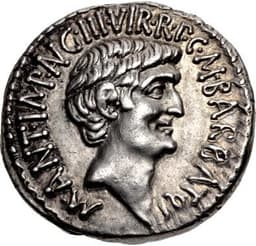
Mark Antony
General · Ancient
55.6Total
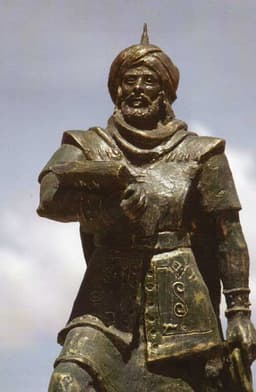
Uqba ibn Nafi
General · Ancient
67.0Total
Basic Information
Born
-83
-622
Died
-30
—
Era
Ancient
Ancient
Nationality
Roman Republic
Umayyad Caliphate
Occupation
General
General
Civilization
Western
Middle Eastern
Score Comparison
Military (10%)
85.0
80.0
Political (20%)
36.5
68.0
Influence (20%)
55.0
72.0
Legacy (20%)
58.0
55.0
Leadership (15%)
50.7
68.0
Strategy (15%)
58.0
68.0
TOTAL
55.6
67.0
Mark Antony — Complete Timeline
42 BC
Battle of PhilippiWar◆ Major
Antony, as part of the Second Triumvirate, defeated the assassins of Caesar, Brutus and Cassius, at Philippi in Macedonia. The victory consolidated the Triumvirs' control over the Roman world.
Civil WarTriumvirateCaesar's Assassins
Impact: global
41 BC
Alliance with CleopatraPolitical Action◆ Major
Antony summoned Cleopatra to Tarsus and became her lover, forming a political and personal alliance. He used Egyptian resources for his Parthian campaign and later married her, alienating Octavian.
AllianceEgyptCleopatra
Impact: regional
34 BC
Donations of AlexandriaPolitical Action◆ Major
Antony granted Roman territories to Cleopatra and her children, including Caesarion, in a ceremony in Alexandria. This act was used by Octavian to portray Antony as a traitor to Rome.
Territorial GrantPropagandaEgypt
Impact: regionaldestructive
31 BC
Battle of ActiumWar
Antony and Cleopatra's fleet was decisively defeated by Octavian's navy under Agrippa at Actium in Greece. The defeat forced Antony to flee to Egypt, leading to his downfall.
Civil WarNaval BattleOctavian
Impact: globaltragic
30 BC
Suicide of Mark AntonyOther◆ Major
After Octavian's forces captured Alexandria, Antony attempted suicide by stabbing himself. He died in Cleopatra's arms, ending the civil war and paving the way for Octavian's sole rule.
DeathCivil WarEnd of Republic
Impact: globaltragic
Uqba ibn Nafi — Complete Timeline
670 AD
Founded KairouanPolitical Action
Uqba ibn Nafi founded the city of Kairouan in present-day Tunisia as a military base and center for Islamic expansion in North Africa. The city became a major religious and cultural center, housing the Great Mosque of Kairouan.
City FoundationIslamic ExpansionNorth Africa
Impact: regionalconstructive
680 AD
Conquered the MaghrebWar◆ Major
Uqba led Arab forces across the Maghreb, reaching the Atlantic coast. He subdued Berber tribes and established Umayyad control over territories from Egypt to Morocco, extending Islamic rule across North Africa.
ConquestMaghrebUmayyad Caliphate
Impact: regional
683 AD
Killed at the Battle of TahudaWar◆ Major
Uqba ibn Nafi was ambushed and killed by Berber forces under Kusaila at Tahuda in present-day Algeria. His death temporarily halted Arab expansion in the Maghreb and led to a Berber resurgence.
BattleDeathBerber Resistance
Impact: regionaltragic
Expert Analysis
Origins
Mark Antony was born in 83 BC into a prominent Roman plebeian family. His father, Marcus Antonius Creticus, was a praetor who died in 71 BC, leaving Antony in debt. His mother, Julia Antonia, was a distant relative of Julius Caesar. Antony received a typical Roman education but fell into a life of debauchery in his youth, accumulating massive debts. He fled to Greece to study rhetoric and philosophy but was soon recalled to military service. His early military experience came under Aulus Gabinius in Syria and Egypt, where he distinguished himself as a cavalry commander.
Uqba ibn Nafi was born around 622 AD in the Quraysh tribe of Mecca, the same tribe as the Prophet Muhammad. His father, Nafi ibn Abd al-Qais, was an early companion of the Prophet. Uqba grew up during the formative years of Islam and participated in the early Muslim conquests. He was known for his piety and military skill, serving under the Rashidun caliphs and later the Umayyads. His early career included campaigns in Syria and Egypt, where he learned the art of desert warfare and governance.
Rise to Power
Antony's rise began as a staff officer under Julius Caesar in the Gallic Wars (58-50 BC). He served as quaestor in 52 BC and was elected tribune of the plebs in 49 BC, where he vetoed a motion to strip Caesar of his command, leading to the outbreak of Caesar's civil war. Antony commanded Caesar's left wing at the Battle of Pharsalus (48 BC) and was appointed Master of the Horse (dictator's deputy) in 47 BC. After Caesar's assassination in 44 BC, Antony gave the famous funeral oration that turned the Roman mob against the conspirators. He formed the Second Triumvirate with Octavian and Lepidus in 43 BC, and they proscribed their enemies, including Cicero. Antony and Octavian defeated the assassins Brutus and Cassius at the Battle of Philippi in 42 BC.
Uqba ibn Nafi rose to prominence under the Umayyad caliph Muawiyah I. He was appointed governor of Ifriqiya (roughly modern Tunisia) in 670 AD, tasked with expanding Muslim control in North Africa. He founded the city of Kairouan in 670 AD as a military base and capital, strategically located away from the coast to avoid Byzantine naval raids. From Kairouan, he launched campaigns against the Berber tribes and the Byzantine remnants. His conquests earned him the title "Conqueror of the Maghreb." He pushed westward to the Atlantic coast, reaching the Sous region of Morocco, and subdued the Berber chieftains.
Leadership & Governance
Antony's leadership was charismatic but erratic. He was a skilled battlefield commander who inspired loyalty among his troops, as seen at Philippi. However, his political judgment was often flawed. He alienated Octavian and the Roman Senate by his alliance with Cleopatra and his distribution of Roman territories to her children in the Donations of Alexandria (34 BC). He governed the eastern provinces from Alexandria, adopting Hellenistic court practices that offended Roman sensibilities. His governance was marked by reliance on Cleopatra's resources and a neglect of administrative details, which allowed Octavian to portray him as a traitor to Rome.
Uqba ibn Nafi was a disciplined and pious leader. He governed the newly conquered territories with a focus on spreading Islam and establishing order. He founded Kairouan not only as a military base but also as a center of Islamic learning and justice. He maintained strict discipline among his troops, forbidding them from harming non-combatants. His governance was inclusive, as he allowed Berber converts to Islam to retain their lands and customs. However, his rapid conquests and heavy taxation led to resentment among some Berber tribes, which eventually contributed to his downfall. His political score of 68.0 reflects his effectiveness as a governor, though his lack of diplomatic finesse with the Berbers proved costly.
Triumph & Tragedy
Antony's greatest triumph was the victory at Philippi in 42 BC, where he defeated the assassins of Caesar and solidified the Triumvirate's control. He also successfully campaigned in Parthia in 36 BC, though with heavy losses. His tragedy was the defeat at the Battle of Actium in 31 BC, where his fleet was routed by Octavian's admiral Agrippa. This loss led to his flight to Egypt and his eventual suicide in 30 BC. His alliance with Cleopatra, while providing resources, also made him vulnerable to Octavian's propaganda, and his Donations of Alexandria were a political disaster.
Uqba ibn Nafi's greatest triumph was the conquest of the Maghreb, which brought vast territories under Islamic rule. He founded Kairouan, which became one of the most important cities in the Islamic world. His tragedy was his death at the Battle of Tahuda in 683 AD, where he was ambushed and killed by Berber forces under Kusaila. His death temporarily halted Arab expansion in North Africa and led to a Berber resurgence. The loss of Uqba was a severe blow to Umayyad ambitions, though his foundations endured.
Character & Destiny
Antony was impulsive, generous, and prone to excess. He was a capable soldier but a poor politician. His love for Cleopatra and his desire for a Hellenistic eastern empire blinded him to the realities of Roman politics. His character led him to make decisions that isolated him from Roman support, ultimately sealing his fate. Historians like Plutarch describe him as a man undone by his passions. His military score of 85.0 reflects his tactical skill, but his political score of 36.5 reveals his fatal flaws.
Uqba ibn Nafi was determined, pious, and ruthless when necessary. He was a devout Muslim who saw his conquests as a religious duty. His character was marked by a single-minded focus on expansion, but he lacked the diplomatic skills to secure the loyalty of the Berber tribes he conquered. His death in an ambush shows that he underestimated the resistance of the Berbers. His leadership score of 68.0 indicates competence, but his strategy score of 68.0 suggests he was not a military genius, relying more on brute force than subtlety.
Legacy
Antony's legacy is complex. He is remembered primarily as the lover of Cleopatra and the loser of the Roman civil wars. His actions helped pave the way for the end of the Roman Republic and the rise of the Roman Empire under Augustus. His military tactics and leadership were studied by later Roman commanders, but his political failures overshadow his achievements. His influence score of 55.0 and legacy score of 58.0 reflect his mixed impact.
Uqba ibn Nafi's legacy is more tangible. He founded Kairouan, which became a major center of Islamic culture and remains a holy city in Tunisia. His conquests laid the foundation for the Islamization of North Africa, which has lasted to the present day. He is revered as a warrior-saint in Islamic tradition, and his name is honored in many places. His influence score of 72.0 and legacy score of 55.0 show his lasting impact on the region, though his personal legacy is sometimes overshadowed by later Muslim conquerors.
Conclusion
Uqba ibn Nafi had a greater impact than Mark Antony. While Antony's actions accelerated the end of the Roman Republic, his personal failures and the ephemeral nature of his achievements (his alliance with Cleopatra collapsed, his territories were reclaimed) limit his long-term influence. Uqba, on the other hand, founded a city that still exists and initiated a cultural and religious transformation of North Africa that persists to this day. His total score of 67.0 compared to Antony's 55.6 reflects this. Though Antony was a more skilled general (85.0 vs 80.0), Uqba's superior political (68.0 vs 36.5) and influence (72.0 vs 55.0) scores demonstrate his more enduring legacy. In the long view of history, the Arab general who built a city and converted a continent outweighs the Roman general who lost an empire for love.
Rankings
🥇
Uqba ibn NafiLeader
Mil: 80.0Pol: 68.0Inf: 72.0
67.0
🥈
Mark Antony
Mil: 85.0Pol: 36.5Inf: 55.0
55.6
+11.4 behind
How This Comparison Works
Algorithm
Each figure is scored on 6 dimensions (0—100 scale) based on structured historical data: Military (10%), Political (20%), Influence (20%), Legacy (20%), Leadership (15%), Strategy (15%). The weighted total produces the final ranking.
Data Sources
Scores are computed from structured sub-indicators in the database. Scale factors adjust for era (Ancient ×0.85, Modern ×1.0) and civilization size (Eastern ×1.05, Other ×0.80) to account for differences in population and military scale.
Maximum 3 Figures
Comparisons are limited to 2—3 figures to ensure readability and statistical meaningfulness.
Error Margins
±5 points per dimension — Sub-scores are derived from historical records with inherent uncertainty. Two figures within 5 points on a dimension should be considered roughly equivalent in that area.
Total Score Accuracy
±3 points overall — The weighted combination of 6 dimensions produces a total score with approximately ±3 points of uncertainty. Differences of less than 3 points are not statistically significant— the figures are effectively tied.
Known Limitations
- Historical records are incomplete and uneven across civilizations
- Figures from oral-tradition societies may be underrepresented
- Occupation labels can misclassify multi-role figures
- Scores measure capability and impact, not moral character
- Quantitative scoring is a comparison tool, not absolute truth
Capability Radar
Military (10%) — Battles & Warfare
Battles
75
75
Win Rate
60
80
Expansion
70
80
Political (20%) — Governance & Reform
Reform
30
70
Diplomacy
70
65
Economy
40
60
Influence (20%) — Cultural & Global Reach
Cultural
65
70
Global
60
65
Legacy (20%) — Historical Impact
Historical
70
75
Longevity
65
70
Leadership (15%) — Power & Stability
Tenure
60
60
Stability
30
55
Strategy (15%) — Tactics & Innovation
Strategy
65
75
Tactics
70
70
Reform
30
65
Similar Comparisons
Comments & Discussion
No comments yet. Be the first to share your thoughts!