Loading...
Guo Huai vs Sima Yi
Sima Yi leads by 10.2 pts · 2 figures compared
…

Guo Huai
General · Ancient
48.1Total
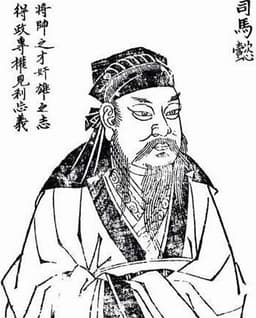
Sima Yi
General · Ancient
58.3Total
Basic Information
Born
180
179
Died
255
251
Era
Ancient
Ancient
Nationality
China
China
Occupation
General
General
Civilization
Eastern
Eastern
Score Comparison
Military (10%)
70.0
75.0
Political (20%)
27.9
59.2
Influence (20%)
48.6
58.3
Legacy (20%)
40.0
40.0
Leadership (15%)
54.2
66.0
Strategy (15%)
66.3
74.4
TOTAL
48.1
58.3
Guo Huai — Complete Timeline
228 AD
Battle of JietingWar◆ Major
Guo Huai served under Cao Zhen during the first Shu invasion. He provided reinforcements to Zhang He at Jieting, where Zhang He defeated Ma Su, forcing Zhuge Liang to retreat. This victory secured Wei's western border.
Three KingdomsBattleZhuge Liang
Impact: regional
231 AD
Battle of Mount QiWar◆ Major
Guo Huai defended against Zhuge Liang's second northern expedition. He held the strategic position of Mount Qi, repelling Shu attacks and inflicting heavy casualties. Zhuge Liang withdrew due to supply issues.
Three KingdomsBattleZhuge Liang
Impact: regional
234 AD
Battle of Wuzhang PlainsWar◆ Major
Guo Huai participated in the defense against Zhuge Liang's final northern expedition. He commanded a section of the Wei army and helped maintain the stalemate that led to Zhuge Liang's death and the Shu retreat.
Three KingdomsBattleZhuge Liang
Impact: regional
247 AD
Campaign against Jiang WeiWar◆ Major
Guo Huai led Wei forces against Jiang Wei's invasion of Longxi. He used a pincer movement to trap Jiang Wei's army, forcing him to retreat with heavy losses. This victory solidified Wei control over the western regions.
Three KingdomsBattleJiang Wei
Impact: regional
255 AD
Appointed Grand CommandantPolitical Action◆ Major
Guo Huai was appointed Grand Commandant, one of the highest military offices in Wei. He continued to oversee western defenses until his death later that year, maintaining stability against Shu incursions.
Three KingdomsAppointmentWei
Impact: national
Sima Yi — Complete Timeline
228 AD
Battle of JietingWar◆ Major
Sima Yi led the Cao Wei forces to defeat the Shu Han army at Jieting, forcing Zhuge Liang to retreat. This victory prevented Shu from capturing the Chang'an region and secured Wei's western border.
BattleCao WeiShu HanThree Kingdoms
Impact: regionalconstructive
231 AD
Defense of HefeiWar
Sima Yi successfully defended the city of Hefei against an Eastern Wu invasion led by Sun Quan. He repelled the Wu forces, maintaining Wei control over the Huai River region.
DefenseCao WeiEastern WuThree Kingdoms
Impact: regionalconstructive
249 AD
Coup at Gaoping TombsPolitical Action
Sima Yi staged a coup against the regent Cao Shuang at the Gaoping Tombs. He seized control of the Cao Wei government, executing Cao Shuang and his faction. This event gave the Sima clan effective control over Wei.
CoupCao WeiThree KingdomsPower Struggle
Impact: nationaldestructive
251 AD
Death and Posthumous HonorsOther◆ Major
Sima Yi died in 251 AD. His descendants later founded the Jin dynasty, fulfilling his ambition. He was posthumously honored as Emperor Xuan of Jin, though he never ruled as emperor himself.
DeathJin DynastyLegacy
Impact: national
Expert Analysis
Origins
Guo Huai was born around 190 AD in Yangqu, Taiyuan Commandery (modern Shanxi). His family had a history of service under the Han dynasty; his father Guo Hong served as a governor. Guo Huai began his career as a minor official under Cao Cao, later serving as a county magistrate. He demonstrated competence in administration and was promoted to prefect.
Sima Yi was born in 179 AD in Xiaojing, Henei Commandery (modern Henan). His family was prominent, with his father Sima Fang serving as a high-ranking official under the Han. Sima Yi was known for his intelligence and cautious nature. He initially avoided serving Cao Cao, feigning illness, but was eventually compelled to join Cao Cao's administration in 208 AD as a clerk. Both men came from established families, but Sima Yi's connections were more elite.
Rise to Power
Guo Huai rose through military merit on the western front. His first major contribution came in 228 AD during the first Shu invasion led by Zhuge Liang. Guo Huai, serving under Cao Zhen, provided reinforcements to Zhang He at the Battle of Jieting. Zhang He's victory forced Zhuge Liang to retreat, and Guo Huai was recognized for his role. He continued to defend against Zhuge Liang's subsequent campaigns, notably holding Mount Qi in 229 AD. By 240 AD, he was appointed Inspector of Yong Province, commanding Wei's western forces against Jiang Wei.
Sima Yi's rise was more political. He gained Cao Cao's trust through administrative competence and strategic advice. After Cao Cao's death, Sima Yi became a key advisor to Cao Pi, who appointed him to high offices. He successfully defended Hefei against Sun Quan in 222 AD, enhancing his military reputation. When Cao Rui ascended, Sima Yi was appointed Grand General and tasked with opposing Zhuge Liang. He faced Zhuge Liang in the field, often avoiding decisive battles. His greatest political move came in 249 AD when he staged the coup at Gaoping Tombs, seizing power from regent Cao Shuang. This event marked his ascent to de facto ruler of Wei.
Leadership & Governance
Guo Huai was a capable field commander, scoring 66.3 in strategy and 54.2 in leadership. He favored aggressive tactics, as seen in his pincer movement against Jiang Wei in 247 AD. He maintained stability in the west through a combination of military deterrence and diplomacy with local Qiang tribes. However, his political score of 27.9 reflects his limited role in central governance; he remained focused on military affairs.
Sima Yi scored 74.4 in strategy and 66.0 in leadership. His leadership was marked by caution and long-term planning. He avoided pitched battles with Zhuge Liang, relying on attrition. Politically, he was ruthless: after the coup, he executed Cao Shuang's faction and consolidated power. He implemented agricultural reforms to support the army, such as tuntian (military colonies), but his governance was overshadowed by his usurpation of power.
Triumph & Tragedy
Guo Huai's greatest triumph was his successful defense against Jiang Wei's invasions. In 247 AD, he trapped Jiang Wei's army near Mount Qi, forcing a retreat with heavy losses. He was appointed Grand Commandant in 251 AD, the highest military office. His tragedy was his death in 255 AD while on campaign, possibly due to illness or wounds. He never achieved the political power to shape the dynasty.
Sima Yi's triumph was the Gaoping Tombs coup, which allowed his family to control Wei and eventually found the Jin dynasty. He also successfully defended against Zhuge Liang's campaigns, securing the north. His tragedy was his legacy of usurpation; he was posthumously honored as Emperor Xuan of Jin, but his methods stained his reputation. His descendants later faced internal strife, leading to the Jin's decline.
Character & Destiny
Guo Huai was known for loyalty and straightforwardness. He served the Cao family without personal ambition for the throne. His character led him to a stable but limited career; he never sought to centralize power. Historical assessments praise his military competence but note his lack of political influence.
Sima Yi was cunning, patient, and ambitious. He feigned illness to avoid service and later to deceive Cao Shuang. His decision-making was calculated, often waiting for the right moment to strike. His character shaped his destiny: he achieved supreme power but at the cost of being remembered as a usurper. Sima Yi's total score of 58.3 vs Guo Huai's 48.1 reflects his broader impact.
Legacy
Guo Huai's legacy is confined to military history. He is remembered as a capable general who stabilized the western frontier. His tactics influenced later Wei commanders, but his name is not widely known outside Three Kingdoms scholarship. His score in legacy is 40.0.
Sima Yi's legacy is immense: he founded the Jin dynasty, which unified China after the Three Kingdoms period. His political maneuvering set a precedent for later usurpations. However, the Jin dynasty was short-lived and plagued by internal conflicts. Sima Yi's legacy score is also 40.0, but his influence on Chinese history is greater. He is a central figure in the novel "Romance of the Three Kingdoms," ensuring his enduring fame.
Conclusion
Sima Yi had a greater impact on history. His total score of 58.3 surpasses Guo Huai's 48.1 by 10.2 points. While Guo Huai was an effective general, Sima Yi's coup changed the course of Chinese history, leading to the Jin dynasty. Guo Huai's influence was limited to military defense, whereas Sima Yi's political legacy shaped subsequent dynasties. Therefore, Sima Yi is the more significant figure.
Rankings
🥇
Sima YiLeader
Mil: 75.0Pol: 59.2Inf: 58.3
58.3
🥈
Guo Huai
Mil: 70.0Pol: 27.9Inf: 48.6
48.1
+10.2 behind
How This Comparison Works
Algorithm
Each figure is scored on 6 dimensions (0—100 scale) based on structured historical data: Military (10%), Political (20%), Influence (20%), Legacy (20%), Leadership (15%), Strategy (15%). The weighted total produces the final ranking.
Data Sources
Scores are computed from structured sub-indicators in the database. Scale factors adjust for era (Ancient ×0.85, Modern ×1.0) and civilization size (Eastern ×1.05, Other ×0.80) to account for differences in population and military scale.
Maximum 3 Figures
Comparisons are limited to 2—3 figures to ensure readability and statistical meaningfulness.
Error Margins
±5 points per dimension — Sub-scores are derived from historical records with inherent uncertainty. Two figures within 5 points on a dimension should be considered roughly equivalent in that area.
Total Score Accuracy
±3 points overall — The weighted combination of 6 dimensions produces a total score with approximately ±3 points of uncertainty. Differences of less than 3 points are not statistically significant— the figures are effectively tied.
Known Limitations
- Historical records are incomplete and uneven across civilizations
- Figures from oral-tradition societies may be underrepresented
- Occupation labels can misclassify multi-role figures
- Scores measure capability and impact, not moral character
- Quantitative scoring is a comparison tool, not absolute truth
Capability Radar
Military (10%) — Battles & Warfare
Battles
60
78
Win Rate
55
75
Expansion
30
72
Political (20%) — Governance & Reform
Reform
20
65
Diplomacy
40
82
Economy
30
70
Influence (20%) — Cultural & Global Reach
Cultural
20
65
Global
10
55
Legacy (20%) — Historical Impact
Historical
30
80
Longevity
20
75
Leadership (15%) — Power & Stability
Tenure
50
80
Stability
45
75
Strategy (15%) — Tactics & Innovation
Strategy
60
85
Tactics
65
88
Reform
20
60
Similar Comparisons
Comments & Discussion
No comments yet. Be the first to share your thoughts!