Loading...
Flavius Aetius vs Uqba ibn Nafi
Uqba ibn Nafi leads by 5.4 pts · 2 figures compared
…

Flavius Aetius
General · Ancient
61.6Total
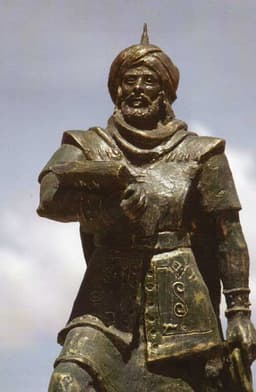
Uqba ibn Nafi
General · Ancient
67.0Total
Basic Information
Born
391
-622
Died
454
—
Era
Ancient
Ancient
Nationality
Roman Empire
Umayyad Caliphate
Occupation
General
General
Civilization
Western
Middle Eastern
Score Comparison
Military (10%)
80.0
80.0
Political (20%)
68.0
68.0
Influence (20%)
72.0
72.0
Legacy (20%)
40.0
55.0
Leadership (15%)
48.8
68.0
Strategy (15%)
80.8
68.0
TOTAL
61.6
67.0
Flavius Aetius — Complete Timeline
428 AD
Defeat of the Franks and Settlement of the AlansWar
Aetius defeated the Franks and forced them to accept Roman authority. He also settled the Alans in Gaul as foederati (allied barbarians), using them to bolster Roman defenses. These actions stabilized the Rhine frontier temporarily.
FranksAlansFrontier
Impact: regional
432 AD
Struggle for Power with BonifaciusPolitical Action◆ Major
Aetius fought a civil war against his rival Bonifacius, the comes of Africa. Aetius was defeated at the Battle of Rimini (432) and fled to the Huns, but returned after Bonifacius's death to become the dominant figure in the Western Empire.
Civil WarBonifaciusPower Struggle
Impact: national
436 AD
Campaigns against the Visigoths and BurgundiansWar◆ Major
Aetius campaigned against the Visigoths in Gaul, defeating them at the Battle of Mons Colubrarius (436). He also suppressed the Burgundians, leading to the destruction of their kingdom at Worms (437), which later inspired the Nibelungenlied.
CampaignVisigothsBurgundians
Impact: regional
451 AD
Battle of the Catalaunian PlainsWar
Flavius Aetius, commanding a coalition of Romans, Visigoths, and other barbarians, defeated Attila the Hun at the Catalaunian Plains (near modern Ch
BattleHunsAttila
Impact: global
454 AD
Assassination of Flavius AetiusPolitical Action
Emperor Valentinian III personally stabbed and killed Flavius Aetius during a meeting, accusing him of treason. This act removed the Western Empire's most effective general and led to a rapid decline in Roman military power.
AssassinationValentinian IIIDecline
Impact: globaltragic
Uqba ibn Nafi — Complete Timeline
670 AD
Founded KairouanPolitical Action
Uqba ibn Nafi founded the city of Kairouan in present-day Tunisia as a military base and center for Islamic expansion in North Africa. The city became a major religious and cultural center, housing the Great Mosque of Kairouan.
City FoundationIslamic ExpansionNorth Africa
Impact: regionalconstructive
680 AD
Conquered the MaghrebWar◆ Major
Uqba led Arab forces across the Maghreb, reaching the Atlantic coast. He subdued Berber tribes and established Umayyad control over territories from Egypt to Morocco, extending Islamic rule across North Africa.
ConquestMaghrebUmayyad Caliphate
Impact: regional
683 AD
Killed at the Battle of TahudaWar◆ Major
Uqba ibn Nafi was ambushed and killed by Berber forces under Kusaila at Tahuda in present-day Algeria. His death temporarily halted Arab expansion in the Maghreb and led to a Berber resurgence.
BattleDeathBerber Resistance
Impact: regionaltragic
Expert Analysis
Origins
Flavius Aetius was born around 391 AD in Durostorum (modern Silistra, Bulgaria) to a Roman military family. His father, Gaudentius, was a high-ranking general in the Eastern Roman Empire. Aetius spent his youth as a hostage among the Visigoths and later the Huns, experiences that gave him deep insight into barbarian cultures and military tactics. This unique background shaped his future as a master of diplomacy and coalition warfare.
Uqba ibn Nafi was born around 622 AD in Mecca, part of the Quraysh tribe. He was a companion of the Prophet Muhammad and early convert to Islam. His family had a tradition of military service; his father was a warrior who participated in early Islamic conquests. Uqba's formative years were spent in the rapid expansion of the Islamic caliphate, learning warfare and governance under the early caliphs.
Rise to Power
Aetius rose to prominence in the 420s after serving as a military tribune. In 425, he led a Hunnic army to support the usurper John, but after John's defeat, Aetius negotiated a pardon and gained the rank of comes (count). By 429, he became the leading general of the Western Roman Empire, defeating the Visigoths at the Battle of Mons Colubrarius (436) and suppressing the Burgundians in 436, a campaign that inspired the Nibelungenlied. His rivalry with Bonifacius, the comes of Africa, led to a civil war; Aetius was defeated at Rimini (432) and fled to the Huns, but returned with Hunnic support to become the dominant power in the West by 434.
Uqba ibn Nafi rose under the Umayyad Caliphate. He was appointed governor of Ifriqiya (modern Tunisia) in 670 by Caliph Muawiyah I. His mission was to consolidate and expand Muslim control in North Africa. He founded Kairouan in 670 as a military base and center for Islamic propagation. His campaigns subdued Berber tribes and pushed the frontier to the Atlantic. His conquests were marked by speed and ruthlessness, but also by the establishment of administrative centers.
Leadership & Governance
Aetius's leadership style was diplomatic and coalition-based. He maintained Roman authority by balancing barbarian allies against each other. He settled Alans and Huns in Gaul as foederati, used Visigoths to fight Burgundians, and employed Hunnic mercenaries against internal rivals. His governance focused on preserving the Western Empire through flexibility and negotiation, often ceding territory in exchange for military support. However, he failed to secure a stable succession or strengthen central institutions.
Uqba ibn Nafi led with a combination of military force and religious zeal. He established Kairouan as a permanent base, building a mosque and administrative structures. His governance was direct: he imposed Islam and Arabic culture, but also integrated local Berber converts into the army. His approach was more transformative, aiming to replace existing structures with Islamic ones. However, his harsh treatment of Berber resistance provoked rebellions that eventually led to his death.
Triumph & Tragedy
Aetius's greatest triumph was the Battle of the Catalaunian Plains (451), where he led a coalition of Romans, Visigoths, and others to defeat Attila the Hun, saving Gaul from devastation. His greatest failure was his inability to secure lasting peace; his assassination in 454 by Emperor Valentinian III removed the empire's strongest defender, leading to rapid decline. His score of 48.8 in leadership reflects his failure to institutionalize his power.
Uqba's triumph was founding Kairouan, which became a major cultural and religious center, and his conquest of the Maghreb reaching the Atlantic. His tragedy was his death at the Battle of Tahuda (683), where he was ambushed and killed by Berber forces under Kusaila. This halted Arab expansion temporarily and showed the limits of military conquest without local support. His legacy score of 55.0 is higher than Aetius's 40.0, reflecting the enduring importance of Kairouan.
Character & Destiny
Aetius was pragmatic and patient, a master of political maneuvering. His early hostage experiences gave him a realistic view of barbarian power. However, his reliance on personal relationships left him vulnerable; he failed to cultivate loyalty among Roman elites. His assassination was a direct result of his inability to manage the emperor's jealousy. Historical assessments often call him the 'Last of the Romans,' implying that his death marked the end of effective Roman leadership.
Uqba was zealous and determined, driven by religious conviction. He was a capable field commander but lacked diplomatic finesse. His harsh treatment of Berber resisters provoked a backlash that killed him. His character combined strategic vision with tactical rigidity. He is remembered as a founding figure of Islamic North Africa, but his death underscores the danger of alienating conquered peoples.
Legacy
Aetius's legacy is mixed. He delayed the fall of the Western Roman Empire but could not prevent it. His military tactics influenced later medieval warfare, but his political methods were not sustained. He scored 72.0 in influence, but his legacy score of 40.0 reflects the transience of his achievements. The Western Empire collapsed within two decades of his death.
Uqba's legacy is more tangible. Kairouan remains a major city and religious center in Tunisia. His conquests laid the foundation for the Islamization of North Africa. He scored 55.0 in legacy, higher than Aetius. His influence on the region's culture and religion is still evident today.
Conclusion
While Aetius was a brilliant military strategist (military score 80.0, strategy score 80.8) and temporarily saved the Western Empire, his achievements were ephemeral. Uqba ibn Nafi, with a total score of 67.0 versus Aetius's 61.6, had a more lasting impact. His founding of Kairouan and conquest of the Maghreb permanently altered North African civilization, while Aetius's victories only delayed an inevitable collapse. Uqba's legacy, though cut short, endured through the city he built and the Islamic culture he spread. Therefore, Uqba ibn Nafi had the greater impact.
Rankings
🥇
Uqba ibn NafiLeader
Mil: 80.0Pol: 68.0Inf: 72.0
67.0
🥈
Flavius Aetius
Mil: 80.0Pol: 68.0Inf: 72.0
61.6
+5.4 behind
How This Comparison Works
Algorithm
Each figure is scored on 6 dimensions (0—100 scale) based on structured historical data: Military (10%), Political (20%), Influence (20%), Legacy (20%), Leadership (15%), Strategy (15%). The weighted total produces the final ranking.
Data Sources
Scores are computed from structured sub-indicators in the database. Scale factors adjust for era (Ancient ×0.85, Modern ×1.0) and civilization size (Eastern ×1.05, Other ×0.80) to account for differences in population and military scale.
Maximum 3 Figures
Comparisons are limited to 2—3 figures to ensure readability and statistical meaningfulness.
Error Margins
±5 points per dimension — Sub-scores are derived from historical records with inherent uncertainty. Two figures within 5 points on a dimension should be considered roughly equivalent in that area.
Total Score Accuracy
±3 points overall — The weighted combination of 6 dimensions produces a total score with approximately ±3 points of uncertainty. Differences of less than 3 points are not statistically significant— the figures are effectively tied.
Known Limitations
- Historical records are incomplete and uneven across civilizations
- Figures from oral-tradition societies may be underrepresented
- Occupation labels can misclassify multi-role figures
- Scores measure capability and impact, not moral character
- Quantitative scoring is a comparison tool, not absolute truth
Capability Radar
Military (10%) — Battles & Warfare
Battles
85
75
Win Rate
80
80
Expansion
70
80
Political (20%) — Governance & Reform
Reform
65
70
Diplomacy
90
65
Economy
60
60
Influence (20%) — Cultural & Global Reach
Cultural
70
70
Global
75
65
Legacy (20%) — Historical Impact
Historical
85
75
Longevity
80
70
Leadership (15%) — Power & Stability
Tenure
75
60
Stability
70
55
Strategy (15%) — Tactics & Innovation
Strategy
90
75
Tactics
88
70
Reform
75
65
Similar Comparisons
Comments & Discussion
No comments yet. Be the first to share your thoughts!