Loading...
Shi Dakai vs To Lam
Shi Dakai leads by 9.0 pts · 2 figures compared
…
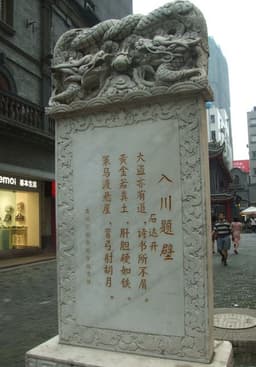
Shi Dakai
General · Modern
59.6Total
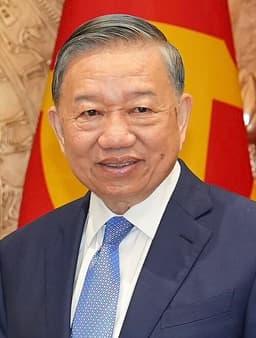
To Lam
General · Modern
50.6Total
Basic Information
Born
1831
1957
Died
1863
—
Era
Modern
Modern
Nationality
China
Vietnam
Occupation
General
General
Civilization
Eastern
Eastern
Score Comparison
Military (10%)
76.0
25.9
Political (20%)
45.0
68.0
Influence (20%)
56.7
51.8
Legacy (20%)
54.0
41.7
Leadership (15%)
72.0
72.0
Strategy (15%)
68.1
36.8
TOTAL
59.6
50.6
Shi Dakai — Complete Timeline
1851 AD
Jintian UprisingWar◆ Major
Shi Dakai joined the Taiping Rebellion at its inception in Jintian, Guangxi. As a core leader, he helped organize the rebel forces and was appointed Wing King, becoming one of the key military commanders of the Taiping Heavenly Kingdom.
Taiping RebellionUprisingMilitary Command
Impact: national
1854 AD
Battle of XiangtanWar◆ Major
Shi Dakai led Taiping forces to a major victory at Xiangtan, Hunan, defeating Qing imperial troops. This battle secured Taiping control over key territories in the Yangtze River valley and demonstrated his military skill.
Taiping RebellionBattleVictory
Impact: regional
1856 AD
Tianjing IncidentPolitical Action
Shi Dakai returned to Tianjing (Nanjing) after the internal purge of the Eastern King Yang Xiuqing and the murder of the Northern King Wei Changhui. He condemned the violence and was forced to flee, leading to a split in Taiping leadership.
Taiping RebellionInternal ConflictPurge
Impact: nationaltragic
1858 AD
Campaign in Zhejiang and FujianWar
Shi Dakai led a separate Taiping army into Zhejiang and Fujian provinces, capturing several cities. This campaign expanded Taiping influence into southeastern China but also isolated his forces from the main Taiping base.
Taiping RebellionCampaignExpansion
Impact: regional
1863 AD
Battle of Baishui RiverWar◆ Major
Shi Dakai's army was trapped and defeated by Qing forces at the Baishui River in Sichuan. He was captured and executed shortly after, marking the end of his military career and a significant loss for the Taiping cause.
Taiping RebellionBattleDefeatDeath
Impact: nationaltragic
To Lam — Complete Timeline
2016 AD
Appointed Minister of Public SecurityPolitical Action◆ Major
To Lam was appointed Minister of Public Security of Vietnam, overseeing the country's police and internal security forces. He played a key role in maintaining public order and combating crime.
Ministerial AppointmentSecurity Leadership
Impact: national
2024 AD
Elected President of VietnamPolitical Action◆ Major
To Lam was elected President of Vietnam by the National Assembly, succeeding Vo Van Thuong. He transitioned from security chief to head of state, continuing his influence in national politics.
PresidencyGovernment Leadership
Impact: national
Expert Analysis
Shi Dakai vs To Lam
# The Warrior and the Enforcer: Two Paths Through the Storm of History
On a summer morning in 1856, Shi Dakai rode through the gates of Tianjing—Nanjing, the Taiping capital—to find a city drenched in blood. His comrade Yang Xiuqing lay dead, murdered on the orders of Hong Xiuquan, the movement’s divine king. Thousands of Taiping loyalists had been slaughtered in an orgy of paranoia and ambition. Shi Dakai, the man they called the Wing King, stood at the precipice: he could seize power, flee, or try to mend what was broken. He chose loyalty, and it would cost him everything. A century and a half later, on the other side of Southeast Asia, another man faced a different kind of crossroads. To Lam, a public security minister with a quiet smile and an iron grip, watched as Vietnam’s presidency fell vacant in 2024. He did not hesitate. He stepped into the vacuum, swapping a uniform for a suit, and became the nation’s head of state. Both men were soldiers. Both rose in eras of upheaval. But one became a martyr; the other, a master of the state.
Origins
Shi Dakai was born in 1831 into a prosperous Hakka family in Guangxi, southern China. The Qing Dynasty was rotting from within: opium addiction, foreign humiliation, peasant starvation. Young Shi received a classical Confucian education, but he was restless. He read military treatises, practiced martial arts, and grew tall and commanding. When Hong Xiuquan, a failed scholar who believed himself the brother of Jesus, began recruiting followers in the hills of Guangxi, Shi Dakai was among the first to join. He was barely twenty years old, but he brought money, organization, and a fierce conviction that the old world had to burn.
To Lam was born in 1957, in the midst of the Vietnam War. His father, a party loyalist, raised him in the shadow of Ho Chi Minh’s revolutionary state. There was no religious ecstasy in To Lam’s youth—only discipline, ideology, and the long grind of nation-building. He studied law and security, joined the Ministry of Public Security in his twenties, and climbed the ladder with methodical patience. Where Shi Dakai was a fire, To Lam was a glacier.
Rise to Power
Shi Dakai’s rise was meteoric. In 1851, at the Jintian Uprising, he helped forge a ragtag army into a disciplined force. By 1854, at the Battle of Xiangtan, he crushed Qing imperial troops with a flanking maneuver that became legend. He was promoted to Wing King, the fifth-ranking leader of the Taiping Heavenly Kingdom, and given command of vast territories. His reputation grew so bright that even his enemies whispered his name with respect.
To Lam’s ascent was slower, quieter, and far more bureaucratic. Appointed Minister of Public Security in 2016, he oversaw Vietnam’s police, intelligence, and internal security. He did not win battles; he crushed dissent, monitored dissidents, and ensured the Communist Party’s grip never loosened. In 2024, when President Vo Van Thuong resigned amid a corruption purge, the National Assembly elected To Lam as his successor. He had not led an army into battle—but he had won the only war that mattered in Hanoi: the war for survival inside the party.
Leadership & Governance
Shi Dakai ruled as a warrior-king. He reformed taxation in his territories, reduced the burden on peasants, and tried to impose order on a movement that was tearing itself apart with factional strife. His military genius was undeniable: he could read terrain, anticipate enemy moves, and inspire his men to fight against impossible odds. But he was a poor politician. After the Tianjing Incident of 1856, when the Eastern King Yang Xiuqing was murdered and the Western King Wei Changhui massacred thousands, Shi Dakai returned to the capital and tried to broker peace. He failed. Hong Xiuquan, paranoid and erratic, turned on him. Shi Dakai fled Tianjing with his army, becoming a wandering warlord rather than a kingmaker.
To Lam governed from the shadows. As security minister, he built a surveillance state, purged rivals, and cultivated a network of loyalists. As president, he has continued that work—consolidating power, ensuring that no rival faction can challenge him. He is not a military strategist; his strategy is institutional. He controls the police, the courts, and the party apparatus. Where Shi Dakai tried to lead men, To Lam controls systems.
Triumph & Tragedy
Shi Dakai’s greatest triumph was the Battle of Xiangtan in 1854, where he outmaneuvered a larger Qing army and secured the Taiping’s western flank. His greatest tragedy came in 1863, at the Baishui River in Sichuan. Trapped by Qing forces, his army exhausted and starving, he surrendered on the promise that his men would be spared. The Qing executed him by slow slicing—the death reserved for traitors. His men were slaughtered anyway. He died at thirty-two, a brilliant flame extinguished by betrayal and bad faith.
To Lam has known no such tragedy. His triumph is his presidency—a bloodless ascension to the highest office. His tragedy, if it comes, will be the slow erosion of Vietnam’s fragile openness under his tightening grip. But tragedy requires a fall, and To Lam has not yet fallen.
Character & Destiny
Shi Dakai was honorable to a fault. He believed in loyalty, in the righteousness of his cause, in the possibility of a better world. That belief made him a great general but a terrible survivor. He could not betray his comrades, even when they betrayed him. He could not seize power, even when it lay within reach. His destiny was shaped by his nobility—and his nobility destroyed him.
To Lam is a pragmatist. He believes in power, in stability, in the party. He has no illusions about honor or righteousness. He has seen how revolutions consume their children, and he has chosen to be the one who consumes instead. His destiny is shaped by his caution—and his caution has made him president.
Legacy
Shi Dakai is remembered as the tragic hero of the Taiping Rebellion. Chinese historians praise his military skill and mourn his wasted potential. Statues stand in his hometown. His name is whispered alongside Zhuge Liang and Yue Fei—men of talent destroyed by the times they tried to change.
To Lam’s legacy is unwritten. He is still in power, still building his monument. He may be remembered as a stabilizer, a man who held Vietnam steady in turbulent times. Or he may be remembered as a security chief who turned the presidency into a police station. History will decide—but it will not be kind to those who confuse control with greatness.
Conclusion
Shi Dakai and To Lam stand at opposite ends of a spectrum that runs through all of history: the warrior who believes in something greater than himself, and the enforcer who believes only in himself. One died for a kingdom that never was; the other rules a nation that is. In the end, the difference between them is not talent or luck—it is the willingness to sacrifice others, or to be sacrificed. Shi Dakai chose the latter. To Lam chose the former. And that, perhaps, is the only choice that ever matters.
Rankings
🥇
Shi DakaiLeader
Mil: 76.0Pol: 45.0Inf: 56.7
59.6
🥈
To Lam
Mil: 25.9Pol: 68.0Inf: 51.8
50.6
+9.0 behind
How This Comparison Works
Algorithm
Each figure is scored on 6 dimensions (0—100 scale) based on structured historical data: Military (10%), Political (20%), Influence (20%), Legacy (20%), Leadership (15%), Strategy (15%). The weighted total produces the final ranking.
Data Sources
Scores are computed from structured sub-indicators in the database. Scale factors adjust for era (Ancient ×0.85, Modern ×1.0) and civilization size (Eastern ×1.05, Other ×0.80) to account for differences in population and military scale.
Maximum 3 Figures
Comparisons are limited to 2—3 figures to ensure readability and statistical meaningfulness.
Error Margins
±5 points per dimension — Sub-scores are derived from historical records with inherent uncertainty. Two figures within 5 points on a dimension should be considered roughly equivalent in that area.
Total Score Accuracy
±3 points overall — The weighted combination of 6 dimensions produces a total score with approximately ±3 points of uncertainty. Differences of less than 3 points are not statistically significant— the figures are effectively tied.
Known Limitations
- Historical records are incomplete and uneven across civilizations
- Figures from oral-tradition societies may be underrepresented
- Occupation labels can misclassify multi-role figures
- Scores measure capability and impact, not moral character
- Quantitative scoring is a comparison tool, not absolute truth
Capability Radar
Military (10%) — Battles & Warfare
Battles
75
10
Win Rate
70
10
Expansion
75
10
Political (20%) — Governance & Reform
Reform
50
40
Diplomacy
45
40
Economy
40
30
Influence (20%) — Cultural & Global Reach
Cultural
55
20
Global
40
20
Legacy (20%) — Historical Impact
Historical
60
20
Longevity
45
20
Leadership (15%) — Power & Stability
Tenure
55
50
Stability
35
40
Strategy (15%) — Tactics & Innovation
Strategy
80
10
Tactics
85
10
Reform
60
10
Similar Comparisons
Comments & Discussion
太平遗响6/16/2026
说我是浪漫化历史也好,但我始终觉得石达开才是真正的英雄。他完全可以在天京事变后自立为王,但他选择了忠诚,选择了保护残存的太平军兄弟。最后在大渡河,为保全数千部下性命,他独自赴清营就义——这种舍生取义的气节,我们在现代越南政坛的转椅上怕是找不到了。
WestPointer's Ghost6/16/2026
Anyone with even basic military history knowledge knows these men aren't comparable. Shi Dakai was a tactical genius who annihilated Zeng Guofan's Xiang Army at the Xiangtan, a feat that echoes through Chinese military doctrine. To Lam? He spent his career replacing generals who got too popular and purging cops who wouldn't kiss the ring. These aren't two paths through the storm—one's a warrior, the other's just smart enough to stay dry.
数据考古员6/16/2026
我翻了翻公开数据:石达开在太平天国最鼎盛时期实际控制的苏南地区,人口约2000万,亩产粮食约300斤,经济上自给自足。而苏林执掌下的越南,2023年GDP增长率仅4.8%,远低于政府目标6.5%,更麻烦的是外商直接投资同比下降7.2%。一个是把战区经营成粮仓的实干家,一个是把领跑国家拖慢的官场老手。数据不会说谎。
Classics and Dust6/16/2026
These comparisons always miss the deeper cultural DNA. Shi Dakai embodied the Confucian ideal of the loyal minister—when his king went mad, he didn't rebel, he tried to restore order. His final poem at Dadu River is genuinely heartbreaking. To Lam embodies something closer to the Legalist tradition: order through surveillance, loyalty through fear. Two different philosophies, two different ends, and I know which one I'd rather read the poetry of.
披着红旗的疑古派6/16/2026
别急着把苏林捧成第二个石达开。石达开是22岁就带兵封王的天才,苏林是公安系统里靠整肃异己往上爬的技术官僚。石达开最后在大渡河被凌迟时,据说至死不吭一声;苏林现在坐在河内那个位置上,还没经过真正的风暴考验。如果我们非要找2010年代越南的"翼王",可能得往监狱里找找——那些反对滥伐森林和腐败的异议人士,他们的选择才更像石达开。