Loading...
Shi Dakai vs Yitzhak Rabin
Yitzhak Rabin leads by 6.8 pts · 2 figures compared
…
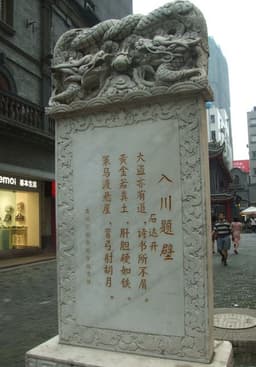
Shi Dakai
General · Modern
59.6Total
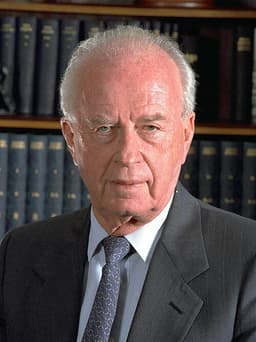
Yitzhak Rabin
General · Modern
66.4Total
Basic Information
Born
1831
1922
Died
1863
—
Era
Modern
Modern
Nationality
China
Israel
Occupation
General
General
Civilization
Eastern
Middle Eastern
Score Comparison
Military (10%)
76.0
61.7
Political (20%)
45.0
82.0
Influence (20%)
56.7
68.0
Legacy (20%)
54.0
55.0
Leadership (15%)
72.0
78.0
Strategy (15%)
68.1
55.0
TOTAL
59.6
66.4
Shi Dakai — Complete Timeline
1851 AD
Jintian UprisingWar◆ Major
Shi Dakai joined the Taiping Rebellion at its inception in Jintian, Guangxi. As a core leader, he helped organize the rebel forces and was appointed Wing King, becoming one of the key military commanders of the Taiping Heavenly Kingdom.
Taiping RebellionUprisingMilitary Command
Impact: national
1854 AD
Battle of XiangtanWar◆ Major
Shi Dakai led Taiping forces to a major victory at Xiangtan, Hunan, defeating Qing imperial troops. This battle secured Taiping control over key territories in the Yangtze River valley and demonstrated his military skill.
Taiping RebellionBattleVictory
Impact: regional
1856 AD
Tianjing IncidentPolitical Action
Shi Dakai returned to Tianjing (Nanjing) after the internal purge of the Eastern King Yang Xiuqing and the murder of the Northern King Wei Changhui. He condemned the violence and was forced to flee, leading to a split in Taiping leadership.
Taiping RebellionInternal ConflictPurge
Impact: nationaltragic
1858 AD
Campaign in Zhejiang and FujianWar
Shi Dakai led a separate Taiping army into Zhejiang and Fujian provinces, capturing several cities. This campaign expanded Taiping influence into southeastern China but also isolated his forces from the main Taiping base.
Taiping RebellionCampaignExpansion
Impact: regional
1863 AD
Battle of Baishui RiverWar◆ Major
Shi Dakai's army was trapped and defeated by Qing forces at the Baishui River in Sichuan. He was captured and executed shortly after, marking the end of his military career and a significant loss for the Taiping cause.
Taiping RebellionBattleDefeatDeath
Impact: nationaltragic
Yitzhak Rabin — Complete Timeline
1967 AD
Chief of Staff during the Six-Day WarWar
As Chief of Staff of the Israel Defense Forces, Rabin commanded the Israeli military during the Six-Day War against Egypt, Jordan, and Syria. Israel captured the Sinai Peninsula, Gaza Strip, West Bank, East Jerusalem, and Golan Heights, reshaping the region.
Six-Day WarTerritorial ExpansionMilitary Victory
Impact: global
1993 AD
Signing of the Oslo AccordsPolitical Action
As prime minister, Rabin signed the Oslo Accords with PLO Chairman Yasser Arafat on the White House lawn. The agreement established the Palestinian Authority and set a framework for Palestinian self-governance in the West Bank and Gaza Strip.
Peace ProcessPalestiniansOslo
Impact: globalconstructive
1995 AD
Assassination at Peace RallyPolitical Action
Rabin was assassinated by Israeli extremist Yigal Amir after a peace rally in Tel Aviv. The assassination shocked Israel and the world, derailing the Oslo peace process and leading to a period of political instability.
AssassinationPeace ProcessPolitical Violence
Impact: globaltragic
Expert Analysis
Yitzhak Rabin vs Shi Dakai
# The General Who Dared to Stop
On a warm November evening in 1995, Yitzhak Rabin stood on a stage in Tel Aviv, singing a song of peace with a crowd of 100,000 Israelis. Minutes later, a young man stepped from the shadows and fired three bullets into his back. Across the ocean of time, in the summer of 1863, Shi Dakai knelt by the Baishui River in Sichuan, exhausted and surrounded by Qing imperial troops. He had led his army on a desperate march across half of China, only to be captured and executed by slow slicing. Two generals, two worlds apart, yet bound by a single haunting truth: the men who fight the hardest for their causes often die at the hands of their own people.
Origins
Rabin was born in Jerusalem in 1922 to socialist Zionist immigrants from Russia. His childhood was defined by the struggle to build a Jewish homeland in a land already inhabited by Arabs. He grew up on a kibbutz, learning to farm and fight, shaped by the ethos of self-defense and collective survival. The Holocaust was not an abstraction—it was the shadow that drove his generation to believe that only military strength could guarantee Jewish existence.
Shi Dakai was born in 1831 in Guangxi, southern China, into a Hakka family of modest means. He lived in a crumbling Qing Empire wracked by corruption, famine, and foreign humiliation. The Opium Wars had exposed China’s weakness, and the countryside seethed with rebellion. Shi was educated in Confucian classics but also trained in martial arts—a hybrid of scholar and soldier that the Taiping movement would weaponize. His world was not about building a nation from scratch, but about tearing down an old one.
Rise to Power
Rabin’s path was institutional. He joined the Palmach, the elite strike force of the Jewish underground, and rose through the ranks of the Israel Defense Forces methodically. By 1967, he was Chief of Staff, commanding the Six-Day War—a lightning campaign that crushed Egypt, Jordan, and Syria in six days. The victory was not just military; it cemented his reputation as the architect of Israel’s security doctrine. His rise was linear, a product of state-building and professional military culture.
Shi Dakai’s rise was revolutionary. In 1851, he joined the Jintian Uprising, a peasant rebellion led by a failed scholar who claimed to be the brother of Jesus Christ. Shi was just 20 years old, but his tactical brilliance quickly elevated him to “Wing King,” one of the six core leaders of the Taiping Heavenly Kingdom. He was not a product of institutions but of chaos—a young general who learned war by waging it, commanding armies that grew from thousands to hundreds of thousands.
Leadership & Governance
Rabin’s leadership was pragmatic and cautious. As prime minister, he was no charismatic orator; he spoke slowly, often awkwardly, as if weighing every word. His military background gave him credibility, but his political wisdom emerged slowly. He authorized the Oslo Accords in 1993, shaking hands with Yasser Arafat on the White House lawn—a man he had once called a terrorist. The decision was not born of idealism but of realism: Rabin understood that Israel could not rule millions of Palestinians forever. His governance was about managing contradictions, not solving them.
Shi Dakai governed differently. As a Taiping king, he was both military commander and administrator, implementing the movement’s radical vision: communal property, gender equality, and the rejection of Confucian hierarchy. He was known for his discipline and fairness, punishing looting and protecting civilians even in conquered territories. But the Taiping kingdom was a theocracy, and Shi’s autonomy was limited. After the Tianjing Incident of 1856—an internal massacre that killed the Eastern King and thousands of followers—Shi lost faith in the movement’s leadership. He withdrew to lead his own campaigns, a decision that fragmented the rebellion.
Triumph & Tragedy
Rabin’s greatest moment was also the seed of his tragedy. The Oslo Accords were his triumph—a framework for Palestinian self-rule that won him the Nobel Peace Prize. But they also unleashed a wave of violence: suicide bombings by Hamas, settler protests, and a deepening polarization within Israeli society. Rabin became the target of right-wing vitriol, called a traitor in his own country. His assassination at the peace rally was the ultimate paradox: a man who had spent his life defending Israel was killed by a Jew who believed he was betraying it.
Shi Dakai’s triumph was the Battle of Xiangtan in 1854, where his forces routed Qing armies and secured the Taiping’s southern flank. His tragedy came nine years later, trapped at the Baishui River. He had tried to lead his army across the Yangtze, but the Qing commander had flooded the river, turning the valley into a killing field. Shi surrendered on the condition that his remaining soldiers be spared. They were not. He was executed by slow slicing—a death reserved for the worst enemies of the empire—while his men were massacred.
Character & Destiny
Rabin was a man of contradictions: a general who became a peacemaker, a hawk who learned to trust his enemy. His character was shaped by the burden of command—he had ordered soldiers into battle, and he knew the cost of war. This knowledge made him cautious but also determined. He once said, “You don’t make peace with friends. You make it with very nasty enemies.” His destiny was to be the bridge between war and peace, and to die on that bridge.
Shi Dakai was a man of principle in a movement that devoured its own. He was loyal to the Taiping vision but disgusted by its internal brutality. After the Tianjing Incident, he refused to seize power for himself, choosing instead to lead a separate army—a decision that historians debate as either noble or naive. His character was that of a knight errant in a world without honor. His destiny was to be a brilliant general in a lost cause, remembered more for his integrity than his victories.
Legacy
Rabin is remembered as Israel’s martyr for peace. His assassination transformed him into a symbol of what might have been—a leader who dared to compromise in a land of absolutes. His legacy is contested: some see him as a hero, others as a naive politician who opened the door to terrorism. But his death changed Israeli politics forever, deepening the fault lines that still define the region today.
Shi Dakai is remembered in China as a tragic hero—a brilliant commander who fought for a failed utopia. The Taiping Rebellion ultimately collapsed in 1864, costing 20 million lives, but Shi’s name survives in folk songs and local legends. He is the “Wing King” who could not fly away from fate. His legacy is that of a man who stayed true to his ideals even as the world burned around him.
Conclusion
Two generals, two centuries, two continents. Rabin and Shi Dakai never met, never knew each other’s worlds. Yet they shared the same fundamental dilemma: how to lead a people in times of war and peace, how to navigate the razor’s edge between conviction and compromise. One died at the hands of an extremist who rejected his vision; the other died at the hands of an empire that crushed his dream. Both were victims of the very causes they served. In the end, their stories remind us that the hardest battle a leader can fight is not against an enemy, but against the forces within his own camp—and that sometimes, the greatest courage is not to fight, but to stop.
Rankings
🥇
Yitzhak RabinLeader
Mil: 61.7Pol: 82.0Inf: 68.0
66.4
🥈
Shi Dakai
Mil: 76.0Pol: 45.0Inf: 56.7
59.6
+6.8 behind
How This Comparison Works
Algorithm
Each figure is scored on 6 dimensions (0—100 scale) based on structured historical data: Military (10%), Political (20%), Influence (20%), Legacy (20%), Leadership (15%), Strategy (15%). The weighted total produces the final ranking.
Data Sources
Scores are computed from structured sub-indicators in the database. Scale factors adjust for era (Ancient ×0.85, Modern ×1.0) and civilization size (Eastern ×1.05, Other ×0.80) to account for differences in population and military scale.
Maximum 3 Figures
Comparisons are limited to 2—3 figures to ensure readability and statistical meaningfulness.
Error Margins
±5 points per dimension — Sub-scores are derived from historical records with inherent uncertainty. Two figures within 5 points on a dimension should be considered roughly equivalent in that area.
Total Score Accuracy
±3 points overall — The weighted combination of 6 dimensions produces a total score with approximately ±3 points of uncertainty. Differences of less than 3 points are not statistically significant— the figures are effectively tied.
Known Limitations
- Historical records are incomplete and uneven across civilizations
- Figures from oral-tradition societies may be underrepresented
- Occupation labels can misclassify multi-role figures
- Scores measure capability and impact, not moral character
- Quantitative scoring is a comparison tool, not absolute truth
Capability Radar
Military (10%) — Battles & Warfare
Battles
75
65
Win Rate
70
70
Expansion
75
50
Political (20%) — Governance & Reform
Reform
50
65
Diplomacy
45
85
Economy
40
60
Influence (20%) — Cultural & Global Reach
Cultural
55
55
Global
40
70
Legacy (20%) — Historical Impact
Historical
60
75
Longevity
45
60
Leadership (15%) — Power & Stability
Tenure
55
70
Stability
35
40
Strategy (15%) — Tactics & Innovation
Strategy
80
75
Tactics
85
60
Reform
60
55
Similar Comparisons
Comments & Discussion
RetiredSabre26/16/2026
The real difference isn't courage—it's the nature of the enemy. Rabin fought Arabs, then shook their hands. Shi Dakai fought the Qing dynasty, men who shared his language, his history, his very blood. That's why Shi's end feels more tragic: he was killed by his own empire's machinery, not a foreign ideology. Rabin's assassin wore a kippah; Shi's executioners wore Qing uniforms. One betrayal was political; the other, civilizational. Shi's slow slicing wasn't just torture—it was the dynasty's mess
墨守成规6/16/2026
别被悲情叙事骗了。石达开不是"孤胆英雄",他是太平天国权力内斗的败将。天京事变里他带兵回朝"靖难",杀了韦昌辉,却又逼走洪秀全,搞得自己四面楚歌。要不是他战略上优柔寡断、在大渡河拖延了三天等洪水退去,清军根本围不住他。一个连渡河时机都判断错的人,凭什么和拉宾比?拉宾至少赢得了六日战争的胜利,石达开连一场决定性的胜仗都没打出来。
KippahKiller6/16/2026
Two bullets, three points, one truth: Rabin died because he dared to compromise. He saw Oslo as a strategic necessity, not a surrender; he'd fought wars, knew the cost. But in the eyes of Yigal Amir, the assassin, any land concession was treason. That's the sick mirror of history—Shi Dakai died fighting the Manchu; Rabin died fighting his own zealots. Both were murdered by absolutists who couldn't stomach pragmatism. Rabin's crime wasn't weakness; it was being too strong, and then choosing to us
行军假秀才6/16/2026
历史从不重复,但押韵得可怕。拉宾被自己同胞枪杀,石达开被清廷凌迟——都是"自己人"下的手。但别搞错了:石达开不是被平民杀的,他是被一个摇摇欲坠的帝国用最残忍的方式处决的。凌迟不是私刑,是清朝的官方刑罚。这说明他威胁到了体制本身,而不是某个狂热分子的个人执念。拉宾的死是一场孤狼式的政治谋杀;石达开的死是一场帝国对叛乱的仪式性镇压。一个是悲剧,另一个是屠戮。
SkepticalStripe6/16/2026
Missing context: Shi Dakai didn't just "march across China"—he commanded 100,000 troops who lived off the land like locusts. His campaign devastated provinces. And Rabin? He approved 15,000 housing units in East Jerusalem during his 1992 campaign. Both were exceptional field