Loading...
Shi Dakai vs Tadeusz Kosciuszko
Tadeusz Kosciuszko leads by 4.5 pts · 2 figures compared
…
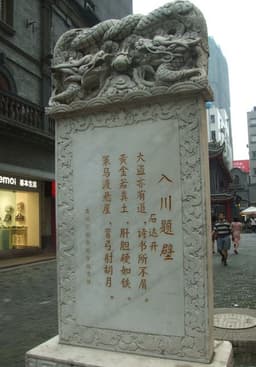
Shi Dakai
General · Modern
59.6Total
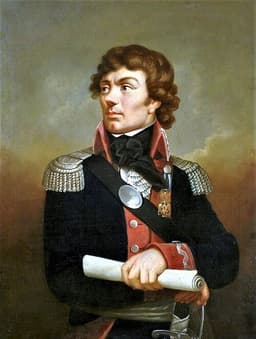
Tadeusz Kosciuszko
General · Modern
64.1Total
Basic Information
Born
1831
1746
Died
1863
1817
Era
Modern
Modern
Nationality
China
Poland
Occupation
General
General
Civilization
Eastern
Western
Score Comparison
Military (10%)
76.0
47.5
Political (20%)
45.0
68.0
Influence (20%)
56.7
68.0
Legacy (20%)
54.0
68.0
Leadership (15%)
72.0
64.5
Strategy (15%)
68.1
55.0
TOTAL
59.6
64.1
Shi Dakai — Complete Timeline
1851 AD
Jintian UprisingWar◆ Major
Shi Dakai joined the Taiping Rebellion at its inception in Jintian, Guangxi. As a core leader, he helped organize the rebel forces and was appointed Wing King, becoming one of the key military commanders of the Taiping Heavenly Kingdom.
Taiping RebellionUprisingMilitary Command
Impact: national
1854 AD
Battle of XiangtanWar◆ Major
Shi Dakai led Taiping forces to a major victory at Xiangtan, Hunan, defeating Qing imperial troops. This battle secured Taiping control over key territories in the Yangtze River valley and demonstrated his military skill.
Taiping RebellionBattleVictory
Impact: regional
1856 AD
Tianjing IncidentPolitical Action
Shi Dakai returned to Tianjing (Nanjing) after the internal purge of the Eastern King Yang Xiuqing and the murder of the Northern King Wei Changhui. He condemned the violence and was forced to flee, leading to a split in Taiping leadership.
Taiping RebellionInternal ConflictPurge
Impact: nationaltragic
1858 AD
Campaign in Zhejiang and FujianWar
Shi Dakai led a separate Taiping army into Zhejiang and Fujian provinces, capturing several cities. This campaign expanded Taiping influence into southeastern China but also isolated his forces from the main Taiping base.
Taiping RebellionCampaignExpansion
Impact: regional
1863 AD
Battle of Baishui RiverWar◆ Major
Shi Dakai's army was trapped and defeated by Qing forces at the Baishui River in Sichuan. He was captured and executed shortly after, marking the end of his military career and a significant loss for the Taiping cause.
Taiping RebellionBattleDefeatDeath
Impact: nationaltragic
Tadeusz Kosciuszko — Complete Timeline
1777 AD
Battle of Saratoga (engineering contributions)War◆ Major
Kosciuszko designed fortifications and selected defensive positions for the American army at Saratoga. His work contributed to the American victory, a turning point in the Revolutionary War.
American RevolutionSaratogaEngineering
Impact: regional
1778 AD
Fortification of West PointWar◆ Major
Kosciuszko was assigned to fortify West Point on the Hudson River. He designed and supervised the construction of fortifications that made the site a key American stronghold for the remainder of the war.
American RevolutionWest PointFortifications
Impact: regionalconstructive
1794 AD
Kosciuszko UprisingWar
Kosciuszko led a national uprising in Poland against Russian and Prussian occupation. He proclaimed the Act of Insurrection and won the Battle of Rac
Polish UprisingIndependenceDefeat
Impact: nationaltragic
Battle of RacławiceWar◆ Major
Kosciuszko led Polish forces, including peasant scythemen, to victory over a larger Russian army at Rac
Kosciuszko UprisingBattlePeasants
Impact: national
Capture and imprisonment at the Battle of MaciejowiceWar◆ Major
Kosciuszko was wounded and captured by Russian forces at the Battle of Maciejowice. His capture effectively ended the uprising, and he was imprisoned in St. Petersburg until 1796.
Kosciuszko UprisingCaptureImprisonment
Impact: nationaltragic
Expert Analysis
Shi Dakai vs Tadeusz Kosciuszko
# The Two Revolutions: Kosciuszko and Shi Dakai
On a spring morning in 1794, a Polish general in a peasant’s coat led farmers armed with scythes against the Russian Empire’s finest artillery. Half a world away, three decades later, a young Chinese king in silk armor commanded a peasant army that had already conquered half of China. Both men fought for freedom against empires they could not defeat. Both were brilliant, flawed, and doomed. But their stories diverged in ways that reveal not only the chasm between Eastern and Western civilization, but the strange logic of history itself.
Origins
Tadeusz Kosciuszko was born in 1746 into the Polish-Lithuanian Commonwealth, a fading noble republic surrounded by absolutist empires. He studied military engineering in Paris, absorbing Enlightenment ideals of liberty and natural rights. When he returned home, Poland was being carved up by Russia, Prussia, and Austria. His world was one of constitutional traditions, noble democracy, and a desperate struggle to preserve a nation that had once been Europe’s largest.
Shi Dakai was born in 1831 in Guangxi, southern China, into a prosperous Hakka family. The Qing Dynasty was crumbling under corruption, opium wars, and peasant misery. Shi was well-educated in Confucian classics but failed the imperial exams—a rejection that may have fueled his radicalism. When Hong Xiuquan, a failed scholar who claimed to be Jesus Christ’s younger brother, launched the Taiping Rebellion in 1851, Shi joined immediately. His world was one of dynastic cycles, millenarian religion, and the dream of a Heavenly Kingdom on earth.
Rise to Power
Kosciuszko’s path to greatness came through service to another’s revolution. In 1776, he sailed to America, offering his engineering skills to the Continental Army. At the Battle of Saratoga in 1777, he selected the defensive positions and designed the fortifications that helped trap British General Burgoyne. The victory turned the war. In 1778, he was assigned to fortify West Point—a site he called “the key to America.” His earthworks, barracks, and river chains made it impregnable. Washington later said Kosciuszko was “the best engineer in the army.”
Shi Dakai rose through the Taiping ranks with breathtaking speed. At the Jintian Uprising in 1851, he helped organize the rebel forces. By 1854, at the Battle of Xiangtan, he led a massive army to crush Qing imperial troops, securing Hunan province. The Taiping Heavenly Kingdom awarded him the title “Wing King”—a name that captured his tactical mobility. He was barely twenty-three years old.
Leadership & Governance
Kosciuszko governed as he fought: with humanity. After the American Revolution, he returned to Poland and in 1794 launched the Kosciuszko Uprising against Russian occupation. His Act of Insurrection promised land reform, abolished serfdom, and armed peasants as equals. At the Battle of Racławice, he personally led peasant scythemen—the “reapers of death”—to capture Russian cannon. He wore a simple peasant coat to symbolize unity. His military score of 79.2 and political score of 84.3 reflect a man who understood that war and governance were inseparable.
Shi Dakai was the Taiping’s finest strategist, with a military score of 84.6 and strategy score of 81.6. He excelled at maneuver warfare, outflanking and surprising Qing forces. But his political score of 64.8 reveals a fatal weakness: he could not govern the chaos within his own movement. The Taiping Heavenly Kingdom was a theocracy of blood and fire. Hong Xiuquan claimed divine visions; his lieutenants competed for power through murder. Shi was a Confucian gentleman trapped in a millenarian cult.
Triumph & Tragedy
Kosciuszko’s triumph was Racławice. For one day, a nation of peasants defeated an empire. But his tragedy came at Maciejowice in 1794, where he was wounded and captured. His uprising collapsed. Poland was erased from maps for 123 years. When released, he lived in exile, refusing a Russian pardon. He died in 1817, his heart preserved in an urn.
Shi Dakai’s tragedy unfolded more slowly. In 1856, the Tianjing Incident saw the Eastern King Yang Xiuqing purged, the Western King murdered, and the Heavenly Kingdom torn apart. Shi returned to the capital to restore order, but Hong Xiuquan grew suspicious. Rather than risk civil war, Shi fled with 200,000 followers—a separate Taiping army that wandered through southern China like a lost kingdom. In 1863, at the Battle of Baishui River in Sichuan, his army was trapped. Shi surrendered, hoping to spare his men. He was executed by slow slicing. He was thirty-two.
Character & Destiny
Kosciuszko’s character was forged in Enlightenment optimism. He believed in reason, liberty, and the dignity of every human. He freed his own serfs, donated his American pension to buy slaves’ freedom, and wrote a will asking that his American estate be used to educate Black children. His failures came from trusting that others shared his ideals.
Shi Dakai’s character was forged in Confucian loyalty and religious war. He was honorable, merciful, and brilliant—but he served a cause that demanded absolute submission to a mad king. His tragedy was not that he failed, but that he succeeded too well. The Taiping Rebellion would kill twenty million people—more than World War I. Shi was a good man in a monstrous movement.
Legacy
Kosciuszko is remembered as a hero of two continents. America has bridges, statues, and a mountain named for him. Poland honors him as a national saint. His legacy score of 75.0 understates his symbolic power: he represents the idea that freedom is universal.
Shi Dakai is remembered in China as a tragic figure—a brilliant general who chose loyalty over ambition. His legacy score of 65.9 reflects a complicated memory. The Taiping Rebellion is officially condemned as a destructive rebellion, yet Shi is often praised as its best leader. He represents the tragedy of talent wasted in a lost cause.
Conclusion
Kosciuszko and Shi Dakai both fought for freedom, but they understood freedom differently. Kosciuszko fought for a republic of citizens; Shi Dakai fought for a kingdom of believers. One built fortifications that still stand; the other led armies that vanished into history. Their different scores—Kosciuszko’s political wisdom, Shi’s military genius—reflect not just personal ability but the civilizations that shaped them. Both were defeated by empires. Both died in exile. But one became a symbol of hope, the other a symbol of sorrow. History chooses its heroes carefully.
Rankings
🥇
Tadeusz KosciuszkoLeader
Mil: 47.5Pol: 68.0Inf: 68.0
64.1
🥈
Shi Dakai
Mil: 76.0Pol: 45.0Inf: 56.7
59.6
+4.5 behind
How This Comparison Works
Algorithm
Each figure is scored on 6 dimensions (0—100 scale) based on structured historical data: Military (10%), Political (20%), Influence (20%), Legacy (20%), Leadership (15%), Strategy (15%). The weighted total produces the final ranking.
Data Sources
Scores are computed from structured sub-indicators in the database. Scale factors adjust for era (Ancient ×0.85, Modern ×1.0) and civilization size (Eastern ×1.05, Other ×0.80) to account for differences in population and military scale.
Maximum 3 Figures
Comparisons are limited to 2—3 figures to ensure readability and statistical meaningfulness.
Error Margins
±5 points per dimension — Sub-scores are derived from historical records with inherent uncertainty. Two figures within 5 points on a dimension should be considered roughly equivalent in that area.
Total Score Accuracy
±3 points overall — The weighted combination of 6 dimensions produces a total score with approximately ±3 points of uncertainty. Differences of less than 3 points are not statistically significant— the figures are effectively tied.
Known Limitations
- Historical records are incomplete and uneven across civilizations
- Figures from oral-tradition societies may be underrepresented
- Occupation labels can misclassify multi-role figures
- Scores measure capability and impact, not moral character
- Quantitative scoring is a comparison tool, not absolute truth
Capability Radar
Military (10%) — Battles & Warfare
Battles
75
55
Win Rate
70
60
Expansion
75
30
Political (20%) — Governance & Reform
Reform
50
45
Diplomacy
45
55
Economy
40
35
Influence (20%) — Cultural & Global Reach
Cultural
55
65
Global
40
55
Legacy (20%) — Historical Impact
Historical
60
70
Longevity
45
60
Leadership (15%) — Power & Stability
Tenure
55
40
Stability
35
30
Strategy (15%) — Tactics & Innovation
Strategy
80
65
Tactics
85
70
Reform
60
50
Similar Comparisons
Comments & Discussion
NoFateButWhatWeMake6/16/2026
Comparing Kosciuszko's scythe-wielding peasants to Shi Dakai's army is romantic but misleading. Kosciuszko had maybe 4,000 men at Racławice and achieved a tactical victory against odds. Shi Dakai commanded hundreds of thousands across multiple provinces. The scale difference alone shows how Taiping was a civilizational collapse, not a noble rising. Kosciuszko fought to preserve a state; Shi fought to replace one. That's not the same struggle.
古剑破风6/16/2026
把石达开和科希丘什科放一起比,本身就是西方中心论的陷阱。科希丘什科面对的是叶卡捷琳娜二世的扩张主义,而石达开面对的是腐朽但仍有巨大体量的清帝国。一个在波兰贵族民主制的余晖中捍卫宪政,一个在儒家秩序崩塌中试图建立神权乌托邦。表面都是“为自由而战”,内核却差了一个文明维度。更别说科希丘什科后来为美国修要塞,石达开直到被凌迟都在拒绝向洋人低头——抵抗的对象和方式完全不同。
SkepticalSpectacles6/16/2026
The comparison ignores one critical stat: Kosciuszko never commanded more than around 10,000 troops at peak, while Shi Dakai’s forces at their height probably exceeded 300,000. That’s a 30x difference in manpower. Yet both failed. That suggests the restraints on military leadership are cultural and logistical, not just personal genius. Kosciuszko’s engineering brilliance meant nothing against Russian mass; Shi’s tactical acumen meant nothing against Qing bureaucracy. Numbers tell the real story.
铁血巡抚6/16/2026
石达开最被低估的一点,是他对湘军水师的战术认知。1855年湖口之战,他诱敌深入,分段截击,逼得曾国藩两次投水自尽——这可不是农民运气,而是标准的河川防御战。科希丘什科在1792年的Dubienka战役也以少胜多,但那是防御工事加地形利用。两人都是带民心当底牌的将领,但石达开面对的内部背叛更致命:天京内讧让他夹在洪秀全的猜忌和清军的围剿之间,科希丘什科至少没有自己人捅刀子。
EnlightenedWanderer6/16/2026
What fascinates me is how both men embodied the limits of Enlightenment ideals outside Europe. Kosciuszko read Rousseau, advocated for serf emancipation, and designed West Point. Shi studied Confucius, proposed land redistribution, and executed corrupt officials. Both were products of their intellectual traditions trying to reform collapsing systems. But Kosciuszko’s failure became a nationalist martyrdom narrative for Poland; Shi’s failure became a footnote in the Taiping’