Loading...
Shi Dakai vs Suharto
Shi Dakai leads by 2.4 pts · 2 figures compared
…
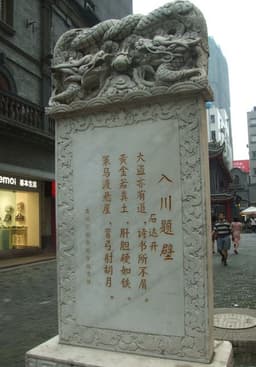
Shi Dakai
General · Modern
59.6Total
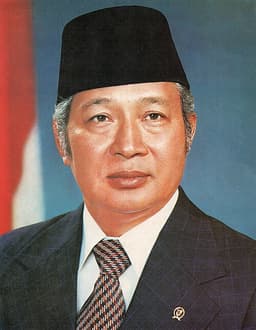
Suharto
General · Modern
57.2Total
Basic Information
Born
1831
1921
Died
1863
—
Era
Modern
Modern
Nationality
China
Indonesia
Occupation
General
General
Civilization
Eastern
Eastern
Score Comparison
Military (10%)
76.0
20.0
Political (20%)
45.0
59.3
Influence (20%)
56.7
60.0
Legacy (20%)
54.0
52.0
Leadership (15%)
72.0
82.0
Strategy (15%)
68.1
60.0
TOTAL
59.6
57.2
Shi Dakai — Complete Timeline
1851 AD
Jintian UprisingWar◆ Major
Shi Dakai joined the Taiping Rebellion at its inception in Jintian, Guangxi. As a core leader, he helped organize the rebel forces and was appointed Wing King, becoming one of the key military commanders of the Taiping Heavenly Kingdom.
Taiping RebellionUprisingMilitary Command
Impact: national
1854 AD
Battle of XiangtanWar◆ Major
Shi Dakai led Taiping forces to a major victory at Xiangtan, Hunan, defeating Qing imperial troops. This battle secured Taiping control over key territories in the Yangtze River valley and demonstrated his military skill.
Taiping RebellionBattleVictory
Impact: regional
1856 AD
Tianjing IncidentPolitical Action
Shi Dakai returned to Tianjing (Nanjing) after the internal purge of the Eastern King Yang Xiuqing and the murder of the Northern King Wei Changhui. He condemned the violence and was forced to flee, leading to a split in Taiping leadership.
Taiping RebellionInternal ConflictPurge
Impact: nationaltragic
1858 AD
Campaign in Zhejiang and FujianWar
Shi Dakai led a separate Taiping army into Zhejiang and Fujian provinces, capturing several cities. This campaign expanded Taiping influence into southeastern China but also isolated his forces from the main Taiping base.
Taiping RebellionCampaignExpansion
Impact: regional
1863 AD
Battle of Baishui RiverWar◆ Major
Shi Dakai's army was trapped and defeated by Qing forces at the Baishui River in Sichuan. He was captured and executed shortly after, marking the end of his military career and a significant loss for the Taiping cause.
Taiping RebellionBattleDefeatDeath
Impact: nationaltragic
Suharto — Complete Timeline
1966 AD
Supersemar and Transfer of PowerPolitical Action
President Sukarno signed the Supersemar order, delegating authority to General Suharto to restore order after the 30 September Movement. Suharto used this to ban the Communist Party, purge leftists, and gradually assume executive power, effectively beginning his New Order regime.
SupersemarNew OrderIndonesia
Impact: nationaldestructive
1967 AD
New Order Economic DevelopmentReform◆ Major
Suharto implemented the New Order's economic policies, focusing on foreign investment, agricultural self-sufficiency, and industrialization. The government achieved high growth rates, reduced poverty, and stabilized the economy, but also fostered crony capitalism and corruption.
Economic GrowthDevelopmentIndonesia
Impact: nationalconstructive
1975 AD
Invasion of East TimorWar◆ Major
Suharto ordered the invasion of East Timor after Portugal withdrew. Indonesian forces occupied the territory, leading to a 24-year occupation marked by widespread human rights abuses, including massacres and forced displacement, resulting in an estimated 100,000-200,000 deaths.
East TimorOccupationHuman Rights
Impact: regionaldestructive
1998 AD
Asian Financial Crisis and Fall from PowerPolitical Action
The Asian Financial Crisis devastated Indonesia's economy, leading to massive unemployment and food shortages. Widespread protests and riots forced Suharto to resign in May 1998 after 31 years in power, ending his authoritarian rule and ushering in the Reformasi era.
Financial CrisisResignationReformasi
Impact: nationaltragic
Expert Analysis
Shi Dakai vs Suharto
# The General and the King: Two Paths of Power in Eastern History
In the summer of 1863, on the banks of the Baishui River in Sichuan, a 32-year-old rebel king knelt before his captors. His army was shattered, his dream of a new China drowned in blood. One hundred and thirty-five years later, on a spring morning in Jakarta in 1998, a 77-year-old president slipped out of his palace by car, his thirty-one-year reign dissolved by the very economic forces he had once mastered. Shi Dakai and Suharto both seized power in moments of chaos, both commanded armies and nations, yet their fates could not have diverged more sharply. Why did one die a martyr and the other retire in comfort? The answer lies not in luck but in the marrow of their characters and the eras that shaped them.
Origins
Shi Dakai was born in 1831 into a prosperous Hakka family in Guangxi, southern China. The Qing Dynasty was rotting from within, its bureaucracy paralyzed, its people starving. From childhood, Shi was trained in the Confucian classics but also in martial arts—a fusion of scholar and soldier that would define him. When Hong Xiuquan, a failed examination candidate turned prophet, launched the Taiping Rebellion in 1851, Shi joined at the Jintian Uprising. He was barely twenty, but he brought something rare: idealism tempered by discipline.
Suharto came from a different world. Born in 1921 in a small village in Java, he was the son of a low-level irrigation official. His parents separated when he was young, and he was passed between relatives. There was no Confucian learning here, no grand visions—only the hard realities of Dutch colonial rule and Japanese occupation. Suharto learned early that survival meant obedience, patience, and the careful reading of power. He joined the Dutch colonial army, then the Japanese-sponsored militia, then the Indonesian independence struggle. By the 1960s, he was a general who had never lost a battle—but also never fought for a cause larger than himself.
Rise to Power
Shi Dakai rose through talent. In 1854, at the Battle of Xiangtan, he led Taiping forces to a decisive victory over Qing troops, securing Hunan and proving himself the rebellion's finest field commander. His soldiers adored him; his peers respected him. But the Taiping court was a nest of jealousy and paranoia. In 1856, the Tianjing Incident tore the kingdom apart: the Eastern King Yang Xiuqing was purged, the Northern King murdered, and Shi Dakai returned to the capital to find a bloodbath. He tried to mediate, but the Heavenly King Hong Xiuquan grew suspicious of him. Shi fled Tianjing with his army, choosing exile over fratricide.
Suharto rose through patience. In 1965, Indonesia was convulsed by a failed coup blamed on the Communist Party. General Suharto, commander of the army's strategic reserve, did not seize power immediately. He waited. He let President Sukarno flounder, let the anti-communist massacres unfold, let the army consolidate its grip. Then, on March 11, 1966, he maneuvered Sukarno into signing the Supersemar order—a single piece of paper that transferred authority to Suharto to "restore order." It was a coup by document, not by bullet. Suharto understood what Shi Dakai never did: that power is not taken in a day but assembled piece by piece, like a Javanese shadow puppet show where the audience only sees the final silhouette.
Leadership and Governance
Shi Dakai governed on the march. His military score of 84.6 reflects a commander who could outmaneuver larger Qing forces through speed and terrain. His strategy score of 81.6 shows a mind that grasped the geometry of war. But his political score of 64.8 reveals his weakness: he was a brilliant general in a movement that needed a statesman. In 1858, he led his army into Zhejiang and Fujian, capturing cities and recruiting followers, but he never built institutions. He could conquer but not administer. His soldiers fought for him, not for a system.
Suharto ruled from a desk. His military score of 45.5 is surprisingly low for a general-president, but it is honest: he was not a great field commander. His strength was political, with a score of 68.8, and strategic, with 58.2—not brilliant, but steady. Under his New Order from 1967 onward, he invited foreign investment, achieved rice self-sufficiency, and built schools and roads. Indonesia's economy grew at 7% annually for two decades. But this growth came at a price: corruption became systemic, dissent was crushed, and East Timor was invaded in 1975 in a brutal occupation that would last twenty-four years. Suharto built a machine, not a nation.
Triumph and Tragedy
Shi Dakai's greatest moment was also his last. In 1863, trapped by Qing forces at the Baishui River, he could have escaped. Instead, he surrendered on condition that his soldiers be spared. The Qing executed him by slow slicing, but his legend survived. His tragedy was that he remained loyal to a failed cause long after loyalty became suicide.
Suharto's triumph was the transformation of Indonesia from a volatile, impoverished archipelago into a stable middle-income country. His tragedy was the Asian Financial Crisis of 1997-1998, which revealed that his economic miracle was built on cronyism and debt. When the rupiah collapsed and riots erupted, the machine stopped. Students occupied parliament, and his own generals abandoned him. On May 21, 1998, he resigned—not executed, not imprisoned, but retired to a comfortable house in Jakarta, where he lived until 2008.
Character and Destiny
Shi Dakai was a romantic: he believed in honor, loyalty, and the possibility of a just world. This made him beloved but also vulnerable. He could not betray his comrades, even when they betrayed him. He could not compromise, even when compromise was the only path to survival. His personality led him to the execution ground.
Suharto was a pragmatist: he believed in power, stability, and the necessity of control. This made him effective but also cold. He could wait, manipulate, and when necessary, destroy. He had no illusions about human nature. His personality led him to a peaceful death in old age, surrounded by family and wealth, but also to a legacy stained by corruption and human rights abuses.
Legacy
Shi Dakai is remembered as a tragic hero in China, a symbol of integrity in a corrupt age. His legacy score of 65.9 reflects his status as a footnote in Western history but a significant figure in Chinese memory. Poems and folk songs celebrate his bravery. His image appears in films and novels.
Suharto's legacy is more contested. His score of 67.1 places him slightly higher, but the numbers hide a bitter debate. In Indonesia, some remember the stability and growth of the New Order; others remember the stolen wealth and the disappeared activists. His name is invoked by politicians who long for strongman rule, and cursed by those who dream of democracy.
Conclusion
Standing at the Baishui River in 1863, Shi Dakai might have envied Suharto's longevity. Sitting in Jakarta in 1998, Suharto might have envied Shi Dakai's honor. But neither could have chosen the other's path. History gives us the cards we are dealt, but it is character that decides how we play them. One died for a dream that failed; the other lived for a system that worked—until it didn't. In the end, perhaps the question is not which was greater, but which taught us more about the human condition. And on that score, both generals still have much to say.
Rankings
🥇
Shi DakaiLeader
Mil: 76.0Pol: 45.0Inf: 56.7
59.6
🥈
Suharto
Mil: 20.0Pol: 59.3Inf: 60.0
57.2
+2.4 behind
How This Comparison Works
Algorithm
Each figure is scored on 6 dimensions (0—100 scale) based on structured historical data: Military (10%), Political (20%), Influence (20%), Legacy (20%), Leadership (15%), Strategy (15%). The weighted total produces the final ranking.
Data Sources
Scores are computed from structured sub-indicators in the database. Scale factors adjust for era (Ancient ×0.85, Modern ×1.0) and civilization size (Eastern ×1.05, Other ×0.80) to account for differences in population and military scale.
Maximum 3 Figures
Comparisons are limited to 2—3 figures to ensure readability and statistical meaningfulness.
Error Margins
±5 points per dimension — Sub-scores are derived from historical records with inherent uncertainty. Two figures within 5 points on a dimension should be considered roughly equivalent in that area.
Total Score Accuracy
±3 points overall — The weighted combination of 6 dimensions produces a total score with approximately ±3 points of uncertainty. Differences of less than 3 points are not statistically significant— the figures are effectively tied.
Known Limitations
- Historical records are incomplete and uneven across civilizations
- Figures from oral-tradition societies may be underrepresented
- Occupation labels can misclassify multi-role figures
- Scores measure capability and impact, not moral character
- Quantitative scoring is a comparison tool, not absolute truth
Capability Radar
Military (10%) — Battles & Warfare
Battles
75
40
Win Rate
70
45
Expansion
75
30
Political (20%) — Governance & Reform
Reform
50
55
Diplomacy
45
60
Economy
40
65
Influence (20%) — Cultural & Global Reach
Cultural
55
40
Global
40
50
Legacy (20%) — Historical Impact
Historical
60
55
Longevity
45
45
Leadership (15%) — Power & Stability
Tenure
55
85
Stability
35
50
Strategy (15%) — Tactics & Innovation
Strategy
80
40
Tactics
85
35
Reform
60
50
Similar Comparisons
Comments & Discussion
铁血史鉴6/16/2026
别拿叛国神棍和东南亚军阀相提并论,简直是侮辱史实。石达开是有原则的纲领领袖,太平天国虽败犹荣,而苏哈托不过是冷战催生的暴君,靠美军和日资把持印尼32年。史书不会遗忘,石达开在大渡河败得悲壮,苏哈托在雅加达逃得丢人。
TheArmchairGeneral6/16/2026
As a military historian, Suharto's 1965-66 power grab is far more cunning than Shi Dakai's straightforward battlefield leadership. Shi lost the Taiping cause at the Battle of Baishui River because he was outmaneuvered by Qing logistics and local militias, not just by raw force. Suharto, by contrast, manipulated the UN's West New Guinea dispute in 1962 to build his military cult, then used that momentum to crush the PKI.
数据侦探6/16/2026
别被“三万亿”这种故事蒙了!苏哈托家族据估算掠夺150-350亿美元,超过印尼GDP的5%,而石达开死时身无分文。数据会撒谎但趋势不会:苏哈托倒台后印尼贫困率从1996年的17%飙升到1999年的24%,这说明他的“开发”是靠外资信贷堆出来的纸牌屋,根本不是真本事。
ClassicsScholar6/16/2026
Shi Dakai's fatal flaw was his loyalty to Hong Xiuquan's god-king fantasy even after Tianjing was lost. Confucian teaching of righteousness bound him to a failed charismatic cult, while Suharto, pragmatic and Javanese, adapted Hindu-Buddhist statecraft of the Majapahit empire. One died a martyr for a doomed ideology; the other survived as a secular sultan, proving adaptability trumps moral purity in realpolitik.