Loading...
Shamil Basayev vs Vladimir Lenin
Vladimir Lenin leads by 28.1 pts · 2 figures compared
…
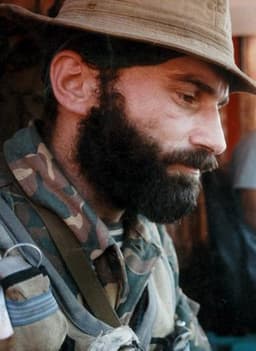
Shamil Basayev
Revolutionary · Modern
43.1Total
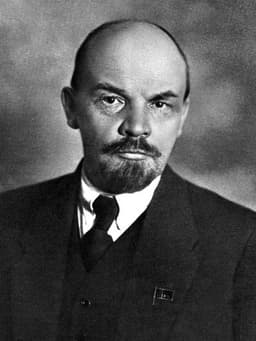
Vladimir Lenin
Revolutionary · Modern
71.2Total
Basic Information
Born
1965
1870
Died
—
1924
Era
Modern
Modern
Nationality
Chechnya
Russia
Occupation
Revolutionary
Revolutionary
Civilization
Western
Western
Score Comparison
Military (10%)
40.0
30.0
Political (20%)
35.0
78.0
Influence (20%)
45.5
82.0
Legacy (20%)
35.0
72.0
Leadership (15%)
57.1
80.0
Strategy (15%)
51.7
60.0
TOTAL
43.1
71.2
Shamil Basayev — Complete Timeline
1995 AD
Budyonnovsk Hospital Hostage CrisisWar◆ Major
Basayev led a raid on the Russian town of Budyonnovsk, taking over 1,000 hostages in a hospital. The crisis ended with a negotiated settlement that allowed him to return to Chechnya. This attack demonstrated Chechen reach into Russia.
Hostage CrisisTerrorismChechnya
Impact: nationaldestructive
1999 AD
Invasion of DagestanWar
Basayev led Chechen and Islamist fighters into Dagestan to support local rebels. This invasion triggered the Second Chechen War as Russia responded with a full-scale military campaign. The invasion failed to gain local support.
DagestanChechnyaInvasion
Impact: regionaldestructive
2002 AD
Moscow Theater Hostage CrisisWar◆ Major
Basayev orchestrated the Moscow theater hostage crisis, where Chechen militants took 850 people hostage. Russian forces ended the siege with gas, killing 130 hostages. The attack increased international condemnation of Chechen rebels.
Hostage CrisisTerrorismMoscow
Impact: nationaldestructive
2004 AD
Beslan School SiegeWar◆ Major
Basayev planned the Beslan school siege, where militants took over 1,100 people hostage. The siege ended in a bloody assault, resulting in 334 deaths, mostly children. This attack was widely condemned globally.
Hostage CrisisTerrorismBeslan
Impact: globaltragic
2006 AD
Killed by Russian ExplosivesWar◆ Major
Basayev was killed in Ingushetia when a truck loaded with explosives detonated. Russian intelligence claimed responsibility. His death removed the most prominent Chechen rebel commander.
AssassinationChechnyaRussia
Impact: regional
Vladimir Lenin — Complete Timeline
1903 AD
Founding of the Bolshevik PartyPolitical Action
At the Second Congress of the Russian Social Democratic Labour Party in London, Lenin led a split that created the Bolshevik faction. The Bolsheviks advocated for a disciplined vanguard party of professional revolutionaries, a key element of Lenin's political strategy.
Political PartyRevolutionIdeology
Impact: global
1917 AD
April ThesesPolitical Action◆ Major
Lenin returned to Russia from exile and published the April Theses, calling for the overthrow of the Provisional Government, transfer of power to the soviets, and an end to World War I. This document set the Bolshevik agenda for the coming revolution.
RevolutionIdeologyPolitical Strategy
Impact: national
October RevolutionPolitical Action
Lenin led the Bolshevik seizure of power in Petrograd, capturing key government buildings and the Winter Palace. The revolution overthrew the Provisional Government and established the world's first socialist state, the Russian Soviet Federative Socialist Republic.
RevolutionCoupCommunism
Impact: global
1918 AD
Treaty of Brest-LitovskPolitical Action◆ Major
Lenin signed a separate peace treaty with the Central Powers, ceding vast territories including Ukraine, Belarus, and the Baltic states. The treaty ended Russia's involvement in World War I but caused significant territorial losses and internal opposition.
TreatyWorld War ITerritorial Loss
Impact: globaldestructive
1921 AD
New Economic Policy (NEP)Reform◆ Major
Lenin introduced the NEP, allowing limited private enterprise and market mechanisms to revive the war-torn Soviet economy. The policy replaced War Communism, permitting small-scale capitalism while the state retained control of major industries.
Economic ReformPolicyRecovery
Impact: nationalconstructive
1922 AD
Establishment of the Soviet UnionPolitical Action
Lenin oversaw the creation of the Union of Soviet Socialist Republics (USSR), a federation of Soviet republics. The new state consolidated Bolshevik control over much of the former Russian Empire and became a model for communist states worldwide.
State FormationCommunismFederation
Impact: global
Expert Analysis
Vladimir Lenin vs Shamil Basayev
# The Revolutionary's Shadow: Lenin and Basayev
On an April night in 1917, a sealed train carried Vladimir Lenin across war-torn Europe, bound for a Russia teetering on the edge of collapse. Nearly a century later, in a Chechen village, a young man named Shamil Basayev listened to stories of his grandfather's deportation under Stalin's orders. Both men would become revolutionaries. Both would spill blood in the name of their causes. But the paths they carved through history could not have been more different: one built an empire that spanned a sixth of the Earth's surface, the other left behind only rubble and a question that still haunts the Caucasus.
Origins
Lenin was born into privilege in 1870, the son of a school inspector who rose to the rank of hereditary noble. His older brother Alexander's execution for plotting to assassinate the Tsar shattered the family and radicalized the younger Ulyanov. He devoured Marx, studied law, and spent years in Siberian exile perfecting his theories. His world was one of books, debates in smoky émigré cafes, and the patient construction of a revolutionary ideology.
Basayev grew up in a very different world. Born in 1965 in the Chechen village of Dyshne-Vedeno, he came of age during the Soviet Union's slow decay. His grandfather had been deported to Kazakhstan in 1944, and the family's return to a homeland stripped of its autonomy left deep scars. Basayev studied land management in Moscow, but his real education came in the chaos of the early 1990s, when the Soviet collapse opened a vacuum of power. He fought in the 1991-1993 war between Georgia and Abkhazia, learning the brutal trade of guerrilla warfare.
Rise to Power
Lenin's ascent was a masterclass in political patience. At the 1903 London congress of the Russian Social Democratic Labour Party, he engineered a split that created the Bolshevik faction—a disciplined vanguard of professional revolutionaries. For fourteen years, he wrote, organized, and waited. When the February Revolution of 1917 toppled the Tsar, Lenin saw his moment. He returned to Russia in that sealed train and issued the April Theses, demanding "Peace, Land, and Bread." By October, he had orchestrated a coup that seized the Winter Palace with astonishing ease.
Basayev's rise followed a different logic. In 1995, he led 150 fighters across the border into Budyonnovsk, taking over 1,000 hostages in a hospital. The siege ended with a negotiated withdrawal and safe passage, but it made Basayev a household name in Chechnya and a symbol of defiance. The First Chechen War had exposed Russia's weakness, and Basayev capitalized on it. By 1999, he invaded neighboring Dagestan with Islamist fighters, hoping to spark a broader rebellion. That invasion triggered the Second Chechen War—and the full weight of Vladimir Putin's new Russia.
Leadership & Governance
Lenin ruled through the power of ideas turned into institutions. As head of the world's first communist state, he created the Cheka secret police, suppressed dissent, and presided over a Red Terror that claimed tens of thousands of lives. Yet he also proved pragmatic. When War Communism brought economic collapse, he pivoted to the New Economic Policy in 1921, allowing limited private enterprise to save the revolution. His political genius lay in his ability to adapt Marxist theory to Russian reality—and to crush anyone who stood in his way.
Basayev governed nothing. He commanded fighters, not ministries. His military score of 55.8 reflects tactical skill—the Budyonnovsk raid, the Moscow theater siege in 2002, the Beslan school siege in 2004—but his political score of 38.8 reveals a fatal weakness. He could destroy, but he could not build. The Beslan siege ended with over 330 dead, mostly children, and turned even sympathetic Chechens against him. Where Lenin created a state, Basayev created only a legacy of terror.
Triumph & Tragedy
Lenin's greatest triumph was the establishment of the Soviet Union in 1922, a federation that would outlast him by seven decades. His greatest tragedy was the brutality it required: the execution of the Romanov family, the suppression of the Kronstadt rebellion, the famine that followed forced grain requisitions. He died in 1924, paralyzed by strokes, his body embalmed and enshrined in a mausoleum that still stands in Red Square.
Basayev's triumphs were all pyrrhic. The Budyonnovsk raid forced Russia to negotiate, but the peace collapsed. The Moscow theater siege ended when Russian forces pumped in gas and stormed the building, killing 130 hostages. The Beslan school siege was a catastrophe of planning and execution. Basayev himself was killed in 2006, blown up by a truckload of explosives in Ingushetia. Russian intelligence claimed responsibility. There was no mausoleum.
Character & Destiny
Lenin was a man of iron discipline and cold calculation. He could wait years for the right moment, then act with surgical precision. His personality—ruthless, intellectual, utterly convinced of his own correctness—shaped the Soviet system in his image. He believed history was on his side, and he was willing to sacrifice millions to prove it.
Basayev was driven by rage and faith. He called himself a "soldier of Allah" and styled himself after the 19th-century Chechen leader Imam Shamil, from whom he took his name. But he lacked Shamil's political acumen or Lenin's strategic patience. His strategy score of 45.6 reflects a man who understood guerrilla warfare but not statecraft. He was a weapon, not a builder.
Legacy
Lenin's legacy is monumental and contested. His ideas shaped China, Cuba, Vietnam, and half the world. The Soviet Union he founded collapsed in 1991, but Leninism as a method of revolutionary organization persists. His embalmed body remains a pilgrimage site for the faithful—and a symbol of failed utopia for millions.
Basayev's legacy is narrower. He is remembered in Chechnya as a freedom fighter by some, a terrorist by most of the world. The Beslan siege made him a pariah even among former allies. His war did not win Chechen independence; it only deepened the destruction. Today, Grozny is rebuilt, but Chechnya is ruled by a pro-Russian strongman, and Basayev's name is spoken in whispers.
Conclusion
Two revolutionaries, two fates. Lenin built a state that lasted seventy years; Basayev waged a war that ended in rubble. The difference lies not in their goals—both sought to overturn an existing order—but in their methods and their understanding of power. Lenin knew that revolution required institutions, ideology, and the patience to wait for history. Basayev believed that violence alone could remake the world. History proved him wrong. In the end, the man who wrote the books outlasted the man who only knew how to burn them.
Rankings
🥇
Vladimir LeninLeader
Mil: 30.0Pol: 78.0Inf: 82.0
71.2
🥈
Shamil Basayev
Mil: 40.0Pol: 35.0Inf: 45.5
43.1
+28.1 behind
How This Comparison Works
Algorithm
Each figure is scored on 6 dimensions (0—100 scale) based on structured historical data: Military (10%), Political (20%), Influence (20%), Legacy (20%), Leadership (15%), Strategy (15%). The weighted total produces the final ranking.
Data Sources
Scores are computed from structured sub-indicators in the database. Scale factors adjust for era (Ancient ×0.85, Modern ×1.0) and civilization size (Eastern ×1.05, Other ×0.80) to account for differences in population and military scale.
Maximum 3 Figures
Comparisons are limited to 2—3 figures to ensure readability and statistical meaningfulness.
Error Margins
±5 points per dimension — Sub-scores are derived from historical records with inherent uncertainty. Two figures within 5 points on a dimension should be considered roughly equivalent in that area.
Total Score Accuracy
±3 points overall — The weighted combination of 6 dimensions produces a total score with approximately ±3 points of uncertainty. Differences of less than 3 points are not statistically significant— the figures are effectively tied.
Known Limitations
- Historical records are incomplete and uneven across civilizations
- Figures from oral-tradition societies may be underrepresented
- Occupation labels can misclassify multi-role figures
- Scores measure capability and impact, not moral character
- Quantitative scoring is a comparison tool, not absolute truth
Capability Radar
Military (10%) — Battles & Warfare
Battles
45
20
Win Rate
40
35
Expansion
15
70
Political (20%) — Governance & Reform
Reform
5
95
Diplomacy
10
75
Economy
5
60
Influence (20%) — Cultural & Global Reach
Cultural
20
80
Global
20
90
Legacy (20%) — Historical Impact
Historical
25
95
Longevity
15
85
Leadership (15%) — Power & Stability
Tenure
10
55
Stability
5
40
Strategy (15%) — Tactics & Innovation
Strategy
35
55
Tactics
55
30
Reform
20
85
Similar Comparisons
Comments & Discussion
Vlad_of_19176/16/2026
As a military historian, I see Lenin as the decisive victor for one reason: operationalization of terror. Lenin's Red Terror was systematic, targeting 500,000+ victims with efficiency. Basayev's Beslan school siege (2004, killing 334, including 186 children) was tactical but lacked strategic depth. Lenin built a state machine that ran for decades; Basayev's actions were reactive fireworks. Terror wins battles, but ideology wins wars.
KremlinGhost6/16/2026
数据怀疑论者在此:别拿死亡数字比较!列宁的红恐算上内战饥荒死了500万+,巴萨耶夫车臣战争期间平民伤亡2万-5万,但统计口径全是政治武器。苏联档案有多少被烧干净?两人都是杀人机器,但列宁的罪证被意识形态美化,巴萨耶夫的罪证被妖魔化。要真相就挖原始档案,不是比谁的血染得更红。
TextWrecked_Greek6/16/2026
Classics scholar here. Lenin's intellectual scaffolding is unignorable: he read Hegel, Clausewitz, and Marx, writing 55-volume collected works. Basayev's library was practical—field manuals and Islamist pamphlets. But neither parallels Rome's civil wars: Lenin = Sulla (proscriptions, land reform) while Basayev = Spartacus (hopeless uprising against empire). One built a system, the other burned one. Both failed the peace test.
Homefront_Hussar6/16/2026
历史粉视角:两人都恨帝国主义,但结果天差地别。列宁搞十月革命,建立苏联(1991年崩盘),影响了中国、古巴、越南。巴萨耶夫打了两场车臣战争,搞独立却只留下格罗兹尼废墟和3000亿卢布重建账单。列宁是持久的意识形态病毒,巴萨耶夫是烧完就灭的野火。书和炸弹,哪个更毒?
Che_Guevara_Syndrome6/16/2026
Revisionist critic here. Let's cut the hero/villain binary: Lenin was a privileged intellectual who hijacked a peasant revolution for a vanguard party, creating a one-party state where literacy rose but millions starved. Basayev was a product of colonial trauma—Chechnya's 1944 deportation killed 100,000-200,000 alone. Both used violence as a tool; the difference is Lenin's was institutionalized, Basayev's was desperate. Neither is a model; both are mirrors of systemic failure.