Loading...
Miguel Hidalgo vs Shamil Basayev
Miguel Hidalgo leads by 3.9 pts · 2 figures compared
…
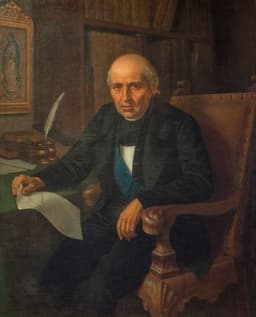
Miguel Hidalgo
Revolutionary · Modern
47.0Total
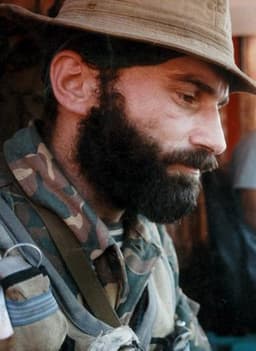
Shamil Basayev
Revolutionary · Modern
43.1Total
Basic Information
Born
1753
1965
Died
1811
—
Era
Modern
Modern
Nationality
Mexico
Chechnya
Occupation
Revolutionary
Revolutionary
Civilization
Western
Western
Score Comparison
Military (10%)
50.0
40.0
Political (20%)
36.5
35.0
Influence (20%)
55.0
45.5
Legacy (20%)
52.0
35.0
Leadership (15%)
39.0
57.1
Strategy (15%)
39.6
51.7
TOTAL
47.0
43.1
Miguel Hidalgo — Complete Timeline
1810 AD
Captured Guanajuato and massacred SpaniardsWar◆ Major
Hidalgo's army of 80,000 captured the city of Guanajuato on September 28, 1810. After taking the Alh
BattleMassacreViolence
Impact: regionaldestructive
Issued the Grito de DoloresPolitical Action
On September 16, 1810, Father Miguel Hidalgo rang the church bell in Dolores and called for rebellion against Spanish colonial rule. His speech, known as the Grito de Dolores, urged Mexicans to rise up against the Spanish and marked the beginning of the Mexican War of Independence.
IndependenceRebellionGrito de Dolores
Impact: nationalconstructive
1811 AD
Defeated at the Battle of Calderón BridgeWar◆ Major
Hidalgo's poorly trained army was decisively defeated by a smaller Spanish royalist force at the Battle of Calder
DefeatSpanish RoyalistsTurning Point
Impact: regionaltragic
Executed by Spanish authoritiesPolitical Action◆ Major
Hidalgo was captured in Acatita de Baj
ExecutionMartyrdomIndependence Movement
Impact: nationaltragic
Shamil Basayev — Complete Timeline
1995 AD
Budyonnovsk Hospital Hostage CrisisWar◆ Major
Basayev led a raid on the Russian town of Budyonnovsk, taking over 1,000 hostages in a hospital. The crisis ended with a negotiated settlement that allowed him to return to Chechnya. This attack demonstrated Chechen reach into Russia.
Hostage CrisisTerrorismChechnya
Impact: nationaldestructive
1999 AD
Invasion of DagestanWar
Basayev led Chechen and Islamist fighters into Dagestan to support local rebels. This invasion triggered the Second Chechen War as Russia responded with a full-scale military campaign. The invasion failed to gain local support.
DagestanChechnyaInvasion
Impact: regionaldestructive
2002 AD
Moscow Theater Hostage CrisisWar◆ Major
Basayev orchestrated the Moscow theater hostage crisis, where Chechen militants took 850 people hostage. Russian forces ended the siege with gas, killing 130 hostages. The attack increased international condemnation of Chechen rebels.
Hostage CrisisTerrorismMoscow
Impact: nationaldestructive
2004 AD
Beslan School SiegeWar◆ Major
Basayev planned the Beslan school siege, where militants took over 1,100 people hostage. The siege ended in a bloody assault, resulting in 334 deaths, mostly children. This attack was widely condemned globally.
Hostage CrisisTerrorismBeslan
Impact: globaltragic
2006 AD
Killed by Russian ExplosivesWar◆ Major
Basayev was killed in Ingushetia when a truck loaded with explosives detonated. Russian intelligence claimed responsibility. His death removed the most prominent Chechen rebel commander.
AssassinationChechnyaRussia
Impact: regional
Expert Analysis
Miguel Hidalgo vs Shamil Basayev
# The Priest and the Warlord: Two Paths to Revolution
On a warm September morning in 1810, an elderly priest in the dusty town of Dolores rang his church bell and called his parishioners to arms. Miguel Hidalgo, a 57-year-old intellectual turned revolutionary, had no army, no weapons, and no clear plan—only a burning conviction that three centuries of Spanish rule must end. Almost two centuries later, in a Chechen village swallowed by the Caucasus mountains, another revolutionary prepared his own call to war. Shamil Basayev, a former computer salesman turned guerrilla commander, was planning a raid that would make his name synonymous with terror. Both men sought to liberate their people from foreign domination. Both would die violently, their dreams unfinished. Yet the paths they walked, the methods they chose, and the legacies they left could not have been more different.
Origins
Miguel Hidalgo was born into privilege in 1753, the son of a hacienda manager in the fertile Bajío region of New Spain. He studied at the prestigious Colegio de San Nicolás in Valladolid, where he absorbed Enlightenment philosophy alongside Catholic theology. By the time he became a parish priest, Hidalgo was reading banned books—Rousseau, Voltaire, the French encyclopedists—and questioning the divine right of kings. His world was one of ideas, of debates in candlelit libraries, of a slowly fermenting intellectual rebellion against colonial authority.
Shamil Basayev entered the world in 1965 in the village of Dyshne-Vedeno, a place where tradition and blood feuds mattered more than books. The Chechen people had been fighting Russian domination for centuries, and young Basayev grew up hearing stories of Imam Shamil, the 19th-century resistance leader after whom he was named. The Soviet Union was collapsing around him, and with it any hope of peaceful integration. Basayev's education came not from universities but from the crucible of war—first as a conscript in the Soviet army, then as a fighter in the chaotic post-Soviet conflicts that tore through the Caucasus.
Rise to Power
Hidalgo's path to revolution was reluctant and accidental. He was no natural warrior. When the conspiracy for Mexican independence was discovered in September 1810, Hidalgo faced a choice: flee or fight. He chose to fight, issuing the *Grito de Dolores* on September 16—a cry for independence, racial equality, and the end of bad government. Within weeks, his ragtag army swelled to 80,000 followers, mostly indigenous peasants and mestizo laborers armed with machetes, slings, and farming tools.
Basayev's rise was swifter and more brutal. In 1995, at age 30, he led a raid on the Russian town of Budyonnovsk, taking over 1,000 hostages in a hospital. The crisis ended with a negotiated settlement and Basayev emerging as a folk hero among Chechens. He had discovered his weapon: terror. Where Hidalgo had found his voice in a church bell, Basayev found his in the screams of hostages and the flash of explosives.
Leadership & Governance
Hidalgo governed as a priest and a populist. In Guanajuato, captured on September 28, 1810, his army massacred Spanish civilians in the Alhóndiga de Granaditas—an atrocity that would haunt his movement. Yet Hidalgo also issued decrees abolishing slavery and tribute, returning land to indigenous communities. His political score of 63.2 reflects a man who understood the need for social transformation but lacked the discipline to control his followers.
Basayev was a different breed entirely. His military score of 55.8 and strategy of 45.6 suggest competence rather than genius, but his true skill lay in psychological warfare. He never held territory for long, never built institutions, never governed. The Moscow theater siege of 2002 and the Beslan school siege of 2004 were not attempts to win battles but to shatter the Russian psyche. His political score of 38.8 reveals a commander who could destroy but not build.
Triumph & Tragedy
Hidalgo's greatest moment was also the beginning of his end. The capture of Guanajuato showed the raw power of popular rebellion, but the massacre that followed alienated moderates and crippled his cause. At the Battle of Calderón Bridge in January 1811, his untrained army was routed by 6,000 Spanish regulars. Hidalgo fled north, was betrayed, captured, and executed on July 30, 1811. He died defrocked, excommunicated, and convinced he had failed.
Basayev's triumphs were measured in body counts and shattered buildings. The Budyonnovsk raid made him a legend. The Beslan siege, where 334 hostages—half of them children—died in a firefight and explosion, made him a monster. He was killed on July 10, 2006, when a truck loaded with explosives detonated in Ingushetia. Russian intelligence claimed credit, but the exact circumstances remain murky.
Character & Destiny
Hidalgo was a man of books and faith, thrust into a war he never wanted. His leadership score of 43.4 reflects a scholar who could inspire but not command. He hesitated, he compromised, he hoped for miracles. In the end, his idealism was both his strength and his weakness—it drove him to fight for a better world, but it blinded him to the realities of power.
Basayev was a man of iron and fire. His leadership score of 34.5 suggests a commander who led by fear and example, not by persuasion or vision. He was ruthless, calculating, and utterly committed to his cause. But his cause was destruction, not construction. Where Hidalgo dreamed of a nation, Basayev dreamed of ashes.
Legacy
Hidalgo's legacy is written in the Mexican calendar. Every September 16, the president of Mexico reenacts the *Grito de Dolores* from the National Palace, and millions celebrate the birth of their nation. Hidalgo's face appears on coins, his name on streets, his story in every schoolbook. His legacy score of 75.0 reflects a man who failed in his own lifetime but succeeded in history.
Basayev's legacy is more complicated. To Chechen separatists, he remains a symbol of resistance against Russian oppression. To the world, he is a terrorist who targeted children. His legacy score of 47.7 is a testament to his ambiguity—a revolutionary to some, a monster to others, forgotten by most.
Conclusion
Two revolutionaries, two centuries, two worlds. Hidalgo fought with a bell and a prayer; Basayev fought with a bomb and a hostage. One sought to build a nation; the other sought to destroy an empire. Both died violently, both left behind unfinished revolutions. But while Hidalgo's cry of *¡Viva México!* echoes through the ages, Basayev's name fades into the shadows of history. The difference lies not in their courage or their commitment, but in their vision. Hidalgo dreamed of a future; Basayev dreamed of revenge. In the end, it is the dreamers who endure, and the destroyers who are forgotten.
Rankings
🥇
Miguel HidalgoLeader
Mil: 50.0Pol: 36.5Inf: 55.0
47.0
🥈
Shamil Basayev
Mil: 40.0Pol: 35.0Inf: 45.5
43.1
+3.9 behind
How This Comparison Works
Algorithm
Each figure is scored on 6 dimensions (0—100 scale) based on structured historical data: Military (10%), Political (20%), Influence (20%), Legacy (20%), Leadership (15%), Strategy (15%). The weighted total produces the final ranking.
Data Sources
Scores are computed from structured sub-indicators in the database. Scale factors adjust for era (Ancient ×0.85, Modern ×1.0) and civilization size (Eastern ×1.05, Other ×0.80) to account for differences in population and military scale.
Maximum 3 Figures
Comparisons are limited to 2—3 figures to ensure readability and statistical meaningfulness.
Error Margins
±5 points per dimension — Sub-scores are derived from historical records with inherent uncertainty. Two figures within 5 points on a dimension should be considered roughly equivalent in that area.
Total Score Accuracy
±3 points overall — The weighted combination of 6 dimensions produces a total score with approximately ±3 points of uncertainty. Differences of less than 3 points are not statistically significant— the figures are effectively tied.
Known Limitations
- Historical records are incomplete and uneven across civilizations
- Figures from oral-tradition societies may be underrepresented
- Occupation labels can misclassify multi-role figures
- Scores measure capability and impact, not moral character
- Quantitative scoring is a comparison tool, not absolute truth
Capability Radar
Military (10%) — Battles & Warfare
Battles
30
45
Win Rate
25
40
Expansion
20
15
Political (20%) — Governance & Reform
Reform
60
5
Diplomacy
30
10
Economy
20
5
Influence (20%) — Cultural & Global Reach
Cultural
70
20
Global
60
20
Legacy (20%) — Historical Impact
Historical
75
25
Longevity
70
15
Leadership (15%) — Power & Stability
Tenure
15
10
Stability
10
5
Strategy (15%) — Tactics & Innovation
Strategy
25
35
Tactics
20
55
Reform
10
20
Similar Comparisons
Comments & Discussion
BattleAxeHidalgo6/16/2026
Calling this a comparison is an insult to Hidalgo. One was a priest who sparked a legitimate independence movement against colonial tyranny; the other was a terrorist who bombed schools and theaters. Basayev hijacked a hospital in Budyonnovsk, taking over 1,500 civilians hostage. Hidalgo marched with 80,000 peasants chanting for justice and land reform. The only thing they share is an early death. Context doesn't erase the blood of children.
数据解剖师6/16/2026
先把数字摆清楚:伊达尔戈起义不过半年就失败,首级被悬示十年;巴萨耶夫却打了近二十年游击,2002年莫斯科剧院绑架案一役就造成至少130人质死亡。说他们"殊途同归"纯粹是政治正确的空话。伊达尔戈被处决时手下只剩几千人,而巴萨耶夫直到2006年死前还能指挥高加索酋长国。这哪是"两条道路"?根本是两套完全不兼容的暴力算法。
EmperorOfRuins6/16/2026
What fascinates me is the *style* of their failure. Hidalgo was a romantic: he abolished slavery by decree in Guadalajara, then got excommunicated and beheaded. Basayev was a pragmatist who used suicide bombers, hostage-taking, and the internet to project power. One wrote manifestos, the other uploaded execution videos. Yet both became messianic symbols in death. The difference is that Hidalgo's face is on Mexican currency; Basayev's is on wanted posters in five countries.
丝路幽灵6/16/2026
马基雅维利要是活着,肯定会说这两人都犯了同样的错:低估敌人的底线。伊达尔戈把希望寄于西班牙王室的"仁慈",结果费尔南多七世一复位就翻脸;巴萨耶夫天天喊要建立伊斯兰哈里发,到头来克里姆林宫用焦土战术把他的车臣老家炸成月球表面。历史教训?永远别指望殖民者或帝国会讲规矩——他们只会拿你的头盖骨当碗使。
StochasticSaint6/16/2026
The comment about "no army, no weapons, no clear plan" for Hidalgo is misleading. He had 600 trained infantry from the Regimiento de la Corona when he started. The "fermenting intellectual rebellion" is romantic nonsense: he was a traumatized alcoholic who raged at the execution of his priest brother-in-law. Let's strip the mythology. These weren't philosophers—they were desperate men who stumbled into violence because every other door had been slammed shut. That's the only honest comparison.