Loading...
Bal Gangadhar Tilak vs Shamil Basayev
Bal Gangadhar Tilak leads by 9.8 pts · 2 figures compared
…
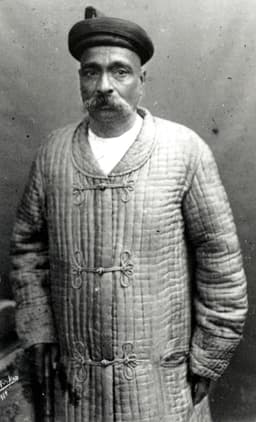
Bal Gangadhar Tilak
Revolutionary · Modern
52.9Total
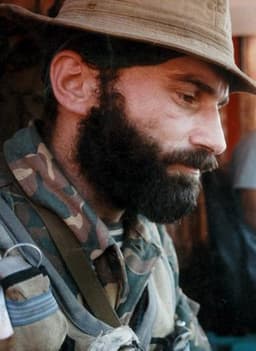
Shamil Basayev
Revolutionary · Modern
43.1Total
Basic Information
Born
1856
1965
Died
1920
—
Era
Modern
Modern
Nationality
India
Chechnya
Occupation
Revolutionary
Revolutionary
Civilization
Indian
Western
Score Comparison
Military (10%)
50.0
40.0
Political (20%)
48.0
35.0
Influence (20%)
58.3
45.5
Legacy (20%)
56.0
35.0
Leadership (15%)
50.7
57.1
Strategy (15%)
45.0
51.7
TOTAL
52.9
43.1
Bal Gangadhar Tilak — Complete Timeline
1881 AD
Launch of the Maratha and Kesari NewspapersCultural◆ Major
Tilak founded the Marathi-language newspaper 'Kesari' and the English-language 'Maratha' to spread nationalist ideas. These newspapers became influential platforms for criticizing British rule and mobilizing public opinion.
MediaNationalism
Impact: nationalconstructive
1897 AD
Imprisonment for SeditionPolitical Action◆ Major
Tilak was arrested and sentenced to 18 months imprisonment for sedition after publishing articles critical of British rule. His imprisonment increased his popularity and made him a martyr for the nationalist cause.
ImprisonmentSedition
Impact: national
1905 AD
Introduction of Swadeshi MovementPolitical Action◆ Major
Bal Gangadhar Tilak promoted the Swadeshi movement, advocating for the boycott of British goods and the use of Indian-made products. This movement gained widespread support and became a key part of the Indian independence struggle.
NationalismEconomic Boycott
Impact: nationalconstructive
1908 AD
Lucky Ali TrialPolitical Action◆ Major
Tilak was tried and sentenced to six years in Mandalay prison for sedition after defending the use of violence against British officials. His trial and imprisonment further galvanized the Indian independence movement.
TrialImprisonment
Impact: national
1916 AD
Formation of the Home Rule LeaguePolitical Action◆ Major
Tilak founded the Indian Home Rule League in 1916, demanding self-government for India within the British Empire. The movement gained mass support and pressured the British government to consider political reforms.
Political MovementSelf-Government
Impact: nationalconstructive
Shamil Basayev — Complete Timeline
1995 AD
Budyonnovsk Hospital Hostage CrisisWar◆ Major
Basayev led a raid on the Russian town of Budyonnovsk, taking over 1,000 hostages in a hospital. The crisis ended with a negotiated settlement that allowed him to return to Chechnya. This attack demonstrated Chechen reach into Russia.
Hostage CrisisTerrorismChechnya
Impact: nationaldestructive
1999 AD
Invasion of DagestanWar
Basayev led Chechen and Islamist fighters into Dagestan to support local rebels. This invasion triggered the Second Chechen War as Russia responded with a full-scale military campaign. The invasion failed to gain local support.
DagestanChechnyaInvasion
Impact: regionaldestructive
2002 AD
Moscow Theater Hostage CrisisWar◆ Major
Basayev orchestrated the Moscow theater hostage crisis, where Chechen militants took 850 people hostage. Russian forces ended the siege with gas, killing 130 hostages. The attack increased international condemnation of Chechen rebels.
Hostage CrisisTerrorismMoscow
Impact: nationaldestructive
2004 AD
Beslan School SiegeWar◆ Major
Basayev planned the Beslan school siege, where militants took over 1,100 people hostage. The siege ended in a bloody assault, resulting in 334 deaths, mostly children. This attack was widely condemned globally.
Hostage CrisisTerrorismBeslan
Impact: globaltragic
2006 AD
Killed by Russian ExplosivesWar◆ Major
Basayev was killed in Ingushetia when a truck loaded with explosives detonated. Russian intelligence claimed responsibility. His death removed the most prominent Chechen rebel commander.
AssassinationChechnyaRussia
Impact: regional
Expert Analysis
Bal Gangadhar Tilak vs Shamil Basayev
# The Revolutionary’s Dilemma
On a June morning in 1908, a British judge in Bombay sentenced a frail, bespectacled man to six years of exile in the remote prison of Mandalay. Bal Gangadhar Tilak, then fifty-two, had spent his life arguing that India’s freedom was a birthright, not a gift. He would write, teach, and organize from his cell, emerging to a nation transformed. Nearly a century later, in the rubble of a school in Beslan, another revolutionary—Shamil Basayev—watched his own plan unfold into a massacre that would horrify the world. Both men sought to overthrow empires. Both believed violence could be a tool of liberation. Yet one is remembered as the father of Indian unrest, a founding architect of a democracy; the other as a terrorist who left only ashes. Why did their paths diverge so dramatically? The answer lies not in their goals, but in the soil where those goals took root.
Origins
Tilak was born in 1856 into a Chitpavan Brahmin family in Ratnagiri, a coastal town in western India. His father was a schoolteacher and government official. Young Bal learned Sanskrit, mathematics, and English, absorbing the rationalism of the West alongside the spiritual depth of Hindu scripture. He studied law, but found the courtroom too narrow a stage. By the 1880s, he had turned his gaze to a different kind of law—the unwritten rule that Britain ruled India by consent, and that consent could be withdrawn.
Basayev, born in 1965 in the Chechen village of Dyshne-Vedeno, grew up in a world where consent was never asked. Chechnya had been conquered by the Russian Empire in the 19th century, its people subjected to massacres and deportations. Basayev’s father was a farmer, his family devoutly Muslim. He studied in Moscow, worked as a computer salesman, but the First Chechen War (1994–1996) transformed him. Where Tilak had the luxury of debating in English, Basayev had only the language of Kalashnikovs.
Rise to Power
Tilak entered the political stage through words. In 1881, he launched two newspapers: *Kesari* (in Marathi) and *Maratha* (in English). They were not mere journals; they were weapons. Tilak wrote about ancient Indian history, about the Maratha warrior-king Shivaji, about the injustices of British taxation. He turned festivals like Ganesh Chaturthi into public rallies. When the British arrested him for sedition in 1897, he used the trial as a platform. “I would prefer to be a rebel,” he declared, “than a slave.” That 18-month sentence made him a martyr.
Basayev’s rise was bloodier and faster. In 1995, he led a raid on Budyonnovsk, a Russian town, seizing a hospital with over 1,000 hostages. The standoff ended with a negotiated withdrawal, but Basayev had proven that Chechens could strike at the heart of Russia. He was thirty years old, a hero to his people, a monster to Moscow. The 1999 invasion of Dagestan, which triggered the Second Chechen War, solidified his role as the most feared commander in the Caucasus.
Leadership & Governance
Tilak governed through persuasion. He was a political organizer, not a soldier. When he launched the Swadeshi movement in 1905, he urged Indians to boycott British cloth and burn foreign goods. He founded the Home Rule League in 1916, demanding self-government within the British Empire. His strategy was one of mass mobilization—strikes, protests, educational campaigns. He believed that if enough Indians refused to cooperate, the British would have no choice but to leave. His military score is low (34.3) because he never commanded an army; his political score (76.0) reflects his mastery of the art of the possible.
Basayev was the opposite. His political score (38.8) is a fraction of his military one (55.8), but even that military rating is deceptive. He was a tactician of terror, not a general of conventional war. The Moscow theater crisis in 2002—850 hostages, 130 dead after Russian forces pumped in gas—was not a battle; it was a statement. The Beslan school siege in 2004—over 1,100 hostages, 334 dead, half of them children—was not a campaign; it was a scream. Basayev had no patience for negotiation. He believed that only through catastrophic violence could Chechnya’s cause be heard.
Triumph & Tragedy
Tilak’s greatest triumph was not a victory in battle but a transformation of consciousness. By the time of his death in 1920, he had turned Indian nationalism from a polite petition into a mass movement. His tragedy was that he never saw independence. He died eight years before Jawaharlal Nehru and Mahatma Gandhi would inherit his work.
Basayev’s triumphs were ephemeral. The Budyonnovsk raid forced Russia to negotiate a temporary ceasefire. But each success came at a higher price. The Beslan siege, which he planned from afar, ended with Russian forces storming the school, killing most of the militants and many hostages. Basayev himself was killed in 2006, blown up by a truckload of explosives in Ingushetia. Russian intelligence claimed responsibility. There was no trial, no martyrdom—just a crater.
Character & Destiny
Tilak was a scholar-revolutionary. He wrote commentaries on the Bhagavad Gita, arguing that the text justified righteous violence in the service of dharma. But his violence was always conditional, always subordinated to a larger political strategy. He believed in the power of ideas to move mountains. Basayev was a warrior-mystic. He saw the world as a battlefield between Islam and the infidel, between Chechen honor and Russian oppression. He had no patience for gradualism. “We are not fighting for territory,” he once said. “We are fighting for our souls.”
The difference in their outcomes reflects the difference in their adversaries. Tilak fought an empire that, for all its cruelty, had a legal system, a press, a public opinion. He could appeal to British liberals, to the Labour Party, to the world. Basayev fought a state that had no such scruples. The Russia of Vladimir Putin saw Chechnya not as a colony to be reformed but as a wound to be cauterized. There was no room for negotiation, no space for a *Kesari*.
Legacy
Tilak’s legacy is woven into the fabric of modern India. His slogan “Swaraj is my birthright” became the rallying cry of a nation. His influence score (76.5) and legacy score (68.1) reflect a man who built institutions—the Deccan Education Society, the Home Rule League—that outlasted him. He is remembered as a founding father, his face on postage stamps, his name on university halls.
Basayev’s legacy is more ambiguous. His influence score (62.6) is high among Chechen rebels and Islamist militants, but his legacy score (47.7) is low because he left nothing but destruction. He built no schools, wrote no manifestos that survived him. The Beslan siege remains a byword for terror, not liberation. Even within Chechnya, the current government—led by Ramzan Kadyrov, a Putin ally—portrays him as a traitor.
Conclusion
The difference between Tilak and Basayev is not a difference of character alone. It is a difference of context. Tilak lived in an India where the empire was beginning to doubt itself, where the colonized could appeal to the colonizer’s own ideals. Basayev lived in a Chechnya where the empire had no doubts, where the only language the Kremlin understood was force. One man used words to build a nation; the other used bombs to destroy a state. Both were revolutionaries. But revolution, like water, takes the shape of the vessel that contains it. Tilak’s vessel was a civilization three thousand years old, with a tradition of debate and compromise. Basayev’s was a land scarred by genocide, where the only tradition left was resistance. The two men are warnings to history: that the path to freedom can be paved with ink or with blood, and that the choice is never entirely our own.
Rankings
🥇
Bal Gangadhar TilakLeader
Mil: 50.0Pol: 48.0Inf: 58.3
52.9
🥈
Shamil Basayev
Mil: 40.0Pol: 35.0Inf: 45.5
43.1
+9.8 behind
How This Comparison Works
Algorithm
Each figure is scored on 6 dimensions (0—100 scale) based on structured historical data: Military (10%), Political (20%), Influence (20%), Legacy (20%), Leadership (15%), Strategy (15%). The weighted total produces the final ranking.
Data Sources
Scores are computed from structured sub-indicators in the database. Scale factors adjust for era (Ancient ×0.85, Modern ×1.0) and civilization size (Eastern ×1.05, Other ×0.80) to account for differences in population and military scale.
Maximum 3 Figures
Comparisons are limited to 2—3 figures to ensure readability and statistical meaningfulness.
Error Margins
±5 points per dimension — Sub-scores are derived from historical records with inherent uncertainty. Two figures within 5 points on a dimension should be considered roughly equivalent in that area.
Total Score Accuracy
±3 points overall — The weighted combination of 6 dimensions produces a total score with approximately ±3 points of uncertainty. Differences of less than 3 points are not statistically significant— the figures are effectively tied.
Known Limitations
- Historical records are incomplete and uneven across civilizations
- Figures from oral-tradition societies may be underrepresented
- Occupation labels can misclassify multi-role figures
- Scores measure capability and impact, not moral character
- Quantitative scoring is a comparison tool, not absolute truth
Capability Radar
Military (10%) — Battles & Warfare
Battles
23
45
Win Rate
30
40
Expansion
30
15
Political (20%) — Governance & Reform
Reform
70
5
Diplomacy
60
10
Economy
20
5
Influence (20%) — Cultural & Global Reach
Cultural
65
20
Global
55
20
Legacy (20%) — Historical Impact
Historical
70
25
Longevity
60
15
Leadership (15%) — Power & Stability
Tenure
30
10
Stability
40
5
Strategy (15%) — Tactics & Innovation
Strategy
37
35
Tactics
39
55
Reform
43
20
Similar Comparisons
Comments & Discussion
Freedom's Fury6/16/2026
Calling this a comparison is like comparing oxygen to napalm. Tilak revived the Ganesh festival to unite Marathi Hindus culturally, not just politically. Basayev blew up buildings in Moscow. One forged a national consciousness from the anvil of tradition; the other imported Wahhabi extremism from abroad. Stop romanticizing violence as "strategy" and respect the man who weaponized nothing but words and processions.
史海斗士6/16/2026
把提拉克和巴萨耶夫并列,本身就是对历史的侮辱。提拉克在1893年发起的象头神节是全印和平动员的典范,而巴萨耶夫在布琼诺夫斯克医院挟持数千平民。记住:一个是法治下的抵抗,一个是无差别的恐怖。所谓的"革命手段"不能洗白对无辜者的暴行,否则我们就玷污了真实斗争的意义。
Might & Right6/16/2026
Tilak chose the courtroom and schoolhouse over the Kalashnikov. When charged with sedition in 1897, he didn't flee, but hired a lawyer and debated empire face‑to‑face. Basayev chose the hostage‑taking and the suicide vest. One man trusted his people's intellect; the other trusted only the bullet. There's no moral equivalence between a man willing to argue for his freedom and one willing to die only for death.
硝烟见证者6/16/2026
军事上,巴萨耶夫确实有战术天才,他策划的格罗兹尼战役给俄军造成重大伤亡。但提拉克的"斯瓦拉杰是我的天赋权利"成为数百万人行动的口号。军事胜利转瞬即逝,而思想孵化出印度独立——这才是持久战。从长远看,一个用哲学武装的人民远比一支游击队更不可战胜。
Nation's Architect6/16/2026
Tilak didn't fight to replace one tyranny with another. He founded the Home Rule League, wrote *Gita Rahasya*, and believed in mass education. Basayev destroyed Beslan's school—killing 186 children—for an independent Ichkeria that would likely have been a Sharia state. Tilak's revolution built institutions; Basayev's burned them. That's the difference between a statesman and an arsonist.