Loading...
Bhagat Singh vs Shamil Basayev
Bhagat Singh leads by 3.7 pts · 2 figures compared
…
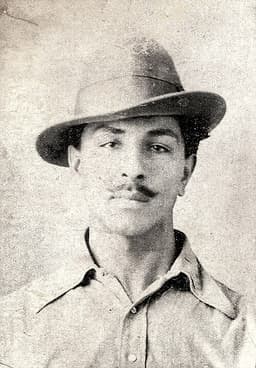
Bhagat Singh
Revolutionary · Modern
46.8Total
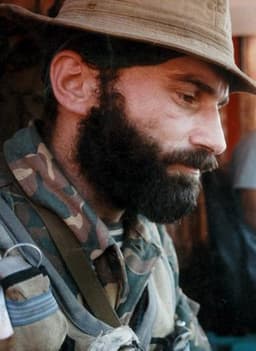
Shamil Basayev
Revolutionary · Modern
43.1Total
Basic Information
Born
1907
1965
Died
1931
—
Era
Modern
Modern
Nationality
India
Chechnya
Occupation
Revolutionary
Revolutionary
Civilization
Indian
Western
Score Comparison
Military (10%)
30.0
40.0
Political (20%)
25.0
35.0
Influence (20%)
61.0
45.5
Legacy (20%)
50.0
35.0
Leadership (15%)
65.0
57.1
Strategy (15%)
25.0
51.7
TOTAL
46.8
43.1
Bhagat Singh — Complete Timeline
1928 AD
Killing of John SaundersPolitical Action◆ Major
Bhagat Singh and his associates killed British police officer John Saunders in Lahore, mistaking him for James Scott, who had ordered the lathi charge that killed Lala Lajpat Rai. This act of revenge escalated the revolutionary movement.
AssassinationRevolutionary Action
Impact: national
1929 AD
Central Legislative Assembly BombingPolitical Action◆ Major
Bhagat Singh and Batukeshwar Dutt threw bombs in the Central Legislative Assembly in Delhi to protest the Public Safety Bill and Trade Disputes Act. They were arrested and used the trial to propagate revolutionary ideas.
ProtestRevolutionary Action
Impact: national
Hunger Strike in JailPolitical Action◆ Major
Bhagat Singh and fellow prisoners went on a 116-day hunger strike in Lahore jail demanding better treatment for political prisoners. The strike drew national attention and forced the British to make concessions.
ProtestPrison Reform
Impact: national
1931 AD
Execution by HangingPolitical Action◆ Major
Bhagat Singh was executed by hanging at Lahore jail at age 23, along with Rajguru and Sukhdev. His execution sparked widespread protests and made him a martyr for the Indian independence movement.
ExecutionMartyrdom
Impact: nationaltragic
Shamil Basayev — Complete Timeline
1995 AD
Budyonnovsk Hospital Hostage CrisisWar◆ Major
Basayev led a raid on the Russian town of Budyonnovsk, taking over 1,000 hostages in a hospital. The crisis ended with a negotiated settlement that allowed him to return to Chechnya. This attack demonstrated Chechen reach into Russia.
Hostage CrisisTerrorismChechnya
Impact: nationaldestructive
1999 AD
Invasion of DagestanWar
Basayev led Chechen and Islamist fighters into Dagestan to support local rebels. This invasion triggered the Second Chechen War as Russia responded with a full-scale military campaign. The invasion failed to gain local support.
DagestanChechnyaInvasion
Impact: regionaldestructive
2002 AD
Moscow Theater Hostage CrisisWar◆ Major
Basayev orchestrated the Moscow theater hostage crisis, where Chechen militants took 850 people hostage. Russian forces ended the siege with gas, killing 130 hostages. The attack increased international condemnation of Chechen rebels.
Hostage CrisisTerrorismMoscow
Impact: nationaldestructive
2004 AD
Beslan School SiegeWar◆ Major
Basayev planned the Beslan school siege, where militants took over 1,100 people hostage. The siege ended in a bloody assault, resulting in 334 deaths, mostly children. This attack was widely condemned globally.
Hostage CrisisTerrorismBeslan
Impact: globaltragic
2006 AD
Killed by Russian ExplosivesWar◆ Major
Basayev was killed in Ingushetia when a truck loaded with explosives detonated. Russian intelligence claimed responsibility. His death removed the most prominent Chechen rebel commander.
AssassinationChechnyaRussia
Impact: regional
Expert Analysis
Bhagat Singh vs Shamil Basayev
# The Revolutionary’s Mirror: Bhagat Singh and Shamil Basayev
On a March evening in 1931, a young man walked to the gallows in Lahore jail, singing songs of revolution. Half a world away and seven decades later, a Chechen commander died in a truck bomb explosion in Ingushetia, his body torn apart by the very weapon he had mastered. Both men fought empires. Both died young. Both left behind movements that outlived them. Yet the distance between Bhagat Singh and Shamil Basayev is not merely measured in miles or years, but in the moral architecture of their rebellions—and in how history chooses to remember them.
Origins
Bhagat Singh was born in 1907 into a Sikh family steeped in anti-colonial resistance. His uncle had been hanged by the British; his father had been imprisoned. The Jallianwala Bagh massacre of 1919, which he witnessed as a twelve-year-old, seared into him the brutality of imperial rule. He grew up reading European anarchist literature, Marxist theory, and the lives of Irish revolutionaries. His was a world of books, debates, and the dream of a free India.
Shamil Basayev, born in 1965 in the Chechen village of Dyshne-Vedeno, came of age in a different kind of empire—the Soviet Union. His family had been deported to Kazakhstan under Stalin, and the memory of that exile was a wound that never healed. He served in the Soviet army, then worked as a computer salesman, but the collapse of the USSR in 1991 opened a vacuum that war filled. The First Chechen War (1994–1996) turned him from a nationalist into a guerrilla commander.
The difference in their eras is crucial. Singh faced a colonial empire that, for all its violence, operated within a legal framework—trials, executions, censorship. Basayev faced a post-Soviet state in collapse, where law meant little and violence was the only language. One fought for independence from a distant crown; the other for survival against a neighboring power.
Rise to Power
Bhagat Singh’s path was intellectual and symbolic. In 1928, he and his associates killed John Saunders, a British police officer, in a case of mistaken identity—they had intended to kill James Scott, the superintendent of police who had ordered the lathi charge that killed the veteran leader Lala Lajpat Rai. The act was vengeance, but what followed was theater. In 1929, Singh and Batukeshwar Dutt threw bombs into the Central Legislative Assembly in Delhi—not to kill, but to protest the Public Safety Bill. They deliberately courted arrest, using the courtroom as a stage to broadcast their ideology.
Basayev’s rise was military and brutal. In 1995, he led the Budyonnovsk hospital hostage crisis, seizing over 1,000 hostages to force a Russian ceasefire. The operation succeeded—Russia halted its offensive and negotiated. This made Basayev a hero to Chechens and a monster to Russians. In 1999, his invasion of Dagestan triggered the Second Chechen War, a conflict that would devastate both sides. Where Singh used symbols, Basayev used bodies.
Leadership & Governance
Singh never governed. He died at twenty-three, before any chance to build a state. His leadership was moral and ideological—he organized hunger strikes in prison, wrote essays on the meaning of revolution, and insisted on a secular, socialist India. His 116-day hunger strike in 1929 forced the British to improve prison conditions for political prisoners. He was, in essence, a revolutionary philosopher who acted.
Basayev, by contrast, commanded fighters. His military score of 55.8 reflects a man who understood guerrilla warfare, terror, and logistics. But his political score—38.8—tells a different story. He failed to build a stable government or a coherent political movement. After the Moscow theater hostage crisis in 2002, where 850 people were taken and 130 died when Russian forces pumped gas into the building, he became a pariah even among some Chechens. The Beslan school siege in 2004, which killed 334 civilians, including 186 children, destroyed any remaining legitimacy.
Triumph & Tragedy
Singh’s greatest moment was his execution. He went to the gallows at 23, laughing and shouting “Down with British imperialism!” His death sparked protests across India—riots, strikes, and a surge in the independence movement. The British had turned a revolutionary into a martyr, and in doing so, handed the Indian National Congress a weapon they could not match.
Basayev’s greatest moment was Budyonnovsk, where he forced a Russian retreat. But his tragedy was that he never found an exit. He became a man of pure negation—defined by what he destroyed, not what he built. His death in 2006, killed by a Russian intelligence operation, ended a career of spectacular violence but left Chechnya in ruins, its people war-weary and its future uncertain.
Character & Destiny
Bhagat Singh was a reader, a writer, a man who believed that ideas could kill empires. He wrote in his jail notebook: “The sword of revolution is sharpened on the whetting stone of ideas.” His strategy score of 47.8 reflects that he was not a military genius but a moral one. He understood that the real battlefield was the hearts of the Indian people.
Basayev was a man of action, not reflection. His leadership score of 34.5 suggests a commander who inspired loyalty through audacity, not through vision. He named himself after Shamil, the 19th-century Chechen resistance leader, but he lacked the older Shamil’s ability to build a state and negotiate peace. He was a fighter who could not stop fighting.
Legacy
Bhagat Singh’s legacy score of 68.4 is a testament to how India remembers him—as a hero, a martyr, a symbol of youthful defiance. His statues stand in every city; his image adorns posters, films, and textbooks. The British Empire he fought is gone, and India is free. His ideas, however, remain contested—was he a socialist, an anarchist, a nationalist? The ambiguity is his power.
Basayev’s legacy score of 47.7 reflects a more complicated judgment. In Chechnya, he is remembered by some as a freedom fighter; in Russia, he is a terrorist. The world mostly knows him through the Beslan school siege, a tragedy that defined his career. He left no books, no political programs, no institutions. He left only bodies and fear.
Conclusion
Both men took up arms against empires. Both died violently, young, and unrepentant. But the difference between them is not simply that one fought the British and the other fought the Russians. It is that Bhagat Singh believed revolution was a means to a just society, while Shamil Basayev seemed to believe revolution was an end in itself. One wrote, the other raided. One built a legacy that outlasted his enemy; the other destroyed himself along with his enemy. In the end, history does not judge only by the cause—it judges by the method, the vision, and the humanity carried through the fight.
Rankings
🥇
Bhagat SinghLeader
Mil: 30.0Pol: 25.0Inf: 61.0
46.8
🥈
Shamil Basayev
Mil: 40.0Pol: 35.0Inf: 45.5
43.1
+3.7 behind
How This Comparison Works
Algorithm
Each figure is scored on 6 dimensions (0—100 scale) based on structured historical data: Military (10%), Political (20%), Influence (20%), Legacy (20%), Leadership (15%), Strategy (15%). The weighted total produces the final ranking.
Data Sources
Scores are computed from structured sub-indicators in the database. Scale factors adjust for era (Ancient ×0.85, Modern ×1.0) and civilization size (Eastern ×1.05, Other ×0.80) to account for differences in population and military scale.
Maximum 3 Figures
Comparisons are limited to 2—3 figures to ensure readability and statistical meaningfulness.
Error Margins
±5 points per dimension — Sub-scores are derived from historical records with inherent uncertainty. Two figures within 5 points on a dimension should be considered roughly equivalent in that area.
Total Score Accuracy
±3 points overall — The weighted combination of 6 dimensions produces a total score with approximately ±3 points of uncertainty. Differences of less than 3 points are not statistically significant— the figures are effectively tied.
Known Limitations
- Historical records are incomplete and uneven across civilizations
- Figures from oral-tradition societies may be underrepresented
- Occupation labels can misclassify multi-role figures
- Scores measure capability and impact, not moral character
- Quantitative scoring is a comparison tool, not absolute truth
Capability Radar
Military (10%) — Battles & Warfare
Battles
0
45
Win Rate
0
40
Expansion
0
15
Political (20%) — Governance & Reform
Reform
15
5
Diplomacy
5
10
Economy
0
5
Influence (20%) — Cultural & Global Reach
Cultural
55
20
Global
50
20
Legacy (20%) — Historical Impact
Historical
60
25
Longevity
55
15
Leadership (15%) — Power & Stability
Tenure
0
10
Stability
0
5
Strategy (15%) — Tactics & Innovation
Strategy
5
35
Tactics
10
55
Reform
0
20
Similar Comparisons
Comments & Discussion
Karma Gallows6/16/2026
Comparing Bhagat Singh to Shamil Basayev is like equating a chess grandmaster with a street brawler. Singh wrote treatises on revolutionary ethics, famously refusing to flee after the Assembly bombing because he wanted to use his trial as a platform for ideas. Basayev? He seized a hospital full of children in Beslan. One was a martyr to a cause of liberation; the other, a terrorist by any standard. Call it what it is.
枪口上的理想主义者6/16/2026
那些说两者都是“自由斗士”的人,怕是连历史教科书都没翻全。巴格特·辛格在法庭上高喊“Inquilab Zindabad”——革命万岁——时,他追求的是一种制度性的正义,哪怕要用生命来换。而巴萨耶夫呢?他把人质当盾牌,把学校变成屠宰场。这不是语境不同,这是道德底线截然不同。把辛格和他放一起,是对1931年那道绞索的侮辱。
Empire's Tailors6/16/2026
Both men responded to imperial violence, yes—but what distinguishes them is their relationship with time. Bhagat Singh wrote proudly that “the history of human progress is written in blood,” but he was building toward a future republic. Basayev’s vision was fundamentally reactionary: an Islamic emirate that looked backward, not forward. Singh quoted Lenin and Marx; Basayev quoted militant Salafism. One was a revolutionary modernist; the other, a traditionalist with explosives. That’s the whole s
血火分界线6/16/2026
你们的分析忽略了最关键的一点:对方如何看待“人民”这个名词。辛格坚信群众力量,他投弹时再三确认没有人会受伤——那是象征性反抗,是“唤醒沉睡者”。但巴萨耶夫在布琼诺夫斯克医院开枪扫射孕妇和新生儿时,他不认为那是“人民”,而是“异教徒”、是“代价”。革命者对待平民的态度,就是一面照妖镜。别拿政治语境来洗白。
Threadbare Hero6/16/2026
Let’s not pretend this is apples to oranges—it’s more like comparing a university student to a mujahideen warlord. Singh was executed at 23, having spent his final months reading Lenin and writing letters to the youth. Basayev died at 41, having orchestrated the deaths of hundreds of civilians over a decade. One was a symbol of sacrifice; the other, a symbol of survivalism in a brutal war. If history is written by the victors, both lose. But which death teaches more? Singh’s, every time.