Loading...
Shamil Basayev vs Theobald Wolfe Tone
Theobald Wolfe Tone leads by 4.7 pts · 2 figures compared
…
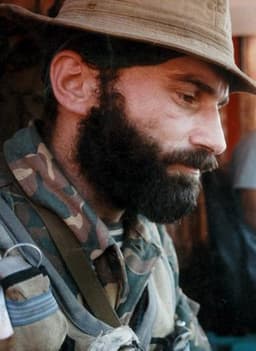
Shamil Basayev
Revolutionary · Modern
43.1Total
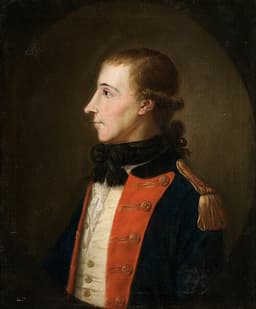
Theobald Wolfe Tone
Revolutionary · Modern
47.8Total
Basic Information
Born
1965
1763
Died
—
1798
Era
Modern
Modern
Nationality
Chechnya
Ireland
Occupation
Revolutionary
Revolutionary
Civilization
Western
Western
Score Comparison
Military (10%)
40.0
39.9
Political (20%)
35.0
27.9
Influence (20%)
45.5
57.2
Legacy (20%)
35.0
49.2
Leadership (15%)
57.1
57.1
Strategy (15%)
51.7
45.0
TOTAL
43.1
47.8
Shamil Basayev — Complete Timeline
1995 AD
Budyonnovsk Hospital Hostage CrisisWar◆ Major
Basayev led a raid on the Russian town of Budyonnovsk, taking over 1,000 hostages in a hospital. The crisis ended with a negotiated settlement that allowed him to return to Chechnya. This attack demonstrated Chechen reach into Russia.
Hostage CrisisTerrorismChechnya
Impact: nationaldestructive
1999 AD
Invasion of DagestanWar
Basayev led Chechen and Islamist fighters into Dagestan to support local rebels. This invasion triggered the Second Chechen War as Russia responded with a full-scale military campaign. The invasion failed to gain local support.
DagestanChechnyaInvasion
Impact: regionaldestructive
2002 AD
Moscow Theater Hostage CrisisWar◆ Major
Basayev orchestrated the Moscow theater hostage crisis, where Chechen militants took 850 people hostage. Russian forces ended the siege with gas, killing 130 hostages. The attack increased international condemnation of Chechen rebels.
Hostage CrisisTerrorismMoscow
Impact: nationaldestructive
2004 AD
Beslan School SiegeWar◆ Major
Basayev planned the Beslan school siege, where militants took over 1,100 people hostage. The siege ended in a bloody assault, resulting in 334 deaths, mostly children. This attack was widely condemned globally.
Hostage CrisisTerrorismBeslan
Impact: globaltragic
2006 AD
Killed by Russian ExplosivesWar◆ Major
Basayev was killed in Ingushetia when a truck loaded with explosives detonated. Russian intelligence claimed responsibility. His death removed the most prominent Chechen rebel commander.
AssassinationChechnyaRussia
Impact: regional
Theobald Wolfe Tone — Complete Timeline
1791 AD
Founding of the United IrishmenPolitical Action◆ Major
Tone co-founded the Society of United Irishmen in Belfast, a revolutionary organization seeking parliamentary reform and Catholic emancipation. The society later became a secret republican movement aiming for Irish independence.
Irish RepublicanismFoundingReform
Impact: nationalprogressive
Publication of 'An Argument on Behalf of the Catholics of Ireland'Cultural
Tone published a pamphlet arguing for the inclusion of Catholics in Irish political life. It helped bridge the gap between Protestant radicals and the Catholic majority, broadening the base of the United Irishmen.
PamphletCatholic EmancipationPolitical Thought
Impact: nationalprogressive
1796 AD
Expédition d'IrlandeWar◆ Major
Tone accompanied a French fleet of 43 ships carrying 15,000 troops to invade Ireland. The expedition was scattered by storms off Bantry Bay and failed to land, a major setback for the republican cause.
French InvasionNavalFailure
Impact: nationaltragic
Mission to FrancePolitical Action◆ Major
Tone traveled to France to secure French military support for an Irish rebellion. He persuaded the French Directory to launch an invasion of Ireland, leading to the dispatch of a large expeditionary force.
DiplomacyFrench RevolutionInvasion
Impact: national
1798 AD
Battle of Tory IslandWar◆ Major
Tone was captured aboard a French ship at the Battle of Tory Island, part of a second French invasion attempt. The French squadron was defeated by the Royal Navy, ending French hopes of aiding the Irish Rebellion.
1798 RebellionNaval BattleCapture
Impact: nationaltragic
Trial and SuicidePolitical Action◆ Major
Tone was tried for treason in Dublin and sentenced to death by hanging. Before execution, he cut his own throat to deny the British the spectacle of his hanging, dying from the wound a week later.
TrialSuicideMartyrdom
Impact: nationaltragic
Expert Analysis
Theobald Wolfe Tone vs Shamil Basayev
# The Revolutionary’s Mirror: Shamil Basayev and Theobald Wolfe Tone
In a Dublin courtroom in November 1798, Theobald Wolfe Tone lay dying from a self-inflicted wound to the throat, a final act of defiance against the British Empire that had sentenced him to hang. Nearly two centuries later, in the Ingushetian countryside in July 2006, Shamil Basayev was obliterated when a truckload of explosives detonated, his body scattered across the earth by the Russian intelligence services he had terrorized for a decade. Both men died for the same cause—national liberation from a vast imperial neighbor—yet the paths they took, and the judgments history has passed on them, could hardly be more different. What separates a founding father from a terrorist, a martyr from a monster? The answer lies not in their dreams, but in their deeds.
Origins
Theobald Wolfe Tone was born in 1763 into Dublin’s Protestant Ascendancy, the privileged minority that ruled Catholic Ireland. He studied law at Trinity College, but his heart belonged to the Enlightenment ideals sweeping across Europe and America. Tone was a man of words before he became a man of action: a pamphleteer, a debater, a constitutional radical who believed reason could reshape nations. His Ireland was a land of deep sectarian divides, where Catholics were denied property rights and Presbyterians chafed under Anglican dominance. Tone’s genius was to see that these grievances could be fused into a single Irish identity.
Shamil Basayev was born in 1965 in the Chechen village of Dyshne-Vedeno, a place steeped in the memory of Russian conquest. His namesake, Imam Shamil, had led a legendary resistance against the Tsarist empire in the 19th century. Basayev grew up in the twilight of the Soviet Union, a world of collapsing institutions and simmering ethnic hatreds. Unlike Tone, he was not a man of books but of mountains and war. The First Chechen War (1994–1996) forged him into a commander, and the brutal Russian siege of Grozny left him with a burning, personal vendetta. Where Tone sought to build a nation through persuasion, Basayev sought to destroy an enemy through terror.
Rise to Power
Tone’s rise was intellectual and political. In 1791, he co-founded the Society of United Irishmen in Belfast, a revolutionary organization that demanded parliamentary reform and Catholic emancipation. That same year, he published *An Argument on Behalf of the Catholics of Ireland*, a pamphlet that helped bridge the gap between Protestant radicals and the Catholic masses. Tone was no street fighter; he was a diplomat and propagandist. His great achievement was convincing the French Directory in 1796 to launch a full-scale invasion of Ireland, a fleet of 43 ships carrying 15,000 troops. The expedition failed—scattered by storms off Bantry Bay—but it established Tone as the strategic mind of Irish republicanism.
Basayev’s rise was forged in blood. In 1995, he led a raid on the Russian town of Budyonnovsk, seizing a hospital and taking over 1,000 hostages. The crisis ended with a negotiated withdrawal and safe passage for his fighters—a stunning humiliation for Moscow. This was not a political maneuver but a military one, a demonstration that Chechen rebels could strike deep into Russian territory and survive. Basayev became a hero to Chechens and a demon to Russians. In 1999, he led an invasion of Dagestan, triggering the Second Chechen War. This was a gamble that failed, but it cemented his role as the most feared commander in the Caucasus.
Leadership & Governance
Tone was never a ruler; he was a revolutionary theorist and a diplomatic agent. His leadership was exercised through persuasion and alliance-building. He convinced Protestants and Catholics to unite under the banner of “common name of Irishman.” He secured French support by appealing to revolutionary solidarity. His military role was advisory—he served as an adjutant general in the French army, not a field commander. The 1798 rebellion that broke out in his absence was a chaotic, brutal affair, crushed by British forces with terrible reprisals. Tone’s genius was political, not martial.
Basayev was a commander of men, not a builder of institutions. His leadership was charismatic and ruthless, exercised through personal bravery and a willingness to embrace extreme violence. He orchestrated the 2002 Moscow theater hostage crisis, where 850 people were taken captive, and the 2004 Beslan school siege, where over 1,100 hostages—mostly children—were held in a gymnasium rigged with explosives. Both ended in bloodbaths. Basayev’s strategy was to inflict maximum pain on Russian civilians, hoping to force a withdrawal from Chechnya. It was a strategy that horrified the world and alienated potential allies, but it kept the Chechen cause in the headlines.
Triumph & Tragedy
Tone’s greatest moment was the 1796 French expedition, a fleet that came within sight of the Irish coast before storms destroyed the invasion. It was a near miss that haunted the British for years. His tragedy came in 1798, when he sailed with a second, smaller French force to Ireland, only to be captured at the Battle of Tory Island. Brought to Dublin in chains, he was tried for treason and sentenced to hang. Before the execution, he cut his own throat, dying a week later in agony. His death was a defeat, but it became the founding myth of Irish republicanism.
Basayev’s triumph was the 1995 Budyonnovsk raid, which forced Moscow to negotiate and demonstrated Chechen resilience. His tragedy was the Beslan school siege, a catastrophe that killed over 330 people, including 186 children. The world recoiled. Even within the Chechen resistance, some began to question Basayev’s tactics. He was killed in 2006, not by a bullet in battle, but by a truck bomb—an ironic end for a man who had used explosives to terrorize civilians. Russian intelligence claimed responsibility, but the details remain murky.
Character & Destiny
Tone was a man of the 18th century: rational, idealistic, and deeply committed to the principles of liberty and equality. He believed that Ireland could be a republic for all its people, regardless of religion. His character was shaped by the Enlightenment, and his destiny was to become a symbol rather than a ruler. He died with dignity, refusing to beg for mercy, and his writings—his journals, his pamphlets—outlived him.
Basayev was a man of the 20th and 21st centuries: a product of war, trauma, and the collapse of empires. He was shaped not by books but by bombs. His character was forged in the crucible of Chechnya’s destruction, where the Russian military leveled Grozny and killed tens of thousands of civilians. Basayev’s response was to embrace the same brutality he condemned. He became the very thing he fought against. His destiny was to be hunted and killed, his name synonymous with terrorism.
Legacy
Tone is remembered as the “Father of Irish Republicanism.” His face appears on Irish currency, his statue stands in Dublin, and his writings are studied as foundational texts. The United Irishmen’s ideals—secular, inclusive, republican—shaped the Irish independence movement for two centuries. Tone failed in his lifetime, but his ideas won.
Basayev’s legacy is far more ambiguous. In Chechnya, some still honor him as a freedom fighter; in Russia, he is a terrorist of almost mythical evil. The Chechen cause he championed was crushed by Vladimir Putin’s ruthless campaign, and the republic now exists as a Russian client state under Ramzan Kadyrov. Basayev’s methods discredited the separatist movement and made international sympathy nearly impossible. He left behind no institutions, no writings, no political framework—only a trail of blood and a question that haunts every liberation struggle: Can violence ever be a path to freedom?
Conclusion
Theobald Wolfe Tone and Shamil Basayev faced the same dilemma: how to free a small nation from a vast empire. Tone chose the pen and the diplomatic mission; Basayev chose the bomb and the hostage crisis. One became a martyr for a cause that eventually triumphed; the other became a pariah for a cause that collapsed. Their differences are not just personal but historical: Tone lived in an age of revolutions that could be won with ideas; Basayev lived in an age of asymmetrical warfare where terror seemed the only weapon left to the weak. Both died violently, but one died with his principles intact, while the other died having sacrificed his. In the end, the revolutionary’s mirror reflects not just the face of the fighter, but the soul of the struggle itself.
Rankings
🥇
Theobald Wolfe ToneLeader
Mil: 39.9Pol: 27.9Inf: 57.2
47.8
🥈
Shamil Basayev
Mil: 40.0Pol: 35.0Inf: 45.5
43.1
+4.7 behind
How This Comparison Works
Algorithm
Each figure is scored on 6 dimensions (0—100 scale) based on structured historical data: Military (10%), Political (20%), Influence (20%), Legacy (20%), Leadership (15%), Strategy (15%). The weighted total produces the final ranking.
Data Sources
Scores are computed from structured sub-indicators in the database. Scale factors adjust for era (Ancient ×0.85, Modern ×1.0) and civilization size (Eastern ×1.05, Other ×0.80) to account for differences in population and military scale.
Maximum 3 Figures
Comparisons are limited to 2—3 figures to ensure readability and statistical meaningfulness.
Error Margins
±5 points per dimension — Sub-scores are derived from historical records with inherent uncertainty. Two figures within 5 points on a dimension should be considered roughly equivalent in that area.
Total Score Accuracy
±3 points overall — The weighted combination of 6 dimensions produces a total score with approximately ±3 points of uncertainty. Differences of less than 3 points are not statistically significant— the figures are effectively tied.
Known Limitations
- Historical records are incomplete and uneven across civilizations
- Figures from oral-tradition societies may be underrepresented
- Occupation labels can misclassify multi-role figures
- Scores measure capability and impact, not moral character
- Quantitative scoring is a comparison tool, not absolute truth
Capability Radar
Military (10%) — Battles & Warfare
Battles
45
5
Win Rate
40
5
Expansion
15
5
Political (20%) — Governance & Reform
Reform
5
30
Diplomacy
10
25
Economy
5
5
Influence (20%) — Cultural & Global Reach
Cultural
20
45
Global
20
40
Legacy (20%) — Historical Impact
Historical
25
50
Longevity
15
55
Leadership (15%) — Power & Stability
Tenure
10
10
Stability
5
5
Strategy (15%) — Tactics & Innovation
Strategy
35
15
Tactics
55
10
Reform
20
20
Similar Comparisons
Comments & Discussion
BelfastBard6/16/2026
Wolfe Tone vs Basayev? Come off it - one was a constitutional radical who founded modern Irish republicanism and died by his own hand rather than face British gallows, while the other was a Chechen warlord who seized a hospital full of children. Tone's United Irishmen waged war primarily against military targets; Basayev's Budyonnovsk massacre in 1995 killed 129 civilians. The comparison sanitizes terrorism by dressing it in the robes of romantic nationalism.
HistorianHack6/16/2026
The structural parallels are undeniable: both men led small nations against massive imperial powers, both died violently at the hands of their enemies, and both are venerated by their people as martyrs. But the devil's in the detail. Tone explicitly rejected "indiscriminate violence against the persons or property of the subject" in his 1796 memorandum. Basayev explicitly targeted civilians in the 2002 Moscow theater hostage crisis. Intentions matter in revolutionary history.
数值侦探6/16/2026
把18世纪都柏林律师和21世纪车臣野战指挥官放在一起比较,这是典型的历史类比谬误。军事技术、国家能力、国际环境完全不同——1798年爱尔兰叛军用的是法国援助的旧式滑膛枪,2006年俄罗斯已经用上无人机和卫星追踪。更重要的是,Tone失败后没有造成后续恐怖浪潮,而Basayev推动了北高加索长达二十年的暴力和极端化。历史语境决定命运,不是浪漫的"解放者套话"。
古卷书生6/16/2026
两人都使用"民族解放"话语,但内在逻辑迥异。Tone深受法国启蒙思想和美国独立战争影响,是"理性民族主义"的产物;他的《权利宣言》明确强调宗教宽容和议会改革。Basayev则成长于苏联解体后的权力真空,核心意识形态是伊斯兰极端主义和分离主义——他1999年入侵达吉斯坦的根本目的不是建立包容国家,而是建立伊斯兰法政体。这不是"同一个事业",而是不同文明时代的两种暴力。
战术刀锋6/16/2026
从军事角度,Basayev远比Tone成功。Tone组织的1798年叛乱在几个月内被血腥镇压,他本人连战场都没上就被俘虏。Basayev在1996年策划了格罗兹尼巷战和赎命行动,成功迫使俄罗斯撤军,使车臣事实上独立了三年。Tone只是个理论家和外交失败者,Basayev是个能打仗、能操作实际军事战略的指挥官。历史区分"英雄"和"恐怖分子"的标准,很多时候只是胜利和失败的区别。