Loading...
Sengge Rinchen vs Shi Dakai
Shi Dakai leads by 2.7 pts · 2 figures compared
…
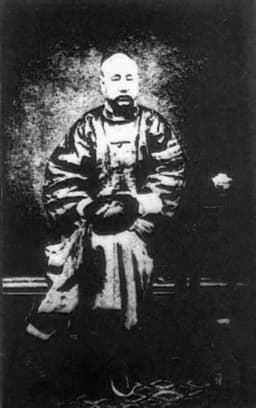
Sengge Rinchen
General · Modern
56.9Total
Shi Dakai
General · Modern
59.6Total
Basic Information
Born
1811
1831
Died
1865
1863
Era
Modern
Modern
Nationality
China
China
Occupation
General
General
Civilization
Eastern
Eastern
Score Comparison
Military (10%)
70.0
76.0
Political (20%)
43.7
45.0
Influence (20%)
55.0
56.7
Legacy (20%)
54.0
54.0
Leadership (15%)
67.0
72.0
Strategy (15%)
60.7
68.1
TOTAL
56.9
59.6
Sengge Rinchen — Complete Timeline
1859 AD
Battle of Dagu FortsWar◆ Major
Sengge Rinchen commanded Qing forces defending the Dagu Forts against a British and French naval attack. His forces repelled the assault, sinking several enemy ships and inflicting heavy casualties, a rare Qing victory in the Second Opium War.
Second Opium WarBattleVictory
Impact: regional
1860 AD
Battle of PalikaoWar◆ Major
Sengge Rinchen commanded Qing cavalry at the Battle of Palikao against Anglo-French forces. His forces were decisively defeated by superior firepower, leading to the fall of Beijing and the burning of the Old Summer Palace.
Second Opium WarBattleDefeat
Impact: regionaltragic
1863 AD
Suppression of the Nian RebellionWar◆ Major
Sengge Rinchen led Qing forces against the Nian rebels in northern China. He achieved several victories but was ultimately killed in battle against the Nian in 1865, marking a turning point in the rebellion.
Nian RebellionCampaignDeath
Impact: regionaltragic
Shi Dakai — Complete Timeline
1851 AD
Jintian UprisingWar◆ Major
Shi Dakai joined the Taiping Rebellion at its inception in Jintian, Guangxi. As a core leader, he helped organize the rebel forces and was appointed Wing King, becoming one of the key military commanders of the Taiping Heavenly Kingdom.
Taiping RebellionUprisingMilitary Command
Impact: national
1854 AD
Battle of XiangtanWar◆ Major
Shi Dakai led Taiping forces to a major victory at Xiangtan, Hunan, defeating Qing imperial troops. This battle secured Taiping control over key territories in the Yangtze River valley and demonstrated his military skill.
Taiping RebellionBattleVictory
Impact: regional
1856 AD
Tianjing IncidentPolitical Action
Shi Dakai returned to Tianjing (Nanjing) after the internal purge of the Eastern King Yang Xiuqing and the murder of the Northern King Wei Changhui. He condemned the violence and was forced to flee, leading to a split in Taiping leadership.
Taiping RebellionInternal ConflictPurge
Impact: nationaltragic
1858 AD
Campaign in Zhejiang and FujianWar
Shi Dakai led a separate Taiping army into Zhejiang and Fujian provinces, capturing several cities. This campaign expanded Taiping influence into southeastern China but also isolated his forces from the main Taiping base.
Taiping RebellionCampaignExpansion
Impact: regional
1863 AD
Battle of Baishui RiverWar◆ Major
Shi Dakai's army was trapped and defeated by Qing forces at the Baishui River in Sichuan. He was captured and executed shortly after, marking the end of his military career and a significant loss for the Taiping cause.
Taiping RebellionBattleDefeatDeath
Impact: nationaltragic
Expert Analysis
Shi Dakai vs Sengge Rinchen
# The Two Paths of Rebellion and Empire
In the summer of 1860, two Chinese generals faced their respective fates on opposite sides of a brutal civil war. On the plains north of Beijing, a Mongol prince named Sengge Rinchen watched his elite cavalry shatter against Anglo-French rifle fire at the Battle of Palikao, the old world of horse and bow collapsing in a single afternoon. Three years later, deep in the mountains of Sichuan, a young Taiping king named Shi Dakai knelt by the Baishui River, his army surrounded, his rebellion extinguished, waiting for the executioner's blade. Both men died for lost causes. Both had been brilliant. Yet their names evoke very different echoes across Chinese history—one a tragic defender of a dying order, the other a romantic hero of a failed revolution.
Origins
Sengge Rinchen was born in 1811 into the Mongol aristocracy of the Horqin banner, a warrior lineage that had served the Qing dynasty for generations. His world was one of steppe loyalties, imperial patronage, and the unspoken assumption that the Manchu-led Qing would endure forever. He grew up speaking Mongolian and Manchu, learning horsemanship and the Confucian classics in equal measure—a synthesis of nomadic tradition and Chinese imperial culture that defined the Qing ruling class.
Shi Dakai, born twenty years later in 1831, came from a very different China. His family were Hakka farmers in Guangxi, a southern province simmering with ethnic tensions, economic desperation, and millenarian fervor. The Hakka, a migrant subgroup, often found themselves landless and marginalized. Shi received a classical education but failed the civil service examinations—that great gateway to advancement—and instead found his purpose in the teachings of Hong Xiuquan, a failed scholar who claimed to be the younger brother of Jesus Christ. Where Sengge Rinchen inherited a world, Shi Dakai chose a revolution.
Rise to Power
Sengge Rinchen rose through the ranks of the Qing military establishment, his path smoothed by noble birth and proven competence. By the 1850s, as the Taiping Rebellion consumed central China, he was given command of Mongol cavalry forces tasked with defending the northern approaches to Beijing. His appointment reflected the Qing strategy of relying on loyal Mongol allies to suppress internal rebellion—a tactic that had worked for centuries.
Shi Dakai’s rise was more meteoric and more dangerous. In 1851, at just twenty years old, he joined the Jintian Uprising that launched the Taiping Heavenly Kingdom. His military genius emerged almost immediately. At the Battle of Xiangtan in 1854, he outmaneuvered Qing forces and secured Hunan province for the rebellion, earning the title "Wing King"—a name that captured both his tactical agility and his role as the movement’s most capable commander. By 1856, he was one of the most powerful men in China, second only to Hong Xiuquan himself.
Leadership & Governance
Sengge Rinchen’s leadership was defined by loyalty and adaptation. He understood that the Qing dynasty faced threats on two fronts: internal rebellions and foreign invaders. In 1859, at the Battle of Dagu Forts, he achieved something remarkable—a rare Qing victory against Western forces. His troops repelled a British and French naval attack, sinking several warships and inflicting heavy casualties. It was a triumph of defensive strategy and personal courage. But the victory was fleeting. The following year, at Palikao, his cavalry charges met the full force of modern European firepower. The Mongol horsemen, armed with sabers and bows, were mowed down by artillery and rifle volleys. Sengge Rinchen watched his world end on that battlefield.
Shi Dakai governed differently. He was known for his humane administration in the territories he controlled, a rarity in the brutal Taiping regime. He imposed discipline on his troops, protected civilians, and even recruited Confucian scholars to help govern—a pragmatic approach that contrasted sharply with the fanaticism of other Taiping leaders. His political wisdom, however, could not prevent the catastrophic Tianjing Incident of 1856, when internal power struggles led to the murder of the Eastern King Yang Xiuqing and the near-destruction of the Taiping leadership. Shi Dakai returned to Tianjing to restore order but found himself sidelined by Hong Xiuquan’s paranoia. He chose to leave, leading a separate army into western China—a decision that ultimately doomed him.
Triumph & Tragedy
Sengge Rinchen’s greatest moment was the defense of Dagu in 1859. His greatest tragedy was Palikao in 1860, where his obsolete tactics met modern warfare. After that defeat, he retreated north, tasked with suppressing the Nian Rebellion—a peasant uprising in the northern plains. He achieved several victories, but in 1865, his forces were ambushed and he was killed in action. He died fighting for a dynasty that was already dying around him.
Shi Dakai’s triumphs were many—the capture of cities in Zhejiang and Fujian, the brilliant campaigns that kept Qing armies off balance. But his tragedy was the Baishui River in 1863. Surrounded, outnumbered, and running out of supplies, he negotiated a surrender, hoping to spare his remaining troops. The Qing commander accepted, then executed Shi Dakai and thousands of his followers by slow slicing. His trust in Qing honor was his final, fatal miscalculation.
Character & Destiny
Sengge Rinchen was a man of duty. He served the Qing because that was what his ancestors had done, what his identity demanded. His strategy was competent but never innovative—he fought the wars he was given, not the wars he chose. His destiny was to be a symbol of loyalty in an age of collapse.
Shi Dakai was a man of conviction. He joined the Taiping because he believed in its promise of a new world, and he left the inner circle because he could not stomach its corruption. His strategy was creative and adaptive—he moved faster, thought more clearly, and fought more effectively than almost any commander on either side. But his idealism made him vulnerable. He trusted that the Qing would honor a surrender; he believed that his reputation for mercy would protect his men. It did not.
Legacy
Sengge Rinchen is remembered as a tragic hero of the Qing dynasty, a loyal general who fought against impossible odds. In modern China, he is sometimes invoked as a symbol of resistance against Western imperialism, his victory at Dagu celebrated as a moment of national pride. But his legacy is ultimately tied to a dynasty that collapsed, a conservative order that could not adapt.
Shi Dakai’s legacy is more complex and more enduring. He is remembered as the "Wing King" who might have saved the Taiping if he had not been betrayed by his own leaders. His military brilliance is studied by historians; his humane governance is contrasted with the brutality of his peers. In Chinese popular memory, he is a romantic figure—a brilliant general, a principled rebel, a tragic hero who died for his beliefs. The Taiping Rebellion itself remains controversial, but Shi Dakai’s reputation has largely escaped its shadow.
Conclusion
Two generals, two Chinas. Sengge Rinchen defended an empire that could not change; Shi Dakai fought for a revolution that could not survive. One died in battle, the other by execution. Both were outnumbered, outgunned, and ultimately outmatched by forces larger than themselves. Their stories remind us that history is not a simple ledger of winners and losers—it is a graveyard of brilliant men who chose their causes and were consumed by them. In the end, what separates them is not talent or courage, but the quality of the dreams they served.
Rankings
🥇
Shi DakaiLeader
Mil: 76.0Pol: 45.0Inf: 56.7
59.6
🥈
Sengge Rinchen
Mil: 70.0Pol: 43.7Inf: 55.0
56.9
+2.7 behind
How This Comparison Works
Algorithm
Each figure is scored on 6 dimensions (0—100 scale) based on structured historical data: Military (10%), Political (20%), Influence (20%), Legacy (20%), Leadership (15%), Strategy (15%). The weighted total produces the final ranking.
Data Sources
Scores are computed from structured sub-indicators in the database. Scale factors adjust for era (Ancient ×0.85, Modern ×1.0) and civilization size (Eastern ×1.05, Other ×0.80) to account for differences in population and military scale.
Maximum 3 Figures
Comparisons are limited to 2—3 figures to ensure readability and statistical meaningfulness.
Error Margins
±5 points per dimension — Sub-scores are derived from historical records with inherent uncertainty. Two figures within 5 points on a dimension should be considered roughly equivalent in that area.
Total Score Accuracy
±3 points overall — The weighted combination of 6 dimensions produces a total score with approximately ±3 points of uncertainty. Differences of less than 3 points are not statistically significant— the figures are effectively tied.
Known Limitations
- Historical records are incomplete and uneven across civilizations
- Figures from oral-tradition societies may be underrepresented
- Occupation labels can misclassify multi-role figures
- Scores measure capability and impact, not moral character
- Quantitative scoring is a comparison tool, not absolute truth
Capability Radar
Military (10%) — Battles & Warfare
Battles
75
75
Win Rate
60
70
Expansion
20
75
Political (20%) — Governance & Reform
Reform
20
50
Diplomacy
50
45
Economy
20
40
Influence (20%) — Cultural & Global Reach
Cultural
40
55
Global
35
40
Legacy (20%) — Historical Impact
Historical
55
60
Longevity
30
45
Leadership (15%) — Power & Stability
Tenure
40
55
Stability
30
35
Strategy (15%) — Tactics & Innovation
Strategy
70
80
Tactics
80
85
Reform
30
60
Similar Comparisons
Comments & Discussion
数据风暴6/16/2026
别再吹石达开是“完美将领”了,史实数据根本不支持。天京事变后他带走了20万精兵,结果在宝庆、桂林屡战屡败,最后大渡河畔军队只剩4万人。而僧格林沁在八里桥伤亡仅三分之一,还被英法联军赞为“最顽强的对手”。数据说话:石达开的战略执行率和生存率都比僧格林沁低,浪漫化他是因为太平天国更符合现代政治叙事罢了。
历史叛逆者6/16/2026
所谓“民族英雄”僧格林沁,不过是个屠杀汉人起义军的蒙古刽子手!他在1855年平定北伐军时,把林凤祥、李开芳的部下们活活剐死,手段残忍。而石达开虽然也是农民军领袖,但至少他禁止屠城,在江西推行减税。别被满清宣传骗了:一个维护种族压迫的贵族,一个反抗阶级压迫的战士,你站哪边?我选石达开。
Historian3276/16/2026
Let's examine sources: Shi Dakai's execution was prolonged—Qing records say he bore 1,000 cuts without a whimper, earning grudging respect from his torturers. Sengge Rinchen's death at Sizhouqiao was ignominious, shot by a child soldier in a panicked rout. Yet the Qing canonizes Sengge as "loyal martyr" for empire, while Shi's Hakka roots and Taiping heresy make him a rebel underdog. Narrative bias, plain and simple—both were extraordinary commanders facing impossible odds.
Chronicler61126/16/2026
Both men shared a fatal flaw: inflexibility at the decisive moment. At Palikao, Sengge refused to adapt to rifled volleys, ordering seven frontal cavalry charges into certain death. At the Dadu River, Shi wasted three days crossing his baggage train, allowing Qing forces to encircle him. A week earlier and Shi escapes; a tactical retreat and Sengge lives. Their brilliance was tactical, not strategic—great captains, but not great commanders. History remembers them for their worst decisions.
BoldScribe976/16/2026
Sengge Rinchen was a relic of a dying era, clinging to cavalry charges against modern rifles at Palikao. His tactics were brave but suicidal—he lost 1,000 men in minutes while inflicting minimal casualties. A true Mongol warrior, but a military dinosaur. Shi Dakai, by contrast, adapted siege warfare and logistics, nearly breaking Chengdu. Sengge fought for a corrupt empire; Shi fought for a radical vision. One is a tragic footnote, the other a legendary martyr.