Loading...
Samori Toure vs Shi Dakai
Samori Toure leads by 10.9 pts · 2 figures compared
…
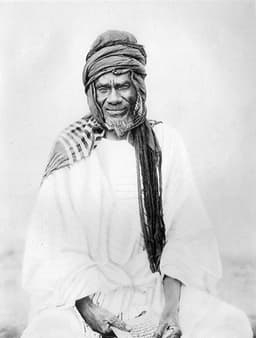
Samori Toure
General · Modern
70.5Total
Shi Dakai
General · Modern
59.6Total
Basic Information
Born
1830
1831
Died
1900
1863
Era
Modern
Modern
Nationality
Wassoulou Empire
China
Occupation
General
General
Civilization
Other
Eastern
Score Comparison
Military (10%)
60.0
76.0
Political (20%)
78.0
45.0
Influence (20%)
68.0
56.7
Legacy (20%)
72.0
54.0
Leadership (15%)
72.0
72.0
Strategy (15%)
70.0
68.1
TOTAL
70.5
59.6
Samori Toure — Complete Timeline
1878 AD
Establishment of the Wassoulou EmpirePolitical Action
Samori Toure founded the Wassoulou Empire in West Africa, uniting various Mandinka states under his rule. He established a centralized administration and a professional army, creating a powerful state that resisted French expansion.
EmpireWassoulouUnification
Impact: regionalconstructive
1880 AD
Military Reforms and ModernizationReform◆ Major
Samori Toure modernized his army by importing firearms from European traders and establishing a standing army of up to 35,000 men. He organized his forces into regular units and introduced new tactics, making them effective against French troops.
Military ReformFirearmsArmy
Impact: regionalconstructive
1882 AD
First Franco-Wassoulou WarWar◆ Major
Samori Toure's forces fought the French army in the first major conflict between the Wassoulou Empire and France. The war ended with a treaty in 1886, recognizing Samori's control over the Niger River region.
WarFranceTreaty
Impact: regional
1891 AD
Second Franco-Wassoulou WarWar◆ Major
The French resumed hostilities, forcing Samori to retreat eastward. He employed a scorched-earth strategy, destroying villages and crops to deny resources to the French, prolonging the conflict for years.
WarScorched EarthRetreat
Impact: regionaltragic
1898 AD
Capture and ExileWar
Samori Toure was captured by French forces after a long campaign. He was exiled to Gabon, where he died in 1900. His capture ended the Wassoulou Empire and marked the completion of French conquest in West Africa.
CaptureExileEnd of Empire
Impact: regionaltragic
Shi Dakai — Complete Timeline
1851 AD
Jintian UprisingWar◆ Major
Shi Dakai joined the Taiping Rebellion at its inception in Jintian, Guangxi. As a core leader, he helped organize the rebel forces and was appointed Wing King, becoming one of the key military commanders of the Taiping Heavenly Kingdom.
Taiping RebellionUprisingMilitary Command
Impact: national
1854 AD
Battle of XiangtanWar◆ Major
Shi Dakai led Taiping forces to a major victory at Xiangtan, Hunan, defeating Qing imperial troops. This battle secured Taiping control over key territories in the Yangtze River valley and demonstrated his military skill.
Taiping RebellionBattleVictory
Impact: regional
1856 AD
Tianjing IncidentPolitical Action
Shi Dakai returned to Tianjing (Nanjing) after the internal purge of the Eastern King Yang Xiuqing and the murder of the Northern King Wei Changhui. He condemned the violence and was forced to flee, leading to a split in Taiping leadership.
Taiping RebellionInternal ConflictPurge
Impact: nationaltragic
1858 AD
Campaign in Zhejiang and FujianWar
Shi Dakai led a separate Taiping army into Zhejiang and Fujian provinces, capturing several cities. This campaign expanded Taiping influence into southeastern China but also isolated his forces from the main Taiping base.
Taiping RebellionCampaignExpansion
Impact: regional
1863 AD
Battle of Baishui RiverWar◆ Major
Shi Dakai's army was trapped and defeated by Qing forces at the Baishui River in Sichuan. He was captured and executed shortly after, marking the end of his military career and a significant loss for the Taiping cause.
Taiping RebellionBattleDefeatDeath
Impact: nationaltragic
Expert Analysis
Shi Dakai vs Samori Toure
# The Lion and the Wing King: Two Paths Through the Fire
In the autumn of 1898, a 68-year-old African emperor sat in a French prison camp in Gabon, his empire reduced to ash. Half a world away and thirty-five years earlier, a 32-year-old Chinese prince knelt before Qing executioners in Sichuan, his dream of a Heavenly Kingdom drowned in blood. Samori Toure and Shi Dakai—two generals who built kingdoms on the edge of collapse, two men who fought empires with courage and cunning, two lives that ended in defeat. Yet their stories are not the same. One built a nation. The other lost one. Why?
Origins
Samori Toure was born in 1830 in the Konyan region of West Africa, the son of a Dyula trader. His world was one of shifting alliances, Islamic scholarship, and the growing shadow of European colonialism. He learned the Quran as a boy, worked as a soldier of fortune in his youth, and watched the French creep inland from the coast. His rise was born of chaos—the collapse of the Mali Empire, the slave trade’s aftershocks, and the desperate need for order.
Shi Dakai was born in 1831 in Guangxi, southern China, into a wealthy Hakka family. He received a classical Confucian education, studied military strategy, and grew up in a Qing dynasty rotting from within—corrupt officials, famine, and the opium trade poisoning the land. While Samori faced an external enemy, Shi Dakai’s enemy was his own empire.
One man learned to fight foreigners. The other learned to fight his own countrymen. That difference shaped everything.
Rise to Power
Samori’s path was slow and deliberate. In 1878, after years of building alliances and defeating rival chieftains, he declared himself *faama*—emperor—of the Wassoulou Empire. He united the Mandinka states not by conquest alone, but by diplomacy and marriage. He understood that power required legitimacy, and legitimacy required law.
Shi Dakai’s rise was explosive. In 1851, at age 20, he joined the Jintian Uprising, the spark of the Taiping Rebellion. The rebellion’s leader, Hong Xiuquan, claimed to be the younger brother of Jesus Christ. Shi Dakai, a practical man, saw not theology but opportunity—a chance to overthrow the Qing and build a new order. He became the Wing King, one of the rebellion’s five core kings, and its finest general.
Samori built slowly. Shi Dakai rose fast. One was a statesman. The other was a revolutionary.
Leadership & Governance
Samori Toure proved himself a ruler of rare ability. In 1880, he modernized his army, importing breech-loading rifles from British and German traders, establishing a standing army of up to 30,000 men, and training them in European tactics. He built a centralized state with a tax system, a judiciary, and a network of fortified towns. He was a political animal—he knew that wars are won not only on battlefields but in the minds of men.
Shi Dakai was a military genius but a political failure. His score of 84.6 in military strategy reflects his brilliance: the 1854 Battle of Xiangtan, where he crushed Qing forces, and his 1858 campaign through Zhejiang and Fujian, where he captured city after city. But his political score of 64.8 tells a darker story. In 1856, the Tianjing Incident tore the Taiping apart—Hong Xiuquan ordered the murder of the Eastern King, Yang Xiuqing, and Shi Dakai’s own family was slaughtered. He returned to Tianjing to restore order, but the damage was done. He could win battles. He could not win the court.
Samori fought the French with a unified state. Shi Dakai fought the Qing with a fractured cult.
Triumph & Tragedy
Samori’s greatest moment came between 1882 and 1886, during the First Franco-Wassoulou War. He fought the French to a stalemate, forcing them to sign a treaty recognizing his empire. For a brief moment, an African ruler had held the line against Europe’s might. But the French returned in 1891. Samori retreated eastward, burning villages and crops behind him—a scorched-earth strategy that slowed his enemies but starved his own people. In 1898, betrayed by a guide, he was captured and exiled to Gabon. He died in 1900, a prisoner.
Shi Dakai’s triumph was the 1854 Battle of Xiangtan, where his tactics shattered Qing armies and secured Taiping control of the Yangtze. But after the Tianjing Incident, he grew disillusioned. In 1858, he led his army away from the capital, a separate campaign that became a wandering march. In 1863, trapped at the Baishui River in Sichuan, his army was annihilated. He surrendered himself to spare his remaining men, but the Qing executed him by slow slicing—the Thousand Cuts. He died at 32, a prince without a kingdom.
Samori’s tragedy was defeat by a foreign empire. Shi Dakai’s tragedy was defeat by his own.
Character & Destiny
Samori Toure was patient, calculating, and pragmatic. He negotiated when he could, fought when he must, and never lost sight of the long game. His leadership score of 78.4 reflects a man who could inspire loyalty across ethnic and religious lines. He was a realist—he knew the French were stronger, but he believed he could outlast them.
Shi Dakai was brilliant, honorable, and doomed. His military score of 84.6 is the highest among these two, but his political score of 64.8 is the lowest. He was a man of principle in a movement of fanatics. He refused to participate in the bloodshed of the Tianjing Incident, and he walked away from power rather than seize it. He was a general who should have been a king, but he never had the stomach for the throne.
Samori built a state. Shi Dakai led an army. One was a king. The other was a knight.
Legacy
Today, Samori Toure is remembered as a father of African resistance. His legacy score of 73.9 and influence score of 75.8 reflect his place in the pantheon of anti-colonial heroes. In Guinea, Mali, and Côte d’Ivoire, his name is spoken with reverence. He is the lion who would not bow.
Shi Dakai is a footnote in a failed rebellion. His legacy score of 65.9 and influence score of 65.2 are lower, not because he was less talented, but because the Taiping Rebellion itself was erased from Chinese history for a century. He is remembered by scholars, not by the people. He is the Wing King who flew too close to the sun.
Conclusion
Samori Toure and Shi Dakai were born one year apart, both generals, both empire-builders, both defeated. But their fates were not written by their enemies—they were written by their choices. Samori chose to build a nation, and his nation survived in memory. Shi Dakai chose to serve a cause, and his cause crumbled into dust. One man fought for a place in the world. The other fought for a world that never was.
The difference between triumph and tragedy is not always victory or defeat. Sometimes, it is simply what you choose to fight for.
Rankings
🥇
Samori ToureLeader
Mil: 60.0Pol: 78.0Inf: 68.0
70.5
🥈
Shi Dakai
Mil: 76.0Pol: 45.0Inf: 56.7
59.6
+10.9 behind
How This Comparison Works
Algorithm
Each figure is scored on 6 dimensions (0—100 scale) based on structured historical data: Military (10%), Political (20%), Influence (20%), Legacy (20%), Leadership (15%), Strategy (15%). The weighted total produces the final ranking.
Data Sources
Scores are computed from structured sub-indicators in the database. Scale factors adjust for era (Ancient ×0.85, Modern ×1.0) and civilization size (Eastern ×1.05, Other ×0.80) to account for differences in population and military scale.
Maximum 3 Figures
Comparisons are limited to 2—3 figures to ensure readability and statistical meaningfulness.
Error Margins
±5 points per dimension — Sub-scores are derived from historical records with inherent uncertainty. Two figures within 5 points on a dimension should be considered roughly equivalent in that area.
Total Score Accuracy
±3 points overall — The weighted combination of 6 dimensions produces a total score with approximately ±3 points of uncertainty. Differences of less than 3 points are not statistically significant— the figures are effectively tied.
Known Limitations
- Historical records are incomplete and uneven across civilizations
- Figures from oral-tradition societies may be underrepresented
- Occupation labels can misclassify multi-role figures
- Scores measure capability and impact, not moral character
- Quantitative scoring is a comparison tool, not absolute truth
Capability Radar
Military (10%) — Battles & Warfare
Battles
75
75
Win Rate
65
70
Expansion
60
75
Political (20%) — Governance & Reform
Reform
75
50
Diplomacy
80
45
Economy
60
40
Influence (20%) — Cultural & Global Reach
Cultural
65
55
Global
55
40
Legacy (20%) — Historical Impact
Historical
70
60
Longevity
60
45
Leadership (15%) — Power & Stability
Tenure
70
55
Stability
55
35
Strategy (15%) — Tactics & Innovation
Strategy
85
80
Tactics
80
85
Reform
70
60
Similar Comparisons
Comments & Discussion
No comments yet. Be the first to share your thoughts!