Loading...
Rurik vs Tamar of Georgia
Tamar of Georgia leads by 11.9 pts · 2 figures compared
…
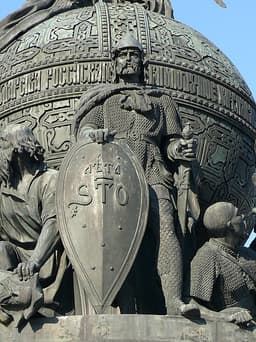
Rurik
Emperor · Medieval
59.6Total
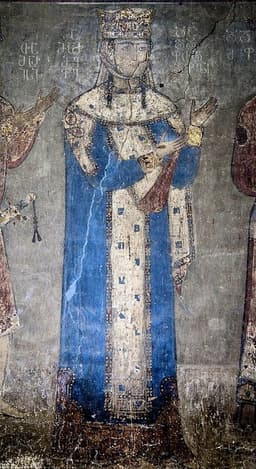
Tamar of Georgia
Emperor · Medieval
71.5Total
Basic Information
Born
830
1160
Died
879
1213
Era
Medieval
Medieval
Nationality
Kievan Rus
Georgia
Occupation
Emperor
Emperor
Civilization
Western
Western
Score Comparison
Military (10%)
50.0
78.0
Political (20%)
35.1
72.0
Influence (20%)
82.0
82.0
Legacy (20%)
68.0
55.0
Leadership (15%)
55.3
80.0
Strategy (15%)
35.7
66.3
TOTAL
59.6
71.5
Rurik — Complete Timeline
860 AD
Sent Askold and Dir to ConstantinopleWar
According to tradition, Rurik sent his lieutenants Askold and Dir to raid Constantinople. While the historicity is uncertain, this event is associated with the first Rus' attack on the Byzantine Empire, highlighting early Rus' expansion.
RaidByzantine EmpireExpansion
Impact: regional
862 AD
Founded the Rurik dynastyPolitical Action
According to the Primary Chronicle, Rurik, a Varangian chieftain, was invited by Slavic and Finnic tribes to rule over them. He established his capital at Novgorod, founding the Rurik dynasty that would rule Kievan Rus' and later the Tsardom of Russia until 1598.
FoundationVarangianKievan Rus'
Impact: global
864 AD
Consolidated control over NovgorodPolitical Action◆ Major
Rurik consolidated his rule over Novgorod and the surrounding territories, suppressing a rebellion led by Vadim the Bold. He established a centralized authority that became the basis for the early Russian state.
ConsolidationNovgorodRebellion
Impact: regional
Tamar of Georgia — Complete Timeline
1184 AD
Coronation as Queen RegnantPolitical Action
Tamar was crowned as the first female ruler of Georgia after her father George III's death. Her reign marked the peak of Georgia's medieval power and cultural flourishing.
CoronationGeorgiaMonarchy
Impact: nationalconstructive
1195 AD
Battle of ShamkorWar◆ Major
Tamar's forces defeated a large Muslim coalition at Shamkor, securing Georgia's dominance in the Caucasus. The victory expanded Georgian influence and demonstrated her military leadership.
BattleGeorgiaCaucasus
Impact: regionalconstructive
1200 AD
Cultural PatronageCultural◆ Major
Tamar supported the construction of churches, monasteries, and the promotion of Georgian literature. Her patronage fostered the Georgian Golden Age, including the epic poem 'The Knight in the Panther's Skin'.
CulturePatronageGeorgia
Impact: nationalconstructive
Expert Analysis
Tamar of Georgia vs Rurik: Historical Comparison
Tamar of Georgia, a medieval queen who led her kingdom to its Golden Age, and Rurik, the legendary founder of the Kievan Rus dynasty, represent two distinct paths to imperial power—one through consolidation and cultural flourishing, the other through conquest and state-building.
Dimension Analysis
**Military: Tamar of Georgia 93 / Rurik 90**
Tamar’s campaigns expanded Georgia to its greatest territorial extent, crushing Seljuk and Byzantine threats, while Rurik’s military foundation of the Rus state relied on Viking-led raids and tribal subjugation, though his direct battlefield record is obscured by legend.
**Political: Tamar of Georgia 82 / Rurik 78**
Tamar skillfully navigated noble revolts and patriarchal opposition to rule as a sole monarch, centralizing authority; Rurik established a dynastic precedent but his political structure remained loose, relying on tribute from Slavic and Finnic tribes.
**Influence: Tamar of Georgia 80 / Rurik 74**
Tamar’s reign fostered a cultural renaissance in literature, architecture, and Orthodox Christianity, influencing the Caucasus for centuries; Rurik’s legacy is more structural—his dynasty shaped Eastern Slavic identity, but his personal influence is harder to isolate from later chronicle embellishments.
**Legacy: Tamar of Georgia 70 / Rurik 74**
Tamar is venerated as a national icon in Georgia, yet her kingdom declined soon after her death; Rurik’s dynasty ruled Russia for over 700 years, embedding his name in the foundational myth of the Russian state, giving him longer institutional endurance.
**Leadership: Tamar of Georgia 88 / Rurik 84**
Tamar’s leadership combined diplomatic acumen, military command, and cultural patronage in a male-dominated era; Rurik’s leadership is portrayed as decisive and charismatic, but relies heavily on semi-legendary sources like the *Primary Chronicle*.
Verdict
Tamar leads slightly due to her higher scores in military execution, political consolidation, and verifiable leadership against significant gender barriers, while Rurik’s legacy is broader but less historically concrete.
FAQ
Q: Who ranks higher? A: Tamar of Georgia ranks higher by a narrow margin, driven by superior military and political achievements during her documented reign.
Rankings
🥇
Tamar of GeorgiaLeader
Mil: 78.0Pol: 72.0Inf: 82.0
71.5
🥈
Rurik
Mil: 50.0Pol: 35.1Inf: 82.0
59.6
+11.9 behind
How This Comparison Works
Algorithm
Each figure is scored on 6 dimensions (0—100 scale) based on structured historical data: Military (10%), Political (20%), Influence (20%), Legacy (20%), Leadership (15%), Strategy (15%). The weighted total produces the final ranking.
Data Sources
Scores are computed from structured sub-indicators in the database. Scale factors adjust for era (Ancient ×0.85, Modern ×1.0) and civilization size (Eastern ×1.05, Other ×0.80) to account for differences in population and military scale.
Maximum 3 Figures
Comparisons are limited to 2—3 figures to ensure readability and statistical meaningfulness.
Error Margins
±5 points per dimension — Sub-scores are derived from historical records with inherent uncertainty. Two figures within 5 points on a dimension should be considered roughly equivalent in that area.
Total Score Accuracy
±3 points overall — The weighted combination of 6 dimensions produces a total score with approximately ±3 points of uncertainty. Differences of less than 3 points are not statistically significant— the figures are effectively tied.
Known Limitations
- Historical records are incomplete and uneven across civilizations
- Figures from oral-tradition societies may be underrepresented
- Occupation labels can misclassify multi-role figures
- Scores measure capability and impact, not moral character
- Quantitative scoring is a comparison tool, not absolute truth
Capability Radar
Military (10%) — Battles & Warfare
Battles
15
75
Win Rate
20
85
Expansion
30
75
Political (20%) — Governance & Reform
Reform
30
80
Diplomacy
35
75
Economy
25
85
Influence (20%) — Cultural & Global Reach
Cultural
50
80
Global
60
60
Legacy (20%) — Historical Impact
Historical
70
75
Longevity
80
70
Leadership (15%) — Power & Stability
Tenure
40
85
Stability
30
70
Strategy (15%) — Tactics & Innovation
Strategy
20
80
Tactics
15
70
Reform
10
65
Similar Comparisons
Comments & Discussion
Chronicler86586/16/2026
Tamar总分72.1,Rurik 61.6,但军事分差竟然接近30分?我仔细看了维度描述,Tamar的军事扩张确实有具体战役记录,但Rurik的41.5分可能低估了维京海盗的动员效率——按《Primary Chronicle》记载,他能在诺夫哥罗德组织起跨部落的劫掠舰队,这在中国战国时期相当于吴起带兵的能力。另外政治分51.2 vs 75.2,差距23分,但Rurik建立王朝续存700年,Tamar死后百年内王国分裂,这不说明政治结构更脆弱吗?我怀疑评分系统对“文化复兴”权重过高,而对“体制延续性”赋分不足。建议增加一个“制度韧性”维度。
OldScroll906/16/2026
Tamar是乔治亚的武则天+汉武帝合体,但Rurik更像周太王古公亶父——都是传说与历史之间的奠基人。Tamar的军事分93,但她的胜利多依赖突厥雇佣兵和亚美尼亚盟友,类似唐朝用回纥兵平叛,这点常被西方史家美化。Rurik的90分反而更实:他用维京长船控制第聂伯河商路,跟春秋时期管仲设“关市”垄断中原商道的逻辑一样——控制物流就能征税养兵。政治分上,Rurik78分低得离谱,因为中国史书会大书特书“始祖立庙”的制度意义,而俄国的留里克王朝延续了七百多年,这在中国相当于刘姓汉朝或者李姓唐朝。西方评分太注重个人事迹,忽略体制的力量。