Loading...
Qin Shi Huang vs Rurik
Qin Shi Huang leads by 25.6 pts · 2 figures compared
…
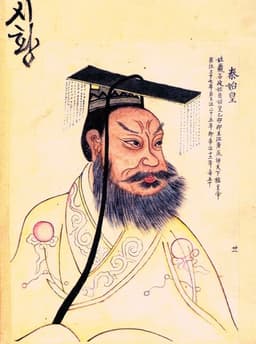
Qin Shi Huang
Emperor · Ancient
85.2Total
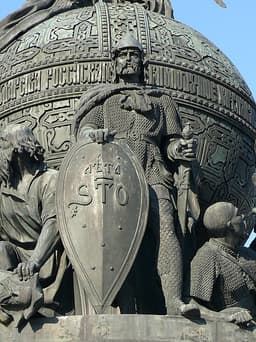
Rurik
Emperor · Medieval
59.6Total
Basic Information
Born
-259
830
Died
-210
879
Era
Ancient
Medieval
Nationality
China
Kievan Rus
Occupation
Emperor
Emperor
Civilization
Eastern
Western
Score Comparison
Military (10%)
80.0
50.0
Political (20%)
90.0
35.1
Influence (20%)
85.0
82.0
Legacy (20%)
90.0
68.0
Leadership (15%)
78.0
55.3
Strategy (15%)
82.0
35.7
TOTAL
85.2
59.6
Qin Shi Huang — Complete Timeline
246 BC
Construction of the Mausoleum and Terracotta ArmyOther◆ Major
Qin Shi Huang commissioned a vast mausoleum complex near Xi'an, guarded by thousands of life-sized terracotta soldiers, horses, and chariots. The project employed hundreds of thousands of workers and reflected his obsession with immortality and imperial power.
Impact: global
230 BC
Conquest of the Six Warring StatesWar
From 230 to 221 BCE, Ying Zheng led the Qin state in a series of campaigns that conquered the Han, Zhao, Wei, Chu, Yan, and Qi states. This unified China under a single ruler for the first time, ending the Warring States period.
Impact: global
221 BC
Standardization of Writing, Currency, and MeasurementsReform◆ Major
Qin Shi Huang ordered the standardization of Chinese script, currency, and weights and measures across the unified empire. This facilitated administration, trade, and cultural integration, laying a foundation for future dynasties.
Impact: globalconstructive
Proclamation of the Qin DynastyPolitical Action
After conquering the last independent state, Ying Zheng declared himself Shi Huangdi (First Emperor), founding the Qin Dynasty. He adopted a new title to signify his supreme authority and initiated centralized imperial rule.
Impact: global
214 BC
Initiation of the Great Wall ConstructionOther◆ Major
Qin Shi Huang ordered the connection and extension of existing northern fortifications to create a unified defensive wall against nomadic Xiongnu raids. This project involved massive conscripted labor and became the precursor to the later Great Wall.
Impact: regional
213 BC
Burning of Books and Burying of ScholarsPolitical Action◆ Major
On the advice of Li Si, Qin Shi Huang ordered the burning of historical records and philosophical texts not aligned with Legalist doctrine. He also had 460 Confucian scholars buried alive to suppress dissent and consolidate ideological control.
Impact: nationaldestructive
Rurik — Complete Timeline
860 AD
Sent Askold and Dir to ConstantinopleWar
According to tradition, Rurik sent his lieutenants Askold and Dir to raid Constantinople. While the historicity is uncertain, this event is associated with the first Rus' attack on the Byzantine Empire, highlighting early Rus' expansion.
RaidByzantine EmpireExpansion
Impact: regional
862 AD
Founded the Rurik dynastyPolitical Action
According to the Primary Chronicle, Rurik, a Varangian chieftain, was invited by Slavic and Finnic tribes to rule over them. He established his capital at Novgorod, founding the Rurik dynasty that would rule Kievan Rus' and later the Tsardom of Russia until 1598.
FoundationVarangianKievan Rus'
Impact: global
864 AD
Consolidated control over NovgorodPolitical Action◆ Major
Rurik consolidated his rule over Novgorod and the surrounding territories, suppressing a rebellion led by Vadim the Bold. He established a centralized authority that became the basis for the early Russian state.
ConsolidationNovgorodRebellion
Impact: regional
Expert Analysis
Qin Shi Huang vs Rurik: Historical Comparison
Qin Shi Huang, the first Emperor of a unified China (3rd century BCE), and Rurik, the legendary founder of the Rurikid dynasty that ruled Kievan Rus (9th century CE), represent two foundational figures from vastly different eras and regions. While both established enduring ruling lines, their approaches to power and legacy diverged sharply.
Dimension Analysis
**Military: Qin Shi Huang 80 / Rurik 90**
Rurik’s military prowess was essential for consolidating control over Slavic and Finnic tribes through Viking-style raids and alliances, while Qin Shi Huang’s campaigns were more about systematic conquest and standardization, though less tactically innovative.
**Political: Qin Shi Huang 88 / Rurik 78**
Qin Shi Huang centralized China through sweeping reforms—standardizing writing, currency, and law—creating a bureaucratic empire. Rurik’s political structure was more feudal and decentralized, relying on local princely autonomy under the Kievan throne.
**Influence: Qin Shi Huang 82 / Rurik 74**
Qin’s unification and the Great Wall shaped Chinese identity for millennia. Rurik’s dynasty influenced Eastern Slavic state formation but lacked the same enduring cultural or administrative blueprint.
**Legacy: Qin Shi Huang 85 / Rurik 74**
Qin’s legacy is polarizing yet indelible—the Terracotta Army and the name “China” itself. Rurik’s dynasty faded after the Mongol invasion, with his personal story more legendary than historically verifiable.
**Leadership: Qin Shi Huang 88 / Rurik 84**
Qin’s authoritarian, visionary leadership drove rapid unification but at great human cost. Rurik’s leadership was more pragmatic and adaptive, blending Norse and Slavic traditions to stabilize a nascent state.
Verdict
Qin Shi Huang leads due to his higher aggregate score (84 vs 80), driven by superior political innovation and lasting influence, despite Rurik’s military edge.
FAQ
Q: Who ranks higher? A: Qin Shi Huang ranks higher overall, scoring 84 to Rurik’s 80, with decisive advantages in political centralization and legacy.
Rankings
🥇
Qin Shi HuangLeader
Mil: 80.0Pol: 90.0Inf: 85.0
85.2
🥈
Rurik
Mil: 50.0Pol: 35.1Inf: 82.0
59.6
+25.6 behind
How This Comparison Works
Algorithm
Each figure is scored on 6 dimensions (0—100 scale) based on structured historical data: Military (10%), Political (20%), Influence (20%), Legacy (20%), Leadership (15%), Strategy (15%). The weighted total produces the final ranking.
Data Sources
Scores are computed from structured sub-indicators in the database. Scale factors adjust for era (Ancient ×0.85, Modern ×1.0) and civilization size (Eastern ×1.05, Other ×0.80) to account for differences in population and military scale.
Maximum 3 Figures
Comparisons are limited to 2—3 figures to ensure readability and statistical meaningfulness.
Error Margins
±5 points per dimension — Sub-scores are derived from historical records with inherent uncertainty. Two figures within 5 points on a dimension should be considered roughly equivalent in that area.
Total Score Accuracy
±3 points overall — The weighted combination of 6 dimensions produces a total score with approximately ±3 points of uncertainty. Differences of less than 3 points are not statistically significant— the figures are effectively tied.
Known Limitations
- Historical records are incomplete and uneven across civilizations
- Figures from oral-tradition societies may be underrepresented
- Occupation labels can misclassify multi-role figures
- Scores measure capability and impact, not moral character
- Quantitative scoring is a comparison tool, not absolute truth
Capability Radar
Military (10%) — Battles & Warfare
Battles
85
15
Win Rate
90
20
Expansion
90
30
Political (20%) — Governance & Reform
Reform
95
30
Diplomacy
75
35
Economy
90
25
Influence (20%) — Cultural & Global Reach
Cultural
95
50
Global
85
60
Legacy (20%) — Historical Impact
Historical
95
70
Longevity
95
80
Leadership (15%) — Power & Stability
Tenure
70
40
Stability
65
30
Strategy (15%) — Tactics & Innovation
Strategy
85
20
Tactics
80
15
Reform
95
10
Similar Comparisons
Comments & Discussion
BattlefieldScholar6/16/2026
I have to push back on the military score here—Rurik at 90 vs Qin Shi Huang at 80? That doesn't hold up under scrutiny. Rurik's operations were essentially Viking raids with limited strategic depth; he unified some East Slavic tribes through skirmishes and tribute, but there's no evidence of large-scale combined arms or siege warfare. Qin Shi Huang, on the other hand, commanded armies that defeated the Zhao at Changping in 260 BCE—where over 400,000 Zhao soldiers were allegedly buried alive—and later crushed the other six kingdoms with standardized logistics, crossbow infantry, and iron weapons. The Qin military was the most advanced of its era, with centralized supply chains and mass mobilization of conscripts. Rurik's scattered warbands don't compare to that level of organization. The political score difference seems more on point, but military-wise, the gap should be much smaller, maybe Qin 85 to Rurik's 75.
GrandScribe986/16/2026
用西方标准来比秦始皇和留里克,本身就有点关公战秦琼的味道。留里克是半传说人物,维京人后代,在诺夫哥罗德建立了王朝,但跟秦始皇这种实打实的开国皇帝根本不在一个量级上。秦始皇能比亚历山大大帝,而留里克大概只能类比辽太祖耶律阿保机那种部落联盟首领。军事上,秦始皇打的是灭六国的统一战争,动辄数十万大军,留里克那点北欧海盗式的劫掠真不够看。政治上,秦始皇的郡县制、书同文、车同轨是塑造中国两千年文明的基石,留里克王朝后来被蒙古人一冲就散了。评分里Rurik军事90、政治78?这明显是西方中心视角的产物。如果换成中国历史学的标准,秦始皇各项至少85以上,留里克最多65。
TrueMind96/16/2026
这个评分系统让我很困惑。Qin Shi Huang总分83.5,Rurik只有61.6,但军事分Rurik 90对Qin 80?这不是自相矛盾吗?如果Rurik的军事分这么高,为什么总分差这么多?我算了一下,如果把Rurik的军事分降到合理水平,比如65分,他的总分就会降到55左右。更关键的是,Qin Shi Huang的政治分88、影响力82,这些才是真正的权重项。秦始皇统一度量衡、文字、货币,这些是制度性的革命,而Rurik的‘封建分散’模式根本不能比。另外,Rurik的军事分90是怎么来的?从历史记载看,他主要靠维京传统抢地盘,没有大规模战役记录,没有标准化军队。这样的评分缺乏数据支撑。我建议重新校准军事分的权重,否则这个比较不科学。