Loading...
Charles de Gaulle vs Rurik
Charles de Gaulle leads by 8.6 pts · 2 figures compared
…
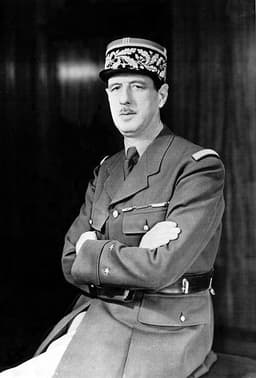
Charles de Gaulle
Politician · Modern
68.2Total
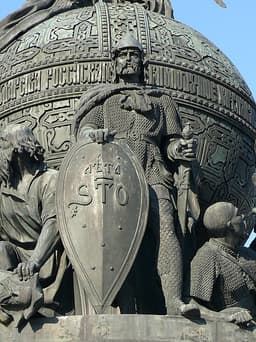
Rurik
Emperor · Medieval
59.6Total
Basic Information
Born
1890
830
Died
1970
879
Era
Modern
Medieval
Nationality
France
Kievan Rus
Occupation
Politician
Emperor
Civilization
Western
Western
Score Comparison
Military (10%)
55.0
50.0
Political (20%)
75.0
35.1
Influence (20%)
65.0
82.0
Legacy (20%)
68.0
68.0
Leadership (15%)
78.0
55.3
Strategy (15%)
65.0
35.7
TOTAL
68.2
59.6
Charles de Gaulle — Complete Timeline
1940 AD
Appeal of 18 June 1940Political Action
From London, de Gaulle broadcast a radio appeal urging French resistance against Nazi occupation. He called on French soldiers and citizens to continue the fight, founding the Free French Forces and becoming the symbol of French defiance.
World War IIResistanceLeadership
Impact: nationalconstructive
1958 AD
Founding of the Fifth RepublicPolitical Action
De Gaulle returned to power during the Algerian crisis and oversaw the drafting of a new constitution. The Fifth Republic established a strong executive presidency, replacing the unstable parliamentary system of the Fourth Republic.
ConstitutionGovernment ReformPolitical System
Impact: nationalconstructive
1962 AD
End of the Algerian WarPolitical Action◆ Major
De Gaulle negotiated the
DecolonizationPeace TreatyAlgeria
Impact: regionalconstructive
1968 AD
May 1968 CrisisPolitical Action◆ Major
Mass student protests and general strikes paralyzed France, challenging de Gaulle's government. De Gaulle briefly fled to Germany, then returned to dissolve the National Assembly and call elections, which his party won, but his authority was weakened.
ProtestPolitical CrisisSocial Unrest
Impact: nationaldestructive
1969 AD
Resignation as PresidentPolitical Action
De Gaulle resigned after losing a referendum on regional reform and Senate restructuring. The defeat marked the end of his political career, as he withdrew from public life and died the following year.
ResignationPolitical DefeatReferendum
Impact: nationaltragic
Rurik — Complete Timeline
860 AD
Sent Askold and Dir to ConstantinopleWar
According to tradition, Rurik sent his lieutenants Askold and Dir to raid Constantinople. While the historicity is uncertain, this event is associated with the first Rus' attack on the Byzantine Empire, highlighting early Rus' expansion.
RaidByzantine EmpireExpansion
Impact: regional
862 AD
Founded the Rurik dynastyPolitical Action
According to the Primary Chronicle, Rurik, a Varangian chieftain, was invited by Slavic and Finnic tribes to rule over them. He established his capital at Novgorod, founding the Rurik dynasty that would rule Kievan Rus' and later the Tsardom of Russia until 1598.
FoundationVarangianKievan Rus'
Impact: global
864 AD
Consolidated control over NovgorodPolitical Action◆ Major
Rurik consolidated his rule over Novgorod and the surrounding territories, suppressing a rebellion led by Vadim the Bold. He established a centralized authority that became the basis for the early Russian state.
ConsolidationNovgorodRebellion
Impact: regional
Expert Analysis
Charles de Gaulle vs Rurik
# The Lonely Tower and the Northern Storm
On a June evening in 1940, a tall, awkward French general stood before a BBC microphone in London, his voice trembling slightly as he called upon his countrymen to resist. Across the centuries, in a wooden hall in Novgorod, a Viking chieftain accepted a crown from weary Slavic elders who begged him to bring order to their feuding lands. One man spoke into the void of defeat; the other stepped into the vacuum of chaos. Both would reshape nations, but their paths—and their endings—could not have been more different.
Origins
Charles de Gaulle was born in 1890 into a devoutly Catholic, patriotic family in Lille. His father taught philosophy and history, filling the boy’s mind with tales of French glory and the pain of the 1870 defeat by Prussia. De Gaulle grew up with a sense of destiny, writing as a teenager that he would one day lead France. He entered Saint-Cyr military academy, fought at Verdun, was captured, and spent nearly three years in German prisoner-of-war camps—a humiliation he never forgot.
Rurik, by contrast, emerges from the mist of legend. Born around 830, he was a Varangian—a Norse warrior-trader from what is now Sweden. The Primary Chronicle, written centuries later, describes him as a chieftain leading his Rus people along the river routes of Eastern Europe. Whether he was a single historical figure or a composite of several leaders, his world was one of tribal warfare, river piracy, and the brutal logic of survival. He left no writings, no speeches, no philosophy—only the dynasty that would rule for seven hundred years.
Rise to Power
De Gaulle’s rise was slow, stubborn, and against all odds. In 1940, he was a mere brigadier general and undersecretary of defense when France collapsed. While Marshal Pétain sued for peace, de Gaulle escaped to London. On June 18, 1940, his radio appeal—heard by relatively few at the time—became the founding myth of the Free French. He was a man without an army, without a country, recognized only by Churchill—and often grudgingly. His authority rested entirely on his will.
Rurik’s rise, if the chronicle is to be believed, was an invitation. In 862, the warring Slavic and Finnic tribes of the region, exhausted by their own conflicts, reportedly said: “Our land is great and abundant, but there is no order in it. Come and rule over us.” Rurik accepted, establishing himself in Novgorod. He consolidated control in 864 by crushing a rebellion led by Vadim the Bold. Unlike de Gaulle, who had to build legitimacy from exile, Rurik was handed power by those who had none.
Leadership & Governance
De Gaulle governed with a vision of France as a great power, independent and proud. As president of the Fifth Republic, which he founded in 1958, he restored a strong executive, ended the disastrous Algerian War through the Évian Accords of 1962, and pursued a foreign policy independent of both Washington and Moscow. He vetoed British entry into the European Economic Community, withdrew France from NATO’s integrated command, and developed an independent nuclear deterrent. His governing style was aloof, paternalistic, and deeply theatrical—he once said, “A leader must be a man of few words, but his silence must be eloquent.”
Rurik’s governance was more elemental. He established a system of tribute and protection, using his Varangian warriors to enforce order along the trade routes between the Baltic and the Black Sea. His rule was not about grand constitutional design but about survival, expansion, and the accumulation of wealth. He sent his lieutenants Askold and Dir to raid Constantinople in 860—an act of piracy that also opened diplomatic channels. His dynasty would eventually adopt Christianity, codify laws, and build the magnificent Saint Sophia Cathedral in Kyiv, but Rurik himself was a pagan chieftain who ruled by the sword and the oath.
Triumph & Tragedy
De Gaulle’s greatest triumph was the founding of the Fifth Republic, a political system that has endured for over six decades and stabilized France through countless crises. His greatest tragedy came in May 1968, when student protests and a general strike paralyzed France. The old general, who had faced Hitler and survived assassination attempts, was bewildered by the youth who rejected his vision of order and authority. He briefly fled to Baden-Baden to consult with French generals in Germany—a moment of panic that nearly broke his mystique. He survived that crisis but resigned in 1969 after losing a referendum on regional reform. The man who had saved France twice—once from the Nazis and once from civil war—left office defeated by a ballot box.
Rurik’s triumph was the foundation of a dynasty that would produce figures like Vladimir the Great, Yaroslav the Wise, and Ivan the Terrible. His tragedy is that we know so little of him. He died around 879, leaving his young son Igor to be raised by the regent Oleg. His legacy was not his own deeds but the centuries of history that followed. He is both a historical figure and a national myth—a symbol of the “Normanist” theory that Russia was founded by Scandinavians, a claim that has sparked endless debate among historians and nationalists.
Character & Destiny
De Gaulle’s character was his destiny. Tall, aloof, with a nose that seemed to point toward the heavens, he cultivated an aura of distance and mystery. He once wrote, “Greatness is a road leading toward the unknown.” His stubbornness, his faith in his own vision, and his refusal to compromise were his strengths and his weaknesses. They allowed him to stand alone in 1940 but also isolated him in 1968. He was a man who believed that France could not be France without greatness—and he imposed that belief upon a reluctant nation.
Rurik’s character is unknowable, but his destiny is written in the DNA of Eastern Europe. The Rurik dynasty would rule for over seven centuries, longer than any other royal house in European history. The invitation legend—whether true or invented—shaped a political culture in which foreign, autocratic rulers were seen as bringers of order to a chaotic land. This pattern would echo through Russian history, from the Mongol khans to the Romanov tsars to the Soviet general secretaries.
Legacy
De Gaulle’s legacy is everywhere in modern France: the Fifth Republic, the nuclear deterrent, the tradition of independent foreign policy, the airport named after him, the streets and squares in every French town. Yet his greatest legacy is perhaps the idea that a nation can be reborn through the will of a single man. He is remembered as the savior of French honor, the architect of French stability, and the prophet of European independence from superpower domination.
Rurik’s legacy is the Russian state itself. The Rurik dynasty ruled until 1598, when the last tsar, Feodor I, died without an heir. The dynasty’s fall led to the Time of Troubles, a period of chaos and foreign invasion that nearly destroyed Russia. But the idea of a single, autocratic ruler—invited, perhaps, from outside—remained. Rurik is the ghost in the Kremlin, the shadow behind every tsar and every general secretary who claimed to bring order to the great and abundant but disordered land.
Conclusion
One man stood on a lonely tower in London, speaking to a nation that had fallen silent. The other stood on a wooden throne in Novgorod, accepting a crown from a people who had lost hope. De Gaulle built a republic that endures; Rurik founded a dynasty that ruled for seven centuries. Both were outsiders who became the center of their nations’ stories. But de Gaulle’s story is one of will and words, of a man who created a country through sheer stubbornness. Rurik’s story is one of myth and blood, of a man who may never have existed yet whose shadow stretches across a thousand years. In the end, both remind us that nations are born not from geography or economics, but from the human need for order, meaning, and a leader who will stand alone when all others have fallen.
Rankings
🥇
Charles de GaulleLeader
Mil: 55.0Pol: 75.0Inf: 65.0
68.2
🥈
Rurik
Mil: 50.0Pol: 35.1Inf: 82.0
59.6
+8.6 behind
How This Comparison Works
Algorithm
Each figure is scored on 6 dimensions (0—100 scale) based on structured historical data: Military (10%), Political (20%), Influence (20%), Legacy (20%), Leadership (15%), Strategy (15%). The weighted total produces the final ranking.
Data Sources
Scores are computed from structured sub-indicators in the database. Scale factors adjust for era (Ancient ×0.85, Modern ×1.0) and civilization size (Eastern ×1.05, Other ×0.80) to account for differences in population and military scale.
Maximum 3 Figures
Comparisons are limited to 2—3 figures to ensure readability and statistical meaningfulness.
Error Margins
±5 points per dimension — Sub-scores are derived from historical records with inherent uncertainty. Two figures within 5 points on a dimension should be considered roughly equivalent in that area.
Total Score Accuracy
±3 points overall — The weighted combination of 6 dimensions produces a total score with approximately ±3 points of uncertainty. Differences of less than 3 points are not statistically significant— the figures are effectively tied.
Known Limitations
- Historical records are incomplete and uneven across civilizations
- Figures from oral-tradition societies may be underrepresented
- Occupation labels can misclassify multi-role figures
- Scores measure capability and impact, not moral character
- Quantitative scoring is a comparison tool, not absolute truth
Capability Radar
Military (10%) — Battles & Warfare
Battles
60
15
Win Rate
55
20
Expansion
20
30
Political (20%) — Governance & Reform
Reform
95
30
Diplomacy
90
35
Economy
70
25
Influence (20%) — Cultural & Global Reach
Cultural
70
50
Global
80
60
Legacy (20%) — Historical Impact
Historical
85
70
Longevity
75
80
Leadership (15%) — Power & Stability
Tenure
85
40
Stability
75
30
Strategy (15%) — Tactics & Innovation
Strategy
85
20
Tactics
70
15
Reform
80
10
Similar Comparisons
Comments & Discussion
JUNE40'S GHOST6/16/2026
De Gaulle was France's last true Roman—standing alone in London while Petain groveled in Vichy. Rurik? He's basically a Viking fanfiction character. The Primary Chronicle is propaganda from 300 years later. One man shaped history with his own hands; the other had monks write his legend. Give me the general any day. He actually existed.
归刃先锋6/16/2026
Rurik才是真正的民族缔造者,德高望重不过是个流亡播音员。诺夫哥罗德820年的骨斧和护符说得很清楚:他是真实的战争领主,不是戴高乐那种靠BBC演戏的文人将军。戴高乐最后被法国人赶下台两次,而留里克开创了统治东欧700年的王朝。事实胜于雄辩。