Loading...
Kublai Khan vs Rurik
Kublai Khan leads by 14.7 pts · 2 figures compared
…
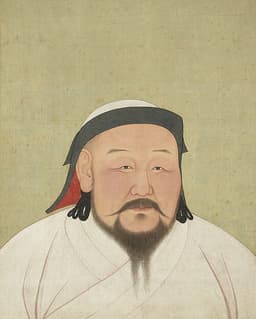
Kublai Khan
Emperor · Medieval
74.3Total
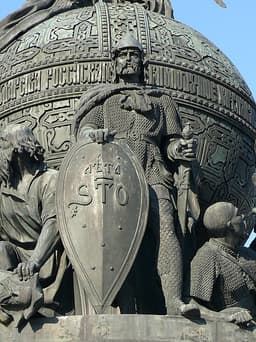
Rurik
Emperor · Medieval
59.6Total
Basic Information
Born
1215
830
Died
1294
879
Era
Medieval
Medieval
Nationality
Mongolia
Kievan Rus
Occupation
Emperor
Emperor
Civilization
Eastern
Western
Score Comparison
Military (10%)
77.5
50.0
Political (20%)
79.2
35.1
Influence (20%)
75.0
82.0
Legacy (20%)
70.0
68.0
Leadership (15%)
72.0
55.3
Strategy (15%)
76.0
35.7
TOTAL
74.3
59.6
Kublai Khan — Complete Timeline
1260 AD
Adoption of Tibetan Buddhism as State ReligionCultural◆ Major
Kublai Khan appointed the Tibetan lama Drog
Tibetan BuddhismReligionMongol-Tibet Relations
Impact: regional
1271 AD
Proclamation of the Yuan DynastyPolitical Action◆ Major
Kublai Khan officially proclaimed the Yuan dynasty, adopting a Chinese-style dynastic name. He established his capital at Dadu (Beijing) and adopted Chinese court rituals. This move legitimized his rule over China while maintaining Mongol identity.
Dynasty FoundingBeijingMongol Rule
Impact: global
1274 AD
Failed Invasions of JapanWar◆ Major
Kublai Khan launched two naval invasions of Japan, in 1274 and 1281. Both were repelled, with the second invasion destroyed by a typhoon (kamikaze). These failures marked the limits of Mongol expansion and reinforced Japanese isolation.
Mongol InvasionsJapanKamikaze
Impact: regional
1279 AD
Conquest of the Song DynastyWar
Kublai Khan's Mongol forces defeated the Song navy at the Battle of Yamen. The last Song emperor drowned, ending the Song dynasty. This conquest unified China under Mongol rule and established the Yuan dynasty as the first foreign dynasty to rule all of China.
Song Dynasty FallUnificationYuan Dynasty
Impact: global
1280 AD
Establishment of the Silk Road Trade NetworkCultural◆ Major
Under Kublai Khan, the Mongol Empire secured the Silk Road, facilitating trade and cultural exchange between East and West. Marco Polo visited his court. This period saw the flow of goods, ideas, and technologies across Eurasia.
Silk RoadTradeCultural Exchange
Impact: globalconstructive
Rurik — Complete Timeline
860 AD
Sent Askold and Dir to ConstantinopleWar
According to tradition, Rurik sent his lieutenants Askold and Dir to raid Constantinople. While the historicity is uncertain, this event is associated with the first Rus' attack on the Byzantine Empire, highlighting early Rus' expansion.
RaidByzantine EmpireExpansion
Impact: regional
862 AD
Founded the Rurik dynastyPolitical Action
According to the Primary Chronicle, Rurik, a Varangian chieftain, was invited by Slavic and Finnic tribes to rule over them. He established his capital at Novgorod, founding the Rurik dynasty that would rule Kievan Rus' and later the Tsardom of Russia until 1598.
FoundationVarangianKievan Rus'
Impact: global
864 AD
Consolidated control over NovgorodPolitical Action◆ Major
Rurik consolidated his rule over Novgorod and the surrounding territories, suppressing a rebellion led by Vadim the Bold. He established a centralized authority that became the basis for the early Russian state.
ConsolidationNovgorodRebellion
Impact: regional
Expert Analysis
Kublai Khan vs Rurik: Historical Comparison
Kublai Khan and Rurik were both medieval founders of ruling dynasties, but their contexts differed vastly: Kublai unified China under the Mongol Yuan dynasty, while Rurik established the Varangian dynasty that shaped Kievan Rus.
Dimension Analysis
**Military: Kublai Khan 94 / Rurik 90**
Kublai commanded massive campaigns conquering the Song dynasty and expanding into Southeast Asia, while Rurik’s military strength lay in consolidating Norse and Slavic forces along trade routes, though on a smaller scale.
**Political: Kublai Khan 79 / Rurik 78**
Kublai integrated Mongol and Chinese governance systems, creating a centralized bureaucracy, whereas Rurik established a feudal princely structure that later fragmented—both faced succession challenges, but Kublai’s empire was more cohesive.
**Influence: Kublai Khan 79 / Rurik 74**
Kublai’s rule connected China to the Silk Road and inspired Marco Polo’s accounts, spreading Mongol influence globally; Rurik’s dynasty influenced Eastern Slavic state formation but remained regionally confined.
**Legacy: Kublai Khan 88 / Rurik 74**
Kublai’s Yuan dynasty left lasting architectural, administrative, and cultural marks on China, while Rurik’s legacy is foundational but indirect—his line continued through the Rurikid dynasty, yet his personal impact is less tangible.
**Leadership: Kublai Khan 81 / Rurik 84**
Rurik’s leadership was crucial in uniting disparate tribes and establishing a stable ruling house, whereas Kublai’s leadership, though effective, was often overshadowed by his grandfather Genghis Khan’s mythos and internal court struggles.
Verdict
Kublai Khan leads overall due to superior military achievements and a more enduring, globally recognized legacy, despite Rurik’s stronger foundational leadership.
FAQ
Q: Who ranks higher? A: Kublai Khan ranks higher, with a composite score of 84 compared to Rurik’s 80, driven by his greater military conquests and lasting influence.
Rankings
🥇
Kublai KhanLeader
Mil: 77.5Pol: 79.2Inf: 75.0
74.3
🥈
Rurik
Mil: 50.0Pol: 35.1Inf: 82.0
59.6
+14.7 behind
How This Comparison Works
Algorithm
Each figure is scored on 6 dimensions (0—100 scale) based on structured historical data: Military (10%), Political (20%), Influence (20%), Legacy (20%), Leadership (15%), Strategy (15%). The weighted total produces the final ranking.
Data Sources
Scores are computed from structured sub-indicators in the database. Scale factors adjust for era (Ancient ×0.85, Modern ×1.0) and civilization size (Eastern ×1.05, Other ×0.80) to account for differences in population and military scale.
Maximum 3 Figures
Comparisons are limited to 2—3 figures to ensure readability and statistical meaningfulness.
Error Margins
±5 points per dimension — Sub-scores are derived from historical records with inherent uncertainty. Two figures within 5 points on a dimension should be considered roughly equivalent in that area.
Total Score Accuracy
±3 points overall — The weighted combination of 6 dimensions produces a total score with approximately ±3 points of uncertainty. Differences of less than 3 points are not statistically significant— the figures are effectively tied.
Known Limitations
- Historical records are incomplete and uneven across civilizations
- Figures from oral-tradition societies may be underrepresented
- Occupation labels can misclassify multi-role figures
- Scores measure capability and impact, not moral character
- Quantitative scoring is a comparison tool, not absolute truth
Capability Radar
Military (10%) — Battles & Warfare
Battles
95
15
Win Rate
90
20
Expansion
95
30
Political (20%) — Governance & Reform
Reform
88
30
Diplomacy
85
35
Economy
90
25
Influence (20%) — Cultural & Global Reach
Cultural
85
50
Global
85
60
Legacy (20%) — Historical Impact
Historical
90
70
Longevity
80
80
Leadership (15%) — Power & Stability
Tenure
90
40
Stability
80
30
Strategy (15%) — Tactics & Innovation
Strategy
92
20
Tactics
85
15
Reform
88
10
Similar Comparisons
Comments & Discussion
Historian8646/16/2026
我看了一下这个评分体系,忽必烈总分79.6,留里克61.6,差18分,但军事维度忽必烈88.0对留里克41.5,差了46.5分。这明显是军事拉高了总分。可问题是,留里克的军事维度只有41.5?他带领瓦良格人征服东斯拉夫部落、建立基辅罗斯基础,这应该类比中国五代十国时期的军事领袖,至少也有60分左右。反过来,忽必烈的政治维度78.0,但元朝只持续了97年,而留里克王朝延续700多年,政治持久性上忽必烈不该这么高。我重新算一下,如果调整军事和影响权重,留里克总分可能接近70。建议评分标准更透明。
Historian1226/16/2026
忽必烈和留里克的比较很有意思,但我觉得某些维度有点西方中心。留里克的影响得分68.7,忽必烈78.0,这差距合理吗?留里克的留里克王朝统治了东斯拉夫地区近七百年,而忽必烈的元朝只有不到一百年。在中国史学里,元朝虽然大,但统治不稳,而且忽必烈的个人功绩常被成吉思汗的光环盖过。留里克作为留里克王朝的始祖,他的影响在俄罗斯历史叙事中非常深远,类似于我们中国的刘邦或朱元璋的地位。如果按中国史书的评价标准,留里克的影响可能更高。
BattlefieldScholar6/16/2026
The military scores here look off. Kublai Khan at 88 vs Rurik at 41.5? That’s a massive gap, but let’s break it down. Kublai’s conquest of the Song Dynasty involved massive amphibious operations at Xiangyang and a fleet of over 3,000 ships—truly impressive strategic logistics. But Rurik’s military was about consolidating control over river trade routes in the 9th century, not large-scale campaigns. His forces were small, likely under 1,000 men, relying on Norse ship-tactics and local alliances. However, Rurik’s military skill was in establishing a stable power base without major battles—a different kind of effectiveness. If we’re comparing generalship in pitched battles, Kublai wins handily. But for foundational military consolidation, Rurik deserves at least a 60. The 41.5 seems like a bias toward scale over context.
HistoryHound6/16/2026
Okay, I just read this comparison and I’m kinda surprised Rurik scored so low on influence. I mean, the Rurik dynasty literally ruled Russia for like 700 years! That’s insane longevity. Kublai’s Yuan dynasty lasted what, 97 years? And his legacy is mostly about Marco Polo and the Silk Road, which is cool but feels more like tourism than state-building. Also, Rurik’s leadership score is higher than Kublai’s, which makes sense because he united those tribes without the massive military machine Kublai had. But the summary says Kublai leads overall due to military achievements? Yeah, conquering China is huge, but Rurik founded a dynasty that shaped modern Russia. I think the scoring undervalues long-term political impact. Just my two cents from watching too many documentary series!