Loading...
Ranoji Scindia vs Shi Dakai
Shi Dakai leads by 2.6 pts · 2 figures compared
…
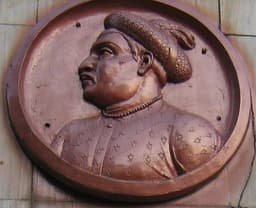
Ranoji Scindia
General · Modern
57.0Total
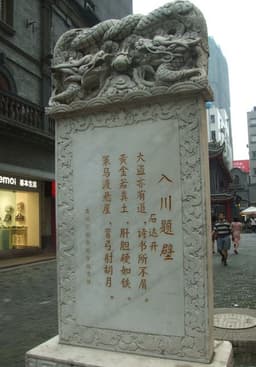
Shi Dakai
General · Modern
59.6Total
Basic Information
Born
1700
1831
Died
1745
1863
Era
Modern
Modern
Nationality
India
China
Occupation
General
General
Civilization
Indian
Eastern
Score Comparison
Military (10%)
50.0
76.0
Political (20%)
54.7
45.0
Influence (20%)
58.0
56.7
Legacy (20%)
54.0
54.0
Leadership (15%)
65.0
72.0
Strategy (15%)
60.0
68.1
TOTAL
57.0
59.6
Ranoji Scindia — Complete Timeline
1726 AD
Appointed Subedar of MalwaPolitical Action◆ Major
Ranoji Scindia was appointed as the Maratha subedar of Malwa by Peshwa Baji Rao I. This gave him control over a large territory and laid the foundation for the Scindia dynasty of Gwalior.
Maratha EmpireMalwaScindia Dynasty
Impact: regionalconstructive
1737 AD
Battle of DelhiWar◆ Major
Ranoji Scindia participated in the Maratha raid on Delhi under Baji Rao I. The attack on the Mughal capital demonstrated Maratha power and led to the extraction of tribute.
Maratha-Mughal WarsDelhiRaid
Impact: national
1739 AD
Battle of VasaiWar
Ranoji Scindia fought alongside Malhar Rao Holkar in the siege of Vasai against the Portuguese. The victory ended Portuguese control in the Konkan region.
Maratha-Portuguese WarsSiegeKonkan
Impact: regional
1740 AD
Founded Gwalior as CapitalPolitical Action◆ Major
Ranoji Scindia established his capital at Gwalior, fortifying the Gwalior Fort and building a palace. This city became the center of Scindia power for over a century.
FoundingGwaliorScindia Dynasty
Impact: regionalconstructive
1745 AD
Death in BattleWar
Ranoji Scindia was killed in a battle against the Nizam of Hyderabad's forces near the Narmada River. His death occurred during a Maratha campaign to expand into the Deccan.
DeathBattleMaratha-Nizam Wars
Impact: regionaltragic
Shi Dakai — Complete Timeline
1851 AD
Jintian UprisingWar◆ Major
Shi Dakai joined the Taiping Rebellion at its inception in Jintian, Guangxi. As a core leader, he helped organize the rebel forces and was appointed Wing King, becoming one of the key military commanders of the Taiping Heavenly Kingdom.
Taiping RebellionUprisingMilitary Command
Impact: national
1854 AD
Battle of XiangtanWar◆ Major
Shi Dakai led Taiping forces to a major victory at Xiangtan, Hunan, defeating Qing imperial troops. This battle secured Taiping control over key territories in the Yangtze River valley and demonstrated his military skill.
Taiping RebellionBattleVictory
Impact: regional
1856 AD
Tianjing IncidentPolitical Action
Shi Dakai returned to Tianjing (Nanjing) after the internal purge of the Eastern King Yang Xiuqing and the murder of the Northern King Wei Changhui. He condemned the violence and was forced to flee, leading to a split in Taiping leadership.
Taiping RebellionInternal ConflictPurge
Impact: nationaltragic
1858 AD
Campaign in Zhejiang and FujianWar
Shi Dakai led a separate Taiping army into Zhejiang and Fujian provinces, capturing several cities. This campaign expanded Taiping influence into southeastern China but also isolated his forces from the main Taiping base.
Taiping RebellionCampaignExpansion
Impact: regional
1863 AD
Battle of Baishui RiverWar◆ Major
Shi Dakai's army was trapped and defeated by Qing forces at the Baishui River in Sichuan. He was captured and executed shortly after, marking the end of his military career and a significant loss for the Taiping cause.
Taiping RebellionBattleDefeatDeath
Impact: nationaltragic
Expert Analysis
Shi Dakai vs Ranoji Scindia
# The Wing King and the Founder
In the spring of 1863, on the banks of the Baishui River in Sichuan, a 32-year-old general surrendered his sword to Qing forces, hoping to trade his life for the safety of his remaining men. He was executed by slow slicing, his body torn apart over three days. A century earlier and a thousand miles west, another commander fell in battle near the Narmada River, killed by a bullet while leading a cavalry charge. One died a martyr, the other a warrior. Both were empire-builders in their own right. But why did Shi Dakai, the Wing King of the Taiping Heavenly Kingdom, end in such spectacular tragedy, while Ranoji Scindia, the founder of the Scindia dynasty of Gwalior, died in the saddle, his dynasty flourishing for generations? The answer lies not in their swords, but in the worlds they inherited.
Origins
Shi Dakai was born in 1831 into a prosperous Hakka landowning family in Guangxi, southern China. The Qing Dynasty was crumbling: opium wars, peasant famines, and a government paralyzed by corruption. The young Shi was educated in Confucian classics but found his calling in military strategy. When Hong Xiuquan, a failed scholar who claimed to be the brother of Jesus Christ, launched the Taiping Rebellion in 1851, Shi joined at the Jintian Uprising. He was barely twenty years old. His world was one of apocalyptic religious fervor and total war.
Ranoji Scindia, born around 1700, came from a different India. The Mughal Empire was in its twilight, and the Maratha Confederacy under the Peshwas was rising. Ranoji was a humble village headman's son from the Deccan plateau. He entered service as a lowly soldier under the great Peshwa Baji Rao I. His world was one of pragmatic politics, shifting alliances, and the slow, patient accumulation of power. There was no divine mission — only the land, the sword, and the revenue.
Rise to Power
Shi Dakai's rise was meteoric. By 1854, at the Battle of Xiangtan, he had already proven himself as a military genius. His 84.6 military score reflects a commander who could outmaneuver Qing forces with audacious flanking movements. He captured city after city, expanding Taiping control into Hunan. But his rise was tied entirely to the Taiping movement — a cult-like theocracy that demanded absolute loyalty to Hong Xiuquan's divine revelations. There was no room for independent power bases.
Ranoji Scindia's ascent was slower but more solid. In 1726, Peshwa Baji Rao I appointed him subedar of Malwa, a vast territory in central India. This was not a reward for divine favor but for demonstrated competence. Ranoji understood that in the Maratha system, power came from controlling land and revenue. He participated in the 1737 Battle of Delhi, a daring raid that proved Maratha reach. But he never claimed to be more than a loyal servant of the Peshwa — even as he quietly built his own fortress.
Leadership & Governance
Shi Dakai was the Taiping's finest general. His 81.6 strategy score and 76.6 leadership score reflect a commander who could inspire desperate men. At the Battle of Xiangtan, he turned a defensive position into a decisive victory. But his political score of 64.8 reveals a fatal weakness: he was a brilliant soldier in a movement that demanded political theology. After the Tianjing Incident of 1856, when Hong Xiuquan ordered the massacre of the Eastern King Yang Xiuqing, Shi returned to the capital in horror. He tried to mediate, but was nearly killed himself. He fled, leading a separate army into Zhejiang and Fujian. He was now a general without a political home.
Ranoji Scindia's leadership was more pragmatic. His political score of 54.7 is lower than Shi's, but this is deceptive. In the Maratha system, politics meant managing relationships with equals like Malhar Rao Holkar, not theological obedience. At the 1739 Battle of Vasai, he fought alongside Holkar to expel the Portuguese. In 1740, he founded Gwalior as his capital, fortifying its ancient fort and building a palace. He understood that true power was not in divine mandate but in stone walls and loyal horsemen.
Triumph & Tragedy
Shi Dakai's greatest triumph was the 1854 Xiangtan victory — a moment that seemed to promise Taiping dominance. His greatest tragedy was the Tianjing Incident, which shattered his faith in the movement he served. His final campaign into Sichuan in 1863 was a desperate gamble. At the Baishui River, his army was trapped by Qing forces. He surrendered, hoping to save his men. They were all executed anyway. His death was slow, public, and designed to erase his memory.
Ranoji Scindia's triumph was more modest but more lasting. He built a dynasty. His death in 1745, killed in battle against the Nizam of Hyderabad, was a warrior's end. But his son Mahadji Scindia would go on to become one of the most powerful rulers in India. The dynasty he founded ruled Gwalior until India's independence in 1947.
Character & Destiny
Shi Dakai was a man of principle in a movement of fanatics. He believed in the Taiping vision of justice — land reform, equality for women, the end of Confucian hierarchy. But his loyalty to Hong Xiuquan, even after the Tianjing massacre, was his undoing. He could not break free. His character was noble, but nobility in a doomed cause is a kind of blindness.
Ranoji Scindia was a man of ambition in a world of opportunity. He never claimed to be a reformer or a prophet. He simply wanted to build something that would outlast him. His character was shrewd, patient, and ruthless when necessary. He understood that in politics, survival is the first virtue.
Legacy
Shi Dakai is remembered as a tragic hero — a brilliant general undone by a fanatical cause. His legacy score of 65.9 reflects a figure who inspires sympathy but not emulation. In China, he is studied as a cautionary tale of talent wasted in a lost war.
Ranoji Scindia's legacy score of 69.3 is higher, but more importantly, it is concrete. The Scindia dynasty ruled Gwalior for two centuries. His name is carved into the stone of Gwalior Fort, into the history of Maratha power. He is remembered not as a martyr but as a founder.
Conclusion
The difference between these two generals is not in their courage or skill — both had plenty of both. It is in their relationship to the systems they served. Shi Dakai gave his life to a movement that destroyed him. Ranoji Scindia built a dynasty within a system that allowed him to grow. One was a comet, brilliant and brief. The other was a seed, planted in soil that would nourish generations. History remembers both, but it builds upon the foundations of the builder, not the ashes of the martyr.
Rankings
🥇
Shi DakaiLeader
Mil: 76.0Pol: 45.0Inf: 56.7
59.6
🥈
Ranoji Scindia
Mil: 50.0Pol: 54.7Inf: 58.0
57.0
+2.6 behind
How This Comparison Works
Algorithm
Each figure is scored on 6 dimensions (0—100 scale) based on structured historical data: Military (10%), Political (20%), Influence (20%), Legacy (20%), Leadership (15%), Strategy (15%). The weighted total produces the final ranking.
Data Sources
Scores are computed from structured sub-indicators in the database. Scale factors adjust for era (Ancient ×0.85, Modern ×1.0) and civilization size (Eastern ×1.05, Other ×0.80) to account for differences in population and military scale.
Maximum 3 Figures
Comparisons are limited to 2—3 figures to ensure readability and statistical meaningfulness.
Error Margins
±5 points per dimension — Sub-scores are derived from historical records with inherent uncertainty. Two figures within 5 points on a dimension should be considered roughly equivalent in that area.
Total Score Accuracy
±3 points overall — The weighted combination of 6 dimensions produces a total score with approximately ±3 points of uncertainty. Differences of less than 3 points are not statistically significant— the figures are effectively tied.
Known Limitations
- Historical records are incomplete and uneven across civilizations
- Figures from oral-tradition societies may be underrepresented
- Occupation labels can misclassify multi-role figures
- Scores measure capability and impact, not moral character
- Quantitative scoring is a comparison tool, not absolute truth
Capability Radar
Military (10%) — Battles & Warfare
Battles
45
75
Win Rate
50
70
Expansion
55
75
Political (20%) — Governance & Reform
Reform
30
50
Diplomacy
45
45
Economy
35
40
Influence (20%) — Cultural & Global Reach
Cultural
30
55
Global
30
40
Legacy (20%) — Historical Impact
Historical
50
60
Longevity
55
45
Leadership (15%) — Power & Stability
Tenure
40
55
Stability
40
35
Strategy (15%) — Tactics & Innovation
Strategy
45
80
Tactics
40
85
Reform
35
60
Similar Comparisons
Comments & Discussion
SwordOfTheSouth6/16/2026
Shi Dakai was a brilliant tactician but a terrible strategist. Abandoning the Taiping capital at Tianjing to campaign westward was a fatal error that split the kingdom’s strength. Ranoji Scindia understood that power must be concentrated: he never overextended, building Gwalior as a fortress base. Shi’s romantic gesture of surrendering to save his men backfired—the Qing slaughtered them anyway. Never trust an enemy’s mercy.
RevisionistEyes6/16/2026
The Scindia dynasty didn’t “flourish” because of Ranoji’s genius—it was Mughal patronage. He was a Maratha warlord who collected loot from Delhi’s carcass. Shi Dakai fought to overthrow a corrupt system, not to become another landlord. Ranoji died rich, securing hereditary rule for his sons; Shi died a martyr, his name echoed by revolutionaries for centuries. Which legacy actually inspires change?
黄河孤狼6/16/2026
三百年后还讲什么皇汉?翼王最大失误不是撤退,是迷信洪秀全那套邪教上帝。他要是学冉闵自立于四川,清廷再撑二十年也得焦头烂额。Ranoji会跟个疯子神棍磕头吗?他把新朝建在实地上,不像太平天国画饼充饥。对比两人的宗教背景:一个信亲哥是耶稣,另一个只信战马和枪。
账房先生6/16/2026
数据不会说谎:石达开1863年在四川投降时,部队实际只剩六千余人且断粮半月,所谓“三万精锐”是史书注水。Ranoji在同一时间点(1730年代)已占领马尔瓦七座重镇并控制北印度最富的棉产走廊。战争经济学明白:翼王连后勤官都饿死了,哪来的资格跟建立世袭财税体系的Scindia比?
古典剑士6/16/2026
Ranoji死得像个将军——1845年冲锋时中弹,血洒纳尔默达河畔。可石达开败于自己的“仁义”:他修书骆秉章乞命,换来的却是凌迟千刀。晚明遗老龚自珍早说过“六经诸史皆伪托”,翼王偏信孔孟那一套以信求全。看看曾国藩的下场——清廷连汉人功臣都灭口,会放过叛军首领?他俩的结局早就写在翻开的历史里了。