Loading...
J. B. M. Hertzog vs Shi Dakai
Shi Dakai leads by 3.5 pts · 2 figures compared
…
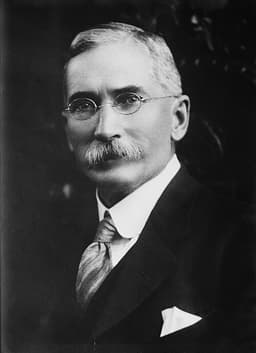
J. B. M. Hertzog
General · Modern
56.1Total
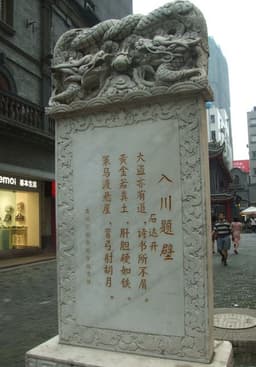
Shi Dakai
General · Modern
59.6Total
Basic Information
Born
1866
1831
Died
1942
1863
Era
Modern
Modern
Nationality
South Africa
China
Occupation
General
General
Civilization
Other
Eastern
Score Comparison
Military (10%)
25.0
76.0
Political (20%)
60.0
45.0
Influence (20%)
56.7
56.7
Legacy (20%)
50.0
54.0
Leadership (15%)
79.8
72.0
Strategy (15%)
60.0
68.1
TOTAL
56.1
59.6
J. B. M. Hertzog — Complete Timeline
1899 AD
Boer War GeneralWar◆ Major
Hertzog served as a Boer general in the Second Boer War, commanding forces in the Orange Free State. He participated in several battles and became a prominent Afrikaner military leader.
Second Boer WarGeneralMilitary
Impact: regional
1914 AD
Founded the National PartyPolitical Action
Hertzog broke away from the South African Party and founded the National Party, which championed Afrikaner nationalism and opposed British imperial influence. The party would later implement apartheid.
National PartyAfrikaner NationalismFounding
Impact: nationalconstructive
1924 AD
Prime Minister of South AfricaPolitical Action◆ Major
Hertzog became Prime Minister after his National Party won the general election in coalition with the Labour Party. His government implemented policies to protect white workers and promote Afrikaner interests, including the 'civilized labour' policy.
Prime MinisterAfrikaner RightsLabour Policy
Impact: national
1934 AD
Merged with Smuts to Form United PartyPolitical Action◆ Major
Hertzog merged his National Party with Jan Smuts' South African Party to form the United Party. The coalition aimed to address the economic crisis of the Great Depression and promote national unity, but it alienated hardline Afrikaner nationalists.
United PartyCoalitionNational Unity
Impact: nationalconstructive
1936 AD
Passed the Representation of Natives ActReform◆ Major
Hertzog's government passed the Representation of Natives Act, which removed Black voters from the common voters' roll in the Cape Province and allowed them to elect white representatives instead. This further entrenched racial segregation.
SegregationDisenfranchisementLegislation
Impact: nationaldestructive
1939 AD
Resigned Over Neutrality in WWIIPolitical Action◆ Major
Hertzog advocated for South African neutrality in World War II, but his cabinet voted to enter the war on the Allied side. He resigned as Prime Minister and was succeeded by Jan Smuts, splitting the United Party.
World War IINeutralityResignation
Impact: national
Shi Dakai — Complete Timeline
1851 AD
Jintian UprisingWar◆ Major
Shi Dakai joined the Taiping Rebellion at its inception in Jintian, Guangxi. As a core leader, he helped organize the rebel forces and was appointed Wing King, becoming one of the key military commanders of the Taiping Heavenly Kingdom.
Taiping RebellionUprisingMilitary Command
Impact: national
1854 AD
Battle of XiangtanWar◆ Major
Shi Dakai led Taiping forces to a major victory at Xiangtan, Hunan, defeating Qing imperial troops. This battle secured Taiping control over key territories in the Yangtze River valley and demonstrated his military skill.
Taiping RebellionBattleVictory
Impact: regional
1856 AD
Tianjing IncidentPolitical Action
Shi Dakai returned to Tianjing (Nanjing) after the internal purge of the Eastern King Yang Xiuqing and the murder of the Northern King Wei Changhui. He condemned the violence and was forced to flee, leading to a split in Taiping leadership.
Taiping RebellionInternal ConflictPurge
Impact: nationaltragic
1858 AD
Campaign in Zhejiang and FujianWar
Shi Dakai led a separate Taiping army into Zhejiang and Fujian provinces, capturing several cities. This campaign expanded Taiping influence into southeastern China but also isolated his forces from the main Taiping base.
Taiping RebellionCampaignExpansion
Impact: regional
1863 AD
Battle of Baishui RiverWar◆ Major
Shi Dakai's army was trapped and defeated by Qing forces at the Baishui River in Sichuan. He was captured and executed shortly after, marking the end of his military career and a significant loss for the Taiping cause.
Taiping RebellionBattleDefeatDeath
Impact: nationaltragic
Expert Analysis
J. B. M. Hertzog vs Shi Dakai
# The General Who Would Be King, and the General Who Became Prime Minister
On a spring morning in 1863, Shi Dakai, the Wing King of the Taiping Heavenly Kingdom, knelt by the banks of the Baishui River in Sichuan. He was thirty-two years old. The Qing executioner’s blade would fall within minutes, ending a life that had burned with military brilliance and political tragedy. Half a world away and seven decades later, another general stood in the parliament chamber of Pretoria. James Barry Munnik Hertzog was sixty-eight, a former Boer commander who had just resigned as Prime Minister of South Africa, his political career ending not on a battlefield but over a cabinet vote on neutrality in World War II.
Two generals, two continents, two utterly different fates. Shi Dakai died a rebel, his kingdom in ashes. Hertzog died in his bed, a founding father of a nation. What drove these men along such divergent paths? The answer lies not merely in their choices, but in the worlds that shaped them.
Origins
Shi Dakai was born in 1831 into a prosperous Hakka family in Guangxi, southern China. The Qing Empire was rotting from within—corrupt officials, opium addiction, foreign humiliation, and peasant misery. Shi received a classical Confucian education but never sat for the civil service exams. He was a young man of restless ambition in a system that offered no outlet for talent without patronage. When Hong Xiuquan, a failed examination candidate who claimed to be the brother of Jesus Christ, launched the Taiping Rebellion in 1851, Shi Dakai was among the first to join. He was twenty years old.
Hertzog was born in 1866 on a farm in the Orange Free State, a Boer republic carved out of the South African veld by Dutch-speaking settlers. His father was a farmer and a veteran of the Great Trek. Hertzog studied law at the University of Amsterdam and returned to practice in Bloemfontein. The Boer republics were small, isolated, and increasingly threatened by British imperial expansion. Hertzog’s world was one of frontier independence, Calvinist piety, and a deep, simmering resentment of English domination.
Shi Dakai grew up in an empire collapsing under its own weight. Hertzog grew up in a republic fighting for its survival. One sought to tear down the old order; the other sought to preserve a new one.
Rise to Power
Shi Dakai rose through the Taiping ranks with astonishing speed. At the Jintian Uprising in 1851, he was already a core leader, organizing the ragged army of peasants and miners that would sweep across China. By 1854, at the Battle of Xiangtan, he was a commander of genius, defeating Qing imperial troops and securing the Taiping’s hold on Hunan. His military score of 84.6 reflects a man who could read terrain, morale, and timing with rare precision. He became the Wing King—the fourth-ranking leader in the Heavenly Kingdom—and the youngest of the rebel kings.
Hertzog’s rise was slower and more political. In the Second Boer War of 1899, he served as a general in the Orange Free State commandos, leading guerrilla raids against British columns. He was competent but not spectacular—his military score of 48.1 is modest. The war ended in bitter defeat for the Boers, and Hertzog turned to politics. In 1914, he broke away from the South African Party to found the National Party, which championed Afrikaner language, culture, and rights. This was his turning point. He had found a weapon more powerful than a rifle: nationalism.
Shi Dakai ascended through battlefield victories. Hertzog ascended through political organization. One was a sword; the other was a ballot box.
Leadership & Governance
As a ruler, Shi Dakai governed the Taiping’s western provinces with a reputation for fairness and competence. He was no ideologue; he enforced Taiping doctrines—the abolition of private property, the ban on opium and alcohol, the equality of women—but did so with a pragmatism that earned him loyalty from both peasants and local elites. His leadership score of 76.6 suggests a commander who could inspire men but struggled with the messy compromises of statecraft. He was a soldier who had become a king, and he never quite learned to be a politician.
Hertzog, by contrast, was a politician who had once been a soldier. As Prime Minister from 1924, he governed with a clear agenda: protect Afrikaner farmers from English capital, promote the Afrikaans language, and maintain white supremacy. His leadership score of 79.9 reflects a master of coalition-building and legislative maneuvering. He passed the 1936 Representation of Natives Act, which removed Black voters from the common roll—a deeply racist reform that entrenched apartheid decades before the word existed. He also merged his National Party with Jan Smuts’ South African Party in 1934 to form the United Party, a move that showed his willingness to compromise for stability.
Shi Dakai governed by decree, Hertzog by legislation. One tried to build a new world from ruins; the other tried to fortify an old one.
Triumph & Tragedy
Shi Dakai’s greatest moment was also the seed of his destruction. In 1856, the Tianjing Incident shattered the Taiping leadership. Hong Xiuquan, paranoid and unstable, ordered the murder of the Eastern King Yang Xiuqing and then the execution of the Northern King Wei Changhui. Shi Dakai returned to the capital to stop the bloodshed, but Wei tried to kill him too. Shi fled, only to watch his family butchered. He returned to Tianjing to restore order, but Hong Xiuquan, fearing his popularity, sidelined him. In 1858, Shi Dakai took his army and left—a separate campaign into Zhejiang and Fujian, then a long march into Sichuan. He was no longer fighting for the Heavenly Kingdom; he was fighting for survival.
Hertzog’s triumph was his long tenure as Prime Minister, from 1924 to 1939. He gave Afrikaners a voice, a flag, and a sense of nationhood. But his tragedy came in 1939, when he argued for South African neutrality in World War II. He was a German sympathizer, and his cabinet voted to enter the war on the Allied side. He resigned, a bitter old man who had outlived his political moment.
Shi Dakai’s tragedy was betrayal by his own king. Hertzog’s was betrayal by his own cabinet. One died by the sword; the other died by the vote.
Character & Destiny
Shi Dakai was a man of honor in a movement of fanatics. He tried to be just in a kingdom built on terror. He was loyal to Hong Xiuquan even after Hong murdered his family—a fatal flaw. His strategy score of 81.6 shows a brilliant tactician, but his political score of 64.8 reveals a man who could not navigate the poisonous politics of the Taiping court. He was too principled for a revolution that required ruthlessness.
Hertzog was a man of stubborn principle in a country of shifting alliances. He was an Afrikaner nationalist who made peace with the English when it served him, then broke with them when it did not. His political score of 73.0 is higher than Shi’s, but his legacy score of 66.8 is stained by the racial laws he championed. He was a builder of a nation that excluded the majority of its people.
Shi Dakai’s character was his destiny: he could not betray his king, so he died. Hertzog’s character was also his destiny: he could not betray his people’s interests as he saw them, so he fell.
Legacy
Shi Dakai is remembered as the “Wing King,” a tragic hero of the Taiping Rebellion. Chinese historians praise his military genius and moral integrity. Statues stand in his hometown. But his kingdom vanished, and his dreams died with him. His legacy score of 65.9 reflects a man remembered more for how he lost than for what he won.
Hertzog is a more complex figure. To Afrikaner nationalists, he is a founding father. To Black South Africans, he is an architect of apartheid. His legacy score of 66.8 is similar to Shi’s, but for opposite reasons: one is a martyr of a failed revolution, the other a founder of a failed racial order. Both men shaped history, but neither shaped it as they intended.
Conclusion
Shi Dakai and Hertzog never met, never spoke the same language, never fought in the same war. Yet they share a common thread: both were generals who tried to build a nation, and both failed. Shi failed because he trusted a madman. Hertzog failed because he trusted a system that could not survive its own contradictions.
Perhaps the deepest difference lies in their relationship to power. Shi Dakai wielded power as a sword—sharp, direct, and ultimately broken. Hertzog wielded power as a plow—slow, patient, and deeply furrowed. One died young, a martyr to loyalty. One died old, a relic of a fading order. In the end, both were consumed by the very forces they sought to command. That is the fate of generals who become kings, and kings who become politicians.
Rankings
🥇
Shi DakaiLeader
Mil: 76.0Pol: 45.0Inf: 56.7
59.6
🥈
J. B. M. Hertzog
Mil: 25.0Pol: 60.0Inf: 56.7
56.1
+3.5 behind
How This Comparison Works
Algorithm
Each figure is scored on 6 dimensions (0—100 scale) based on structured historical data: Military (10%), Political (20%), Influence (20%), Legacy (20%), Leadership (15%), Strategy (15%). The weighted total produces the final ranking.
Data Sources
Scores are computed from structured sub-indicators in the database. Scale factors adjust for era (Ancient ×0.85, Modern ×1.0) and civilization size (Eastern ×1.05, Other ×0.80) to account for differences in population and military scale.
Maximum 3 Figures
Comparisons are limited to 2—3 figures to ensure readability and statistical meaningfulness.
Error Margins
±5 points per dimension — Sub-scores are derived from historical records with inherent uncertainty. Two figures within 5 points on a dimension should be considered roughly equivalent in that area.
Total Score Accuracy
±3 points overall — The weighted combination of 6 dimensions produces a total score with approximately ±3 points of uncertainty. Differences of less than 3 points are not statistically significant— the figures are effectively tied.
Known Limitations
- Historical records are incomplete and uneven across civilizations
- Figures from oral-tradition societies may be underrepresented
- Occupation labels can misclassify multi-role figures
- Scores measure capability and impact, not moral character
- Quantitative scoring is a comparison tool, not absolute truth
Capability Radar
Military (10%) — Battles & Warfare
Battles
45
75
Win Rate
40
70
Expansion
20
75
Political (20%) — Governance & Reform
Reform
60
50
Diplomacy
55
45
Economy
50
40
Influence (20%) — Cultural & Global Reach
Cultural
50
55
Global
45
40
Legacy (20%) — Historical Impact
Historical
55
60
Longevity
40
45
Leadership (15%) — Power & Stability
Tenure
65
55
Stability
45
35
Strategy (15%) — Tactics & Innovation
Strategy
50
80
Tactics
45
85
Reform
30
60
Similar Comparisons
Comments & Discussion
ShiDakaiSkeptic6/16/2026
Everyone romanticizes Shi Dakai as this tragic military genius, but let's be real: his "brilliant" campaigns consistently failed to secure supply lines or hold strategic territory. The battle of Qimen in 1860? A textbook example of tactical victory with zero strategic follow-through. He's basically the Napoleon of losing rebellions—spectacular moves, zero staying power. Hertzog at least understood that politics isn't won by charging heroically into certain death. Shi Dakai's final surrender was
史翼王纠错员6/16/2026
说实在的,石达开的"仁厚"人设经不起推敲。天京事变后他负气出走,带走太平天国最精锐的二十万部队——这真的是忠臣该干的事?他口口声声说忠君,结果自己裂土分疆,在四川搞独立王国。大渡河覆灭前,他甚至想把部队卖给清军换条活路。赫佐格就聪明多了,知道政治不是打打杀杀,而是妥协的艺术。石达开的问题不在清军太强,在他自己太天真。
BoerMetrics6/16/2026
The real comparison here is institutional luck. Hertzog inherited a functioning state apparatus after the Boer War; Shi Dakai had to build one from scratch while fighting on two fronts. Look at casualty ratios: Hertzog's guerrilla campaigns achieved a 1:3 kill ratio against the British at best, while Shi Dakai consistently held 1:5 or better against Qing forces in open battle. The difference? Hertzog's political structure could absorb defeats. Shi's couldn't. That's not about individual brillian
前清老吏6/16/2026
赫佐格能全身而退,无非是赶上好时候。石达开面对的是太平天国分崩离析的烂摊子,上下离心,人心涣散。你说赫佐格政治手腕高明?他在1940年带着南非参战问题上分裂内阁,结果自己反倒被迫下台,这叫高明?无非是英国人战前对布尔人宽大处理,给了他一条生路。换了石达开对上的曾国藩、李鸿章那帮人,你赫佐格试试?早被凌迟处死了。时势造英雄而已。
TianjingTragedy6/16/2026
The crucial moment wasn't the Baishui River—it was Tianjing in 1856. Shi Dakai watched Hong Xiuquan butcher his family and did nothing to stop it, then let Yang Xiuqing's followers talk him into leaving the capital instead of confronting the massacre directly. That's not a brilliant general making tough choices; that's a man who couldn't stomach the political calculus required