Loading...
Afonso de Albuquerque vs Shi Dakai
Afonso de Albuquerque leads by 20.0 pts · 2 figures compared
…
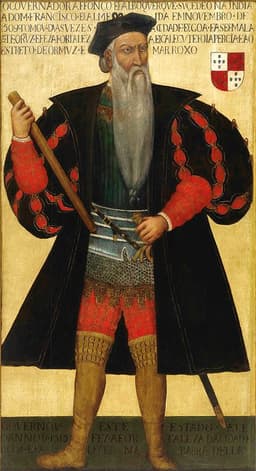
Afonso de Albuquerque
General · Medieval
79.6Total
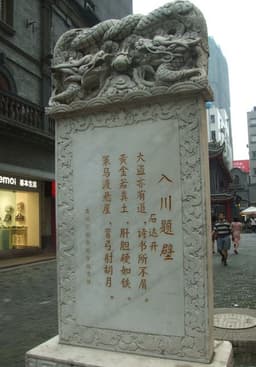
Shi Dakai
General · Modern
59.6Total
Basic Information
Born
1453
1831
Died
1515
1863
Era
Medieval
Modern
Nationality
Portugal
China
Occupation
General
General
Civilization
Western
Eastern
Score Comparison
Military (10%)
77.5
76.0
Political (20%)
88.0
45.0
Influence (20%)
80.0
56.7
Legacy (20%)
75.0
54.0
Leadership (15%)
78.0
72.0
Strategy (15%)
82.0
68.1
TOTAL
79.6
59.6
Afonso de Albuquerque — Complete Timeline
1503 AD
First voyage to IndiaWar◆ Major
Afonso de Albuquerque led a fleet to India, establishing the first Portuguese fort at Cochin. This voyage laid the foundation for Portuguese control of the Indian Ocean trade.
ExplorationColonialismIndia
Impact: global
1510 AD
Conquest of GoaWar◆ Major
Albuquerque captured Goa from the Sultan of Bijapur. He made Goa the capital of Portuguese India, a position it held for over 400 years.
ConquestColonialismIndia
Impact: regional
1511 AD
Conquest of MalaccaWar◆ Major
Albuquerque led a Portuguese fleet to capture the strategic port of Malacca. This gave Portugal control of the spice trade route between the Indian Ocean and the Pacific.
ConquestSpice TradeSoutheast Asia
Impact: global
1513 AD
Siege of AdenWar
Albuquerque attempted to capture Aden in Yemen but failed. This failure prevented Portugal from controlling the entrance to the Red Sea and limited their influence in the region.
SiegeFailureRed Sea
Impact: regional
1515 AD
Death at seaOther◆ Major
Afonso de Albuquerque died at sea off the coast of Goa, possibly from illness or poison. His death left the Portuguese Empire in the Indian Ocean without its most capable leader.
DeathLeadershipEmpire
Impact: regionaltragic
Shi Dakai — Complete Timeline
1851 AD
Jintian UprisingWar◆ Major
Shi Dakai joined the Taiping Rebellion at its inception in Jintian, Guangxi. As a core leader, he helped organize the rebel forces and was appointed Wing King, becoming one of the key military commanders of the Taiping Heavenly Kingdom.
Taiping RebellionUprisingMilitary Command
Impact: national
1854 AD
Battle of XiangtanWar◆ Major
Shi Dakai led Taiping forces to a major victory at Xiangtan, Hunan, defeating Qing imperial troops. This battle secured Taiping control over key territories in the Yangtze River valley and demonstrated his military skill.
Taiping RebellionBattleVictory
Impact: regional
1856 AD
Tianjing IncidentPolitical Action
Shi Dakai returned to Tianjing (Nanjing) after the internal purge of the Eastern King Yang Xiuqing and the murder of the Northern King Wei Changhui. He condemned the violence and was forced to flee, leading to a split in Taiping leadership.
Taiping RebellionInternal ConflictPurge
Impact: nationaltragic
1858 AD
Campaign in Zhejiang and FujianWar
Shi Dakai led a separate Taiping army into Zhejiang and Fujian provinces, capturing several cities. This campaign expanded Taiping influence into southeastern China but also isolated his forces from the main Taiping base.
Taiping RebellionCampaignExpansion
Impact: regional
1863 AD
Battle of Baishui RiverWar◆ Major
Shi Dakai's army was trapped and defeated by Qing forces at the Baishui River in Sichuan. He was captured and executed shortly after, marking the end of his military career and a significant loss for the Taiping cause.
Taiping RebellionBattleDefeatDeath
Impact: nationaltragic
Expert Analysis
Afonso de Albuquerque vs Shi Dakai
# The Admiral and the Wing King: Two Paths to Empire and Ruin
On a sweltering June morning in 1511, Afonso de Albuquerque stood on the deck of his flagship, the *Flor de la Mar*, and watched the smoke rise from the burning city of Malacca. Half a world away, in the spring of 1863, a young Chinese general named Shi Dakai knelt at the edge of the Baishui River in Sichuan, his army annihilated, his fate sealed. Both men were masters of war, architects of grand dreams, and builders of empires. One died at sea, mourned as the father of an oceanic dominion; the other was executed by slow slicing, his rebellion crushed into dust. What separates the conqueror from the martyr? The answer lies not in their brilliance—for both were brilliant—but in the worlds they inhabited and the choices those worlds demanded.
Origins
Albuquerque was born in 1453, the year Constantinople fell, a time when Portugal was clawing its way out of medieval obscurity. He came from the minor nobility, a son of the Algarve, raised in the court of Afonso V, where the air smelled of salt and ambition. His Portugal was a nation obsessed with a single mission: to outflank Islam, reach the spices of the East, and plant the cross where the crescent had flown for centuries. He learned war in the crucible of North Africa, where Portuguese forts bled against Moorish walls. Every instinct he acquired was for conquest—total, merciless, and permanent.
Shi Dakai was born in 1831, in the twilight of the Qing Dynasty, when China was groaning under the weight of corruption, foreign opium, and peasant starvation. He came from a Hakka family in Guangxi, a region of restless poverty. His education was classical Confucian, but his heart burned with the millenarian fire of Hong Xiuquan, the self-proclaimed younger brother of Jesus Christ. The Taiping Heavenly Kingdom promised to sweep away the Manchu "devils" and build a new age of equality. Shi Dakai joined the Jintian Uprising in 1851 as a teenager, not as a professional soldier but as a believer. His war was not for empire but for salvation—and that difference would prove fatal.
Rise to Power
Albuquerque rose through the ranks of Portuguese royal service, his path cleared by patronage and proven ruthlessness. In 1503, he led his first fleet to India, establishing a fort at Cochin. This was no grand battle but a careful insertion: a toehold on a vast continent. He learned the politics of the Malabar Coast, the jealousies of Hindu rajas and Muslim merchants, and he understood that in Asia, the Portuguese could never conquer land—only sea. His rise culminated in 1509, when King Manuel I appointed him governor of Portuguese India, giving him the mandate to build an empire of waves.
Shi Dakai rose in the crucible of rebellion. By 1854, at the Battle of Xiangtan, he had proven himself the Taiping's most brilliant field commander, shattering Qing armies with a blend of speed, deception, and ferocity. But the Taiping movement was not a monarchy; it was a theocracy, riven by jealousy and prophecy. The Eastern King, Yang Xiuqing, claimed to speak in the voice of God, and the Heavenly King, Hong Xiuquan, could not tolerate a rival. In 1856, the Tianjing Incident erupted: Yang Xiuqing was murdered, and in the purge that followed, Shi Dakai's own family was butchered. He fled the capital, not as a rebel against the rebellion, but as a man who had seen the face of his own god's shadow.
Leadership & Governance
Albuquerque ruled from the sea. He captured Goa in 1510, not just as a military prize but as a capital: he married Portuguese soldiers to local women, established a mint, built churches, and enforced a code of law. He understood that empire required more than cannon—it required administration. His conquest of Malacca in 1511 was a masterpiece of naval logistics: he seized the strait that controlled the spice trade, then befriended the local Malay rulers while crushing the Muslim merchant class. He wrote to his king: "If you wish to be master of the East, you must make yourself master of the sea." He was a political realist, not a crusader. When he failed to capture Aden in 1513, he knew the loss was strategic, not spiritual: the Red Sea remained open to Ottoman ships.
Shi Dakai governed from the saddle. His campaigns in Zhejiang and Fujian from 1858 were brilliant—he captured cities, levied taxes, and won the loyalty of peasants who saw the Taiping as liberators. But he could not build a state. The Taiping Heavenly Kingdom was a machine of war, not a government. Its ideology forbade private property, family, and Confucian hierarchy, but it offered no stable alternative. Shi Dakai tried to rule with moderation—he protected civilians, punished looting, and even studied classical texts—but he was a general in a movement that had no room for compromise. Every victory was temporary, every city a camp.
Triumph & Tragedy
Albuquerque's greatest moment was the conquest of Malacca. It was audacious—a fleet of 18 ships against a fortified city of 100,000—but he won by splitting the enemy, bribing the merchants, and striking with precision. He died in 1515, at sea off Goa, perhaps poisoned, perhaps of illness. His last letter to the king begged for his son to be recognized. He was buried in Goa, and his empire outlived him by centuries.
Shi Dakai's greatest moment was the Battle of Xiangtan, where he routed a Qing army three times his size. But his tragedy was the Tianjing Incident: the moment he realized that his own side was as dangerous as the enemy. He spent the rest of his life in flight, leading a separate army across southern China, trying to find a safe haven. In 1863, at the Baishui River, he was trapped by Qing forces. He surrendered, hoping to spare his men, but the Qing executed him by slow slicing. His last recorded words were a poem: "My only regret is that I could not finish the work of heaven."
Character & Destiny
Albuquerque was a man of iron will and cold calculation. He executed prisoners, burned ships, and crushed rebellions without hesitation. But he also wept when his son was born, and he wrote tender letters to his king. His character matched his era: the Age of Exploration demanded men who could be both saint and butcher. He was ruthless because the world was ruthless, and he succeeded because he understood that empire is a structure of power, not a crusade.
Shi Dakai was a man of principle and passion. He believed in the Taiping vision, but he also believed in mercy, loyalty, and honor. In a movement that devoured its own, he tried to be righteous—and that righteousness doomed him. He could not betray his king, even after the king betrayed him. He could not abandon his followers, even when escape was possible. His character was forged in the Confucian ideal of the loyal minister, but his destiny was shaped by the madness of the Taiping. He was a good man in a bad revolution, and the revolution ate him.
Legacy
Albuquerque left the Portuguese Empire in the Indian Ocean: a network of forts, treaties, and trade routes that lasted until the 20th century. He is remembered as the "Caesar of the East," a founder, a statesman. His statue stands in Lisbon, and his name echoes in the streets of Goa.
Shi Dakai left a memory of tragedy. In China, he is remembered as a brilliant general and a tragic hero, a man who fought for a lost cause with honor. The Taiping Rebellion was crushed, its 20 million dead a scar on the Qing Dynasty. But in the Chinese imagination, Shi Dakai remains a figure of romance—the Wing King who could not fly free.
Conclusion
The difference between Albuquerque and Shi Dakai is not in their skill—both were masters of war—but in the nature of their causes. Albuquerque built an empire for a king who understood the world as a chessboard of ports and profits. Shi Dakai fought for a kingdom of heaven that could not exist on earth. One man's ambition matched his age; the other's faith exceeded it. In the end, the admiral died in his bed, while the rebel died on the execution ground. But both men left behind the same question: what is a life worth, if not for a dream?
Rankings
🥇
Afonso de AlbuquerqueLeader
Mil: 77.5Pol: 88.0Inf: 80.0
79.6
🥈
Shi Dakai
Mil: 76.0Pol: 45.0Inf: 56.7
59.6
+20.0 behind
How This Comparison Works
Algorithm
Each figure is scored on 6 dimensions (0—100 scale) based on structured historical data: Military (10%), Political (20%), Influence (20%), Legacy (20%), Leadership (15%), Strategy (15%). The weighted total produces the final ranking.
Data Sources
Scores are computed from structured sub-indicators in the database. Scale factors adjust for era (Ancient ×0.85, Modern ×1.0) and civilization size (Eastern ×1.05, Other ×0.80) to account for differences in population and military scale.
Maximum 3 Figures
Comparisons are limited to 2—3 figures to ensure readability and statistical meaningfulness.
Error Margins
±5 points per dimension — Sub-scores are derived from historical records with inherent uncertainty. Two figures within 5 points on a dimension should be considered roughly equivalent in that area.
Total Score Accuracy
±3 points overall — The weighted combination of 6 dimensions produces a total score with approximately ±3 points of uncertainty. Differences of less than 3 points are not statistically significant— the figures are effectively tied.
Known Limitations
- Historical records are incomplete and uneven across civilizations
- Figures from oral-tradition societies may be underrepresented
- Occupation labels can misclassify multi-role figures
- Scores measure capability and impact, not moral character
- Quantitative scoring is a comparison tool, not absolute truth
Capability Radar
Military (10%) — Battles & Warfare
Battles
85
75
Win Rate
80
70
Expansion
95
75
Political (20%) — Governance & Reform
Reform
80
50
Diplomacy
85
45
Economy
80
40
Influence (20%) — Cultural & Global Reach
Cultural
70
55
Global
85
40
Legacy (20%) — Historical Impact
Historical
85
60
Longevity
80
45
Leadership (15%) — Power & Stability
Tenure
70
55
Stability
65
35
Strategy (15%) — Tactics & Innovation
Strategy
95
80
Tactics
90
85
Reform
75
60
Similar Comparisons
Comments & Discussion
铁血舵手6/16/2026
你说对了制海权,但漏了最关键的一点:阿尔布开克在非洲沿岸屠杀穆斯林俘虏,在印度强迫寡妇殉葬,在马来亚把整座城市烧成白地。他不是什么文明传播者,而是用葡萄牙火药强行改写亚洲贸易规则的军阀。石达开至少没在占领区搞宗教灭绝,他的太平天国主张"有田同耕",虽然空想,但比那个靠恐怖统治维系帝国的葡萄牙人更有人性温度。两个人都是暴君,只是石达开的罪孽少一页纸。
竹林论剑6/16/2026
从文化视角看,这两个人代表了完全不同的失败美学。阿尔布开克死在印度洋的甲板上,灵柩被运回里斯本,他的帝国延续了四百年。石达开被凌迟处死,成都万人空巷看他的刑场,太平天国三年后灰飞烟灭。西方史学家喜欢把阿尔布开克塑造成"海洋之父",但东方的失败者往往更被记住。石达开的《答曾国藩诗》现在还是中国学生的必读篇目,阿尔布开克的信件只待在档案馆里发霉。谁的遗产更重?沉默就是答案。
南洋旧吏6/16/2026
我来给这个对比泼一盆冷水。说阿尔布开克是"帝国建筑师",石达开是"失败者",完全忽略了一个关键变量:时代。阿尔布开克面对的是分崩离析的马来苏丹国和印度教城邦,他的敌人没有统一的指挥系统。石达开面对的是满清最精锐的八旗和湘军,曾国藩和李鸿
RepublicReader6/16/2026
The real tragedy of this comparison is that Albuquerque understood logistics and Shi Dakai didn't. The Portuguese admiral created a network of fortified bases from Hormuz to Malacca, ensuring his empire could resupply and communicate. Shi Dakai's legendary "Blood-Stained River" stand at Dadu was epic theater, but it was the culmination of years of strategic drift. He let his Taiping armies wander through China like a migratory herd, burning through provinces without securing a single sustainable
QuantHistorian6/16/2026
Data point that demolishes the "both brilliant" narrative: Albuquerque conquered Malacca with roughly 1,200 Portuguese and 300 Malay allies against a city of 100,000. That's a kill ratio of 83:1 in his favor. Shi Dakai at his peak commanded over 100,000 troops and still got his army annihilated at Dadu against a Qing force that was, by most estimates, numerically inferior. The numbers don't lie. Albuquerque achieved more with less because he understood that empire requires infrastructure, not ju