Loading...
Francisco Morazan vs Shi Dakai
Shi Dakai leads by 1.6 pts · 2 figures compared
…
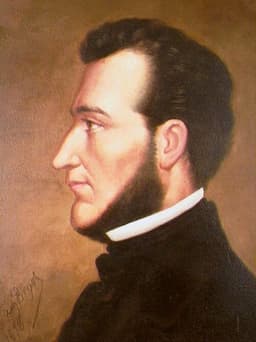
Francisco Morazan
General · Modern
58.0Total
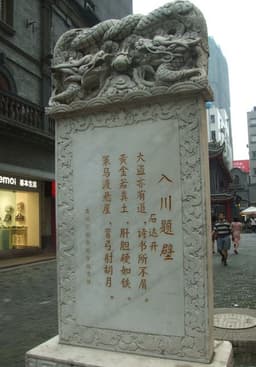
Shi Dakai
General · Modern
59.6Total
Basic Information
Born
1792
1831
Died
1842
1863
Era
Modern
Modern
Nationality
Honduras
China
Occupation
General
General
Civilization
Western
Eastern
Score Comparison
Military (10%)
52.5
76.0
Political (20%)
60.0
45.0
Influence (20%)
62.0
56.7
Legacy (20%)
50.0
54.0
Leadership (15%)
68.0
72.0
Strategy (15%)
55.0
68.1
TOTAL
58.0
59.6
Francisco Morazan — Complete Timeline
1824 AD
Abolition of slavery in Central AmericaReform◆ Major
As a key leader in the liberal movement, Moraz
AbolitionSlaveryLiberal Reform
Impact: regionalprogressive
1827 AD
Battle of La TrinidadWar◆ Major
Morazán led a liberal army to victory against conservative forces at La Trinidad, Honduras. This battle was a key turning point in the Central American civil war, allowing Morazán to consolidate power and eventually become president of the federation.
BattleLiberal VictoryCivil War
Impact: regional
1830 AD
Presidency of the Federal Republic of Central AmericaPolitical Action
Morazán was elected president of the Federal Republic of Central America, a union of Guatemala, El Salvador, Honduras, Nicaragua, and Costa Rica. He pursued liberal reforms including separation of church and state, free trade, and land reform, facing opposition from conservatives.
Federal RepublicLiberal ReformsCentral America
Impact: regionalconstructive
1842 AD
Execution by firing squadPolitical Action
After a failed attempt to restore the Federal Republic, Moraz
ExecutionEnd of FederationLiberal Defeat
Impact: regionaltragic
Shi Dakai — Complete Timeline
1851 AD
Jintian UprisingWar◆ Major
Shi Dakai joined the Taiping Rebellion at its inception in Jintian, Guangxi. As a core leader, he helped organize the rebel forces and was appointed Wing King, becoming one of the key military commanders of the Taiping Heavenly Kingdom.
Taiping RebellionUprisingMilitary Command
Impact: national
1854 AD
Battle of XiangtanWar◆ Major
Shi Dakai led Taiping forces to a major victory at Xiangtan, Hunan, defeating Qing imperial troops. This battle secured Taiping control over key territories in the Yangtze River valley and demonstrated his military skill.
Taiping RebellionBattleVictory
Impact: regional
1856 AD
Tianjing IncidentPolitical Action
Shi Dakai returned to Tianjing (Nanjing) after the internal purge of the Eastern King Yang Xiuqing and the murder of the Northern King Wei Changhui. He condemned the violence and was forced to flee, leading to a split in Taiping leadership.
Taiping RebellionInternal ConflictPurge
Impact: nationaltragic
1858 AD
Campaign in Zhejiang and FujianWar
Shi Dakai led a separate Taiping army into Zhejiang and Fujian provinces, capturing several cities. This campaign expanded Taiping influence into southeastern China but also isolated his forces from the main Taiping base.
Taiping RebellionCampaignExpansion
Impact: regional
1863 AD
Battle of Baishui RiverWar◆ Major
Shi Dakai's army was trapped and defeated by Qing forces at the Baishui River in Sichuan. He was captured and executed shortly after, marking the end of his military career and a significant loss for the Taiping cause.
Taiping RebellionBattleDefeatDeath
Impact: nationaltragic
Expert Analysis
Francisco Morazan vs Shi Dakai
### The Wing King and the Reformer: A Tale of Two Lost Republics
On a battlefield in Sichuan, in the spring of 1863, a brilliant young general watched his army bleed into the shallows of the Baishui River. He had led them on a six-year odyssey across China, only to be trapped and destroyed. Two decades earlier and half a world away, another leader, a man who had once commanded a nation, stood before a firing squad in Costa Rica. He had gambled everything on a return to power and lost. Shi Dakai and Francisco Morazán never met, but their lives echo with a shared tragedy: both were architects of visionary republics that crumbled under the weight of their own contradictions, leaving behind only the memory of what might have been.
### Origins
Shi Dakai was born in 1831 into a wealthy Hakka family in Guangxi, southern China. The Qing Dynasty was in its death throes, crippled by corruption, foreign humiliation in the Opium Wars, and the grinding poverty of a swelling population. Shi was a gifted scholar and a natural fighter, a combination that made him rare. He was drawn to the Taiping Heavenly Kingdom, a bizarre and apocalyptic Christian sect led by Hong Xiuquan, a failed imperial exam candidate who claimed to be the younger brother of Jesus Christ. The Taiping offered a radical vision: the overthrow of the Manchu Qing, the abolition of private property, and a new social order based on communal living and strict moral codes. For a young man of ambition and idealism, it was an irresistible revolution.
Francisco Morazán was born in 1792 in Tegucigalpa, then part of the Spanish Captaincy General of Guatemala. He came of age during the Napoleonic Wars, which shattered the Spanish Empire and opened the door for independence. Unlike Shi, Morazán was a product of the Enlightenment. He absorbed the ideas of Rousseau and the French Revolution: liberty, equality, and secular governance. Central America was a patchwork of feudal estates, a rigid caste system, and a powerful Catholic Church. Morazán saw his mission not as founding a new religion, but as building a modern, liberal state—one that would abolish slavery, separate church and state, and unite the fractious provinces into a single federal republic.
### Rise to Power
Shi Dakai’s rise was meteoric. In 1851, he joined the Jintian Uprising, the spark that ignited the Taiping Rebellion. He was barely twenty years old, but his military genius was immediately apparent. He was a master of maneuver, of speed, and of psychological warfare. While other Taiping kings were consumed by messianic fervor, Shi was a cool-headed tactician. His victory at the Battle of Xiangtan in 1854, where he routed a much larger Qing force, made him the most feared commander in the Taiping army. He was not just a general; he was a symbol of the movement’s invincibility.
Morazán’s path was different. He did not rise through a single cataclysmic rebellion. Instead, he became the champion of the Liberal Party in a grinding civil war against the Conservatives, who wanted to preserve the old colonial order. His turning point came in 1827 at the Battle of La Trinidad in Honduras. Leading a ragtag liberal army, he defeated the conservative forces and seized control of the federal government. He was not a revolutionary who built a new army; he was a politician who won a war. In 1830, he was elected President of the Federal Republic of Central America, a union that stretched from Guatemala to Costa Rica.
### Leadership & Governance
Here, the two men diverged most sharply. Shi Dakai was a military commander first and last. He never sought supreme political power. After the Tianjing Incident of 1856—a bloody internal purge where Hong Xiuquan ordered the murder of the Eastern King Yang Xiuqing and then killed the Northern King for his brutality—Shi was horrified. He returned to the capital, Tianjing (Nanjing), to restore order, but he was mistrusted by the paranoid Hong. Realizing he could not reform the Taiping court from within, Shi did something extraordinary: he left. In 1857, he took a massive army and struck out on his own, a wandering kingdom in search of a new base. His governance was the governance of the camp, the march, and the siege.
Morazán, by contrast, was a political reformer. He used the presidency to enact a sweeping liberal agenda. He abolished slavery in 1824, ended church tithes, established public schools, and promoted free trade. He was trying to build a nation from scratch, to turn a colonial backwater into a modern republic. But his reforms were deeply unpopular. The Conservatives, backed by the Church and the rural peasantry, saw him as a godless tyrant. The provinces, jealous of their autonomy, resented federal authority. Morazán’s military genius was real—he was a brave and charismatic leader on the battlefield—but his political strategy was brittle. He relied on force to impose his vision, and force alone could not hold a nation together.
### Triumph & Tragedy
Shi Dakai’s greatest triumph was his long campaign through Zhejiang and Fujian in 1858, a masterful display of mobile warfare that kept the Qing off balance for years. His greatest tragedy was the Battle of Baishui River in 1863. Trapped by a Qing army under the command of a former Taiping defector, Shi’s army was annihilated. He was captured and executed by slow slicing, a gruesome death reserved for the worst enemies of the state. His last act was to ask for a drink of water, which he took calmly before the executioner began his work. He died at thirty-two, a martyr to a cause that had already betrayed him.
Morazán’s triumph was his presidency itself—a decade of liberal rule that reshaped Central America. His tragedy was the collapse of the Federal Republic in 1839, torn apart by civil war. He went into exile in Peru, but he could not let go. In 1842, he returned to Costa Rica at the head of a small force, hoping to rekindle the union. He was quickly captured. On September 15, 1842, the anniversary of Central American independence, he was executed by firing squad. His last words, reportedly, were: “I die with the satisfaction of having served my country.”
### Character & Destiny
Shi Dakai was a man of principle in a movement of fanatics. He was repulsed by the violence of the Tianjing Incident, but he could not escape the logic of the rebellion. His decision to leave the Taiping capital was both his greatest strength and his fatal weakness. It preserved his honor, but it doomed his cause. He was a brilliant general who lacked a political home. Morazán, by contrast, was a man of ambition and vision. He believed in the republic with a religious fervor, but he could not accept that the people he wanted to liberate did not share his dream. He was a democrat who could not tolerate democratic defeat.
### Legacy
Shi Dakai is remembered in China as a tragic hero, the “Wing King” whose military skill was wasted by a corrupt and deluded leadership. He is a figure of romance and sorrow, a symbol of what the Taiping Rebellion might have been. Morazán is the national hero of Honduras, a name that adorns streets and schools. But his legacy is contested. For liberals, he is the father of Central American unity; for conservatives, he is the tyrant who destroyed the old order. Both men left behind a haunting question: can a visionary leader build a lasting state without a foundation of shared belief?
### Conclusion
In the end, both Shi Dakai and Francisco Morazán were men out of time. Shi was a rational military genius in a movement that was fundamentally irrational; Morazán was a secular liberal in a society that was still deeply Catholic and feudal. Their republics—the Taiping Heavenly Kingdom and the Federal Republic of Central America—were both stillborn, crushed by internal division and external enemies. But their stories endure because they embody a universal human tension: the desire to build a perfect world, and the tragic inability to make it last. The Baishui River and the San José firing squad are not just endings; they are monuments to the terrible cost of idealism.
Rankings
🥇
Shi DakaiLeader
Mil: 76.0Pol: 45.0Inf: 56.7
59.6
🥈
Francisco Morazan
Mil: 52.5Pol: 60.0Inf: 62.0
58.0
+1.6 behind
How This Comparison Works
Algorithm
Each figure is scored on 6 dimensions (0—100 scale) based on structured historical data: Military (10%), Political (20%), Influence (20%), Legacy (20%), Leadership (15%), Strategy (15%). The weighted total produces the final ranking.
Data Sources
Scores are computed from structured sub-indicators in the database. Scale factors adjust for era (Ancient ×0.85, Modern ×1.0) and civilization size (Eastern ×1.05, Other ×0.80) to account for differences in population and military scale.
Maximum 3 Figures
Comparisons are limited to 2—3 figures to ensure readability and statistical meaningfulness.
Error Margins
±5 points per dimension — Sub-scores are derived from historical records with inherent uncertainty. Two figures within 5 points on a dimension should be considered roughly equivalent in that area.
Total Score Accuracy
±3 points overall — The weighted combination of 6 dimensions produces a total score with approximately ±3 points of uncertainty. Differences of less than 3 points are not statistically significant— the figures are effectively tied.
Known Limitations
- Historical records are incomplete and uneven across civilizations
- Figures from oral-tradition societies may be underrepresented
- Occupation labels can misclassify multi-role figures
- Scores measure capability and impact, not moral character
- Quantitative scoring is a comparison tool, not absolute truth
Capability Radar
Military (10%) — Battles & Warfare
Battles
55
75
Win Rate
60
70
Expansion
40
75
Political (20%) — Governance & Reform
Reform
70
50
Diplomacy
45
45
Economy
50
40
Influence (20%) — Cultural & Global Reach
Cultural
45
55
Global
35
40
Legacy (20%) — Historical Impact
Historical
50
60
Longevity
40
45
Leadership (15%) — Power & Stability
Tenure
55
55
Stability
30
35
Strategy (15%) — Tactics & Innovation
Strategy
55
80
Tactics
50
85
Reform
45
60
Similar Comparisons
Comments & Discussion
铩羽翼王6/16/2026
作为一个数据怀疑论者,我得指出这个比较的核心漏洞。石达开和摩拉桑的军事规模完全不在一个量级——天平天国巅峰期拥兵百万,而中美洲联邦常备军从未超过一万人。把两者类比就像比较台风和微风。更关键的是,石达开的天国政权本质上是神权暴政,靠恐怖统治维持的伪共和国,与其说他是共和主义先驱,不如说他是个披着基督教外衣的军阀。
ShootingStarDandy6/16/2026
As a military historian, I see Morazán as the superior commander. His use of combined arms—cavalry charges coordinating with infantry volleys—at the Battle of La Trinidad in 1827 was textbook tactical genius for its time. Shi Dakai's genius was strategic, evident in his brilliant but ultimately futile river-crossing maneuvers at the Battle of Baishui. Morazán fought for a unified liberal republic; Shi fought for a theocracy that banned opium and concubinage. Context matters: one modernized Centr
红色枭雄6/16/2026
作为古典学派的军事观察者,我必须强调石达开真正悲剧在于他输给了时间而非敌人。他六年的西南转战让清军精锐疲于奔命,最终被大渡河洪水而非敌军战术困死。摩拉桑则输给了人性——他太相信宪政改革能弥合中美洲的根深蒂固的地区分裂。结论:石达开是战术的天才、战略的囚徒;摩拉桑是战略的智者、战术的赌徒。
CrimsonPhoenixScribe6/16/2026
My take as a history buff: both men were reformers ahead of their time, but their fatal flaws are often overlooked. Morazán's myopia was in trusting Central American elites who never shared his liberal vision, leading to his exile in 1839. Shi's hubris was his loyalty to Hong Xiuquan's apocalyptic theology—he never fully broke from the Taiping's destructive core, even after the regime collapsed. Their legacies are inverted: Morazán's face is on Honduran banknotes; Shi's is remembered only in Chi