Loading...
Ramon Castilla vs Suchinda Kraprayoon
Ramon Castilla leads by 22.6 pts · 2 figures compared
…
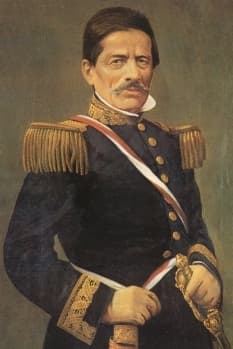
Ramon Castilla
General · Modern
59.7Total
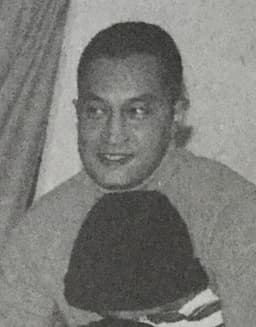
Suchinda Kraprayoon
General · Modern
37.1Total
Basic Information
Born
1797
1933
Died
1867
—
Era
Modern
Modern
Nationality
Peru
Thailand
Occupation
General
General
Civilization
Western
Eastern
Score Comparison
Military (10%)
40.0
10.2
Political (20%)
72.0
27.9
Influence (20%)
56.7
47.1
Legacy (20%)
52.0
37.5
Leadership (15%)
78.0
45.0
Strategy (15%)
60.0
39.6
TOTAL
59.7
37.1
Ramon Castilla — Complete Timeline
1824 AD
Battle of AyacuchoWar
Castilla fought as a junior officer in the decisive Battle of Ayacucho, which ended Spanish rule in Peru. This victory secured Peruvian independence and marked the end of the Spanish Empire in South America, shaping Castilla's nationalist views.
Peruvian War of IndependenceBattleLiberation
Impact: regional
1845 AD
First Presidency of PeruPolitical Action◆ Major
Castilla was elected President of Peru in 1845, serving until 1851. His first term focused on economic development, including the guano boom, and infrastructure projects such as railroads and ports, modernizing the Peruvian state.
PresidencyEconomic DevelopmentGuano
Impact: nationalconstructive
1854 AD
Abolition of Slavery in PeruReform◆ Major
During his second presidency, Castilla issued a decree abolishing slavery in Peru on December 3, 1854. This reform freed approximately 25,000 slaves and was part of a broader liberal agenda, though it faced opposition from slave-owning elites.
AbolitionSlaveryHuman Rights
Impact: nationalprogressive
Abolition of Indigenous TributeReform◆ Major
Castilla also abolished the indigenous tribute tax in 1854, which had been a burden on native communities since colonial times. This measure aimed to integrate indigenous peoples into the Peruvian state as equal citizens, though its implementation was uneven.
Indigenous RightsTax ReformCitizenship
Impact: nationalprogressive
1855 AD
Second Presidency and Guano BoomPolitical Action◆ Major
Castilla served a second term from 1855 to 1862, during the peak of the guano export boom. He used guano revenues to fund public works, pay off foreign debt, and modernize the military, but also faced criticism for corruption and over-reliance on a single resource.
PresidencyGuanoModernization
Impact: nationalconstructive
1860 AD
Constitutional Reform of 1860Reform◆ Major
Castilla oversaw the adoption of a new constitution in 1860, which established a centralized republic with a strong executive. The constitution remained in effect until 1920 and shaped Peru's political structure, though it limited regional autonomy.
ConstitutionPolitical ReformCentralization
Impact: nationalconstructive
Suchinda Kraprayoon — Complete Timeline
1991 AD
Leadership of the 1991 Thai Coup d'ÉtatPolitical Action◆ Major
General Suchinda Kraprayoon led the National Peace Keeping Council in a bloodless coup that overthrew Prime Minister Chatichai Choonhavan. The coup was justified by claims of corruption and political instability, establishing a military junta.
CoupMilitary JuntaPower Seizure
Impact: nationaldestructive
1992 AD
Appointment as Prime MinisterPolitical Action◆ Major
After a general election, Suchinda was appointed Prime Minister despite not being an elected MP. His appointment sparked widespread protests, as it was seen as a continuation of military rule and a violation of democratic principles.
Prime MinisterControversyMilitary Rule
Impact: nationaldestructive
Black May 1992 Uprising and ResignationPolitical Action
Massive pro-democracy protests in Bangkok, led by Chamlong Srimuang, demanded Suchinda's resignation. The military crackdown resulted in dozens of deaths. King Bhumibol intervened, leading to Suchinda's resignation and the restoration of civilian government.
UprisingBlack MayResignation
Impact: nationaltragic
Expert Analysis
Ramon Castilla vs Suchinda Kraprayoon
# The General and the Reformer: Two Paths of Military Power
On a sweltering December morning in 1854, Ramon Castilla stood before a crowd in Lima and signed the decree that would forever change Peru. Slavery, that centuries-old wound, was abolished with a stroke of his pen. Less than 140 years later and half a world away, General Suchinda Kraprayoon sat in a Bangkok command center, orchestrating a bloodless coup that he believed would save Thailand from chaos. Both men were generals. Both seized power in times of national uncertainty. But their stories diverged so sharply that they seem to belong to different species of history—one a builder of nations, the other a cautionary tale of ambition without vision.
Origins
Ramon Castilla was born in 1797 in Tarapacá, then a remote corner of the Spanish Viceroyalty of Peru. His father was a Spanish miner, his mother a Creole from a modest family. The young Castilla grew up in a world where the old colonial order was crumbling, and the air was thick with the scent of rebellion. He joined the Spanish army as a teenager, but by 1821 he had switched sides to fight for independence—a decision that would define his life. At the Battle of Ayacucho in 1824, he fought as a junior officer in the decisive clash that ended Spanish rule. That battle was his crucible: he saw what war could destroy, and what freedom could build.
Suchinda Kraprayoon was born in 1933 in Bangkok, into a Thailand that had never been colonized but was deeply uncertain of its place in a modernizing world. His father was a military officer, and Suchinda followed the family trade, attending the Chulachomklao Royal Military Academy. He rose through the ranks during the Cold War, when the Thai military saw itself as the guardian of the nation against communism and chaos. For Suchinda, order was not a choice—it was the only path.
Rise to Power
Castilla’s rise was gradual, built on military service and political acumen. After Ayacucho, he served in various administrative posts, learning the mechanics of governance. He became a minister under President Agustín Gamarra, then went into exile when his patron fell. But he returned, and in 1845, at the age of 48, he was elected president. His path was democratic, however imperfect: he won elections, served his term, and handed power to a successor. When he ran again in 1854, he did so amid a civil war, but he still sought legitimacy through the ballot.
Suchinda’s rise was faster and more violent. In February 1991, he led the National Peace Keeping Council in a bloodless coup that overthrew Prime Minister Chatichai Choonhavan, whom the military accused of corruption. Suchinda then handpicked a civilian prime minister, Anand Panyarachun, but the military remained the real power. In March 1992, after a general election marred by allegations of manipulation, Suchinda accepted the position of prime minister himself—despite not being an elected member of parliament. He had skipped the slow climb and jumped straight to the peak.
Leadership & Governance
Castilla’s leadership was defined by reform and vision. During his first presidency from 1845 to 1851, he focused on economic development, using the newly discovered guano deposits—bird dung that was then a miracle fertilizer—to fund public works, pay off foreign debt, and modernize the military. But his most enduring achievements came in his second term, from 1855 to 1862. He abolished slavery in 1854, freeing thousands of African-descended Peruvians. He abolished the indigenous tribute tax, which had crushed native communities since colonial times. And in 1860, he oversaw the adoption of a new constitution that centralized the republic while strengthening executive power. These were not gestures; they were structural changes that reshaped Peru.
Suchinda’s governance was the opposite. He had no reform agenda beyond preserving military dominance. His brief tenure as prime minister in 1992 was marked by paralysis. The economy, which had been booming under civilian rule, began to falter. The middle class, which had grown restive under military control, took to the streets. Suchinda’s only response was force. In May 1992, when hundreds of thousands of protesters led by the charismatic Chamlong Srimuang demanded his resignation, Suchinda ordered a crackdown. Soldiers fired into crowds. Dozens were killed. The world watched in horror.
Triumph & Tragedy
Castilla’s greatest moment was the abolition of slavery—a moral and political triumph that placed Peru ahead of many nations, including the United States, which would not follow until 1865. His tragedy came later, in his final years, when the guano boom that had funded his reforms began to collapse, and Peru slid into debt and instability. He died in 1867, a revered but weary figure, knowing that his achievements were fragile.
Suchinda’s tragedy was immediate and public. The Black May uprising of 1992—named for the bloodshed—forced him to resign after only 49 days in power. He had tried to rule by decree, but the people refused to obey. His triumph, if it can be called that, was the bloodless coup of 1991, which at first seemed efficient but ultimately revealed the military’s inability to govern. He left office in disgrace, a general who had lost the only thing that mattered: the trust of the nation.
Character & Destiny
Castilla was pragmatic and patient. He understood that power required legitimacy, and legitimacy required reform. He was not a saint—he was a caudillo, a strongman who used guano revenues to reward allies and crush enemies. But he saw that his own survival depended on the nation’s progress. Suchinda, by contrast, was rigid and insular. He believed that the military’s monopoly on force was enough. He did not understand that in a modernizing society, order without consent is tyranny. His character—arrogant, isolated, and unimaginative—sealed his fate.
Legacy
Castilla is remembered as the “Liberator of the Slaves” and a founding father of modern Peru. His portrait hangs in the government palace. His reforms, though imperfect, laid the groundwork for a more inclusive society. He is a figure of national pride, a general who used power to build.
Suchinda is remembered as a symbol of failed authoritarianism. In Thailand, his name is a shorthand for the dangers of military rule. The 1997 constitution, drafted after his fall, sought to limit military power. His legacy is a warning: that a general who cannot govern will be swept away by the very forces he tried to suppress.
Conclusion
Two generals, two centuries, two outcomes. Castilla rose from the battlefields of independence to reshape a nation; Suchinda rose from the barracks to tear one apart. The difference was not in their uniforms but in their vision. Castilla saw power as a tool for change; Suchinda saw it as an end in itself. History judges them accordingly—one a builder, the other a breaker. And in that judgment lies a lesson for every leader who ever wears a uniform and dreams of ruling.
Rankings
🥇
Ramon CastillaLeader
Mil: 40.0Pol: 72.0Inf: 56.7
59.7
🥈
Suchinda Kraprayoon
Mil: 10.2Pol: 27.9Inf: 47.1
37.1
+22.6 behind
How This Comparison Works
Algorithm
Each figure is scored on 6 dimensions (0—100 scale) based on structured historical data: Military (10%), Political (20%), Influence (20%), Legacy (20%), Leadership (15%), Strategy (15%). The weighted total produces the final ranking.
Data Sources
Scores are computed from structured sub-indicators in the database. Scale factors adjust for era (Ancient ×0.85, Modern ×1.0) and civilization size (Eastern ×1.05, Other ×0.80) to account for differences in population and military scale.
Maximum 3 Figures
Comparisons are limited to 2—3 figures to ensure readability and statistical meaningfulness.
Error Margins
±5 points per dimension — Sub-scores are derived from historical records with inherent uncertainty. Two figures within 5 points on a dimension should be considered roughly equivalent in that area.
Total Score Accuracy
±3 points overall — The weighted combination of 6 dimensions produces a total score with approximately ±3 points of uncertainty. Differences of less than 3 points are not statistically significant— the figures are effectively tied.
Known Limitations
- Historical records are incomplete and uneven across civilizations
- Figures from oral-tradition societies may be underrepresented
- Occupation labels can misclassify multi-role figures
- Scores measure capability and impact, not moral character
- Quantitative scoring is a comparison tool, not absolute truth
Capability Radar
Military (10%) — Battles & Warfare
Battles
45
5
Win Rate
50
5
Expansion
30
5
Political (20%) — Governance & Reform
Reform
85
5
Diplomacy
70
10
Economy
75
5
Influence (20%) — Cultural & Global Reach
Cultural
55
5
Global
50
5
Legacy (20%) — Historical Impact
Historical
65
10
Longevity
60
5
Leadership (15%) — Power & Stability
Tenure
65
10
Stability
60
5
Strategy (15%) — Tactics & Innovation
Strategy
45
10
Tactics
40
10
Reform
55
5
Similar Comparisons
Comments & Discussion
数据侦探6/16/2026
这种比较根本是胡扯。Castilla当总统时秘鲁人均GDP才涨了4%,Suchinda在位13个月股市跌了22%。你要说「改革者」和「暴君」?数据不会撒谎:Castilla时代国债增三倍,Suchinda至少保持了货币稳定。别被浪漫叙事骗了,两个军人出身,手段差不多,只是时间滤镜不同。
历史叛逆者6/16/2026
你们都被「解放奴隶」的光环骗了。Castilla废奴是因为英国施压要换贸易优惠,根本不是道德觉醒。Suchinda至少敢对缅甸的军政府说「不」,维持了泰国主权完整。一个被西方赞美,一个被西方唾弃,区别只是Castilla会拍殖民者的马屁。别双标了,两位将军都是现实主义玩家。
竹杖芒鞋6/16/2026
Ayacucho的硝烟教会Castilla:枪杆子可以造国家,也能砸烂它。所以他修铁路、废奴隶、让军人滚回军营。Suchinda呢?1992年黑五月,坦克碾过民主路,血染曼谷街头。二十年河东河西——一个在秘鲁纸币上微笑,一个在史书里打上独裁烙印。枪炮同源,人心不同。
Historian6286/16/2026
Castilla's army career actually made him hate wars enough to abolish military conscription in 1845 (no one mentions that!). Suchinda just wanted power for its own sake, like a bronze-age warlord. Facts don't lie: Castilla freed slaves and built infrastructure, Suchinda crushed protests and ran. One was a reformer in uniform, the other just a uniform.
Historian6396/16/2026
Castilla walked the line between Machiavelli's prince and Plato's philosopher-king—abolishing slavery while brutally suppressing indigenous revolts. Suchinda just read the tyrant's handbook: stage a coup, call it "restoring order", then cry when the people fight back. The real twist? Castilla's 1854 decree came 30 years before Brazil's Golden Law. Put that in your pundit pipe and smoke it.