Loading...
Suchinda Kraprayoon vs Yitzhak Rabin
Yitzhak Rabin leads by 29.3 pts · 2 figures compared
…
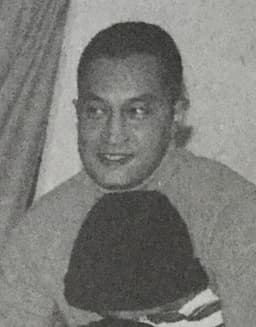
Suchinda Kraprayoon
General · Modern
37.1Total
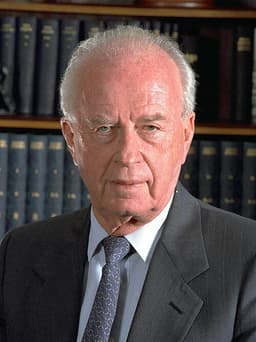
Yitzhak Rabin
General · Modern
66.4Total
Basic Information
Born
1933
1922
Died
—
—
Era
Modern
Modern
Nationality
Thailand
Israel
Occupation
General
General
Civilization
Eastern
Middle Eastern
Score Comparison
Military (10%)
10.2
61.7
Political (20%)
27.9
82.0
Influence (20%)
47.1
68.0
Legacy (20%)
37.5
55.0
Leadership (15%)
45.0
78.0
Strategy (15%)
39.6
55.0
TOTAL
37.1
66.4
Suchinda Kraprayoon — Complete Timeline
1991 AD
Leadership of the 1991 Thai Coup d'ÉtatPolitical Action◆ Major
General Suchinda Kraprayoon led the National Peace Keeping Council in a bloodless coup that overthrew Prime Minister Chatichai Choonhavan. The coup was justified by claims of corruption and political instability, establishing a military junta.
CoupMilitary JuntaPower Seizure
Impact: nationaldestructive
1992 AD
Appointment as Prime MinisterPolitical Action◆ Major
After a general election, Suchinda was appointed Prime Minister despite not being an elected MP. His appointment sparked widespread protests, as it was seen as a continuation of military rule and a violation of democratic principles.
Prime MinisterControversyMilitary Rule
Impact: nationaldestructive
Black May 1992 Uprising and ResignationPolitical Action
Massive pro-democracy protests in Bangkok, led by Chamlong Srimuang, demanded Suchinda's resignation. The military crackdown resulted in dozens of deaths. King Bhumibol intervened, leading to Suchinda's resignation and the restoration of civilian government.
UprisingBlack MayResignation
Impact: nationaltragic
Yitzhak Rabin — Complete Timeline
1967 AD
Chief of Staff during the Six-Day WarWar
As Chief of Staff of the Israel Defense Forces, Rabin commanded the Israeli military during the Six-Day War against Egypt, Jordan, and Syria. Israel captured the Sinai Peninsula, Gaza Strip, West Bank, East Jerusalem, and Golan Heights, reshaping the region.
Six-Day WarTerritorial ExpansionMilitary Victory
Impact: global
1993 AD
Signing of the Oslo AccordsPolitical Action
As prime minister, Rabin signed the Oslo Accords with PLO Chairman Yasser Arafat on the White House lawn. The agreement established the Palestinian Authority and set a framework for Palestinian self-governance in the West Bank and Gaza Strip.
Peace ProcessPalestiniansOslo
Impact: globalconstructive
1995 AD
Assassination at Peace RallyPolitical Action
Rabin was assassinated by Israeli extremist Yigal Amir after a peace rally in Tel Aviv. The assassination shocked Israel and the world, derailing the Oslo peace process and leading to a period of political instability.
AssassinationPeace ProcessPolitical Violence
Impact: globaltragic
Expert Analysis
Yitzhak Rabin vs Suchinda Kraprayoon
### The General and the Peacemaker
On a warm September evening in 1993, Yitzhak Rabin stood on the White House lawn and shook hands with his sworn enemy, Yasser Arafat. It was a moment that stunned the world—a former military commander, the architect of Israel’s greatest battlefield victory, now reaching out to the man he had called a terrorist. Just two years later, Rabin would be gunned down by a fellow Israeli, his blood staining the song sheet of “Shir LaShalom,” the Song of Peace.
Half a world away, in Bangkok, another general named Suchinda Kraprayoon seized power in a bloodless coup in 1991. He promised order, stability, and a restoration of military discipline to Thai politics. Within a year, he was driven from office by hundreds of thousands of unarmed protesters, his tanks rolling into crowds, his name forever linked to the massacre of “Black May.”
Why did one general become a martyr for peace, while the other became a cautionary tale of military overreach? The answer lies not in their uniforms, but in the worlds they inhabited—and the choices they made when history demanded a reckoning.
### Origins
Yitzhak Rabin was born in Jerusalem in 1922 to secular, socialist Zionist parents who had emigrated from Russia. He grew up in a land of constant struggle, where survival depended on collective action and military readiness. His generation was forged in the crucible of the 1948 War of Independence, and Rabin rose through the ranks of the Palmach, the elite strike force of the pre-state Jewish community. He was a soldier’s soldier: disciplined, stoic, and deeply pragmatic.
Suchinda Kraprayoon, born in 1933 in Bangkok, came from a different world. Thailand had never been colonized, and its military had long been the arbiter of political power. Suchinda attended the Chulachomklao Royal Military Academy, where loyalty to the throne and the chain of command were absolute. His Thailand was a hierarchical society where generals were not just warriors but political patrons, and coups were a routine method of changing government.
### Rise to Power
Rabin’s ascent was tied to the existential threats facing Israel. In 1967, as Chief of Staff of the Israel Defense Forces, he commanded the lightning campaign of the Six-Day War, crushing the armies of Egypt, Jordan, and Syria in six days. That victory made him a national hero, but it also burdened him with the consequences of occupation. Rabin was not a politician by instinct; he was a reluctant one. He became Prime Minister in 1974, then again in 1992, only after years of public service and a growing realization that military victory could not deliver lasting security.
Suchinda’s path was more direct. In February 1991, he led the National Peace Keeping Council in a bloodless coup that overthrew the elected government of Chatichai Choonhavan, citing corruption and political chaos. He was not an elected official, but he appointed himself Prime Minister after a rigged general election in 1992. His legitimacy was paper-thin. He ruled by decree, backed by tanks and a military culture that saw civilian politicians as weak and venal.
### Leadership & Governance
Rabin’s leadership style was cautious, methodical, and surprisingly humble for a man of his stature. He did not seek glory; he sought results. In his second term, he shifted from security-first to peace-first, recognizing that Israel could not forever rule over millions of Palestinians. The Oslo Accords, signed in 1993, were a gamble—a secret backchannel negotiation that bypassed his own security establishment. Rabin was no idealist; he was a realist who believed that a negotiated settlement was the only way to preserve Israel’s Jewish and democratic character.
Suchinda governed as a general, not a statesman. He banned political gatherings, censored the press, and appointed military loyalists to key posts. When protests erupted in Bangkok in May 1992, led by the charismatic former governor Chamlong Srimuang, Suchinda’s response was pure force. He ordered troops to fire into crowds of unarmed demonstrators. Dozens were killed, hundreds wounded, and the violence was broadcast live on television. The king of Thailand, a figure of immense moral authority, eventually intervened. Suchinda was forced to resign after just three months in office.
### Triumph & Tragedy
Rabin’s greatest triumph was the Oslo Accords, a framework for Palestinian self-rule that earned him the Nobel Peace Prize in 1994. But the same agreement that brought him international acclaim also made him a target. Israeli extremists saw him as a traitor. On November 4, 1995, after a peace rally in Tel Aviv, a young Jewish law student named Yigal Amir shot Rabin three times. The assassin believed he was saving Israel from a “false peace.” Rabin died on the operating table, leaving a nation in shock and a peace process in ruins.
Suchinda’s tragedy was not his death but his disgrace. Black May 1992 destroyed the myth of the Thai military as a benevolent guardian of the nation. He was forced into exile for a time, but eventually returned to a quiet, forgotten life. His name is now a byword for the dangers of military dictatorship.
### Character & Destiny
Rabin was a man of contradictions: a warrior who became a peacemaker, a pragmatist who took the greatest risk of his life. He was not charismatic; he was blunt, often awkward in public. But he had the courage to change his mind. “You don’t make peace with friends,” he once said. “You make it with very unsavory enemies.”
Suchinda was a product of his environment—a system where the military saw itself as above politics, yet constantly intervened in it. He lacked Rabin’s capacity for self-reflection. He believed that order was more important than democracy, and that the army’s authority was beyond question. That belief cost hundreds of lives and shattered his own legacy.
### Legacy
Rabin is remembered as Israel’s greatest fallen leader. His funeral was attended by kings, presidents, and ordinary Israelis who wept in the streets. The square where he was assassinated is now named Rabin Square. His legacy is unfinished—the peace he sought has not been achieved—but his example endures as a testament to the possibility of change.
Suchinda’s legacy is a warning. Black May became a turning point in Thai democracy, leading to constitutional reforms and a brief period of civilian rule. But the military’s appetite for power did not die with him. Thailand has since seen more coups, most recently in 2014. Suchinda’s name is rarely spoken with honor.
### Conclusion
Two generals, two paths. One chose to transcend his uniform and embrace the messy, uncertain work of peace. The other clung to the certainties of command and was crushed by the very people he sought to control. Their stories remind us that leadership is not about the rank on a shoulder, but the courage to see beyond the battlefield. Rabin died for his choice. Suchinda lived with his. Both left a mark—but only one left a light.
Rankings
🥇
Yitzhak RabinLeader
Mil: 61.7Pol: 82.0Inf: 68.0
66.4
🥈
Suchinda Kraprayoon
Mil: 10.2Pol: 27.9Inf: 47.1
37.1
+29.3 behind
How This Comparison Works
Algorithm
Each figure is scored on 6 dimensions (0—100 scale) based on structured historical data: Military (10%), Political (20%), Influence (20%), Legacy (20%), Leadership (15%), Strategy (15%). The weighted total produces the final ranking.
Data Sources
Scores are computed from structured sub-indicators in the database. Scale factors adjust for era (Ancient ×0.85, Modern ×1.0) and civilization size (Eastern ×1.05, Other ×0.80) to account for differences in population and military scale.
Maximum 3 Figures
Comparisons are limited to 2—3 figures to ensure readability and statistical meaningfulness.
Error Margins
±5 points per dimension — Sub-scores are derived from historical records with inherent uncertainty. Two figures within 5 points on a dimension should be considered roughly equivalent in that area.
Total Score Accuracy
±3 points overall — The weighted combination of 6 dimensions produces a total score with approximately ±3 points of uncertainty. Differences of less than 3 points are not statistically significant— the figures are effectively tied.
Known Limitations
- Historical records are incomplete and uneven across civilizations
- Figures from oral-tradition societies may be underrepresented
- Occupation labels can misclassify multi-role figures
- Scores measure capability and impact, not moral character
- Quantitative scoring is a comparison tool, not absolute truth
Capability Radar
Military (10%) — Battles & Warfare
Battles
5
65
Win Rate
5
70
Expansion
5
50
Political (20%) — Governance & Reform
Reform
5
65
Diplomacy
10
85
Economy
5
60
Influence (20%) — Cultural & Global Reach
Cultural
5
55
Global
5
70
Legacy (20%) — Historical Impact
Historical
10
75
Longevity
5
60
Leadership (15%) — Power & Stability
Tenure
10
70
Stability
5
40
Strategy (15%) — Tactics & Innovation
Strategy
10
75
Tactics
10
60
Reform
5
55
Similar Comparisons
Comments & Discussion
Rabin's Reckoning6/16/2026
Rabin's real transformation wasn't some moral awakening—it was cold pragmatism. After commanding Israel's 1967 victory, he understood that endless occupation would destroy Israel's soul and security. Suchinda never had that moment. He genuinely believed tanks could solve political problems. That's the difference between a general who evolves and one who stays stuck in 1970s coup logic. Both seized power, but only Rabin realized peace was the next battle.
数据拆解者6/16/2026
Rabin民意支持率在1993年奥斯陆协议后飙升到67%,但刺杀前一个月已跌至41%,因为哈马斯袭击不断。而Suchinda执政仅11个月就被500万抗议者逼下台,泰国的GDP增长率从1991年的8.4%暴跌到1992年的4.7%。数据不会撒谎:Rabin至少赢得了多数民众的短暂信任,Suchinda连虚假稳定都没维持住。
Thermopylae Lens6/16/2026
Here's the military irony: Rabin, who planned the 1967 Six-Day War's lightning strikes, ended up proving that some battles can't be won with divisions and air superiority. Suchinda, who never fought a real war, thought crowds were just another insurgency to crush. Rabin understood that a general's ultimate duty is to make generals obsolete. Suchinda only learned to make martyrs.
春秋笔法6/16/2026
Revisionist历史学家们总爱把Rabin塑造成纯粹理想主义者,但别忘了他在1987年第一次巴勒斯坦大起义时命令士兵“打断示威者的骨头”。Suchinda呢?他在1992年黑五月直接下令向手无寸铁的抗议者开火,造成至少52人死亡。区别在于:Rabin晚年敢于承认错误,而Suchinda至今拒绝为屠杀道歉。一个选择自我批判,一个选择铁幕沉默。