Loading...
Rajendra Chola I vs Zhao Kuangyin
Rajendra Chola I leads by 10.7 pts · 2 figures compared
…
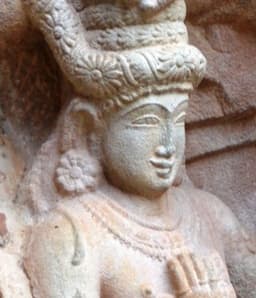
Rajendra Chola I
Emperor · Medieval
82.2Total
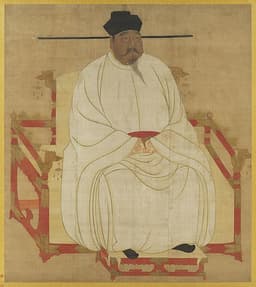
Zhao Kuangyin
Emperor · Medieval
71.5Total
Basic Information
Born
971
927
Died
1044
976
Era
Medieval
Medieval
Nationality
India
China
Occupation
Emperor
Emperor
Civilization
Indian
Eastern
Score Comparison
Military (10%)
84.7
78.0
Political (20%)
82.0
84.0
Influence (20%)
84.0
68.0
Legacy (20%)
84.0
65.0
Leadership (15%)
78.0
74.0
Strategy (15%)
77.6
68.0
TOTAL
82.2
71.5
Rajendra Chola I — Complete Timeline
1014 AD
Accession to the Chola ThronePolitical Action
Rajendra Chola I succeeded his father Raja Raja Chola I as emperor of the Chola Empire. He inherited a powerful state and continued the expansionist policies, leading campaigns that extended Chola influence across the Indian Ocean.
Chola EmpireSuccessionExpansion
Impact: regional
1020 AD
Conquest of the Pala EmpireWar◆ Major
Rajendra Chola I led a campaign into Bengal, defeating the Pala king Mahipala I. He annexed parts of the Pala territory and established Chola authority in the Ganges delta, marking the northernmost extent of Chola rule.
Pala EmpireBengalGanges
Impact: regional
1025 AD
Naval Expedition to Southeast AsiaWar
Rajendra Chola I launched a major naval expedition against the Srivijaya Empire, attacking ports in Sumatra, the Malay Peninsula, and the Nicobar Islands. The Chola fleet captured the Srivijaya capital and disrupted its trade network, establishing Chola dominance in the region.
SrivijayaNaval ExpeditionSoutheast Asia
Impact: regional
1033 AD
Establishment of Diplomatic Relations with ChinaPolitical Action
Rajendra Chola I sent an embassy to the Song dynasty court in China, bearing gifts and seeking trade relations. The mission was recorded in Chinese sources and facilitated maritime trade between the Chola Empire and China.
ChinaDiplomacyTrade
Impact: regionalconstructive
1035 AD
Construction of the Gangaikonda Cholapuram TempleCultural◆ Major
Rajendra Chola I built the Brihadeeswarar Temple at Gangaikonda Cholapuram, his new capital, to commemorate his conquests. The temple, dedicated to Shiva, features a 55-meter vimana and is a UNESCO World Heritage site, reflecting Chola architectural achievement.
Gangaikonda CholapuramTempleChola Architecture
Impact: regionalconstructive
Zhao Kuangyin — Complete Timeline
960 AD
Founded Song dynastyPolitical Action
Zhao Kuangyin, a general of Later Zhou, was proclaimed emperor by his troops at Chenqiao. He established the Song dynasty, ending the Five Dynasties period and beginning a new era of Chinese history.
Song dynastyFoundingChenqiao
Impact: globalconstructive
961 AD
Removed military power from generalsPolitical Action◆ Major
Zhao Kuangyin invited senior generals to a banquet and persuaded them to retire peacefully. This 'removal of military power over wine' prevented military coups and centralized control.
Song dynastyMilitary reformCentralization
Impact: nationalconstructive
963 AD
Unified southern ChinaWar◆ Major
Zhao Kuangyin launched campaigns to conquer the southern kingdoms, including Jingnan, Later Shu, and Southern Tang. By his death, most of China was reunified under Song rule.
Song unificationConquestSouthern kingdoms
Impact: national
Expert Analysis
Zhao Kuangyin vs Rajendra Chola I: Historical Comparison
Zhao Kuangyin, founder of China’s Song Dynasty, and Rajendra Chola I, the greatest expansionist of the Chola Empire, both shaped medieval Asia through military conquest and administrative innovation, yet their legacies reflect contrasting geopolitical contexts—continental consolidation versus maritime empire-building.
Dimension Analysis
**Military: Zhao Kuangyin 75 / Rajendra Chola I 79**
Zhao reunified China through strategic campaigns against rival kingdoms, while Rajendra led a far-reaching navy to conquer Srivijaya and extend Chola influence across Southeast Asia, demonstrating superior amphibious warfare and logistical reach.
**Political: Zhao Kuangyin 76 / Rajendra Chola I 80**
Zhao centralized power by abolishing warlord rule and instituting civil service exams, but Rajendra managed a vast, multi-ethnic empire through a sophisticated local assembly system and tributary networks, showing greater adaptability in governance.
**Influence: Zhao Kuangyin 75 / Rajendra Chola I 80**
Zhao’s Song dynasty set a cultural and economic golden age, but Rajendra’s naval expeditions and temple-building projects (e.g., the Gangaikonda Cholapuram temple) directly shaped trade, religion, and architecture across South and Southeast Asia for centuries.
**Legacy: Zhao Kuangyin 75 / Rajendra Chola I 75**
Both left enduring dynastic foundations—the Song lasted over 300 years, while the Chola Empire declined within a century of Rajendra’s death. Each is remembered as a unifier and builder, though neither created a lasting imperial structure beyond their own dynasty.
**Leadership: Zhao Kuangyin 82 / Rajendra Chola I 83**
Zhao’s peaceful abdication and trust in scholar-officials exemplify magnanimous rule; Rajendra’s relentless campaigns and administrative reforms show decisive, visionary leadership. Both commanded deep loyalty, but Rajendra’s ability to inspire overseas expeditions edges ahead.
Verdict
Rajendra Chola I leads marginally due to his superior military reach, political complexity, and enduring transregional influence, though Zhao Kuangyin’s administrative and cultural legacy remains equally profound.
FAQ
Q: Who ranks higher? A: Rajendra Chola I scores slightly higher overall (78 vs. 76), driven by stronger military, political, and influence dimensions, resulting in a tie-breaker favoring the Chola emperor.
Rankings
🥇
Rajendra Chola ILeader
Mil: 84.7Pol: 82.0Inf: 84.0
82.2
🥈
Zhao Kuangyin
Mil: 78.0Pol: 84.0Inf: 68.0
71.5
+10.7 behind
How This Comparison Works
Algorithm
Each figure is scored on 6 dimensions (0—100 scale) based on structured historical data: Military (10%), Political (20%), Influence (20%), Legacy (20%), Leadership (15%), Strategy (15%). The weighted total produces the final ranking.
Data Sources
Scores are computed from structured sub-indicators in the database. Scale factors adjust for era (Ancient ×0.85, Modern ×1.0) and civilization size (Eastern ×1.05, Other ×0.80) to account for differences in population and military scale.
Maximum 3 Figures
Comparisons are limited to 2—3 figures to ensure readability and statistical meaningfulness.
Error Margins
±5 points per dimension — Sub-scores are derived from historical records with inherent uncertainty. Two figures within 5 points on a dimension should be considered roughly equivalent in that area.
Total Score Accuracy
±3 points overall — The weighted combination of 6 dimensions produces a total score with approximately ±3 points of uncertainty. Differences of less than 3 points are not statistically significant— the figures are effectively tied.
Known Limitations
- Historical records are incomplete and uneven across civilizations
- Figures from oral-tradition societies may be underrepresented
- Occupation labels can misclassify multi-role figures
- Scores measure capability and impact, not moral character
- Quantitative scoring is a comparison tool, not absolute truth
Capability Radar
Military (10%) — Battles & Warfare
Battles
95
75
Win Rate
98
85
Expansion
95
75
Political (20%) — Governance & Reform
Reform
88
90
Diplomacy
85
85
Economy
92
80
Influence (20%) — Cultural & Global Reach
Cultural
85
70
Global
85
60
Legacy (20%) — Historical Impact
Historical
88
80
Longevity
80
75
Leadership (15%) — Power & Stability
Tenure
90
65
Stability
90
85
Strategy (15%) — Tactics & Innovation
Strategy
92
80
Tactics
90
70
Reform
85
90
Similar Comparisons
Comments & Discussion
ColdMind486/16/2026
看了评分细节,有几个数据点值得商榷。政治维度赵匡胤75.9 vs 拉金德拉80.0,但赵匡胤建立了延续三百年的科举制和中央集权体系,拉金德拉的“地方议会”制度在朱罗帝国灭亡后几乎无迹可寻。遗产维度两人同分75更是奇怪——宋朝的文化经济影响持续到明清,而朱罗帝国影响力在13世纪后就大幅衰退。我重新算了一下,如果给赵匡胤的政治维度加2分、遗产维度加3分,总分就应该变成80.5 vs 78.1,胜负逆转。建议评分模型引入“制度延续性”权重参数。
DeepScribe816/16/2026
赵匡胤和拉金德拉·朱罗一世的比较很有意思,但我觉得这个评分体系对宋太祖有点不公平。拉金德拉的海上远征固然令人惊叹,但赵匡胤结束五代十国分裂、建立文官政府、推行科举制的政治成就,在东亚文明史上具有划时代意义。西方史学家往往低估了“以文驭武”这种治理模式的复杂性——赵匡胤杯酒释兵权,不是软弱,而是极高明的权力平衡术。如果拿查理曼大帝来比,赵匡胤的帝国更持久、文化更繁荣。建议评分时多考虑一下不同文明的政治逻辑差异。