Loading...
Le Hoan vs Raja Raja Chola I
Raja Raja Chola I leads by 12.6 pts · 2 figures compared
…

Le Hoan
Emperor · Medieval
57.4Total
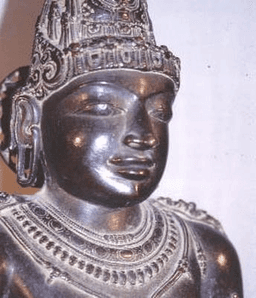
Raja Raja Chola I
Emperor · Medieval
70.0Total
Basic Information
Born
941
947
Died
1005
1014
Era
Medieval
Medieval
Nationality
Vietnam
India
Occupation
Emperor
Emperor
Civilization
Eastern
Indian
Score Comparison
Military (10%)
70.0
82.0
Political (20%)
68.0
72.0
Influence (20%)
59.0
65.0
Legacy (20%)
50.0
65.0
Leadership (15%)
47.9
78.0
Strategy (15%)
58.0
68.0
TOTAL
57.4
70.0
Le Hoan — Complete Timeline
980 AD
Foundation of the Former Le DynastyPolitical Action◆ Major
After the assassination of Dinh Tien Hoang, Le Hoan was proclaimed emperor by the army and court officials. He founded the Former Le dynasty, taking the reign name Le Dai Hanh. His rule stabilized the country and continued the work of unifying Vietnam.
Dynasty FoundingSuccessionStabilization
Impact: nationalconstructive
981 AD
Repulsion of the Song InvasionWar
Le Hoan, as commander of the Vietnamese army, defeated a Song Chinese invasion force at the Battle of Bach Dang River. He used a strategy of placing iron-tipped stakes in the riverbed to impale enemy ships. The victory secured Vietnamese independence and established his legitimacy.
BattleSong DynastyVietnamese Independence
Impact: regionalconstructive
982 AD
Campaigns against ChampaWar◆ Major
Le Hoan launched a military campaign against the Champa kingdom to the south, sacking the Cham capital of Indrapura. The campaign expanded Vietnamese territory and secured the southern border. It also forced Champa to become a tributary state.
Military CampaignChampaTerritorial Expansion
Impact: regional
Raja Raja Chola I — Complete Timeline
985 AD
Accession to the Chola ThronePolitical Action
Raja Raja Chola I ascended the throne of the Chola Empire, succeeding his father Parantaka II. He inherited a kingdom in the Tamil region and began a series of military campaigns that would transform the Chola state into a major power.
Chola EmpireSuccessionExpansion
Impact: regional
990 AD
Conquest of the Chera KingdomWar◆ Major
Raja Raja Chola I defeated the Chera king Bhaskara Ravi Varman and annexed the Chera territories in present-day Kerala. This conquest gave the Cholas control over the Malabar Coast and its spice trade.
CheraKeralaSpice Trade
Impact: regional
1000 AD
Administrative Reforms and Land SurveyReform◆ Major
Raja Raja Chola I conducted a comprehensive land survey and reorganized the revenue system. He standardized tax collection and recorded land holdings in inscriptions, which improved administrative efficiency and funded his military and building projects.
Land SurveyRevenue SystemAdministration
Impact: regionalconstructive
1005 AD
Naval Campaign against the Srivijaya EmpireWar◆ Major
Raja Raja Chola I launched a naval expedition against the Srivijaya Empire in Southeast Asia, targeting the Strait of Malacca. The campaign disrupted Srivijaya's trade monopoly and established Chola influence in the region, though full conquest was not achieved.
SrivijayaNaval ExpeditionSoutheast Asia
Impact: regional
1010 AD
Construction of the Brihadeeswarar TempleCultural◆ Major
Raja Raja Chola I commissioned the construction of the Brihadeeswarar Temple in Thanjavur, dedicated to Shiva. The temple, built with granite, features a 66-meter vimana and is a masterpiece of Dravidian architecture, later designated a UNESCO World Heritage site.
Brihadeeswarar TempleThanjavurDravidian Architecture
Impact: regionalconstructive
Expert Analysis
Origins
**Le Hoan** (941–1005) was born in the village of Bo Hai, in what is now Thanh Hoa Province, Vietnam. Orphaned at a young age, he was raised by a local mandarin named Le Quat, who recognized his intelligence and martial prowess. Le Hoan later served as a general under the Dinh dynasty, rising to become the commander of the army.
**Raja Raja Chola I** (947–1014), born Arulmozhi Varman, was the third child of Parantaka II, a Chola king. He was raised in the royal court of Thanjavur, receiving a thorough education in statecraft, military strategy, and administration. His elder brother Aditya II was assassinated, clearing his path to the throne.
Rise to Power
**Le Hoan** rose to prominence after the assassination of Emperor Dinh Tien Hoang in 979. As the commander of the army, he was proclaimed emperor by the military and court officials, despite opposition from Empress Dowager Duong Van Nga. He suppressed a rebellion led by the former Dinh prince, securing his rule. In 981, he faced the Song invasion, defeating the Chinese fleet at the Battle of Bach Dang River using a strategy of placing iron-tipped stakes in the riverbed. This victory solidified his legitimacy.
**Raja Raja Chola I** ascended the throne in 985 after a period of political instability. He immediately embarked on a campaign to consolidate power, subduing the Pandyas and the Chera kingdom. His conquest of the Chera king Bhaskara Ravi Varman in 988 gave the Cholas control over the Malabar coast, securing trade routes.
Leadership & Governance
**Le Hoan** ruled as a military emperor, prioritizing defense and expansion. He reorganized the army and established a system of military colonies. He also conducted a land survey and reformed taxes, but his governance was less systematic than his southern campaigns. He personally led campaigns against Champa in 982, sacking the Cham capital Indrapura.
**Raja Raja Chola I** was a systematic administrator. He conducted a comprehensive land survey in 1001, recorded in the *Uttiramerur* inscriptions, standardizing tax collection and land rights. He divided the empire into *valanadus* (provinces) and appointed officials. He also built the Brihadeeswarar Temple in Thanjavur (completed 1010), a granite masterpiece that became a model for later Chola architecture. His naval campaigns against the Srivijaya Empire in 1005–1007 disrupted the Strait of Malacca trade, projecting Chola power across Southeast Asia.
Triumph & Tragedy
**Le Hoan's** greatest triumph was the 981 victory over the Song, which preserved Vietnamese independence. He also expanded southward, conquering parts of Champa. However, his reign saw internal strife; his son Le Long Dinh was a cruel ruler who succeeded him and was assassinated in 1009, leading to the fall of the Former Le dynasty after only 24 years. Le Hoan's failure to establish a stable succession was his greatest tragedy.
**Raja Raja Chola I's** greatest triumph was the construction of the Brihadeeswarar Temple and the expansion of the Chola Empire to its zenith. His administrative reforms created a stable system that lasted for generations. His naval campaigns, while successful in disrupting Srivijaya, did not result in permanent territorial gains in Southeast Asia. He died in 1014, leaving a stable empire to his son Rajendra Chola I, who continued his policies.
Character & Destiny
**Le Hoan** was a pragmatic and decisive leader, willing to seize power when opportunity arose. His military focus made him effective in defense but less attentive to long-term governance. His decision to name his son as successor, despite the son's known cruelty, led to the dynasty's collapse. Historians note his ability to inspire loyalty in the army, but his political acumen scored only 68.0, reflecting his failure to secure the dynasty.
**Raja Raja Chola I** was a meticulous planner, both militarily and administratively. His leadership score of 78.0 reflects his ability to delegate and build institutions. He was also a patron of arts and religion, commissioning temples and supporting Tamil literature. His character combined ambition with discipline, ensuring a smooth succession.
Legacy
**Le Hoan** is remembered in Vietnam as a national hero who repelled the Song and expanded Vietnamese territory. However, his dynasty was short-lived, and his legacy is overshadowed by the Later Le dynasty. He scored 50.0 in legacy, reflecting limited long-term impact. His military tactics at Bach Dang influenced later Vietnamese generals, but his administrative achievements were ephemeral.
**Raja Raja Chola I** left a lasting legacy. The Brihadeeswarar Temple is a UNESCO World Heritage site and a symbol of Chola power. His land survey system influenced revenue collection for centuries. He scored 65.0 in legacy, with his influence extending to Southeast Asia through trade and cultural exchange. The Chola Empire under his son reached its peak, continuing his administrative and military systems.
Conclusion
While Le Hoan's defense against the Song was crucial for Vietnamese independence, his overall impact is limited by the rapid fall of his dynasty. Raja Raja Chola I, with a total score of 70.0 against Le Hoan's 57.4, had greater long-term influence through his administrative reforms, temple architecture, and naval power. The Chola Empire's reach into Southeast Asia and its enduring cultural monuments give Raja Raja Chola I a clear edge in historical impact.
Rankings
🥇
Raja Raja Chola ILeader
Mil: 82.0Pol: 72.0Inf: 65.0
70.0
🥈
Le Hoan
Mil: 70.0Pol: 68.0Inf: 59.0
57.4
+12.6 behind
How This Comparison Works
Algorithm
Each figure is scored on 6 dimensions (0—100 scale) based on structured historical data: Military (10%), Political (20%), Influence (20%), Legacy (20%), Leadership (15%), Strategy (15%). The weighted total produces the final ranking.
Data Sources
Scores are computed from structured sub-indicators in the database. Scale factors adjust for era (Ancient ×0.85, Modern ×1.0) and civilization size (Eastern ×1.05, Other ×0.80) to account for differences in population and military scale.
Maximum 3 Figures
Comparisons are limited to 2—3 figures to ensure readability and statistical meaningfulness.
Error Margins
±5 points per dimension — Sub-scores are derived from historical records with inherent uncertainty. Two figures within 5 points on a dimension should be considered roughly equivalent in that area.
Total Score Accuracy
±3 points overall — The weighted combination of 6 dimensions produces a total score with approximately ±3 points of uncertainty. Differences of less than 3 points are not statistically significant— the figures are effectively tied.
Known Limitations
- Historical records are incomplete and uneven across civilizations
- Figures from oral-tradition societies may be underrepresented
- Occupation labels can misclassify multi-role figures
- Scores measure capability and impact, not moral character
- Quantitative scoring is a comparison tool, not absolute truth
Capability Radar
Military (10%) — Battles & Warfare
Battles
65
85
Win Rate
70
90
Expansion
50
85
Political (20%) — Governance & Reform
Reform
55
80
Diplomacy
70
75
Economy
50
85
Influence (20%) — Cultural & Global Reach
Cultural
45
85
Global
40
70
Legacy (20%) — Historical Impact
Historical
55
80
Longevity
50
85
Leadership (15%) — Power & Stability
Tenure
60
85
Stability
58
80
Strategy (15%) — Tactics & Innovation
Strategy
72
85
Tactics
68
80
Reform
55
75
Similar Comparisons
Comments & Discussion
No comments yet. Be the first to share your thoughts!