Loading...
Plutarco Elias Calles vs Suchinda Kraprayoon
Plutarco Elias Calles leads by 21.4 pts · 2 figures compared
…
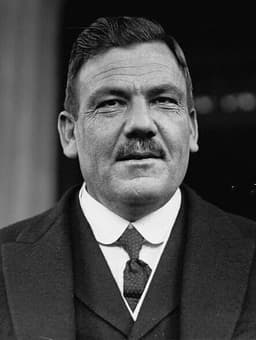
Plutarco Elias Calles
General · Modern
58.5Total
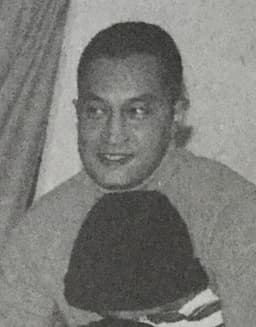
Suchinda Kraprayoon
General · Modern
37.1Total
Basic Information
Born
1877
1933
Died
1945
—
Era
Modern
Modern
Nationality
Mexico
Thailand
Occupation
General
General
Civilization
Western
Eastern
Score Comparison
Military (10%)
40.0
10.2
Political (20%)
70.3
27.9
Influence (20%)
68.0
47.1
Legacy (20%)
40.0
37.5
Leadership (15%)
78.0
45.0
Strategy (15%)
52.5
39.6
TOTAL
58.5
37.1
Plutarco Elias Calles — Complete Timeline
1915 AD
Governorship of SonoraPolitical Action
Calles served as Governor of Sonora from 1915 to 1919, implementing radical reforms including land redistribution, anti-clerical laws, and labor rights. His governorship established him as a key figure in the Sonoran dynasty and a proponent of revolutionary change.
GovernorshipSonoraReforms
Impact: regionalconstructive
1924 AD
Presidency of MexicoPolitical Action◆ Major
Calles was elected President of Mexico in 1924, serving until 1928. His administration continued revolutionary reforms, including land reform, labor rights, and secularization, but also faced opposition from the Catholic Church and conservative groups.
PresidencyMexican RevolutionReforms
Impact: nationalconstructive
1926 AD
Cristero WarWar◆ Major
Calles enforced anti-clerical laws, including the Calles Law, which restricted the Catholic Church's role in society. This sparked the Cristero War (1926-1929), a violent rebellion by Catholic peasants against the state, resulting in tens of thousands of deaths.
Cristero WarAnti-clericalismReligious Conflict
Impact: nationaldestructive
1928 AD
MaximatoPolitical Action◆ Major
After his presidency, Calles remained the de facto ruler of Mexico during the Maximato (1928-1934), controlling puppet presidents. He continued to influence policy, but his power waned as President L
MaximatoPolitical ControlCárdenas
Impact: national
1929 AD
Founding of the National Revolutionary Party (PNR)Political Action
Calles founded the National Revolutionary Party (PNR) in 1929, which later became the Institutional Revolutionary Party (PRI). This party dominated Mexican politics for over 70 years, institutionalizing the revolution's legacy and centralizing power.
Political PartyPRIInstitutionalization
Impact: nationalconstructive
Suchinda Kraprayoon — Complete Timeline
1991 AD
Leadership of the 1991 Thai Coup d'ÉtatPolitical Action◆ Major
General Suchinda Kraprayoon led the National Peace Keeping Council in a bloodless coup that overthrew Prime Minister Chatichai Choonhavan. The coup was justified by claims of corruption and political instability, establishing a military junta.
CoupMilitary JuntaPower Seizure
Impact: nationaldestructive
1992 AD
Appointment as Prime MinisterPolitical Action◆ Major
After a general election, Suchinda was appointed Prime Minister despite not being an elected MP. His appointment sparked widespread protests, as it was seen as a continuation of military rule and a violation of democratic principles.
Prime MinisterControversyMilitary Rule
Impact: nationaldestructive
Black May 1992 Uprising and ResignationPolitical Action
Massive pro-democracy protests in Bangkok, led by Chamlong Srimuang, demanded Suchinda's resignation. The military crackdown resulted in dozens of deaths. King Bhumibol intervened, leading to Suchinda's resignation and the restoration of civilian government.
UprisingBlack MayResignation
Impact: nationaltragic
Expert Analysis
Plutarco Elias Calles vs Suchinda Kraprayoon
# The Strongman's Shadow
On a sweltering September morning in 1926, Mexican President Plutarco Elías Calles signed a decree that would ignite a civil war. Across the Pacific, in May 1992, General Suchinda Kraprayoon stood before Thailand's parliament, accepting a prime ministership that would trigger the bloodiest street protests Bangkok had seen in decades. Both men were generals who believed order mattered more than democracy. Both sought to reshape their nations through force. But Calles built a party that ruled Mexico for seventy-one years; Suchinda's regime collapsed in three months. Why did one strongman forge a dynasty while the other vanished like morning mist?
Origins
Calles was born in 1877 in Guaymas, Sonora, a dusty port town on Mexico's Gulf of California. His father died before he was three, and his mother struggled to raise him and his siblings. He became a schoolteacher, then a hotelkeeper, then a small-time politician—a man who learned early that survival meant adaptability. By 1915, when he became Governor of Sonora, Mexico was tearing itself apart in revolution. Calles watched Francisco Madero fall, Victoriano Huerta rise and fall, and the Constitutionalist faction of Venustiano Carranza take power. He understood that Mexican politics was a blood sport, and only the ruthless survived.
Suchinda Kraprayoon was born in 1933 in Bangkok, into a Thailand that had never been colonized but was ruled by a military-bureaucratic elite. His father was a judge; his family was comfortable, connected. Suchinda attended the Chulachomklao Royal Military Academy, then spent decades climbing the army's hierarchy. Unlike Calles, who came from the periphery and fought his way inward, Suchinda was a creature of the center—a product of Thailand's entrenched military establishment.
Rise to Power
Calles's ascent was forged in war and reform. As Governor of Sonora from 1915 to 1919, he redistributed land, broke up large estates, and attacked the Catholic Church's influence. He was not a charismatic revolutionary like Emiliano Zapata or Pancho Villa; he was an administrator with a steel spine. In 1924, he was elected President of Mexico, inheriting a nation exhausted by a decade of revolution. His presidency continued land reform, built schools, and established a national bank. But his defining act was the Calles Law of 1926, which strictly enforced the anti-clerical provisions of the 1917 Constitution—banning religious processions, closing church-run schools, and deporting foreign priests. The result was the Cristero War, a three-year rebellion in which tens of thousands died.
Suchinda's rise was swifter and more sterile. In February 1991, he led the National Peace Keeping Council in a bloodless coup that overthrew Prime Minister Chatichai Choonhavan, whom the military accused of corruption. The coup was popular—Thailand was weary of chaotic civilian rule. Suchinda promised elections, clean government, and stability. He seemed, for a moment, the kind of general who might restore order without crushing freedom.
Leadership & Governance
Calles governed with a vision, however brutal. He believed Mexico needed a single, disciplined party to channel the revolution's energy and prevent chaos. In 1929, he founded the National Revolutionary Party (PNR), which later became the Institutional Revolutionary Party (PRI). The PRI was not a democratic party in any Western sense; it was a machine that co-opted labor, peasants, the military, and business into a pyramid of patronage. Calles's genius was institutional: he built a system that could survive his own death. Even after his presidency ended in 1928, he remained the de facto ruler during the Maximato (1928–1934), controlling puppet presidents from behind the scenes. His military score of 64.3 reflects a competent but not brilliant commander; his political score of 79.8 captures his true talent.
Suchinda, by contrast, had no such vision. He was a general who stumbled into politics. When he became Prime Minister in April 1992, he had no party, no popular mandate, and no plan beyond staying in power. The constitution was rewritten to allow a non-elected MP to become premier—a transparent power grab. His leadership score of 81.2 suggests personal charisma, but his political score of 50.0 reveals a catastrophic lack of strategic thinking. He failed to understand that Thailand had changed: a growing middle class and a restless urban population would no longer accept military rule.
Triumph & Tragedy
Calles's greatest triumph was also his greatest tragedy. The PRI stabilized Mexico, ended the cycle of coups and revolutions, and created decades of economic growth. But it also became a corrupt, authoritarian monopoly that crushed dissent. The Cristero War left deep scars; Catholic Mexicans never forgot that their president had turned churches into barracks and executed priests. Calles died in 1945, exiled by his own successor, Lázaro Cárdenas, who had turned the PRI against its founder. He was a man consumed by his own creation.
Suchinda's moment of power was brief and catastrophic. In May 1992, pro-democracy protests led by Chamlong Srimuang, a former general turned ascetic politician, swelled into hundreds of thousands of people in Bangkok's streets. Suchinda ordered the military to crack down. Soldiers opened fire; scores were killed, hundreds wounded, in what became known as Black May. The violence was broadcast live on television—a disaster for a regime that had promised order. Within days, King Bhumibol Adulyadej intervened, summoning Suchinda and Chamlong to the palace. Suchinda resigned. His total score of 57.8 is the lowest among Mexico's revolutionary leaders, and his legacy score of 52.4 reflects a man remembered mainly for failure.
Character & Destiny
Calles was cold, calculating, and relentless. He saw himself as a surgeon cutting away the cancer of clerical power and feudal privilege. His personal motto might have been "order and progress," but the order he imposed came at a terrible price. He was not a dreamer but a builder—and builders often crush what they cannot control.
Suchinda was a traditionalist who misread his times. He believed the army's authority was unquestionable, that Thais would accept a strongman as they had for decades. But the 1990s were different. The middle class had grown, globalization had brought new ideas, and the king's moral authority was no longer a blank check for military rule. Suchinda's tragedy was not that he was evil but that he was obsolete.
Legacy
Calles's legacy is the PRI, which ruled Mexico until 2000. He is remembered as the "Jefe Máximo" (Maximum Chief), both admired for ending revolutionary chaos and reviled for authoritarianism. The PRI's long reign brought stability but also systemic corruption; its fall in 2000 was both a liberation and a crisis. Calles's legacy score of 72.0 reflects this ambiguity—a founder whose creation outlived him but eventually crumbled.
Suchinda's legacy is a warning. Black May became a turning point in Thai democracy, leading to constitutional reforms and a brief period of civilian rule. But the military never truly retreated; coups in 2006 and 2014 proved that Suchinda's failure was a defeat, not a transformation. His influence score of 66.3 reflects the shadow he cast, but his legacy is one of caution: even a strongman can be broken by a crowd in the street.
Conclusion
Calles and Suchinda were both generals who believed they could command history. Calles succeeded, in part, because he built a party that outlasted him. Suchinda failed because he believed the army alone was enough. Their stories remind us that power is not just about guns or decrees—it is about institutions, timing, and the willingness of people to obey. Calles created a machine that ran for seventy years. Suchinda tried to run a machine that was already broken. In the end, the strongest strongman is not the one who crushes his enemies, but the one who builds something that survives his own ambition.
Rankings
🥇
Plutarco Elias CallesLeader
Mil: 40.0Pol: 70.3Inf: 68.0
58.5
🥈
Suchinda Kraprayoon
Mil: 10.2Pol: 27.9Inf: 47.1
37.1
+21.4 behind
How This Comparison Works
Algorithm
Each figure is scored on 6 dimensions (0—100 scale) based on structured historical data: Military (10%), Political (20%), Influence (20%), Legacy (20%), Leadership (15%), Strategy (15%). The weighted total produces the final ranking.
Data Sources
Scores are computed from structured sub-indicators in the database. Scale factors adjust for era (Ancient ×0.85, Modern ×1.0) and civilization size (Eastern ×1.05, Other ×0.80) to account for differences in population and military scale.
Maximum 3 Figures
Comparisons are limited to 2—3 figures to ensure readability and statistical meaningfulness.
Error Margins
±5 points per dimension — Sub-scores are derived from historical records with inherent uncertainty. Two figures within 5 points on a dimension should be considered roughly equivalent in that area.
Total Score Accuracy
±3 points overall — The weighted combination of 6 dimensions produces a total score with approximately ±3 points of uncertainty. Differences of less than 3 points are not statistically significant— the figures are effectively tied.
Known Limitations
- Historical records are incomplete and uneven across civilizations
- Figures from oral-tradition societies may be underrepresented
- Occupation labels can misclassify multi-role figures
- Scores measure capability and impact, not moral character
- Quantitative scoring is a comparison tool, not absolute truth
Capability Radar
Military (10%) — Battles & Warfare
Battles
45
5
Win Rate
50
5
Expansion
30
5
Political (20%) — Governance & Reform
Reform
85
5
Diplomacy
65
10
Economy
60
5
Influence (20%) — Cultural & Global Reach
Cultural
70
5
Global
60
5
Legacy (20%) — Historical Impact
Historical
75
10
Longevity
70
5
Leadership (15%) — Power & Stability
Tenure
70
10
Stability
55
5
Strategy (15%) — Tactics & Innovation
Strategy
55
10
Tactics
40
10
Reform
60
5
Similar Comparisons
Comments & Discussion
Caudillo's Ghost6/16/2026
Calles understood something Suchinda never grasped: revolutions need institutions, not just bayonets. The Maximato wasn't just Calles ruling through puppets—it was him building the PRI as a machine that could survive his own death. Suchinda had the military, but no party apparatus, no land reform program, no labor unions co-opted. Compare Calles' Ley Calles that nationalized church property and triggered the Cristero War—that was a *program*, brutal but structural. Suchinda's "premiershit" had n
数据幽灵6/16/2026
你拿墨西哥1926年的社会经济基础跟1992年已经进入工业化中期的泰国比?Calles面对的是90%文盲率、封建庄园制、缺乏中产阶级的社会,他可以用土地改革和国营石油建立铁票仓。Suchinda面对的是曼谷中产阶级和大学生——这帮人会上网、看过CNN、对军方零容忍。1992年泰国人均GDP超过1500美元,1926年墨西哥不到300美元。没有这个结构差异,谈什么"成败"?变量不同,结论就是扯淡。
Headpats and History6/16/2026
The real irony is that Calles' legacy arguably ended up more authoritarian than Suchinda's. Sure, Suchinda's crackdown killed dozens on May 17, 1992, and he fled. But Thailand's military ultimately had to allow civilian rule, elections, and a parliament that, while flawed, did function. Calles created a party-state that perfected electoral fraud, suppression, and corruption for *generations*. Which outcome is actually "worse"? The three-month strongman who failed, or the seventy-year shadow that
金权斗士6/16/2026
别美化卡列斯了——他就是披着"革命者"外衣的军阀头子。他把墨西哥银行系统捏在自己手里,1925年成立墨西哥央行本质上是用金融锁链捆住全国;而素金达搞的是政变后直接吸军方预算,连个像样的经济政策都没有。卡列斯至少知道要贿赂工人领袖、收买农民组织,素金达连跟曼谷商会谈判的本事都没有。这不是什么"远见"差异,这是基本政治智商差距。一个用钱买帝国,一个只会用枪吓人。
Dead Reckoning6/16/2026
As a military historian, the key isn't even politics—it's how each man managed his own officer corps. Calles deliberately rotated generals, created regional military zones that prevented any single commander from building a power base, and kept the army weak relative to the party militia. Suchinda, as the Supreme Commander before taking power, concentrated too many forces under his direct cronies. When 1992 protests exploded, his own