Loading...
Plutarco Elias Calles vs Soe Win
Plutarco Elias Calles leads by 16.8 pts · 2 figures compared
…
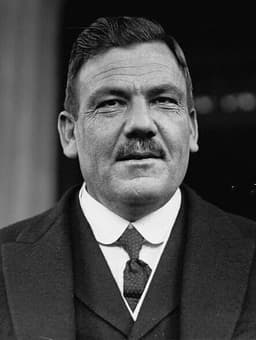
Plutarco Elias Calles
General · Modern
58.5Total
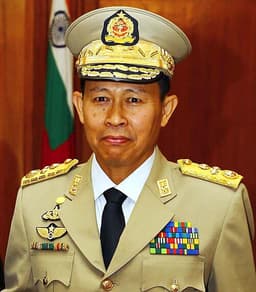
Soe Win
General · Modern
41.7Total
Basic Information
Born
1877
1947
Died
1945
—
Era
Modern
Modern
Nationality
Mexico
Myanmar
Occupation
General
General
Civilization
Western
Eastern
Score Comparison
Military (10%)
40.0
25.9
Political (20%)
70.3
30.8
Influence (20%)
68.0
48.6
Legacy (20%)
40.0
40.0
Leadership (15%)
78.0
57.6
Strategy (15%)
52.5
36.8
TOTAL
58.5
41.7
Plutarco Elias Calles — Complete Timeline
1915 AD
Governorship of SonoraPolitical Action
Calles served as Governor of Sonora from 1915 to 1919, implementing radical reforms including land redistribution, anti-clerical laws, and labor rights. His governorship established him as a key figure in the Sonoran dynasty and a proponent of revolutionary change.
GovernorshipSonoraReforms
Impact: regionalconstructive
1924 AD
Presidency of MexicoPolitical Action◆ Major
Calles was elected President of Mexico in 1924, serving until 1928. His administration continued revolutionary reforms, including land reform, labor rights, and secularization, but also faced opposition from the Catholic Church and conservative groups.
PresidencyMexican RevolutionReforms
Impact: nationalconstructive
1926 AD
Cristero WarWar◆ Major
Calles enforced anti-clerical laws, including the Calles Law, which restricted the Catholic Church's role in society. This sparked the Cristero War (1926-1929), a violent rebellion by Catholic peasants against the state, resulting in tens of thousands of deaths.
Cristero WarAnti-clericalismReligious Conflict
Impact: nationaldestructive
1928 AD
MaximatoPolitical Action◆ Major
After his presidency, Calles remained the de facto ruler of Mexico during the Maximato (1928-1934), controlling puppet presidents. He continued to influence policy, but his power waned as President L
MaximatoPolitical ControlCárdenas
Impact: national
1929 AD
Founding of the National Revolutionary Party (PNR)Political Action
Calles founded the National Revolutionary Party (PNR) in 1929, which later became the Institutional Revolutionary Party (PRI). This party dominated Mexican politics for over 70 years, institutionalizing the revolution's legacy and centralizing power.
Political PartyPRIInstitutionalization
Impact: nationalconstructive
Soe Win — Complete Timeline
2004 AD
Appointed Prime Minister of MyanmarPolitical Action◆ Major
Soe Win was appointed Prime Minister of Myanmar by the State Peace and Development Council, succeeding Khin Nyunt. He served as a key figure in the military junta's government.
Military JuntaGovernment Appointment
Impact: national
2007 AD
Saffron Revolution CrackdownPolitical Action
As Prime Minister, Soe Win oversaw the military's violent suppression of the Saffron Revolution, a series of anti-government protests led by Buddhist monks. The crackdown resulted in numerous deaths, arrests, and international condemnation.
Saffron RevolutionHuman RightsRepression
Impact: nationaldestructive
Death in OfficeOther
Soe Win died in office on October 12, 2007, from leukemia. His death occurred shortly after the Saffron Revolution crackdown, and he was succeeded by Thein Sein.
DeathSuccession
Impact: national
Expert Analysis
Plutarco Elias Calles vs Soe Win
# The Iron Fist and the Silent Sword
On a sweltering October morning in 2007, as Buddhist monks swept the streets of Rangoon with their alms bowls turned upside down—a silent protest that would echo around the world—General Soe Win lay dying in a military hospital, his leukemia a quiet metaphor for a regime that had long been bleeding legitimacy. Half a world away and eighty years earlier, another general, Plutarco Elías Calles, stood in the National Palace in Mexico City, signing a law that would ignite a Catholic rebellion and reshape a nation. One founded a party that ruled for seven decades; the other oversaw a crackdown that hastened his regime's isolation. Both were generals. Both believed in order above all. But their paths diverged like rivers from the same mountain—one carving a lasting valley, the other vanishing into dry sand.
Origins
Calles was born in 1877 in Guaymas, Sonora, a dusty port on the Gulf of California, into a world of revolutionary ferment. His father was a schoolteacher who died when Calles was young, leaving him to scrape together an education in a country still reeling from Porfirio Díaz’s dictatorship. He became a schoolteacher himself, then a mule driver, then a small-time merchant—a man who learned that survival meant bending with the wind. The Mexican Revolution erupted in 1910, and Calles, like many ambitious men, saw in it not just chaos but opportunity. He joined the Constitutionalist faction under Venustiano Carranza, and by 1915, at age thirty-eight, he was governor of Sonora.
Soe Win was born in 1947 in British Burma, a country that had just regained independence and was already sliding into civil war. His father was a military officer, and Soe Win followed him into the armed forces, graduating from the Defense Services Academy in the 1960s. Burma under General Ne Win was a hermit kingdom—xenophobic, socialist, and brutal. Soe Win rose through the ranks of the Tatmadaw, the Burmese army, not through charisma or brilliance but through loyalty and ruthlessness. He was a product of a system that rewarded obedience, not vision.
The difference in their origins was not just geography but era. Calles came of age when Mexico was inventing itself, when a revolution could be won with ideas and alliances. Soe Win came of age when Burma had already been invented—by a paranoid general who had destroyed every alternative.
Rise to Power
Calles’s rise was a masterclass in political navigation. As governor of Sonora from 1915 to 1919, he redistributed land, built schools, and attacked the Catholic Church’s influence—policies that made him a hero to the revolutionary left and a villain to conservatives. He then served as President Álvaro Obregón’s Minister of War, and when Obregón’s term ended, Calles was the natural successor. In 1924, he was elected president of Mexico with overwhelming support. His path was paved by the revolution’s momentum and his own relentless pragmatism.
Soe Win’s rise was quieter, more sinister. He served as a regional commander in the 1990s, overseeing counterinsurgency operations against ethnic minorities—campaigns that involved forced labor, rape, and massacre. In 2004, when Prime Minister Khin Nyunt was purged in a power struggle, Soe Win was appointed as his replacement. He was not chosen for his vision but for his reliability. He was a safe pair of hands—if those hands were stained with blood.
Leadership & Governance
Calles governed Mexico with an iron fist wrapped in a velvet glove. His presidency from 1924 to 1928 was a whirlwind of reform: he built roads, expanded education, and, most controversially, enforced the anti-clerical provisions of the 1917 Constitution. The Calles Law of 1926 restricted the Catholic Church’s property, banned foreign priests, and required all clergy to register with the state. The result was the Cristero War—a three-year rebellion by Catholic peasants that left an estimated 90,000 dead. Calles did not flinch. He crushed the rebellion with brutal efficiency, but he also understood that raw force was not enough. In 1929, he founded the National Revolutionary Party (PNR), a coalition of regional strongmen, labor unions, and peasant organizations that could channel conflict into politics. After his presidency, he remained the *jefe máximo*—the maximum chief—during the Maximato (1928–1934), pulling the strings of puppet presidents. He created a system that outlasted him.
Soe Win’s governance was simpler: suppress everything. As Prime Minister from 2004 to 2007, he continued the military junta’s policy of isolating Myanmar from the world. The economy stagnated; human rights abuses continued. In August 2007, when Buddhist monks led the Saffron Revolution—the largest protests since 1988—Soe Win ordered the crackdown. Soldiers beat monks, fired into crowds, and arrested thousands. The regime’s response was pure reflex, a muscle memory of violence. But Soe Win had no political vision beyond survival. He did not build parties or coalitions. He did not offer reforms. He simply held on.
Triumph & Tragedy
Calles’s greatest triumph was the PNR, which became the Institutional Revolutionary Party (PRI) and ruled Mexico for seventy-one years. It was a machine that absorbed every faction—left, right, military, civilian—and turned them into cogs. His tragedy was the Cristero War, a conflict born of his own ideological rigidity. He saw the Church as a feudal obstacle to progress, but he underestimated the depth of Catholic faith among ordinary Mexicans. The war scarred Mexico for generations.
Soe Win’s greatest triumph was merely surviving in a regime that devoured its own. His tragedy was the Saffron Revolution. The crackdown made Myanmar a global pariah, accelerating sanctions and isolation. And Soe Win himself did not live to see the consequences. He died of leukemia on October 12, 2007, just weeks after the protests were crushed. His death was not a loss; it was an end.
Character & Destiny
Calles was a man of contradictions: a revolutionary who became a dictator, a secularist who sparked a holy war, a builder of institutions who ruled through puppets. He was cold, calculating, and patient. He understood that power was not just about force but about structures. His personality shaped Mexico’s destiny because he thought in decades, not days.
Soe Win was a man of the system. He had no grand vision, no political philosophy. He was a soldier who followed orders and gave orders. His personality was irrelevant; he was a function of the Tatmadaw’s institutional paranoia. He did not shape history; he was swept along by it.
Legacy
Calles is remembered as the father of modern Mexico—the man who ended the chaos of the revolution and created a stable, one-party state. But his legacy is ambiguous. The PRI became corrupt and authoritarian, and when it finally fell in 2000, many Mexicans blamed Calles for planting the seeds of that decay. His anti-clerical laws were eventually softened, but the Cristero War remains a painful memory.
Soe Win is barely remembered. In Myanmar, he is a footnote in the junta’s long, bloody history. In the world, he is a symbol of the regime’s brutality. His legacy is the Saffron Revolution—not because he stopped it, but because he could not stop it. The monks won in the end, even if they lost in the moment.
Conclusion
Calles and Soe Win both believed that order required force. But Calles understood that force alone was not enough—that you needed a party, a vision, a system that could outlast your own mortality. Soe Win understood only the force. One built a house that stood for seventy years; the other built a wall that crumbled as soon as he turned his back. In the end, the question is not whether a general can rule, but whether he can imagine a world beyond his own rule. Calles could. Soe Win could not. And that is the difference between a founder and a functionary.
Rankings
🥇
Plutarco Elias CallesLeader
Mil: 40.0Pol: 70.3Inf: 68.0
58.5
🥈
Soe Win
Mil: 25.9Pol: 30.8Inf: 48.6
41.7
+16.8 behind
How This Comparison Works
Algorithm
Each figure is scored on 6 dimensions (0—100 scale) based on structured historical data: Military (10%), Political (20%), Influence (20%), Legacy (20%), Leadership (15%), Strategy (15%). The weighted total produces the final ranking.
Data Sources
Scores are computed from structured sub-indicators in the database. Scale factors adjust for era (Ancient ×0.85, Modern ×1.0) and civilization size (Eastern ×1.05, Other ×0.80) to account for differences in population and military scale.
Maximum 3 Figures
Comparisons are limited to 2—3 figures to ensure readability and statistical meaningfulness.
Error Margins
±5 points per dimension — Sub-scores are derived from historical records with inherent uncertainty. Two figures within 5 points on a dimension should be considered roughly equivalent in that area.
Total Score Accuracy
±3 points overall — The weighted combination of 6 dimensions produces a total score with approximately ±3 points of uncertainty. Differences of less than 3 points are not statistically significant— the figures are effectively tied.
Known Limitations
- Historical records are incomplete and uneven across civilizations
- Figures from oral-tradition societies may be underrepresented
- Occupation labels can misclassify multi-role figures
- Scores measure capability and impact, not moral character
- Quantitative scoring is a comparison tool, not absolute truth
Capability Radar
Military (10%) — Battles & Warfare
Battles
45
10
Win Rate
50
10
Expansion
30
10
Political (20%) — Governance & Reform
Reform
85
10
Diplomacy
65
10
Economy
60
10
Influence (20%) — Cultural & Global Reach
Cultural
70
10
Global
60
10
Legacy (20%) — Historical Impact
Historical
75
20
Longevity
70
10
Leadership (15%) — Power & Stability
Tenure
70
30
Stability
55
10
Strategy (15%) — Tactics & Innovation
Strategy
55
10
Tactics
40
10
Reform
60
10
Similar Comparisons
Comments & Discussion
IRON COMPARATOR6/16/2026
"Comparing Calles and Soe Win is like comparing a surgeon with a butcher who uses the same tools. Calles institutionalized authoritarianism—founded the PRI, banned worship publicly, crushed Cristeros with calculated ferocity. Soe Win oversaw the 2007 Saffron Revolution crackdown with zero strategic vision; he shot monks in the streets for twelve hours and then died three weeks later. Calles built a system that outlived him by generations. Soe Win accelerated Burma’s collapse into pariah status.
炸药历史学家6/16/2026
我不是暴政美学家,但Calles和Soe Win放在一起量化对比就是耍流氓。Calles干掉的宪法革命军权斗指数、1926年关闭教堂数、处决神父和起义农民比数,哪个不是有详细档案可查?Soe Win呢?《缅甸新光报》直接不报,国际记者扒出的可靠死亡数只有37人。一个用制式军事手段控制国家几十年,一个连镇压规模都搞成历史悬案。你这样并列,不是比较,是给真空弹绣花边。"
GENERAL'S SHADOW6/16/2026
"Boxing them as 'both generals, both ordered above all' is empty theater. Calles waged a culture war against the Catholic Church—secularization as state religion, actively rewriting Mexican identity. Soe Win was a Tatmadaw figurehead overseeing a specific crackdown on monks, not restructuring a nation's soul. Calles banned public mass and fought a three-year guerrilla war; Soe Win gave an order to block a procession. If you want real symmetry, put Soe Win next to a regional police chief, not the
历史精度纠偏员6/16/2026
你以为把两人放一起就叫分析?Calles的权谋遗产是制度化的——创立PNR、建立全国商会体系、用教育工程压制教权,这些有《墨西哥现代史》卷三169页到211页撑腰。Soe Win有什么?2005年在军政府内部当二号人物,主导清剿克伦族和掸邦,这跟Calles的文化体制工程根本不是一个维度。你最好拿Soe Win跟Calles手下的索诺拉州警察局长比,而不是跟一个建立过跨州权力体系的铁腕人物比。"
COMMAND STRUCTURE CRITIC6/16/2026
"You're conflating 'I built the post-revolutionary state' with 'I was a mid-tier junta member who got a promotion.' Calles, love him or hate him, created the institutional DNA of modern Mexico—the PRI's patronage pyramid, the labor-state compact, anti-clericalism as doctrine. All Soe Win did was be the defense minister